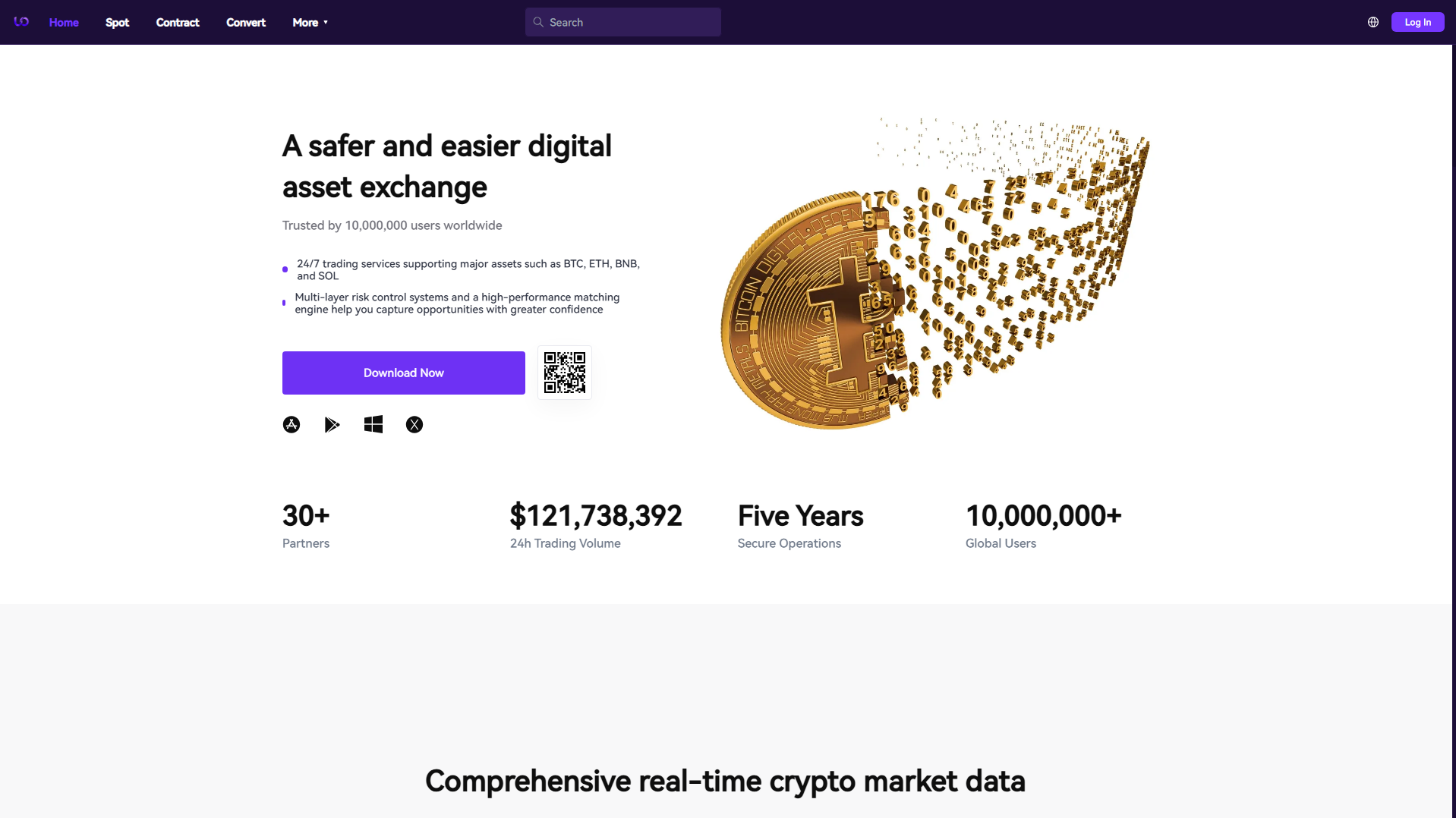
uoniovault.com is an impersonation phishing site that posed as a crypto "vault" service under the bare page title "UO". It is listed by MetaMask and SEAL, two blocklists aimed at protecting wallet users, so its intended victims were people holding crypto. PhishDestroy first saw it on 2026-08-28. The site has been offline since 2026-09-08, and its DNS was still inactive at the last check on 2026-10-19.
诈骗手法解析
Impersonation pages like this one copy the name and look of a service the victim already trusts, then ask for the action that hands over control. Usually that means connecting a wallet and signing a transaction, or typing in a seed phrase or private key to "verify" or "unlock" a vault. The two-letter title "UO" gives away almost nothing about the page, which fits a site meant to be reached through a direct link rather than found through search. Anyone who signs or shares secrets on a page like this can lose the full balance of the affected wallet, and those transfers cannot be reversed.
证据
On 2026-09-05, 11 of 90 VirusTotal engines flagged the domain. The vendors included alphaMountain.ai, Bfore.Ai PreCrime, BitDefender, CRDF, Forcepoint ThreatSeeker, Fortinet, G-Data and Gridinsoft. Spamhaus lists it in its DBL as a phishing domain, and MetaMask and SEAL block it alongside PhishDestroy. It also appears in two AlienVault OTX threat pulses. When this many independent sources agree, a false positive is very unlikely.
基础设施
The domain was registered on 2026-07-07 through Realtime Register B.V., 52 days before PhishDestroy detected it. That gap suggests it was set up in advance rather than used the moment it was bought. The site sat behind Cloudflare, with an edge address geolocated to Canada, which hides where the real origin server is. Its certificate came from Google Trust Services, which is standard for Cloudflare-fronted sites and says nothing about whether the site is legitimate.
What to do
If you connected a wallet to this site, use a token-approval checker to revoke any permissions it requested. Move your remaining funds to a fresh wallet if you signed anything you did not fully understand. If you entered a seed phrase or private key, treat that wallet as compromised and move every asset to a newly generated wallet right away. Never reuse the exposed phrase. Security teams should block the domain at DNS and proxy level and search their logs for visits since 2026-08-28. Watch for lookalike "vault" domains from the same operation.
uoniovault.com is an impersonation phishing page flagged by MetaMask and SEAL, built to trick crypto users into handing over wallet access or secrets.
AI摘要
Overview uoniovault.com is an impersonation phishing site that posed as a crypto "vault" service under the bare page title "UO". It is listed by MetaMask and SEAL, two blocklists aimed at protecting wallet users, so its intended victims were people holding crypto. PhishDestroy first saw it on 2026-08-28. The site has been offline since 2026-09-08, and its DNS was still inactive at the last check on 2026-10-19. How the scam works Impersonation pages like this one copy the name and look of a service the victim already trusts, then ask for the action that hands over control. Usually that means connecting a wallet and signing a transaction, or typing in a seed phrase or private key to "verify" or "unlock" a vault. The two-letter title "UO" gives away almost nothing about the page, which fits a site meant to be reached through a direct link rather than found through search. Anyone who signs or shares secrets on a page like this can lose the full balance of the affected wallet, and those transfers cannot be reversed. Evidence On 2026-09-05, 11 of 90 VirusTotal engines flagged the domain. The vendors included alphaMountain.ai, Bfore.Ai PreCrime, BitDefender, CRDF, Forcepoint ThreatSeeker, Fortinet, G-Data and Gridinsoft. Spamhaus lists it in its DBL as a phishing domain, and MetaMask and SEAL block it alongside PhishDestroy. It also appears in two AlienVault OTX threat pulses. When this many independent sources agree, a false positive is very unlikely. Infrastructure The domain was registered on 2026-07-07 through Realtime Register B.V., 52 days before PhishDestroy detected it. That gap suggests it was set up in advance rather than used the moment it was bought. The site sat behind Cloudflare, with an edge address geolocated to Canada, which hides where the real origin server is. Its certificate came from Google Trust Services, which is standard for Cloudflare-fronted sites and says nothing about whether the site is legitimate. What to do If you connected a wallet to this site, use a token-approval checker to revoke any permissions it requested. Move your remaining funds to a fresh wallet if you signed anything you did not fully understand. If you entered a seed phrase or private key, treat that wallet as compromised and move every asset to a newly generated wallet right away. Never reuse the exposed phrase. Security teams should block the domain at DNS and proxy level and search their logs for visits since 2026-08-28. Watch for lookalike "vault" domains from the same operation. Useful links urlscan.io scan and screenshot: https://urlscan.io/result/01a048b8-a60d-75e6-ab9a-c8946ab42bb0/ VirusTotal report: https://www.virustotal.com/gui/domain/uoniovault.com Google Safe Browsing status: https://transparencyreport.google.com/safe-browsing/search?url=uoniovault.com Archived copy: https://web.archive.org/web/20260828150125/https://uoniovault.com/ Report phishing to Google: https://safebrowsing.google.com/safebrowsing/report_phish/ Site owner? Request a review: https://phishdestroy.io/appeals/
证据层Availability: DNS inactiveContent: UnreachableDNS: NXDOMAIN
RDAP注册
观测时间线last reachable: 2026-09-03 22:16 UTCcurrent episode first observed: 2026-09-30 16:14 UTCobserved RIP window: 2026-09-03 22:16 UTC → 2026-09-30 16:14 UTC · 641.98hmidpoint estimate ≈ 2026-09-17 07:15 UTC · precision low · basis bounded
Availability, content, DNS and registration are independent evidence layers. NXDOMAIN, an unreachable origin or missing content alone does not prove registrar action. A registrar or provider is credited only when a direct technical marker identifies that actor. Report causality is shown separately.


 172.67.166.215


 Microsoft
 Cloudflare
 Yandex
 ESET
 Bitdefender
 Norton
 Symantec
 Avira
 Avast / AVG
 卡巴斯基
 Dr.Web
 Netcraft
 PhishTank
 APWG eCX
 PhishStats
 Phish.Report
 PolySwarm
 CheckPhish
 Quttera
 Criminal IP
 CRDF
 MyWOT