원본 포렌식 기록을 보존하기 위해 아래의 상세 PhishDestroy AI 분석은 영어로 유지됩니다.
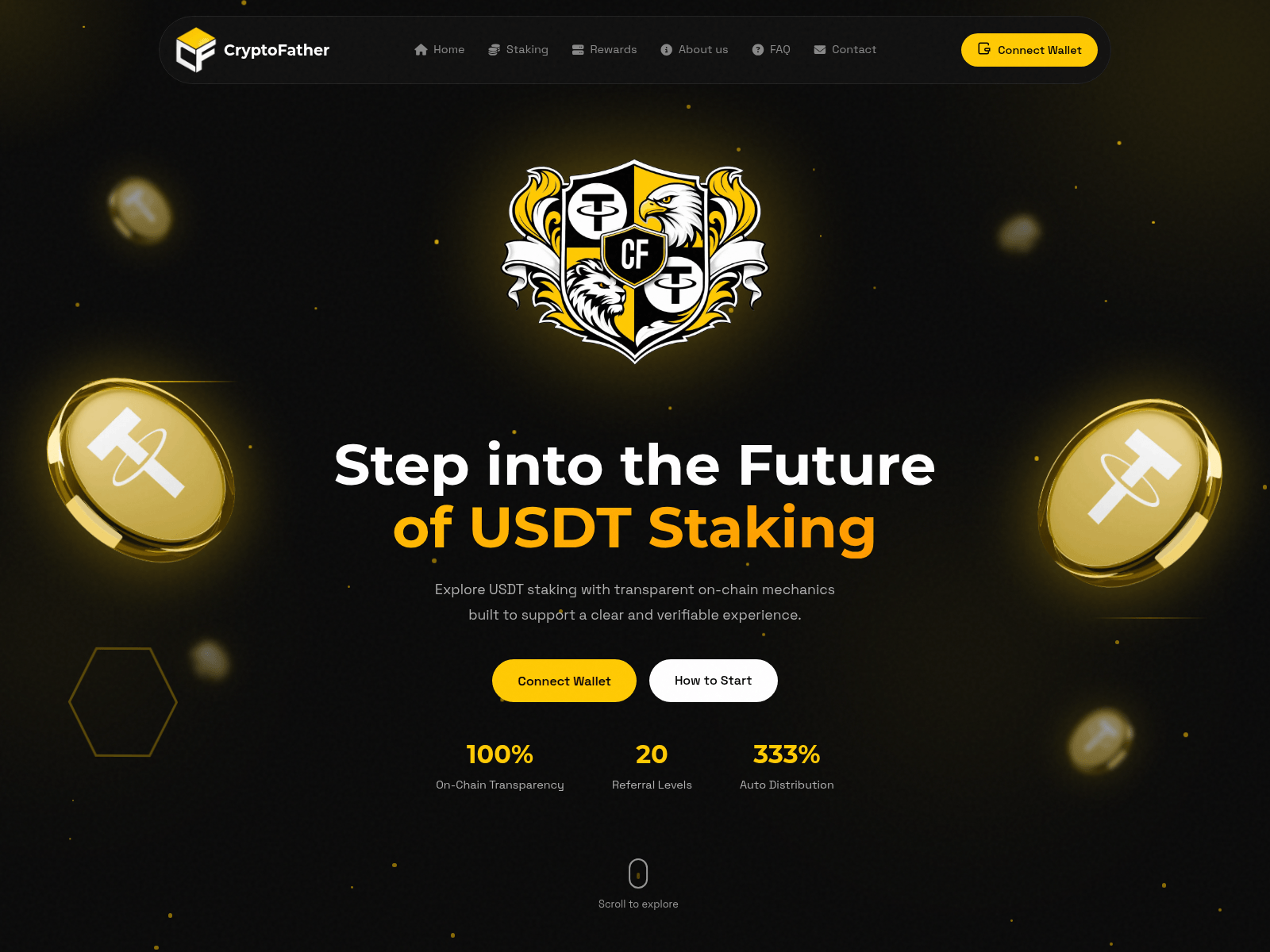
This domain operates at an elevated risk level as a generic phishing threat specifically targeting cryptocurrency users through a fake USDT Tether staking platform called "CryptoFather." The site mimics legitimate staking services to deceive users into connecting their wallets or depositing funds, ultimately aiming to drain crypto assets. PhishDestroy identified this domain after it appeared on one security blocklist and received poor trust signals, including a 5/95 detection rate on VirusTotal, meaning five of 95 security vendors flagged it as malicious.
Technical indicators reveal that cryptofather.network was registered through Dynadot Inc and created on January 9, 2026, a very recent date typical of phishing domains. It resolves to IP address 172.67.190.213 and uses an SSL certificate issued by Google Trust Services (WE1), which gives a false sense of security. The domain's page title explicitly claims to be a USDT Tether staking platform, but the combination of low vendor detection, recent creation, and blocklist presence confirms its malicious intent. The current status shows the domain has been taken offline, but similar domains may appear under different names.
Users who encountered this domain should immediately revoke any wallet permissions granted and avoid interacting with any links or forms from the site. For those who entered credentials or seed phrases, transferring remaining funds to a new, secure wallet is critical. PhishDestroy recommends always verifying staking platforms through official project channels and using domain reputation checkers before connecting wallets. If funds were lost, report the incident to relevant authorities and exchange platforms. Regular monitoring of wallet activity is advised.
cryptofather.network impersonates a USDT Tether staking platform to harvest crypto assets. Flagged by 5/95 vendors on VirusTotal. Verify on PhishDestroy.
AI 요약
This domain operates at an elevated risk level as a generic phishing threat specifically targeting cryptocurrency users through a fake USDT Tether staking platform called "CryptoFather." The site mimics legitimate staking services to deceive users into connecting their wallets or depositing funds, ultimately aiming to drain crypto assets. PhishDestroy identified this domain after it appeared on one security blocklist and received poor trust signals, including a 5/95 detection rate on VirusTotal, meaning five of 95 security vendors flagged it as malicious. Technical indicators reveal that cryptofather.network was registered through Dynadot Inc and created on January 9, 2026, a very recent date typical of phishing domains. It resolves to IP address 172.67.190.213 and uses an SSL certificate issued by Google Trust Services (WE1), which gives a false sense of security. The domain's page title explicitly claims to be a USDT Tether staking platform, but the combination of low vendor detection, recent creation, and blocklist presence confirms its malicious intent. The current status shows the domain has been taken offline, but similar domains may appear under different names. Users who encountered this domain should immediately revoke any wallet permissions granted and avoid interacting with any links or forms from the site. For those who entered credentials or seed phrases, transferring remaining funds to a new, secure wallet is critical. PhishDestroy recommends always verifying staking platforms through official project channels and using domain reputation checkers before connecting wallets. If funds were lost, report the incident to relevant authorities and exchange platforms. Regular monitoring of wallet activity is advised.
검토되지 않은 이전에 저장된 분석 결과; 텍스트 생성 시점은 원본 관측 날짜와 별개입니다.
결과는 각 출처의 수집 시점을 기준으로 합니다. 탐지 0건이 안전을 보장하지는 않습니다. OTX 참조는 커뮤니티 게시물입니다.
수집된 출처 세부 정보
저장된 페이지, 네트워크, 스캐너 관측 결과를 출처와 관측 시각별로 묶어 보여 줍니다.
저장된 모든 필드와 출처·날짜
보안 신호
Scamadviser 경고76/100
The Tranco rank (how much traffic) is rather low Cryptocurrency services detected, these can be high risk
We found a valid SSL certificate DNSFilter labels this site as safe
cryptofather.network 관련 질문
cryptofather.network은(는) 정상적인 사이트인가요?
PhishDestroy는 기록된 증거를 바탕으로 cryptofather.network를 심각 위험 등급(증거 점수 91/100)으로 평가했으며, 이는 2026-06-02에 처음 기록되었습니다. 저장된 VirusTotal 결과: 12/92 엔진에서 경고했습니다. 악성: 11. 의심: 1. 분석 시간(저장된 표기): 2026-09-25 07:25 UTC. 조회 시간(저장된 표기): 2026-10-31 06:06 UTC. 자체 점수와 목록 등재만으로 사기가 입증되지는 않습니다. 각 출처의 날짜와 정확한 URL을 확인하세요.
cryptofather.network에 지갑을 연결해도 안전한가요?
앞서 언급된 위험 신호로 인해, 해당 사이트에서 지갑을 연결하거나 메시지에 서명하거나 토큰 권한을 approve하지 마십시오. 확인된 블록체인 거래는 되돌릴 수 없습니다.
cryptofather.network을(를) 이용했다면 어떻게 해야 하나요?
비밀번호를 입력했습니다 — 해당 서비스와 동일한 비밀번호를 사용한 다른 모든 사이트에서 비밀번호를 변경하세요.
2단계 인증을 켜세요 — 해당 서비스가 지원하는 경우, 인증 앱은 SMS 코드보다 보안성이 더 높습니다.
카드 또는 은행 정보를 결제하거나 입력했습니다. — 카드에 기재된 연락처나 공식 웹사이트를 통해 이용 중인 은행이나 결제 서비스 업체에 문의하십시오.
지갑을 연결했지만 아무것도 서명하지 않았습니다 — 지갑에서 해당 사이트를 연결 해제하고 보류 중인 요청을 거부하십시오. 연결만으로는 자금이 이체되지 않습니다.
토큰 지출 승인 (approve / permit) — 토큰 승인 검사기를 사용하여 해당 승인을 취소합니다
시드 문구나 개인 키를 공유했습니다 — 남은 자금을 새로운 시드 문구가 있는 새 지갑으로 옮기세요. 보안이 노출된 지갑은 더 이상 안전하지 않습니다.
파일을 다운로드했습니다 — 파일을 열지 말고 보안 소프트웨어로 기기를 검사하십시오.
경찰이나 기타 관할 기관에 신고할 때를 대비해 주소, 날짜, 결제 또는 거래 내역, 메시지 등을 잘 보관해 두십시오. 신고한다고 해서 반드시 돈이 돌려받는다는 보장은 없습니다. 단계별 안내: 긴급 대응 가이드.
증거 레이어Availability: DNS inactiveContent: UnreachableDNS: NXDOMAIN
RDAP 등록
관측된 시간축last reachable: 2026-09-03 22:15 UTCcurrent episode first observed: 2026-09-30 16:14 UTCobserved RIP window: 2026-09-03 22:15 UTC → 2026-09-30 16:14 UTC · 641.99hmidpoint estimate ≈ 2026-09-17 07:15 UTC · precision low · basis bounded
Availability, content, DNS and registration are independent evidence layers. NXDOMAIN, an unreachable origin or missing content alone does not prove registrar action. A registrar or provider is credited only when a direct technical marker identifies that actor. Report causality is shown separately.
당신은 혼자가 아니며, 부끄러워할 일은 전혀 없습니다. 사기범은 신뢰를 악용하는 교묘한 범죄자입니다. 피해 사실을 신고하는 것은 사기에 맞서는 가장 강력한 무기입니다. 당신의 신고가 다른 사람의 피해를 막고 수사 기관의 대응을 도울 수 있습니다. 먼저 계정과 자금을 안전하게 보호한 후 신고하십시오. 계정 정보가 유출되었다면 즉시 신고하세요. 피해 복구를 빙자한 사기범에게 응하지 마세요.
실제로 취한 조치에 따라 대응하십시오. 비밀번호를 입력했다면, 해당 비밀번호와 이를 재사용한 모든 곳에서 비밀번호를 변경하십시오. 카드 정보를 결제하거나 제공했다면, 은행이나 결제 서비스 업체에 연락하십시오. 파일을 다운로드했다면, 기기를 바이러스 검사하십시오. 그런 다음 해당 사건을 신고하십시오.

 Dynadot


 Microsoft
 Cloudflare
 Yandex
 ESET
 비트디펜더
 Norton
 Symantec
 Avira
 Avast / AVG
 카스퍼스키
 Dr.Web
 넷크래프트
 PhishTank
 APWG eCX
 PhishStats
 Phish.Report
 Spamhaus
 PolySwarm
 CheckPhish
 Quttera
 Criminal IP
 CRDF
 MyWOT