元のフォレンジック記録を保持するため、下の PhishDestroy AI 詳細分析は英語のままです。
Overview
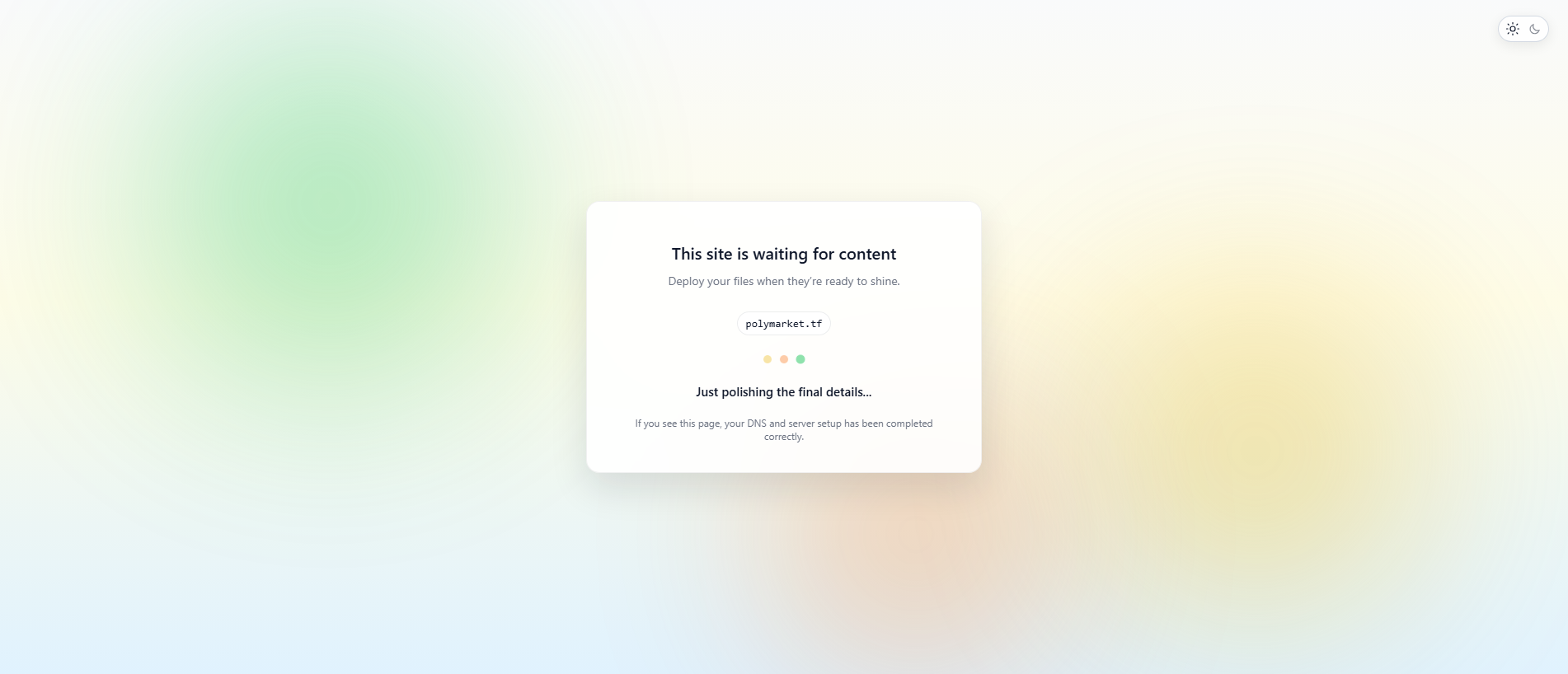
polymarket.tf is an impersonation phishing page that borrows the Polymarket name. It targets prediction-market traders who reach it through a search result, ad or shared link and assume it is the real platform. PhishDestroy first flagged it on 2026-10-01. As of 2026-10-19 the site was still online and serving content. The page currently carries the generic title "Application placeholder," while we classify the domain as Polymarket impersonation.
詐欺の手口
Lookalike Polymarket domains rely on the brand's trust. Polymarket users hold funds in crypto wallets, so a fake copy is built to make connecting a wallet, signing a transaction or entering login details feel routine. Whatever a victim approves or types goes to the operator rather than Polymarket. Depending on what was granted, that can mean wallet balances drained through malicious approvals or signatures, or a hijacked account. The unusual .tf ending is the main visual clue that this is not the official site.
証拠
Six of 92 VirusTotal engines flagged the domain on 2026-10-09: alphaMountain.ai, CRDF, Forcepoint ThreatSeeker, Gridinsoft, LevelBlue and SOCRadar. That count is modest, so many security products may still let the page load without a warning. The listings that matter most for crypto users carry more weight here. MetaMask's blocklist and SEAL both include the domain alongside PhishDestroy, and one AlienVault OTX threat pulse references it.
インフラ
The domain was registered on 2026-09-30 through Openprovider (Hosting Concepts B.V.), and PhishDestroy flagged it the following day. Such a short gap fits a domain bought specifically for this campaign. Traffic runs through Cloudflare's network (AS13335, US), which hides the server that actually hosts the content. A Let's Encrypt certificate gives it the padlock icon, which shows only that the connection is encrypted, not that the site is genuine.
What to do
Do not connect a wallet or sign anything on polymarket.tf, and reach Polymarket only through a bookmark you saved yourself. If you connected a wallet and approved a request, revoke token approvals with a trusted approval checker right away. Move remaining funds to a fresh wallet if you signed anything you did not fully understand. If you entered an email, password or 2FA code, change the password on the genuine service and reset 2FA. Defenders should block the domain at DNS and proxy level and report it to Cloudflare and Openprovider to push for takedown.
polymarket.tf is a phishing page impersonating Polymarket, the crypto prediction market, aimed at traders who may connect a wallet or sign in there.
AIによる要約
Overview polymarket.tf is an impersonation phishing page that borrows the Polymarket name. It targets prediction-market traders who reach it through a search result, ad or shared link and assume it is the real platform. PhishDestroy first flagged it on 2026-10-01. As of 2026-10-19 the site was still online and serving content. The page currently carries the generic title "Application placeholder," while we classify the domain as Polymarket impersonation. How the scam works Lookalike Polymarket domains rely on the brand's trust. Polymarket users hold funds in crypto wallets, so a fake copy is built to make connecting a wallet, signing a transaction or entering login details feel routine. Whatever a victim approves or types goes to the operator rather than Polymarket. Depending on what was granted, that can mean wallet balances drained through malicious approvals or signatures, or a hijacked account. The unusual .tf ending is the main visual clue that this is not the official site. Evidence Six of 92 VirusTotal engines flagged the domain on 2026-10-09: alphaMountain.ai, CRDF, Forcepoint ThreatSeeker, Gridinsoft, LevelBlue and SOCRadar. That count is modest, so many security products may still let the page load without a warning. The listings that matter most for crypto users carry more weight here. MetaMask's blocklist and SEAL both include the domain alongside PhishDestroy, and one AlienVault OTX threat pulse references it. Infrastructure The domain was registered on 2026-09-30 through Openprovider (Hosting Concepts B.V.), and PhishDestroy flagged it the following day. Such a short gap fits a domain bought specifically for this campaign. Traffic runs through Cloudflare's network (AS13335, US), which hides the server that actually hosts the content. A Let's Encrypt certificate gives it the padlock icon, which shows only that the connection is encrypted, not that the site is genuine. What to do Do not connect a wallet or sign anything on polymarket.tf, and reach Polymarket only through a bookmark you saved yourself. If you connected a wallet and approved a request, revoke token approvals with a trusted approval checker right away. Move remaining funds to a fresh wallet if you signed anything you did not fully understand. If you entered an email, password or 2FA code, change the password on the genuine service and reset 2FA. Defenders should block the domain at DNS and proxy level and report it to Cloudflare and Openprovider to push for takedown. Useful links urlscan.io scan and screenshot: https://urlscan.io/result/01a0f91a-73e4-7723-b9bf-2817b2c514d2/ VirusTotal report: https://www.virustotal.com/gui/domain/polymarket.tf Google Safe Browsing status: https://transparencyreport.google.com/safe-browsing/search?url=polymarket.tf Archived copy: https://web.archive.org/web/20261001201637/https://polymarket.tf/ Report phishing to Google: https://safebrowsing.google.com/safebrowsing/report_phish/ Site owner? Request a review: https://phishdestroy.io/appeals/
出典Cloudflaremechanism: Challengesource: Current Http Probe
エビデンスレイヤーAvailability: Reachable but protectedDNS: Resolved
最新のHTTP観測結果アクセス可能だが保護されているCloudflare ChallengeCloudflareChallenge85%2026-11-25 00:07 UTC
RDAP登録
観測されたタイムラインlast reachable: 2026-11-25 00:07 UTClast content: 2026-11-02 11:31 UTC
Availability, content, DNS and registration are independent evidence layers. NXDOMAIN, an unreachable origin or missing content alone does not prove registrar action. A registrar or provider is credited only when a direct technical marker identifies that actor. Report causality is shown separately.

 Openprovider
 188.114.97.3


 Microsoft
 Cloudflare
 Yandex
 ESET
 ビットディフェンダー
 Norton
 Symantec
 Avira
 Avast / AVG
 カスペルスキー
 Dr.Web
 ネットクラフト
 PhishTank
 APWG eCX
 PhishStats
 Phish.Report
 Spamhaus
 PolySwarm
 CheckPhish
 Quttera
 URLquery
 Criminal IP
 CRDF
 Scamadviser
 MyWOT