VirusTotal
2 / 89
ReportInterpretation & limits
Engine detections from this stored analysis. Vendors and collection times may differ from other sources.


“Trust Token Network”
Assessment based on the stored source evidence below. Review sources →
The sent-report ledger records the first outgoing report at .
The recorded recipient is abuse@godaddy.com.
The latest stored availability evidence still shows the domain reachable; 6 months has elapsed since the first outgoing report.
ICANN RAA §3.18 describes registrar abuse-contact and handling obligations. This section records outgoing timestamps, listed recipients, case identifiers, and later availability. It does not by itself prove receipt, acknowledgement, investigation, remediation, or contractual non-compliance.

These are dated observations, not a live safety check. No flag, a stored capture, or a completed analysis does not establish that a site is safe.
2 / 89
ReportEngine detections from this stored analysis. Vendors and collection times may differ from other sources.
checked — no detections recorded
ReportAlerts refer to the preserved scan. They do not describe the current state of the site.
checked — no match recorded
A result applies to the recorded source and observation time. Absence of a flag is not proof of safety.
24 community references
ReportCommunity publication references, not a vendor verdict or evidence of a common operator.
provider verdict: clean
A result applies to the recorded source and observation time. Absence of a flag is not proof of safety.
stored report
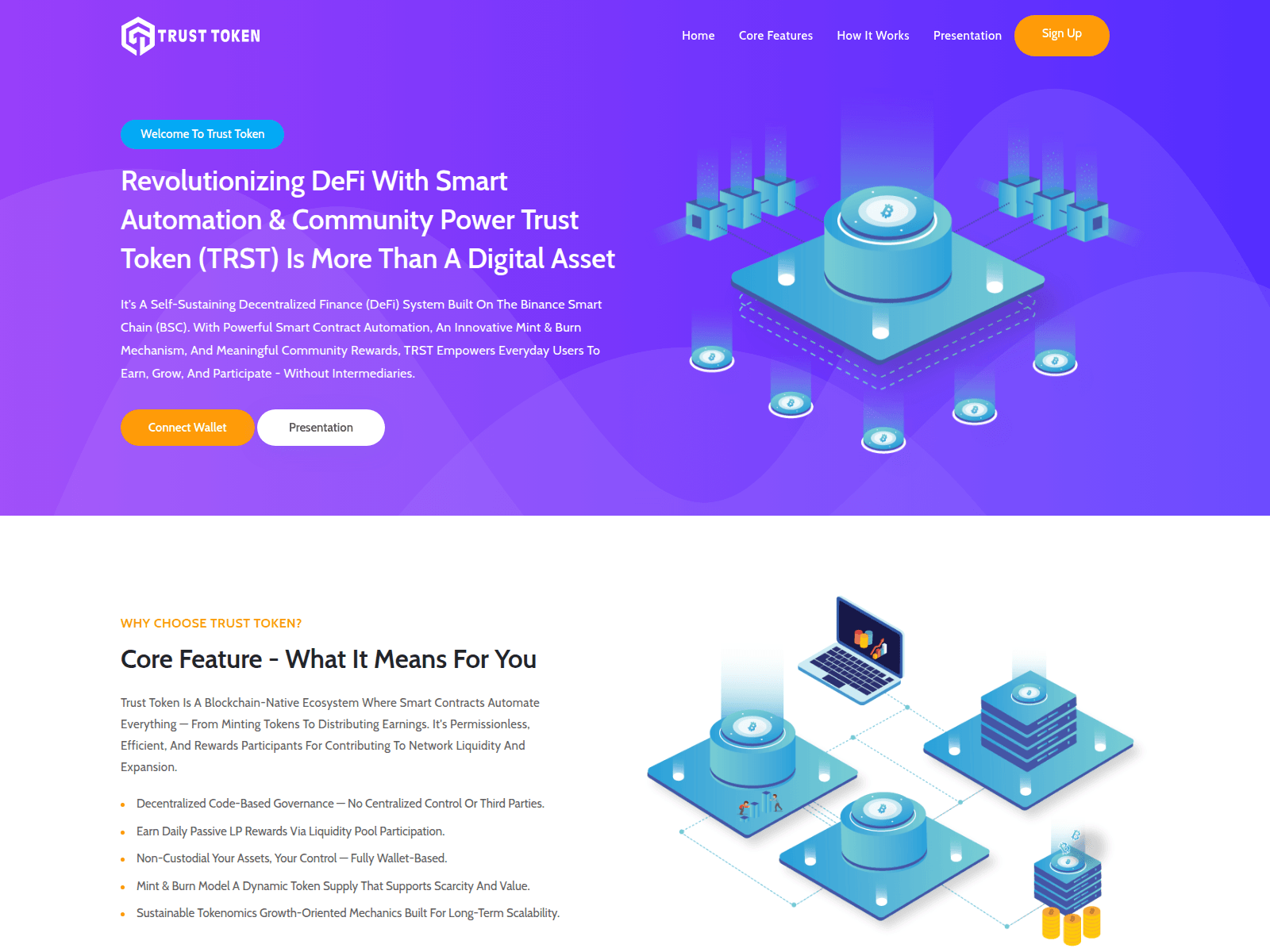
A preserved page image documents what the collector received; a capture is not a safety verdict.
Analysis completed
ReportThis is the recorded automated analysis. Completion alone is not a safety verdict.
14 checked — no blocks
A result applies to the recorded source and observation time. Absence of a flag is not proof of safety.
Checked; no threat flag recorded
ReportA result applies to the recorded source and observation time. Absence of a flag is not proof of safety.
Stored narrative · generated . Provider checks below retain their own observation dates.
This domain, trusttoken.network, is flagged as an active brand impersonation threat with high-risk indicators. Registered on June 15, 2025, through GoDaddy.com, LLC, the domain resolves to IP address 188.114.96.3, hosted under Cloudflare, Inc. in Canada. Infrastructure analysis reveals the use of Cloudflare nameservers (georgia.ns.cloudflare.com and nash.ns.cloudflare.com) and technologies including Microsoft ASP.NET, Bootstrap, jQuery, and Cloudflare Browser Insights, which are consistent with modern web applications but also commonly exploited in phishing operations. The SSL certificate is issued by Let's Encrypt, a legitimate provider, though this does not mitigate the domain's malicious classification. The page title, 'Trust Token Network,' suggests an attempt to impersonate a legitimate token or cryptocurrency-related service, aligning with the 'Brand Impersonation' scam type noted in threat intelligence. The domain is currently active, returning an HTTP 200 status, and appears on one security blocklist, with three of ninety-one security vendors flagging it in aggregated scans. While the exact content of the site has not been analyzed, the combination of brand-targeted naming, recent registration, and low trust scores (Gridinsoft score of 0/100) strongly indicates malicious intent. Defenders should treat this domain as compromised and prioritize blocking or monitoring traffic to 188.114.96.3. The use of Cloudflare infrastructure may complicate takedown efforts, but the domain's presence on blocklists and its detection by multiple security vendors provide concrete evidence for mitigation. Further analysis of associated URLs or payloads is recommended to determine the full scope of the threat.
Full extracted values, their blockchain and collection source. An address found in page content does not establish who controls it.
0x4055709e6ca105a91fcf0ad2acdf2880fb774aafFormat validated · Domain analysishttps://t.me/TrusTokeNetworkStored page referenceIoC extraction recorded 2026-07-29 02:24:38 UTC
Stored crawler-versus-browser observations for this host, plus a live fingerprint check for Keitaro-style traffic distribution systems.
cloudflareScanner note: alive_content: raw=ok; http=200; via=https_proxy; server=cloudflare
For this gTLD, the registrar above operates under an ICANN accreditation agreement. The links below provide the official fee schedule and current DNS abuse compliance guidance.
RAA §3.18 establishes abuse-contact and handling requirements. This report can document stored outbound notices and later technical observations; it does not by itself establish receipt, investigation, remediation, or contractual non-compliance.
Edge-IP reputation is not attributed to this domain.
georgia.ns.cloudflare.comnash.ns.cloudflare.comLocation describes the IP network.
9c7ac8b538e1db91abbe9bbedc46c7b1157c9301f000a4bd43a2d884c0d05acbSaved certificate metadata. Certificate dates without a timezone are shown as stored. Transport encryption does not establish that the site is trustworthy.
Google PageSpeed Insights — mobile performance audit of trusttoken.network · checked Jun 26, 2026
11 recorded events. These records describe collected evidence, outgoing notifications and publication; they do not confirm a complete investigation or a takedown.
We scan suspicious URLs, inspect public results and send evidence through the appropriate abuse-reporting channels. The dated events above show what is recorded for this domain. The directory below explains the wider workflow.
Capture the rendered page, requests and visible infrastructure.
Compare the available engine results and retain the analysis timestamp.
Check whether Google currently lists the URL as unsafe.
Inspect a public scan and its recorded network and classification data.
Look for indicator references and related community intelligence.
Compare archived captures and preserve historical context.
Look for matching indicators and associated threat records.
Inspect certificate records and related hostnames.
Compare security resolver responses and record observed blocking.
Inspect the public DNS, TLS, HTTP and technology surface.
Security services used for scanning, reputation checks and reporting are listed below. A service being listed is not evidence that it received, accepted or acted on this particular domain. Recorded submissions appear in the notification history above.
187 stored lookalike domains
Showing 100 of 187
Reported by 1 community member, first seen Mar 24, 2026
PD-20260324-533015 Recipient: abuse@godaddy.com Registrar: GoDaddy.com LLC (United States) Policy Violations: Universal TOS + Abuse Policy prohibit fraudulent, abusive, malicious, phishing and illegal activity; grants right to terminate or suspend services Applicable Laws: CFAA 18 U.S.C. §1030, Wire Fraud 18 U.S.C. §1343, CAN-SPAM Act
If credentials, payment data, or files were exposed, report the incident immediately. Change affected passwords, revoke active sessions, and scan the device.


Select your country to get official cybercrime contacts, or create a complaint draft →.
Template-based draft · optional AI wording assistance requires separate consent
Each lane is one reason a domain is linked to this host. Node size marks VirusTotal detections and dashed nodes are already offline. The full lists follow below.
Shared edge IP; unrelated tenants may be present.
These domains also target Binance users. View all Binance threats →
Registered through the same registrar. A registrar serves millions of unrelated customers, so this groups reports rather than proving a link.
Recently added threat reports.
Threat analysis using stored blocklist, WHOIS, DNS, and public scan evidence
Scan NowSubmit suspicious domains to our threat database — protect the community
ReportRecent phishing reports and observed availability changes
MonitorMonitor live threats or contest this listing if you believe it's a false positive