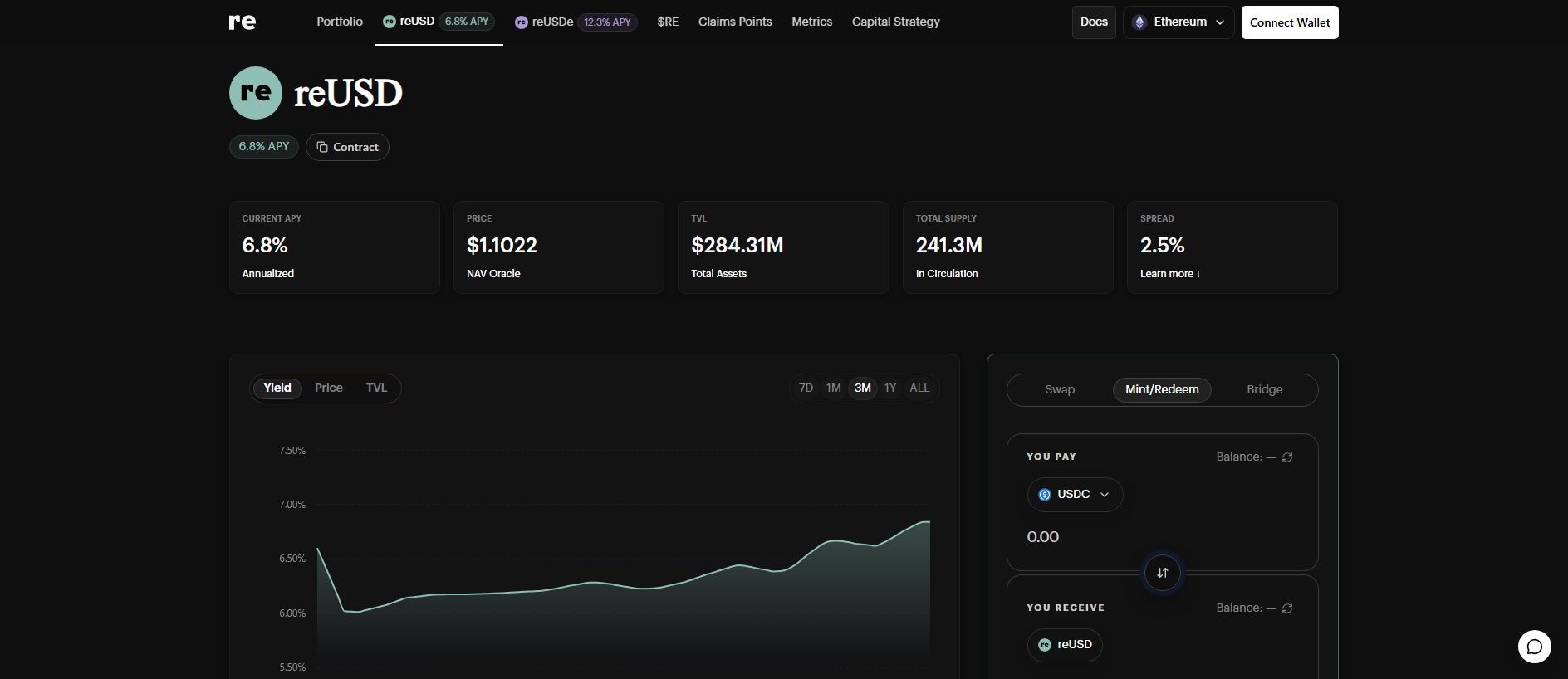
reprotocol.network is an impersonation phishing site built to look like a legitimate crypto protocol project and aimed at wallet users who expect to deal with the real one. PhishDestroy first flagged it on 2026-09-29, barely a week after the domain was registered. As of 2026-10-19 the domain still answered, but its DNS no longer served site content, so the operation may be dormant rather than gone.
诈骗手法解析
Impersonation pages like this copy a project's name, branding and calls to action, then turn routine steps such as connecting a wallet, claiming tokens or verifying an account into a trap. Victims typically lose funds through malicious token approvals or signatures, or hand over a seed phrase or login on a fake form. When last captured, the page title read "Problem loading page," a browser error string, while our classification is impersonation phishing based on the domain's purpose and independent detections.
证据
Eight of 91 VirusTotal engines flagged the domain as of 2026-10-01: alphaMountain.ai, BitDefender, Forcepoint ThreatSeeker, Fortinet, G-Data, Gridinsoft, Kaspersky and SOCRadar. That is a minority of engines, but it includes several major commercial vendors acting independently. ScamSniffer, which focuses specifically on crypto wallet threats, lists it alongside PhishDestroy. The domain also appears in four AlienVault OTX threat pulses, which means other researchers have tracked it as well.
基础设施
The domain was registered on 2026-09-21 through PDR Ltd. (PublicDomainRegistry.com) and was flagged eight days later. That short gap fits throwaway domains set up for a single campaign. Traffic runs through Cloudflare's network, geolocated to Canada, which hides the actual origin server. Its Let's Encrypt certificate gives the site a browser padlock, but the padlock only means the connection is encrypted and says nothing about whether the site is honest.
What to do
If you connected a wallet to this site, use a token-approval checker to review and revoke any permissions you granted, and move remaining assets to a fresh wallet if you signed anything you did not understand. If you typed a seed phrase or private key, treat that wallet as compromised and empty it into a new one right away. If you entered a password, change it everywhere you reused it and enable 2FA. Defenders should block the domain at DNS and proxy level and watch for lookalike protocol-themed domains registered around the same time.
reprotocol.network is an impersonation phishing page posing as a crypto protocol site to trick wallet users into handing over access or funds.
AI摘要
Overview reprotocol.network is an impersonation phishing site built to look like a legitimate crypto protocol project and aimed at wallet users who expect to deal with the real one. PhishDestroy first flagged it on 2026-09-29, barely a week after the domain was registered. As of 2026-10-19 the domain still answered, but its DNS no longer served site content, so the operation may be dormant rather than gone. How the scam works Impersonation pages like this copy a project's name, branding and calls to action, then turn routine steps such as connecting a wallet, claiming tokens or verifying an account into a trap. Victims typically lose funds through malicious token approvals or signatures, or hand over a seed phrase or login on a fake form. When last captured, the page title read "Problem loading page," a browser error string, while our classification is impersonation phishing based on the domain's purpose and independent detections. Evidence Eight of 91 VirusTotal engines flagged the domain as of 2026-10-01: alphaMountain.ai, BitDefender, Forcepoint ThreatSeeker, Fortinet, G-Data, Gridinsoft, Kaspersky and SOCRadar. That is a minority of engines, but it includes several major commercial vendors acting independently. ScamSniffer, which focuses specifically on crypto wallet threats, lists it alongside PhishDestroy. The domain also appears in four AlienVault OTX threat pulses, which means other researchers have tracked it as well. Infrastructure The domain was registered on 2026-09-21 through PDR Ltd. (PublicDomainRegistry.com) and was flagged eight days later. That short gap fits throwaway domains set up for a single campaign. Traffic runs through Cloudflare's network, geolocated to Canada, which hides the actual origin server. Its Let's Encrypt certificate gives the site a browser padlock, but the padlock only means the connection is encrypted and says nothing about whether the site is honest. What to do If you connected a wallet to this site, use a token-approval checker to review and revoke any permissions you granted, and move remaining assets to a fresh wallet if you signed anything you did not understand. If you typed a seed phrase or private key, treat that wallet as compromised and empty it into a new one right away. If you entered a password, change it everywhere you reused it and enable 2FA. Defenders should block the domain at DNS and proxy level and watch for lookalike protocol-themed domains registered around the same time. Useful links urlscan.io scan and screenshot: https://urlscan.io/result/01a0ec5c-e49a-70ba-8348-8664ef23b8dc/ VirusTotal report: https://www.virustotal.com/gui/domain/reprotocol.network Google Safe Browsing status: https://transparencyreport.google.com/safe-browsing/search?url=reprotocol.network Archived copy: https://web.archive.org/web/20260929085452/https://reprotocol.network/ Report phishing to Google: https://safebrowsing.google.com/safebrowsing/report_phish/ Site owner? Request a review: https://phishdestroy.io/appeals/
证据层Availability: DNS inactiveContent: UnreachableDNS: NXDOMAIN
RDAP注册
观测时间线last reachable: 2026-09-29 22:55 UTCcurrent episode first observed: 2026-09-30 16:14 UTCobserved RIP window: 2026-09-29 22:55 UTC → 2026-09-30 16:14 UTC · 17.33hmidpoint estimate ≈ 2026-09-30 07:35 UTC · precision medium · basis bounded
Availability, content, DNS and registration are independent evidence layers. NXDOMAIN, an unreachable origin or missing content alone does not prove registrar action. A registrar or provider is credited only when a direct technical marker identifies that actor. Report causality is shown separately.


 188.114.97.3


 Microsoft
 Cloudflare
 Yandex
 ESET
 Bitdefender
 Norton
 Symantec
 Avira
 Avast / AVG
 卡巴斯基
 Dr.Web
 Netcraft
 PhishTank
 APWG eCX
 PhishStats
 Phish.Report
 Spamhaus
 PolySwarm
 CheckPhish
 Quttera
 URLquery
 Criminal IP
 CRDF
 Scamadviser
 MyWOT