Google Safe Browsing
Đã gắn cờ
Social engineering


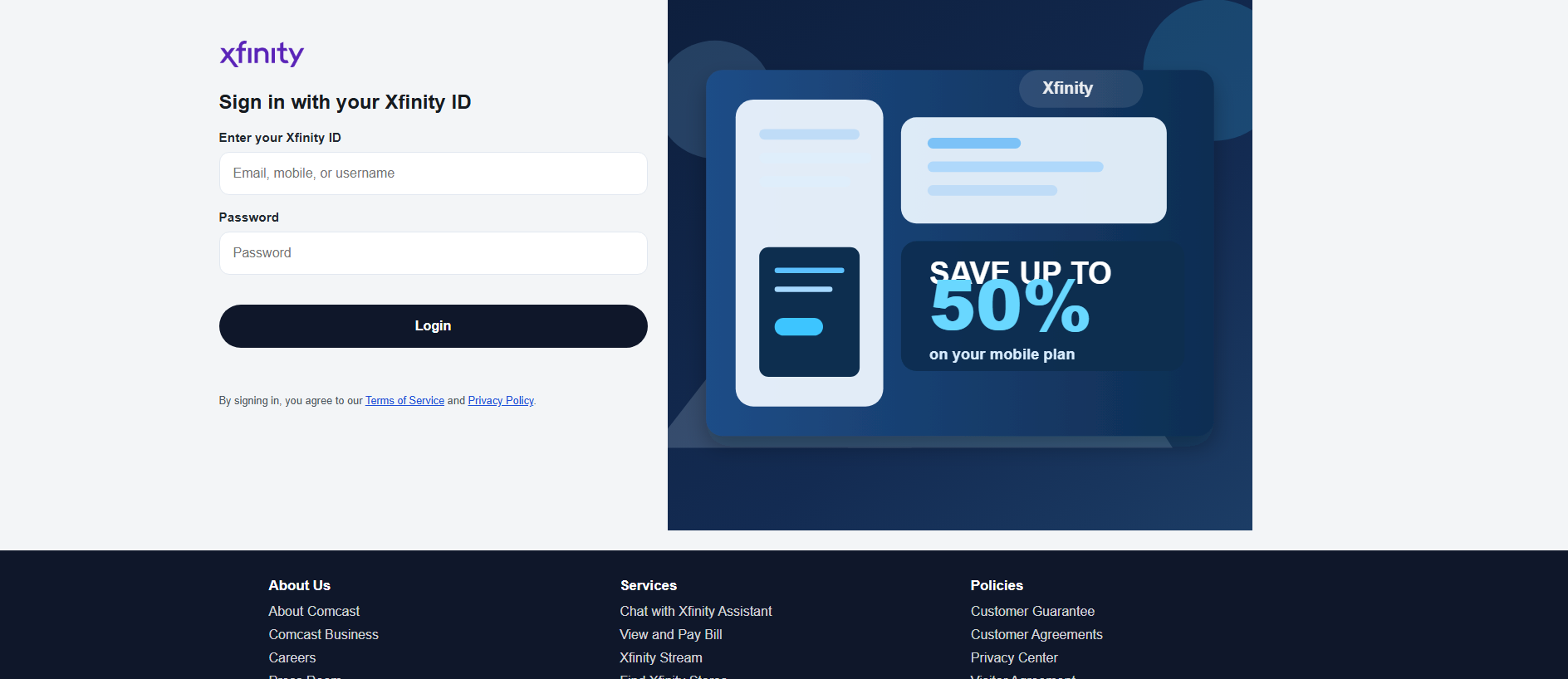
“Sign in | Xfinity”
The sent-report ledger records the first outgoing report at .
The recorded recipient is abuse@colocrossing.com.
The latest stored availability evidence still shows the domain reachable; 13 days has elapsed since the first outgoing report.
ICANN RAA §3.18 describes registrar abuse-contact and handling obligations. This section records outgoing timestamps, listed recipients, case identifiers, and later availability. It does not by itself prove receipt, acknowledgement, investigation, remediation, or contractual non-compliance.
Đã gắn cờ
Social engineering
0
threat pulses mention the domain
Responded · HTTP 200
192.227.154.93
→ connect.xfinity.com
Page script sends visitors to another site
Each check shows its own collection time. Zero detections do not guarantee safety.
Lừa đảo đánh cắp thông tin đăng nhập: xfinity.eventivite.link — Chưa được xác minh. Tóm tắt bằng chứng: VirusTotal 10/92 (Emsisoft, Forcepoint ThreatSeeker…
Phân tích chi tiết của PhishDestroy AI bên dưới được giữ bằng tiếng Anh để bảo toàn hồ sơ pháp chứng gốc.
10 / 92 engine detections
Mở báo cáo2 det.
Mở báo cáoThreat flag recorded
Mở báo cáoĐộc hại
Mở báo cáono community references
Mở báo cáoprovider verdict: clean
Mở báo cáoResults reflect each source’s collection time. Zero detections do not guarantee safety. OTX references are community publications.
PhishDestroy threat report
xfinity.eventivite.link is a credential phishing page built to look like the Xfinity account login, served under the title "Sign in | Xfinity". It targets Xfinity customers who can be persuaded to sign in from a link rather than through Xfinity's own app or site. The parent domain eventivite.link has no connection to Xfinity, and the brand name is placed in front of it only to make the address look legitimate at a glance. PhishDestroy first saw it on 2026-10-07. On 2026-10-19 the site was still responding, but its DNS was inactive for the phishing content.
Victims usually arrive through an email or text claiming a billing problem, a service change or an account alert, with a link to "sign in". The page copies the Xfinity login screen, so anything typed into it goes straight to the operators. A stolen Xfinity login can expose billing and payment details and personal information. It can also open the linked email account, which criminals can use to reset passwords on other services or to send further phishing from a trusted address.
Ten of 92 VirusTotal engines flagged the domain on 2026-10-07, including Google Safe Browsing, Netcraft, Fortinet, Sophos, Forcepoint ThreatSeeker, Emsisoft, G-Data and SOCRadar. Several independent vendors reaching the same conclusion within days of the domain's creation is a strong signal. Google Safe Browsing classes it as social engineering, which triggers warnings in most major browsers. urlscan.io rated the page malicious and detected the Xfinity brand on it, and PhishDestroy lists it on its blocklist.
The domain was registered on 2026-10-05 through Cloudflare, Inc. and was being detected two days later. That short gap is typical of throwaway phishing domains set up for a single campaign. It was hosted in the United States on the ColoCrossing network, part of HostPapa. A free Let's Encrypt certificate gave it a padlock, which shows only that the connection was encrypted, not that the site is genuine.
If you entered your Xfinity username and password here, change that password immediately from Xfinity's official app or by typing the address yourself. Then change it anywhere else you reused it, and turn on two-step verification. Review the account for changed contact details, new authorized users or payment changes, and check any email account tied to it for unfamiliar forwarding rules or sign-ins. Watch your card statements if payment details were shown or entered. Defenders should block the domain and the parent eventivite.link at mail and web gateways, and search logs for users who visited or submitted forms.
 (US)
For the registrable domain eventivite.link behind this subdomain, the registrar above operates under an ICANN accreditation agreement. The links below provide the official fee schedule and current DNS abuse compliance guidance.
RAA §3.18 establishes abuse-contact and handling requirements. This report can document stored outbound notices and later technical observations; it does not by itself establish receipt, investigation, remediation, or contractual non-compliance.
ed.ns.cloudflare.comkallie.ns.cloudflare.comLocation describes the IP network.
730f4abb09d09dfd4a06052e2cf07b67b3923283e73dbd3ae9e4f4cc41d139a7Saved certificate metadata. Certificate dates without a timezone are shown as stored. Transport encryption does not establish that the site is trustworthy.
An estimated time describes an observation window. It does not prove a registrar action or the exact moment a site became unavailable.
Dated changes retained by the monitor and source collectors. Newest observations appear first; source states are not proof of a takedown.
Không rõ→dns_inactive
dns_nxdomain
Không rõ→dns_inactive
dns_nxdomain
Không rõ→dns_inactive
dns_nxdomain
Không rõ→dns_inactive
dns_nxdomain
Không rõ→dns_inactive
dns_nxdomain
Không rõ→dns_inactive
dns_nxdomain
Không rõ→dns_inactive
dns_nxdomain
Không rõ→dns_inactive
dns_nxdomain
Không rõ→dns_inactive
dns_nxdomain
Không rõ→dns_inactive
dns_nxdomain
Không rõ→dns_inactive
dns_nxdomain
No flag recorded→Flag recorded
Có thể truy cập
Threat flag recorded
View source10/92 engine detections
View sourcePD-20261007-5E4ECE
xfinity.eventivite.link
View sourcePage captured
View sourceMỗi làn là một lý do khiến một tên miền được liên kết với máy chủ này. Kích thước nút biểu thị các phát hiện từ VirusTotal, còn các nút có đường gạch ngang đã ngừng hoạt động. Danh sách đầy đủ được trình bày dưới đây.
Có cùng mã băm favicon hoặc cùng tiêu đề trang với máy chủ này.
Reports with the same collector label. A shared label does not establish impersonation or common ownership. View matching reports →
Được đăng ký thông qua cùng một nhà đăng ký tên miền. Một nhà đăng ký tên miền phục vụ hàng triệu khách hàng không có mối liên hệ với nhau, do đó việc này chỉ cho thấy sự trùng hợp về số liệu chứ không chứng minh được mối liên hệ nào.
Compare what a browser and a crawler receive, and check for Keitaro traffic routing.
xfinity.eventivite.link
PD-20261007-5E4ECE Recipient: abuse@colocrossing.com Policy Violations: Illegal Activities: Active phishing operation targeting victims Fraud & Deception: Impersonation of legitimate services Identity Theft: Collection of credentials under false pretenses Applicable Laws (US): 18 U.S.C. § 1343 - Wire Fraud 18 U.S.C. § 1030 - Computer Fraud and Abuse Act (CFAA) 15 U.S.C. § 45 - FTC Act (Deceptive Practices) Federal laws prohibit wire fraud, computer fraud, and deceptive business practices. Action Required: This evidence-backed report demonstrates clear violations requiring suspension per your policies. Continued hosting exposes your organization to regulatory scrutiny and potential legal liability.
Nếu bạn đã nhập thông tin xác thực tài khoản, thông tin cá nhân hoặc thông tin thanh toán hoặc đã tải xuống tệp từ miền này, hãy hành động ngay lập tức. Dưới đây là các nguồn lực giúp bạn báo cáo vụ việc và bảo vệ chính mình.


Chọn quốc gia của bạn để nhận liên hệ tội phạm mạng chính thức hoặc soạn thảo đơn khiếu nại →.
Template-based draft · optional AI wording assistance requires separate consent
Choose the steps that match what you shared. Keep a copy of this report alongside your own records.
Stop using the suspicious site. Open the real service through its official app or an address you already trust.
Keep original emails, receipts, messages and screenshots in a secure place. A factual timeline helps the receiving authority understand what happened. IC3 evidence guidance ↗
xfinity.eventivite.link)Dù bạn chưa nắm rõ tất cả các chi tiết — vẫn nên nộp báo cáo. Ngay cả những thông tin không đầy đủ cũng vẫn có ích cho công tác điều tra.
A report is not a guarantee of recovery or investigation, but prompt, accurate transaction data can help authorities and service providers trace the incident.
Further guidance: NIST · phishing responseFBI IC3 · reports & evidenceFTC · recovery scams
Phân tích mối đe dọa bằng cách sử dụng danh sách chặn được lưu trữ, WHOIS, DNS và bằng chứng quét công khai
Quét ngayHãy gửi các tên miền đáng ngờ đến cơ sở dữ liệu mối đe dọa của chúng tôi — để bảo vệ cộng đồng
Báo cáoCác báo cáo lừa đảo gần đây và những thay đổi về tính khả dụng được quan sát thấy
Theo dõiTheo dõi các mối đe dọa đang diễn ra hoặc phản đối danh sách này nếu bạn cho rằng đây là kết quả báo động sai
This report combines saved page captures, registration and network records, scanner results and PhishDestroy reporting history. Each source keeps its own observation date. Open a source report to inspect the original result.
The AI-assisted analysis was written on . It describes the evidence available at that time; later source checks can change.
A capture documents what was shown. A scanner result records that provider’s assessment at the time of its check. Neither a valid certificate nor a zero-detection result is a guarantee of safety.