VirusTotal
4 / 89 engine detections
Mở báo cáo

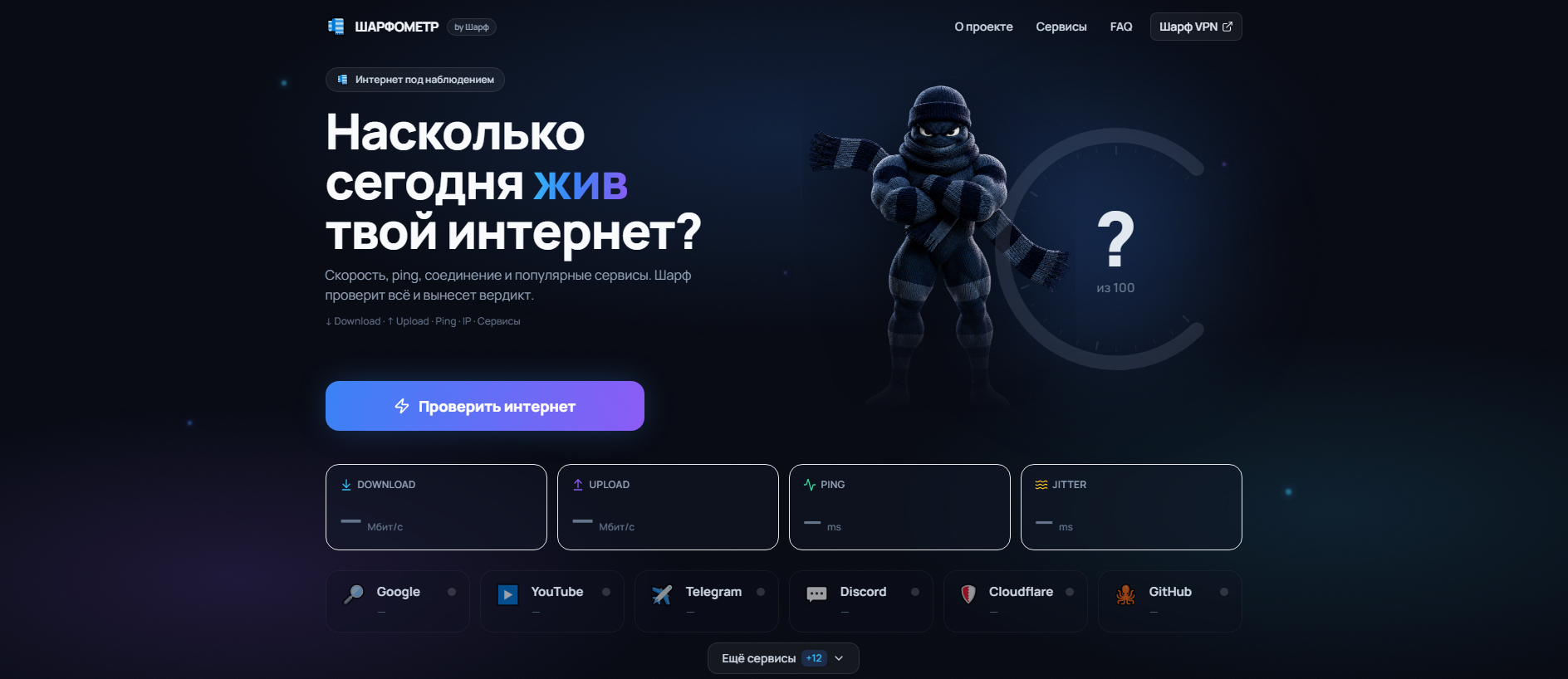
“Шарфометр — проверить скорость и состояние интернета”
Tên miền trong danh sách chặn: sharfometr.com — Nội dung không có sẵn. Tóm tắt bằng chứng: VirusTotal 4/89 (CRDF, Forcepoint ThreatSeeker, Gridinsoft…
Phân tích chi tiết của PhishDestroy AI bên dưới được giữ bằng tiếng Anh để bảo toàn hồ sơ pháp chứng gốc.
4 / 89 engine detections
Mở báo cáo4 community references
Mở báo cáoprovider verdict: clean
Mở báo cáoNo threat flag
Mở báo cáoNo malicious flag
Mở báo cáoResults reflect each source’s collection time. Zero detections do not guarantee safety. OTX references are community publications.
PhishDestroy threat report
sharfometr.com presented itself as "Шарфометр", a Russian-language tool promising to check internet speed and connection health. PhishDestroy classifies it as an impersonation phishing page aimed at Russian-speaking users who expect a quick, harmless utility. We first flagged it on 2026-09-05. The site has been offline since 2026-09-11 and was still dead when last checked on 2026-10-19.
The page title offers an internet speed and status check, while our classification is impersonation phishing. Schemes of this type borrow the look of a familiar, trusted service so visitors lower their guard. The pitch is a free diagnostic, but the visitor is steered into an action the real service would never ask for, such as entering account credentials, handing over payment or personal details, or installing a supposed helper program. Whatever is typed or installed goes to the operators, not to any legitimate provider.
On 2026-09-16, 4 of 89 VirusTotal engines flagged the domain: CRDF, Forcepoint ThreatSeeker, Gridinsoft and SOCRadar. That is a modest count, but it comes from four unrelated vendors, so the verdict is not a single outlier. The domain also appears in 4 AlienVault OTX threat pulses, meaning other researchers tracked it independently. Among the blocklists we track, only PhishDestroy lists it.
The domain was registered on 2026-08-19 through Fewmoretaps OU d/b/a Trustname.com, just 17 days before we detected it. It went dark six days after detection, a short lifespan typical of throwaway phishing domains. Hosting sat on the VDSKA-AS Anton Levin network, registered in Kyrgyzstan, with the server located in Finland. A free Let's Encrypt certificate gave it the padlock icon, which shows only that traffic was encrypted, not that the site was trustworthy.
If you entered a password on this site, change it immediately along with any account that reuses it, and turn on two-factor authentication. If you submitted card or bank details, contact your bank to block the card and dispute unfamiliar charges. If you downloaded or installed anything it offered, remove it and run a full antivirus scan. Defenders should block the domain and its hosting address, and search proxy and DNS logs for visits around 2026-09-05 to 2026-09-11 to find users who may need follow-up.
 (BY)
PhishDestroy Investigation
ares.trustname.comns1.anycastdns.czns2.anycastdns.czzeus.trustname.comLocation describes the IP network.
661c35044ace7fa7f915672acb1dcdfbe44e9041eacef2571c8f34a300334c43Saved certificate metadata. Certificate dates without a timezone are shown as stored. Transport encryption does not establish that the site is trustworthy.
Google PageSpeed Insights — mobile performance audit of sharfometr.com · checked Sep 5, 2026
An estimated time describes an observation window. It does not prove a registrar action or the exact moment a site became unavailable.
Dated changes retained by the monitor and source collectors. Newest observations appear first; source states are not proof of a takedown.
Không có sẵn→Có thể truy cập
Có thể truy cập→Không có sẵn
2→3
Có thể truy cập
No threat flag
View source4/89 engine detections
View source4 community references
View sourcesharfometr.com
View sourcePage captured
View sourceĐược đăng ký thông qua cùng một nhà đăng ký tên miền. Một nhà đăng ký tên miền phục vụ hàng triệu khách hàng không có mối liên hệ với nhau, do đó việc này chỉ cho thấy sự trùng hợp về số liệu chứ không chứng minh được mối liên hệ nào.
Compare what a browser and a crawler receive, and check for Keitaro traffic routing.
sharfometr.com
Listed domains receive at least one abuse report; this entry has no retained notification history.
Nếu bạn đã nhập thông tin xác thực tài khoản, thông tin cá nhân hoặc thông tin thanh toán hoặc đã tải xuống tệp từ miền này, hãy hành động ngay lập tức. Dưới đây là các nguồn lực giúp bạn báo cáo vụ việc và bảo vệ chính mình.


Chọn quốc gia của bạn để nhận liên hệ tội phạm mạng chính thức hoặc soạn thảo đơn khiếu nại →.
Template-based draft · optional AI wording assistance requires separate consent
Choose the steps that match what you shared. Keep a copy of this report alongside your own records.
Stop using the suspicious site. Open the real service through its official app or an address you already trust.
Keep original emails, receipts, messages and screenshots in a secure place. A factual timeline helps the receiving authority understand what happened. IC3 evidence guidance ↗
sharfometr.com)Dù bạn chưa nắm rõ tất cả các chi tiết — vẫn nên nộp báo cáo. Ngay cả những thông tin không đầy đủ cũng vẫn có ích cho công tác điều tra.
A report is not a guarantee of recovery or investigation, but prompt, accurate transaction data can help authorities and service providers trace the incident.
Further guidance: NIST · phishing responseFBI IC3 · reports & evidenceFTC · recovery scams
Phân tích mối đe dọa bằng cách sử dụng danh sách chặn được lưu trữ, WHOIS, DNS và bằng chứng quét công khai
Quét ngayHãy gửi các tên miền đáng ngờ đến cơ sở dữ liệu mối đe dọa của chúng tôi — để bảo vệ cộng đồng
Báo cáoCác báo cáo lừa đảo gần đây và những thay đổi về tính khả dụng được quan sát thấy
Theo dõiTheo dõi các mối đe dọa đang diễn ra hoặc phản đối danh sách này nếu bạn cho rằng đây là kết quả báo động sai
This report combines saved page captures, registration and network records, scanner results and PhishDestroy reporting history. Each source keeps its own observation date. Open a source report to inspect the original result.
The AI-assisted analysis was written on . It describes the evidence available at that time; later source checks can change.
A capture documents what was shown. A scanner result records that provider’s assessment at the time of its check. Neither a valid certificate nor a zero-detection result is a guarantee of safety.