VirusTotal
12 / 91 engine detections
Abrir relatório

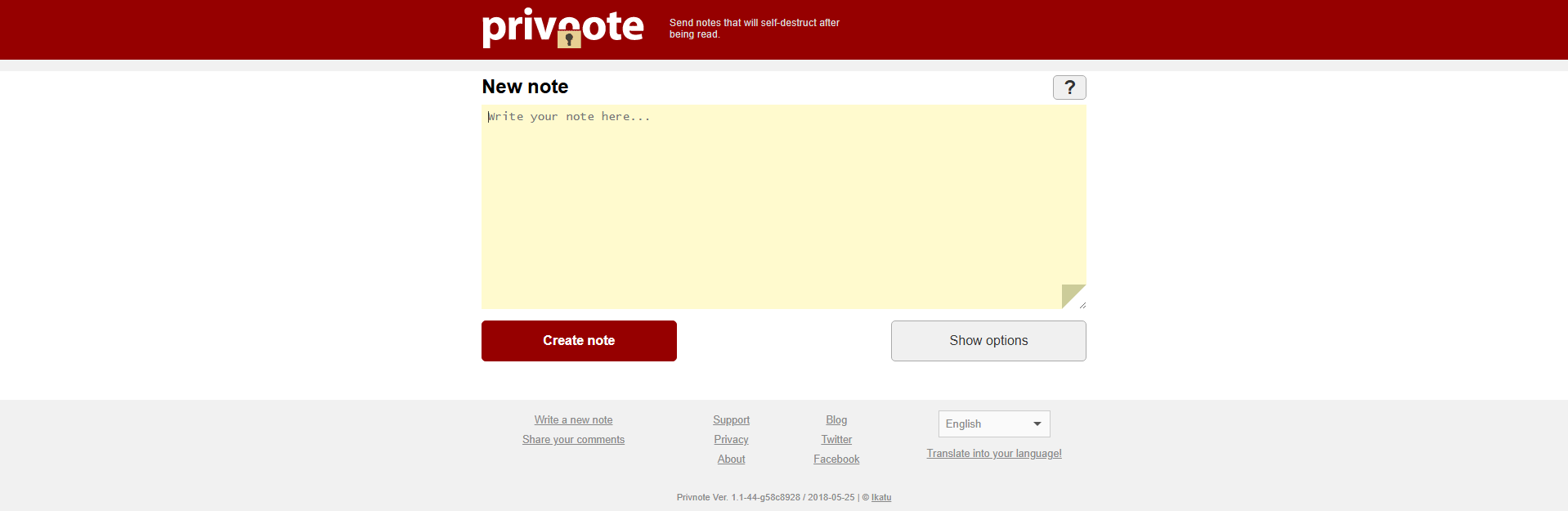
“Privnote - Send notes that will self-destruct after being read”
The sent-report ledger records the first outgoing report at .
The recorded recipient is abuse@spaceship.com.
The latest stored availability evidence still shows the domain reachable; 1 month has elapsed since the first outgoing report.
ICANN RAA §3.18 describes registrar abuse-contact and handling obligations. This section records outgoing timestamps, listed recipients, case identifiers, and later availability. It does not by itself prove receipt, acknowledgement, investigation, remediation, or contractual non-compliance.
Phishing: privnote.best — Último ativo conhecido (HTTP 200). Resumo das evidências: VirusTotal 12/91 (alphaMountain.ai, BitDefender, CRDF, CyRadar, Forcepoint…
A análise detalhada do PhishDestroy AI permanece em inglês para preservar o registro forense original.
12 / 91 engine detections
Abrir relatório1 threat-system alert
Abrir relatório4 community references
Abrir relatórioprovider verdict: clean
Abrir relatórioNo threat flag
Abrir relatórioNo malicious flag
Abrir relatórioResults reflect each source’s collection time. Zero detections do not guarantee safety. OTX references are community publications.
| Detection System | Indicator | Verdict | Alert |
|---|---|---|---|
| DNS4EU | privnote.best |
malicious | Sinkholed |
PhishDestroy threat report
privnote.best is a copycat of Privnote, the service for sending notes that self-destruct after being read. Its page carries the original's title word for word: "Privnote - Send notes that will self-destruct after being read". It targets people who use one-time notes to pass sensitive information, which in crypto circles often means wallet addresses, passwords or recovery details. PhishDestroy first flagged the domain on 2026-09-19, and it was still online serving live content on 2026-10-19.
Fake note services work because users trust the promise of privacy. Anyone who writes a note on a clone hands its contents straight to the operator. In crypto-focused versions of this scheme, the clone can also quietly replace a wallet address inside the note, so the recipient sends payment to the scammer instead of the intended person. Because the note "self-destructs", neither side has a copy to compare against, and the swap often goes unnoticed until the funds are gone.
On 2026-09-29, 12 of 91 VirusTotal engines flagged the domain. They include BitDefender, Fortinet, Forcepoint ThreatSeeker, G-Data, alphaMountain.ai, CRDF, CyRadar and Gridinsoft. Most engines had not caught up by then, but these are independent vendors that reached the same conclusion. The domain also appears on the MetaMask and SEAL blocklists alongside PhishDestroy, which places it squarely in the crypto threat landscape.
The domain was registered through Spaceship, Inc. on 2026-05-20, about four months before PhishDestroy detected it. It resolves to 188.114.97.3, a Cloudflare address that geolocates to Canada, so the server actually hosting the clone is not visible. The site's Let's Encrypt certificate gives it a browser padlock. That padlock only means the connection is encrypted, not that the site is the real Privnote.
If you sent a note through privnote.best, assume its contents were read and possibly altered. Before anyone pays, confirm every wallet address it carried with the recipient over a separate channel. Change any passwords or keys you shared in a note. If a seed phrase or private key passed through the site, move your funds to a new wallet immediately. Security teams should block the domain and search proxy and DNS logs for users who visited it.
Last checked
 (US)
For this gTLD, the registrar above operates under an ICANN accreditation agreement. The links below provide the official fee schedule and current DNS abuse compliance guidance.
RAA §3.18 establishes abuse-contact and handling requirements. This report can document stored outbound notices and later technical observations; it does not by itself establish receipt, investigation, remediation, or contractual non-compliance.
A reputação do Edge-IP não é atribuída a este domínio.
indie.ns.cloudflare.comtosana.ns.cloudflare.comLocation describes the IP network.
86fe62116aed2b6f67b880d1810fd65338844fd6d0a5b48dbb5afb6d562c85daSaved certificate metadata. Certificate dates without a timezone are shown as stored. Transport encryption does not establish that the site is trustworthy.
Google PageSpeed Insights — mobile performance audit of privnote.best · checked Sep 19, 2026
An estimated time describes an observation window. It does not prove a registrar action or the exact moment a site became unavailable.
Compare what a browser and a crawler receive, and check for Keitaro traffic routing.
privnote.best
Dated changes retained by the monitor and source collectors. Newest observations appear first; source states are not proof of a takedown.
Desconhecido→live_content
content_served
Desconhecido→live_content
content_served
Desconhecido→live_content
content_served
Desconhecido→live_content
content_served
Desconhecido→live_content
content_served
Desconhecido→live_content
content_served
Desconhecido→live_content
content_served
Desconhecido→live_content
content_served
Desconhecido→live_content
content_served
Desconhecido→live_content
content_served
Desconhecido→live_content
content_served
Desconhecido→live_content
content_served
Desconhecido→live_content
content_served
Desconhecido→live_content
content_served
Desconhecido→live_content
content_served
Desconhecido→live_content
content_served
Desconhecido→live_content
content_served
Desconhecido→live_content
content_served
Acessível
4 community references
View sourceNo threat flag
View source12/91 engine detections
View sourcePD-20260919-03FBBC
Page captured
View sourceprivnote.best
View sourceCada faixa representa um motivo pelo qual um domínio está vinculado a este host. O tamanho dos nós indica as detecções do VirusTotal, e os nós tracejados já estão offline. As listas completas seguem abaixo.
O mesmo hash do favicon ou o mesmo título da página que este host.
Esses relatórios são resolvidos para o mesmo IP de borda compartilhado. Eles ajudam na descoberta de relatórios, mas não implicam propriedade comum ou um servidor de origem compartilhado.
Registrados pelo mesmo registrador. Um registrador atende a milhões de clientes sem qualquer relação entre si; portanto, isso apenas agrupa os registros, em vez de comprovar uma ligação.
PD-20260919-03FBBC Recipient: abuse@spaceship.com Policy Violations: Illegal Activities: Active phishing operation targeting victims Fraud & Deception: Impersonation of legitimate services Identity Theft: Collection of credentials under false pretenses Applicable Laws (US): 18 U.S.C. § 1343 - Wire Fraud 18 U.S.C. § 1030 - Computer Fraud and Abuse Act (CFAA) 15 U.S.C. § 45 - FTC Act (Deceptive Practices) Federal laws prohibit wire fraud, computer fraud, and deceptive business practices. Action Required: This evidence-backed report demonstrates clear violations requiring suspension per your policies. Continued hosting exposes your organization to regulatory scrutiny and potential legal liability.
Se você inseriu credenciais de conta, informações pessoais ou de pagamento, ou baixou um arquivo deste domínio, tome medidas imediatas. Abaixo estão os recursos para ajudá-lo a relatar o incidente e se proteger.


Selecione seu país para obter contactos oficiais do cibercrime ou crie um rascunho de reclamação →.
Template-based draft · optional AI wording assistance requires separate consent
Choose the steps that match what you shared. Keep a copy of this report alongside your own records.
Stop using the suspicious site. Open the real service through its official app or an address you already trust.
Keep original emails, receipts, messages and screenshots in a secure place. A factual timeline helps the receiving authority understand what happened. IC3 evidence guidance ↗
privnote.best)Mesmo que você não tenha todos os detalhes — registre uma ocorrência mesmo assim. Mesmo informações parciais ainda ajudam nas investigações.
A report is not a guarantee of recovery or investigation, but prompt, accurate transaction data can help authorities and service providers trace the incident.
Further guidance: NIST · phishing responseFBI IC3 · reports & evidenceFTC · recovery scams
Análise de ameaças usando lista de bloqueio armazenada, WHOIS, DNS e evidências de verificação pública
Digitalize agoraEnvie domínios suspeitos para nosso banco de dados de ameaças — proteja a comunidade
DenunciarRelatórios recentes de phishing e alterações de disponibilidade observadas
MonitorarMonitore ameaças em tempo real ou conteste esta listagem caso acredite que se trate de um falso positivo
This report combines saved page captures, registration and network records, scanner results and PhishDestroy reporting history. Each source keeps its own observation date. Open a source report to inspect the original result.
The AI-assisted analysis was written on . It describes the evidence available at that time; later source checks can change.
A capture documents what was shown. A scanner result records that provider’s assessment at the time of its check. Neither a valid certificate nor a zero-detection result is a guarantee of safety.