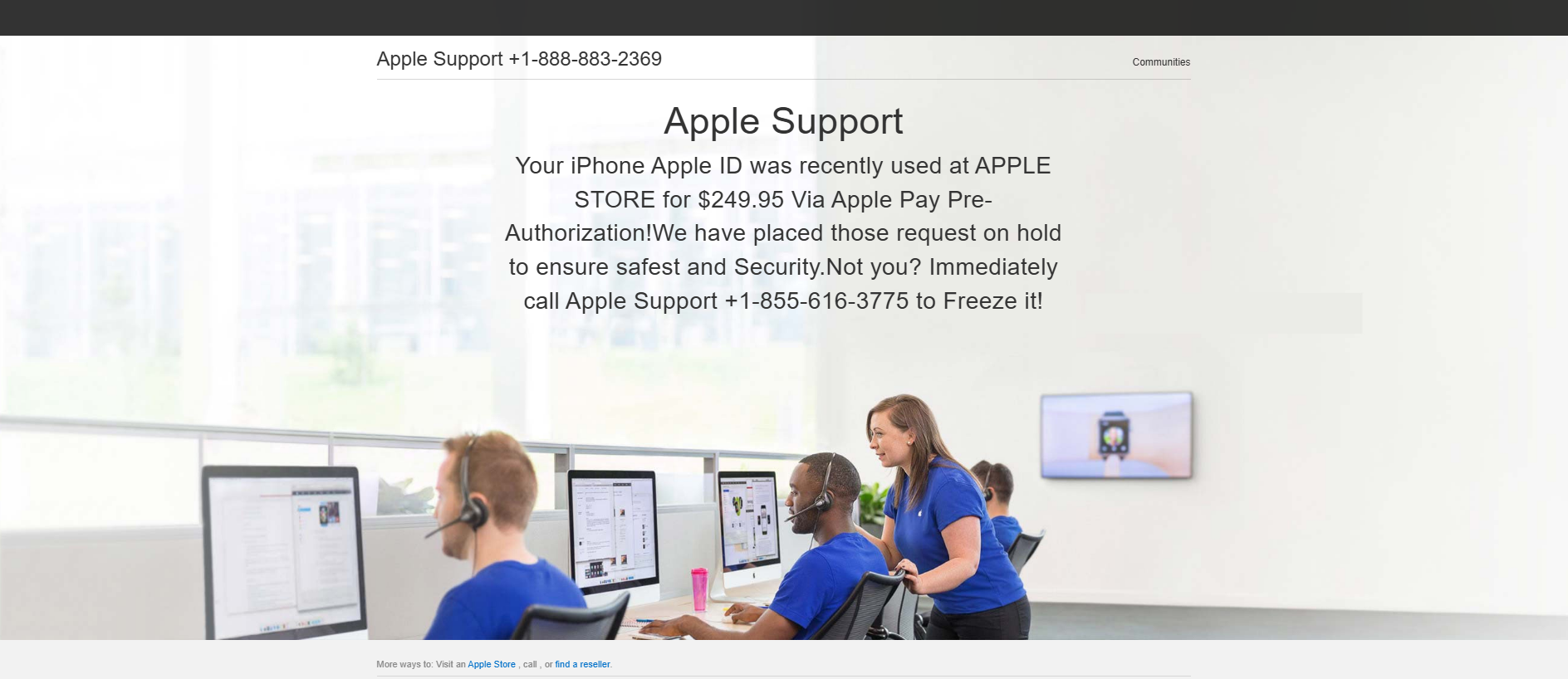
元のフォレンジック記録を保持するため、下の PhishDestroy AI 詳細分析は英語のままです。
Overview
This was an impersonation phishing page dressed up as Apple's own support channel under the title "Contact - Official Apple". It targeted Apple customers looking for help with their account or devices. It ran on a free AWS Amplify app subdomain rather than anything Apple controls. PhishDestroy first flagged it on 2026-09-07, and it has been offline since 2026-09-11. When last checked on 2026-10-19, its DNS was inactive.
詐欺の手口
Fake "contact Apple" pages catch people who are already worried, for example about a locked Apple ID, a suspicious charge or a lost device. The page borrows Apple's branding and the word "Official" to look legitimate. It then asks visitors to sign in with their Apple ID, submit personal and payment details, or call a support number run by the scammers. Victims can lose control of their Apple ID, along with the iCloud data, purchases and device-tracking features tied to it. Some also hand over card details or are talked into paying for bogus "support".
証拠
Eleven of 89 VirusTotal engines flagged the address as of 2026-09-08. Those engines include BitDefender, ESET, Fortinet, G-Data, Google Safe Browsing, Gridinsoft, Kaspersky and LevelBlue. Google Safe Browsing classifies it as SOCIAL_ENGINEERING, so Chrome, Firefox and Safari users would have seen a deceptive-site warning. That is solid backing for a short-lived page, and PhishDestroy lists it on our blocklist.
インフラ
The 2018-04-17 registration date belongs to Amazon's shared amplifyapp.com domain, not to the operator. The scammer simply deployed an app onto Amazon's hosting platform. The site was served from Amazon.com, Inc. infrastructure in the US, with a certificate issued by Amazon. That certificate comes automatically with any Amplify app, so the padlock says nothing about who runs the page. From first sighting to going dark took four days, which is typical of throwaway pages built on free hosting.
What to do
If you entered your Apple ID here, change your password right away from Apple's own settings or website. Then review your trusted devices and phone numbers, and confirm two-factor authentication is still under your control. If you gave card details, contact your bank to block the card and dispute any charges you did not make. If you called a number from the page, do not grant remote access and do not pay anything. Defenders should block the full subdomain and report any new Amplify-hosted Apple lookalikes to AWS abuse and to Apple.
main.d1xdn5bib8f7no.amplifyapp.com — Apple Impersonation
AIによる説明
main.d1xdn5bib8f7no.amplifyapp.com is an Apple impersonation phishing page posing as an official Apple contact page to steal Apple ID users' details.
AIによる要約
Overview This was an impersonation phishing page dressed up as Apple's own support channel under the title "Contact - Official Apple". It targeted Apple customers looking for help with their account or devices. It ran on a free AWS Amplify app subdomain rather than anything Apple controls. PhishDestroy first flagged it on 2026-09-07, and it has been offline since 2026-09-11. When last checked on 2026-10-19, its DNS was inactive. How the scam works Fake "contact Apple" pages catch people who are already worried, for example about a locked Apple ID, a suspicious charge or a lost device. The page borrows Apple's branding and the word "Official" to look legitimate. It then asks visitors to sign in with their Apple ID, submit personal and payment details, or call a support number run by the scammers. Victims can lose control of their Apple ID, along with the iCloud data, purchases and device-tracking features tied to it. Some also hand over card details or are talked into paying for bogus "support". Evidence Eleven of 89 VirusTotal engines flagged the address as of 2026-09-08. Those engines include BitDefender, ESET, Fortinet, G-Data, Google Safe Browsing, Gridinsoft, Kaspersky and LevelBlue. Google Safe Browsing classifies it as SOCIAL_ENGINEERING, so Chrome, Firefox and Safari users would have seen a deceptive-site warning. That is solid backing for a short-lived page, and PhishDestroy lists it on our blocklist. Infrastructure The 2018-04-17 registration date belongs to Amazon's shared amplifyapp.com domain, not to the operator. The scammer simply deployed an app onto Amazon's hosting platform. The site was served from Amazon.com, Inc. infrastructure in the US, with a certificate issued by Amazon. That certificate comes automatically with any Amplify app, so the padlock says nothing about who runs the page. From first sighting to going dark took four days, which is typical of throwaway pages built on free hosting. What to do If you entered your Apple ID here, change your password right away from Apple's own settings or website. Then review your trusted devices and phone numbers, and confirm two-factor authentication is still under your control. If you gave card details, contact your bank to block the card and dispute any charges you did not make. If you called a number from the page, do not grant remote access and do not pay anything. Defenders should block the full subdomain and report any new Amplify-hosted Apple lookalikes to AWS abuse and to Apple. Useful links urlscan.io scan and screenshot: https://urlscan.io/result/01a07bd0-2a30-7549-b594-c00b69f655c0/ VirusTotal report: https://www.virustotal.com/gui/domain/main.d1xdn5bib8f7no.amplifyapp.com Google Safe Browsing status: https://transparencyreport.google.com/safe-browsing/search?url=main.d1xdn5bib8f7no.amplifyapp.com Report phishing to Google: https://safebrowsing.google.com/safebrowsing/report_phish/ Site owner? Request a review: https://phishdestroy.io/appeals/
主要評価項目DNS 非アクティブreason: DNS NXDOMAIN80% confidence
出典source: Dns Cache
エビデンスレイヤーAvailability: DNS inactiveContent: UnreachableDNS: NXDOMAIN
RDAP登録
観測されたタイムラインlast reachable: 2026-09-07 12:21 UTCcurrent episode first observed: 2026-09-30 16:14 UTCobserved RIP window: 2026-09-07 12:21 UTC → 2026-09-30 16:14 UTC · 555.89hmidpoint estimate ≈ 2026-09-19 02:18 UTC · precision low · basis bounded
Availability, content, DNS and registration are independent evidence layers. NXDOMAIN, an unreachable origin or missing content alone does not prove registrar action. A registrar or provider is credited only when a direct technical marker identifies that actor. Report causality is shown separately.

 13.33.187.89


 Microsoft
 Cloudflare
 Yandex
 ESET
 ビットディフェンダー
 Norton
 Symantec
 Avira
 Avast / AVG
 カスペルスキー
 Dr.Web
 ネットクラフト
 PhishTank
 APWG eCX
 PhishStats
 Phish.Report
 Spamhaus
 PolySwarm
 CheckPhish
 Quttera
 URLquery
 Criminal IP
 CRDF
 MyWOT