VirusTotal
16 / 89 engine detections
Open report

“Secure Wallet Management”
The sent-report ledger records the first outgoing report at .
The recorded recipient is abuse@name.com.
The latest stored availability evidence still shows the domain reachable; 6 months has elapsed since the first outgoing report.
ICANN RAA §3.18 describes registrar abuse-contact and handling obligations. This section records outgoing timestamps, listed recipients, case identifiers, and later availability. It does not by itself prove receipt, acknowledgement, investigation, remediation, or contractual non-compliance.
16 / 89 engine detections
Open report2 threat-system alerts
Open report1/12
DBL_PHISH
Malicious
Open reportchecked — no match recorded
24 community references
Open reportprovider verdict: clean
Open reportNo threat flag
Open reportResults reflect each source’s collection time. Zero detections do not guarantee safety. OTX references are community publications.
PhishDestroy threat report
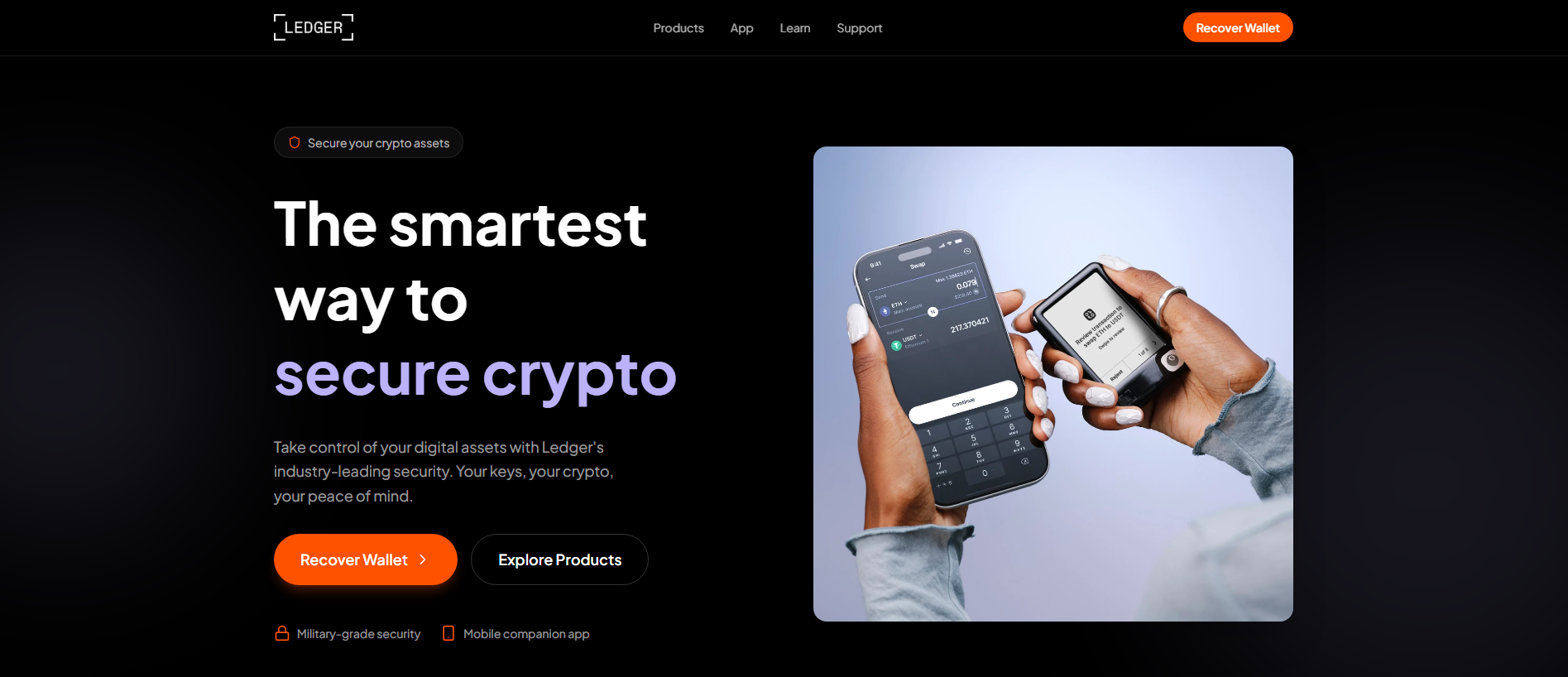
ledger-recovery.support presents a significant brand impersonation threat targeting users of the Ledger cryptocurrency platform. This domain attempts to deceive victims by masquerading as an official Ledger recovery support site, potentially harvesting sensitive credentials or initiating fraudulent transactions. Such impersonation exploits users' trust in the Ledger brand to facilitate financial theft or identity compromise.
According to current threat intelligence, ledger-recovery.support has been flagged by 18 out of 95 security vendors on VirusTotal, indicating substantial consensus on its malicious nature. The domain was registered recently on January 08, 2026, through the registrar Name.com, Inc., suggesting it is a newly created threat actor. Its SSL certificate is issued by Let's Encrypt, which may lend superficial legitimacy to unsuspecting users. The domain resolves to IP address 34.111.179.208, and it remains active and operational, maintaining an elevated risk level within brand impersonation categories.
Users who have encountered or interacted with ledger-recovery.support should immediately cease engagement and refrain from submitting any personal or financial data. It is advisable to run comprehensive malware and credential scan tools on affected devices, update passwords associated with Ledger accounts, and remain vigilant for further fraudulent communications. Organizations are urged to block this domain at network perimeters and educate users about this specific threat to prevent potential losses.
For this gTLD, the registrar above operates under an ICANN accreditation agreement. The links below provide the official fee schedule and current DNS abuse compliance guidance.
RAA §3.18 establishes abuse-contact and handling requirements. This report can document stored outbound notices and later technical observations; it does not by itself establish receipt, investigation, remediation, or contractual non-compliance.
ns1cny.name.comLocation describes the IP network.
3ce86364b5dfc7157dd6b14ee6d05ea7280793de966138a5c397de1b33b7b88dSaved certificate metadata. Certificate dates without a timezone are shown as stored. Transport encryption does not establish that the site is trustworthy.
Google PageSpeed Insights — mobile performance audit of ledger-recovery.support · checked Mar 28, 2026
An estimated time describes an observation window. It does not prove a registrar action or the exact moment a site became unavailable.
Compare what a browser and a crawler receive, and check for Keitaro traffic routing.
redirect: raw=redirect_301; http=301; via=http_proxy; location=https://ledger-recovery.support:443/
ledger-recovery.support
Dated changes retained by the monitor and source collectors. Newest observations appear first; source states are not proof of a takedown.
Unknown→redirected
http_redirect
Unknown→redirected
http_redirect
Unknown→redirected
http_redirect
Unknown→redirected
http_redirect
Unknown→redirected
http_redirect
Unknown→redirected
http_redirect
Unknown→redirected
http_redirect
Unknown→redirected
http_redirect
Unknown→redirected
http_redirect
Unknown→redirected
http_redirect
Unknown→redirected
http_redirect
Unknown→redirected
http_redirect
Unknown→redirected
http_redirect
Unknown→redirected
http_redirect
Unknown→redirected
http_redirect
Unknown→redirected
http_redirect
Unknown→redirected
http_redirect
No threat flag
View source24 community references
View source16/89 engine detections
View sourcePD-20260328-99EEEF
ledger-recovery.support
View source151 stored lookalike domains
Showing 100 of 151
Each lane is one reason a domain is linked to this host. Node size marks VirusTotal detections and dashed nodes are already offline. The full lists follow below.
Same favicon hash or the same page title as this host.
Multiple reports share this IP.
Reports with the same collector label. A shared label does not establish impersonation or common ownership. View matching reports →
Registered through the same registrar. A registrar serves millions of unrelated customers, so this groups reports rather than proving a link.
Reported by 1 community member, first seen Mar 27, 2026
PD-20260328-99EEEF Recipient: abuse@name.com If credentials, payment data, or files were exposed, report the incident immediately. Change affected passwords, revoke active sessions, and scan the device.


Select your country to get official cybercrime contacts, or create a complaint draft →.
Template-based draft · optional AI wording assistance requires separate consent
Choose the steps that match what you shared. Keep a copy of this report alongside your own records.
Stop using the suspicious site. Open the real service through its official app or an address you already trust.
Keep original emails, receipts, messages and screenshots in a secure place. A factual timeline helps the receiving authority understand what happened. IC3 evidence guidance ↗
ledger-recovery.support)Even if you don't have all details — file a report anyway. Partial information still helps investigations.
A report is not a guarantee of recovery or investigation, but prompt, accurate transaction data can help authorities and service providers trace the incident.
Further guidance: NIST · phishing responseFBI IC3 · reports & evidenceFTC · recovery scams
Threat analysis using stored blocklist, WHOIS, DNS, and public scan evidence
Scan NowSubmit suspicious domains to our threat database — protect the community
ReportRecent phishing reports and observed availability changes
MonitorMonitor live threats or contest this listing if you believe it's a false positive
This report combines saved page captures, registration and network records, scanner results and PhishDestroy reporting history. Each source keeps its own observation date. Open a source report to inspect the original result.
The AI-assisted analysis was written on . It describes the evidence available at that time; later source checks can change.
A capture documents what was shown. A scanner result records that provider’s assessment at the time of its check. Neither a valid certificate nor a zero-detection result is a guarantee of safety.