VirusTotal
3 / 89
Report


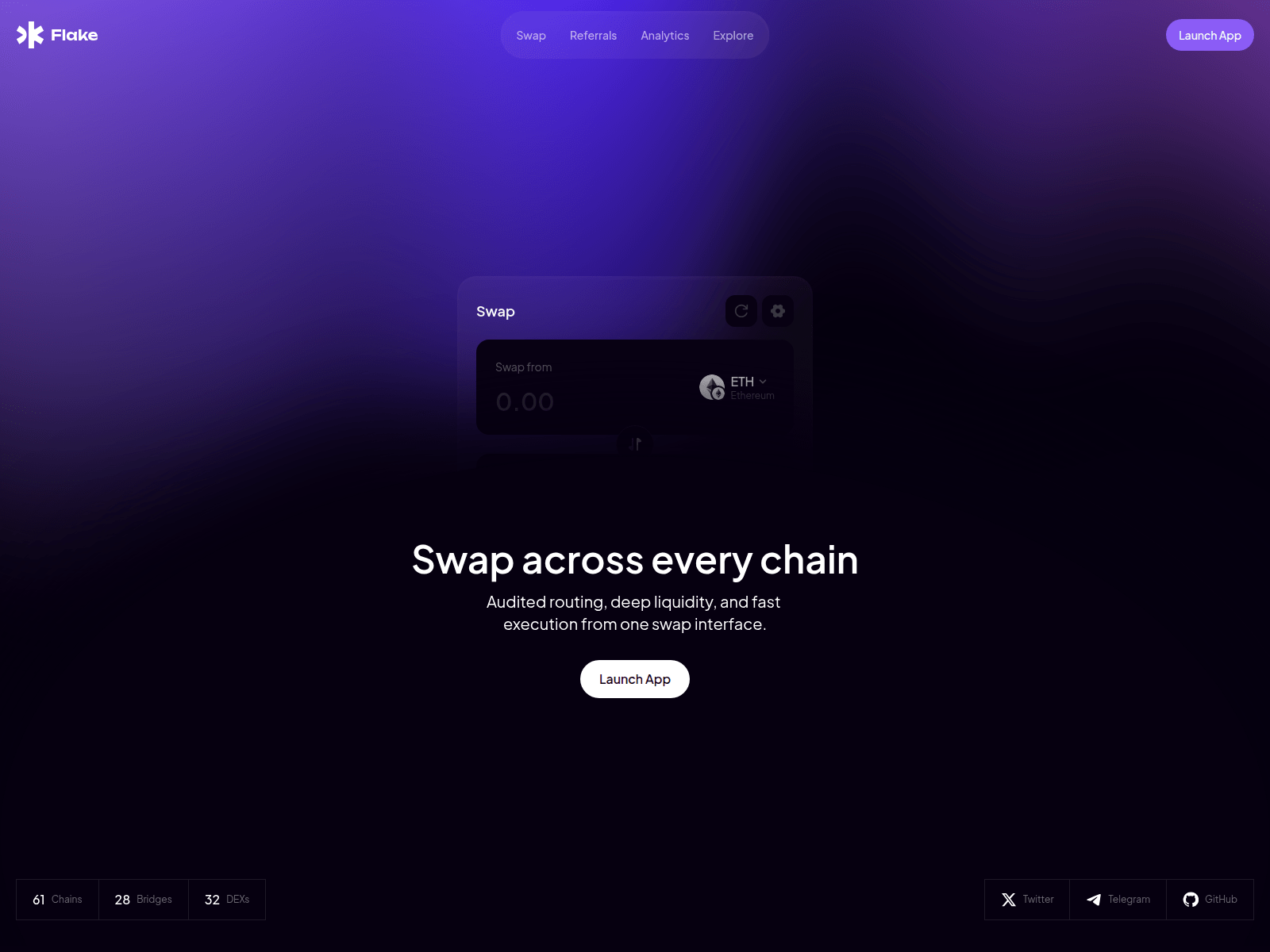
“Flake Protocol | Fast Cross-Chain Swap”
The sent-report ledger records the first outgoing report at .
The recorded recipient is abuse@nicenic.net.
The latest stored availability evidence still shows the domain reachable; 6 months has elapsed since the first outgoing report.
ICANN RAA §3.18 describes registrar abuse-contact and handling obligations. This section records outgoing timestamps, listed recipients, case identifiers, and later availability. It does not by itself prove receipt, acknowledgement, investigation, remediation, or contractual non-compliance.

3 / 89
DBL_PHISH
checked — no detections recorded
Reportchecked — no match recorded
22 community references
Reportstored report
 Report
 Analysis completed
Report12 checked — no blocks
Report stored; verdict not recorded
ReportChecked; no threat flag recorded
ReportThis domain, flake.exchange, poses a direct financial threat as a crypto drainer designed to impersonate legitimate cross-chain swap protocols. Analysis indicates the site mimics the branding and functionality of decentralized exchange interfaces, specifically targeting users of blockchain bridges and multi-chain wallets. The threat operates by tricking victims into connecting their cryptocurrency wallets to malicious smart contracts, which then execute unauthorized transactions to drain funds without user consent. The page title, 'Flake Protocol | Fast Cross-Chain Swap,' reinforces the deception by presenting a false veneer of legitimacy associated with high-speed asset transfers across blockchain networks. Infrastructure analysis reveals several critical indicators supporting the malicious classification. The domain was registered on April 06, 2026, through NICENIC INTERNATIONAL GROUP CO., LIMITED, a registrar frequently associated with high-risk domains. Despite a clean detection profile on VirusTotal with 0 out of 95 engines flagging the domain, it appears on three independent security blocklists and is actively blocked by wallet protection tools. The site resolved to IP address 188.114.96.3 and used an SSL certificate issued by Google Trust Services, which, while providing transport layer encryption, does not validate the legitimacy of the underlying service. The domain has since been taken offline, though historical DNS records and cached content confirm its prior operational status. Users who visited flake.exchange or interacted with its interface should take immediate remediation steps to mitigate potential financial loss. Disconnect any wallets previously linked to the site using authorized revocation tools provided by wallet software. Review all recent transaction histories for unauthorized transfers, particularly those involving cross-chain or token swap operations. Rotate any credentials or private keys associated with compromised wallets, as attackers may retain access even after the domain is offline. Monitor connected accounts for anomalous activity and report the incident to relevant blockchain security platforms to contribute to threat intelligence sharing. Given the domain’s use of legitimate-looking infrastructure and clean initial scans, users are advised to verify all future interactions with cross-chain services through official documentation and community-verified channels.
Full extracted values, their blockchain and collection source. An address found in page content does not establish who controls it.
0xA0b86991c6218b36c1d19D4a2e9Eb0cE3606eB48Format validated · Domain analysishttps://t.me/FlakeProtocolStored page referenceIoC extraction recorded 2026-08-01 04:17:57 UTC
Stored crawler-versus-browser observations for this host, plus a live fingerprint check for Keitaro-style traffic distribution systems.
cloudflareScanner note: redirect: raw=redirect_301; http=301; via=http_proxy; location=https://flake.exchange/; server=cloudflare
 (RU)
PhishDestroy Investigation
(RU)
PhishDestroy Investigation
For this gTLD, the registrar above operates under an ICANN accreditation agreement. The links below provide the official fee schedule and current DNS abuse compliance guidance.
RAA §3.18 establishes abuse-contact and handling requirements. This report can document stored outbound notices and later technical observations; it does not by itself establish receipt, investigation, remediation, or contractual non-compliance.
Edge-IP reputation is not attributed to this domain.
maleah.ns.cloudflare.comLocation describes the IP network.
1be1255bc268278e460534279ca8d4ff1c8a2e397252b1df2eabb87a27560b3fSaved certificate metadata. Certificate dates without a timezone are shown as stored. Transport encryption does not establish that the site is trustworthy.
Google PageSpeed Insights — mobile performance audit of flake.exchange · checked Jun 26, 2026
14 recorded events. These records describe collected evidence, outgoing notifications and publication; they do not confirm a complete investigation or a takedown.
We scan suspicious URLs, inspect public results and send evidence through the appropriate abuse-reporting channels. The dated events above show what is recorded for this domain. The directory below explains the wider workflow.
Capture the rendered page, requests and visible infrastructure.
Compare the available engine results and retain the analysis timestamp.
Check whether Google currently lists the URL as unsafe.
Inspect a public scan and its recorded network and classification data.
Look for indicator references and related community intelligence.
Compare archived captures and preserve historical context.
Look for matching indicators and associated threat records.
Inspect certificate records and related hostnames.
Compare security resolver responses and record observed blocking.
Inspect the public DNS, TLS, HTTP and technology surface.
Security services used for scanning, reputation checks and reporting are listed below. A service being listed is not evidence that it received, accepted or acted on this particular domain. Recorded submissions appear in the notification history above.
Reported by 1 community member, first seen Apr 6, 2026
PD-20260406-CE1AFE Recipient: abuse@nicenic.net Registrar: NICENIC International Group Co., Limited (Hong Kong (China)) Policy Violations: “Services may be used only for lawful purposes… fraud, abuse and illegal activity prohibited. Violations may result in immediate suspension.” + dedicated abuse handling and takedown Applicable Laws: Crimes Ordinance Cap.200 (Fraud), Theft Ordinance Cap.210 §16A (fraud by deception), Personal Data (Privacy) Ordinance Cap.486
If credentials, payment data, or files were exposed, report the incident immediately. Change affected passwords, revoke active sessions, and scan the device.


Select your country to get official cybercrime contacts, or create a complaint draft →.
Template-based draft · optional AI wording assistance requires separate consent
Each lane is one reason a domain is linked to this host. Node size marks VirusTotal detections and dashed nodes are already offline. The full lists follow below.
Same favicon hash or the same page title as this host.
Shared edge IP; unrelated tenants may be present.
These domains also target Across users. View all Across threats →
Registered through the same registrar. A registrar serves millions of unrelated customers, so this groups reports rather than proving a link.
Recently added threat reports.
Threat analysis using stored blocklist, WHOIS, DNS, and public scan evidence
Scan NowSubmit suspicious domains to our threat database — protect the community
ReportRecent phishing reports and observed availability changes
MonitorMonitor live threats or contest this listing if you believe it's a false positive