fincryp.live
  gracedigitalplatform.com
  wtnforum.net
  onion.live
  darkdotweb.com
  pulsenotch.com
FBI IC3
Melden Sie internetbasierte Kriminalität in den Vereinigten Staaten
Federal tips line1-800-CALL-FBI

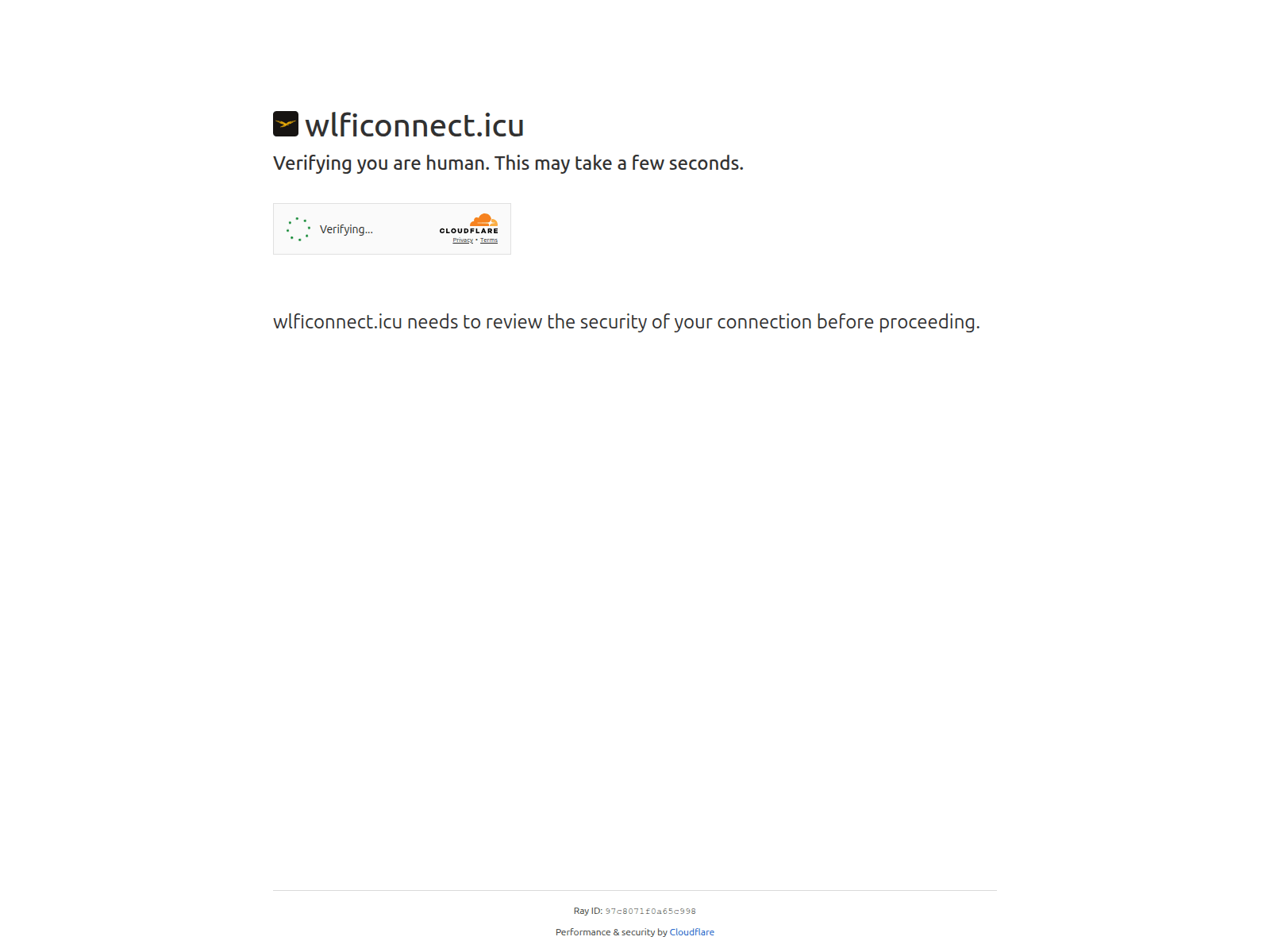
The domain wlficonnect.icu has been identified as a credential theft operation designed to harvest user login credentials through deceptive login portals. Currently, the domain is offline, though prior activity suggests it was actively targeting users through fraudulent authentication interfaces. Analysis indicates this infrastructure was likely used to capture sensitive account details, including usernames, passwords, and potentially multi-factor authentication codes. Infrastructure analysis reveals the domain was registered through NameSilo, LLC on September 01, 2025, and resolved to the IP address 104.21.73.221. Security vendors have flagged this domain, with 4 of 95 VirusTotal engines detecting malicious activity. The domain appears on at least one security blocklist, and its Gridinsoft trust score is 0 out of 100, indicating a complete lack of legitimacy. The page title, 'Just a moment...,' is consistent with intermediate loading pages used in phishing campaigns to mask the final malicious payload or redirect. At present, wlficonnect.icu is offline, reducing immediate risk to users. However, the domain's infrastructure remains a potential threat if reactivated. Organizations and individuals are advised to block the domain and its associated IP address at the network level. Users who may have interacted with this domain should immediately reset credentials for any accounts accessed during the suspected exposure period. Monitoring for unusual login attempts or unauthorized access is strongly recommended. Security teams should treat this domain as high-risk and include it in threat intelligence feeds for ongoing detection and prevention.

10 überwachte externe Feeds · gespeicherter Stand 11.08.2026
Cloudflare-Radar-Scan gespeichert · Scan öffnen
5 → 4
 (US)
PhishDestroy Investigation
San Francisco, US
(US)
PhishDestroy Investigation
San Francisco, USThe linked repository preserves daily zone observations across seven ShortDot-operated TLDs, including registration volume and abuse-related indicators. This registry context is supporting background and is not an independent detection for the domain in this report.
For this gTLD, the registrar above operates under an ICANN accreditation agreement. The links below provide the official fee schedule and current DNS abuse compliance guidance.
RAA §3.18 establishes abuse-contact and handling requirements. This report can document stored outbound notices and later technical observations; it does not by itself establish receipt, investigation, remediation, or contractual non-compliance.
Diese Berichte werden auf dieselbe gemeinsame Edge-IP aufgelöst. Sie helfen bei der Berichtserkennung, bedeuten jedoch keinen gemeinsamen Besitz oder einen gemeinsamen Ursprungsserver.
Kürzlich hinzugefügte Berichte aus der PhishDestroy-Datenbank. Diese Discovery-Links implizieren keine gemeinsame Nutzung der Infrastruktur oder des Eigentums.
Wenn Sie Kontoanmeldeinformationen, persönliche oder Zahlungsinformationen eingegeben oder eine Datei von dieser Domain heruntergeladen haben, ergreifen Sie sofort Maßnahmen. Nachfolgend finden Sie Ressourcen, die Ihnen helfen, den Vorfall zu melden und sich zu schützen.


Wählen Sie Ihr Land aus, um Offizielle Kontakte im Bereich Cyberkriminalität oder einen Beschwerdeentwurf erstellen → zu erhalten.
Bedrohungsanalyse anhand gespeicherter Blocklisten, WHOIS, DNS und öffentlicher Scan-Beweise
Jetzt scannenMelden Sie verdächtige Domains an unsere Bedrohungsdatenbank – schützen Sie die Community
MeldenAktuelle Phishing-Meldungen und beobachtete Verfügbarkeitsänderungen
ÜberwachenBeobachten Sie aktuelle Bedrohungen oder legen Sie Widerspruch gegen diesen Eintrag ein, wenn Sie der Meinung sind, dass es sich um einen Fehlalarm handelt