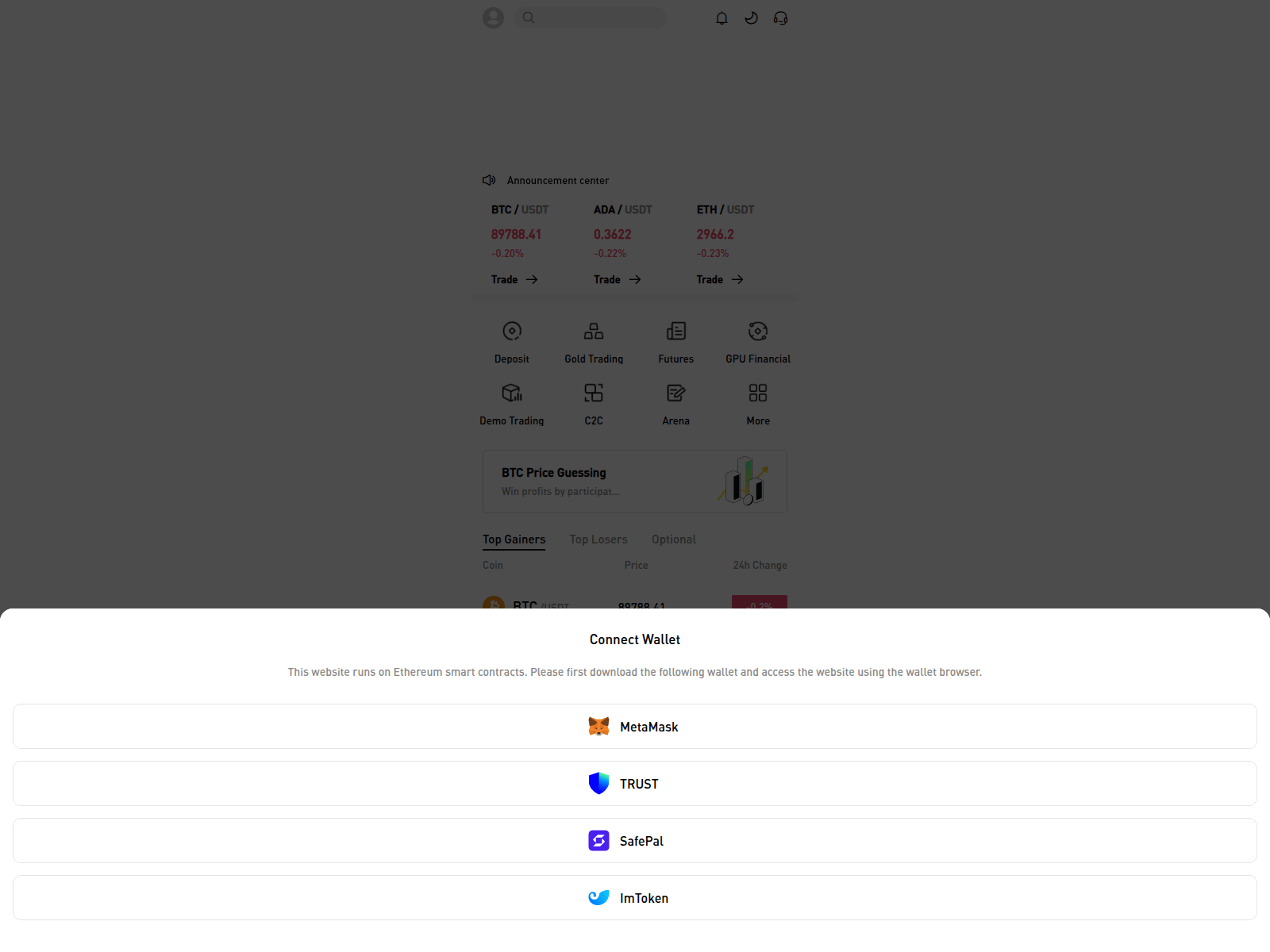
rainbet-aust.com
  mell666.com
FBI IC3
Melden Sie internetbasierte Kriminalität in den Vereinigten Staaten
Federal tips line1-800-CALL-FBI

“undefined”
Gespeicherte Beobachtung
Analysis of the domain m.web3-chain.trade shows a high‑risk investment phishing operation that remains active as of the report date, July 24, 2026. The domain was registered on February 21, 2026 through NameSilo, LLC and resolves to the Cloudflare IP address 104.21.59.68, which belongs to AS13335 Cloudflare, Inc. in the United States. DNS resolution uses Cloudflare nameservers (bayan.ns.cloudflare.com and dell.ns.cloudflare.com), and the site serves content over HTTPS with a certificate issued by Google Trust Services under the WE1 root, indicating a valid TLS chain but not mitigating malicious intent. Technical fingerprints reveal the front‑end stack employs Vue.js and leverages HTTP/3 via Cloudflare’s edge network, returning an HTTP 200 status for the root page.
The page title is currently undefined, meaning the visible title has not been captured for analysis. The domain appears on three independent security blocklists and is explicitly blocked by PhishDestroy, MetaMask, and SEAL, reinforcing its classification as a phishing vector. VirusTotal scans show three of ninety‑three security vendors flag the domain, providing additional vendor‑level corroboration. An independent Gridinsoft trust score rates the domain at 0 out of 100, indicating a lack of trust.
The known scam type is an investment scam, suggesting that victims may be lured into fraudulent financial schemes, potentially targeting cryptocurrency or token investors. While the exact content and lure mechanisms remain unconfirmed due to the missing page title, the convergence of blocklist listings, vendor detections, low trust scoring, and the investment‑scam label provides sufficient confidence for defensive action. Organizations should add the domain and its associated IP to firewall and proxy blocklists, monitor DNS queries for the listed nameservers, and flag any outbound connections to the IP as suspicious.

10 überwachte externe Feeds · gespeicherter Stand 12.08.2026
 (US)
PhishDestroy Investigation
San Francisco, US
(US)
PhishDestroy Investigation
San Francisco, USFor the registrable domain web3-chain.trade behind this subdomain, the registrar above operates under an ICANN accreditation agreement. The links below provide the official fee schedule and current DNS abuse compliance guidance.
RAA §3.18 establishes abuse-contact and handling requirements. This report can document stored outbound notices and later technical observations; it does not by itself establish receipt, investigation, remediation, or contractual non-compliance.
Google PageSpeed Insights — mobile performance audit of m.web3-chain.trade · checked Mar 2, 2026
Kürzlich hinzugefügte Berichte aus der PhishDestroy-Datenbank. Diese Discovery-Links implizieren keine gemeinsame Nutzung der Infrastruktur oder des Eigentums.
Wenn Sie Kontoanmeldeinformationen, persönliche oder Zahlungsinformationen eingegeben oder eine Datei von dieser Domain heruntergeladen haben, ergreifen Sie sofort Maßnahmen. Nachfolgend finden Sie Ressourcen, die Ihnen helfen, den Vorfall zu melden und sich zu schützen.

Wählen Sie Ihr Land aus, um Offizielle Kontakte im Bereich Cyberkriminalität oder einen Beschwerdeentwurf erstellen → zu erhalten.
Bedrohungsanalyse anhand gespeicherter Blocklisten, WHOIS, DNS und öffentlicher Scan-Beweise
Jetzt scannenMelden Sie verdächtige Domains an unsere Bedrohungsdatenbank – schützen Sie die Community
MeldenAktuelle Phishing-Meldungen und beobachtete Verfügbarkeitsänderungen
ÜberwachenBeobachten Sie aktuelle Bedrohungen oder legen Sie Widerspruch gegen diesen Eintrag ein, wenn Sie der Meinung sind, dass es sich um einen Fehlalarm handelt