diamondprimecap.com
  netfinondo.com
  bixerytrades.com
  networkcapial.ltd
  www.bk.unioncelebconnectbroker.info
  polymedal.com
域安全和威胁情报

lievec[.]com
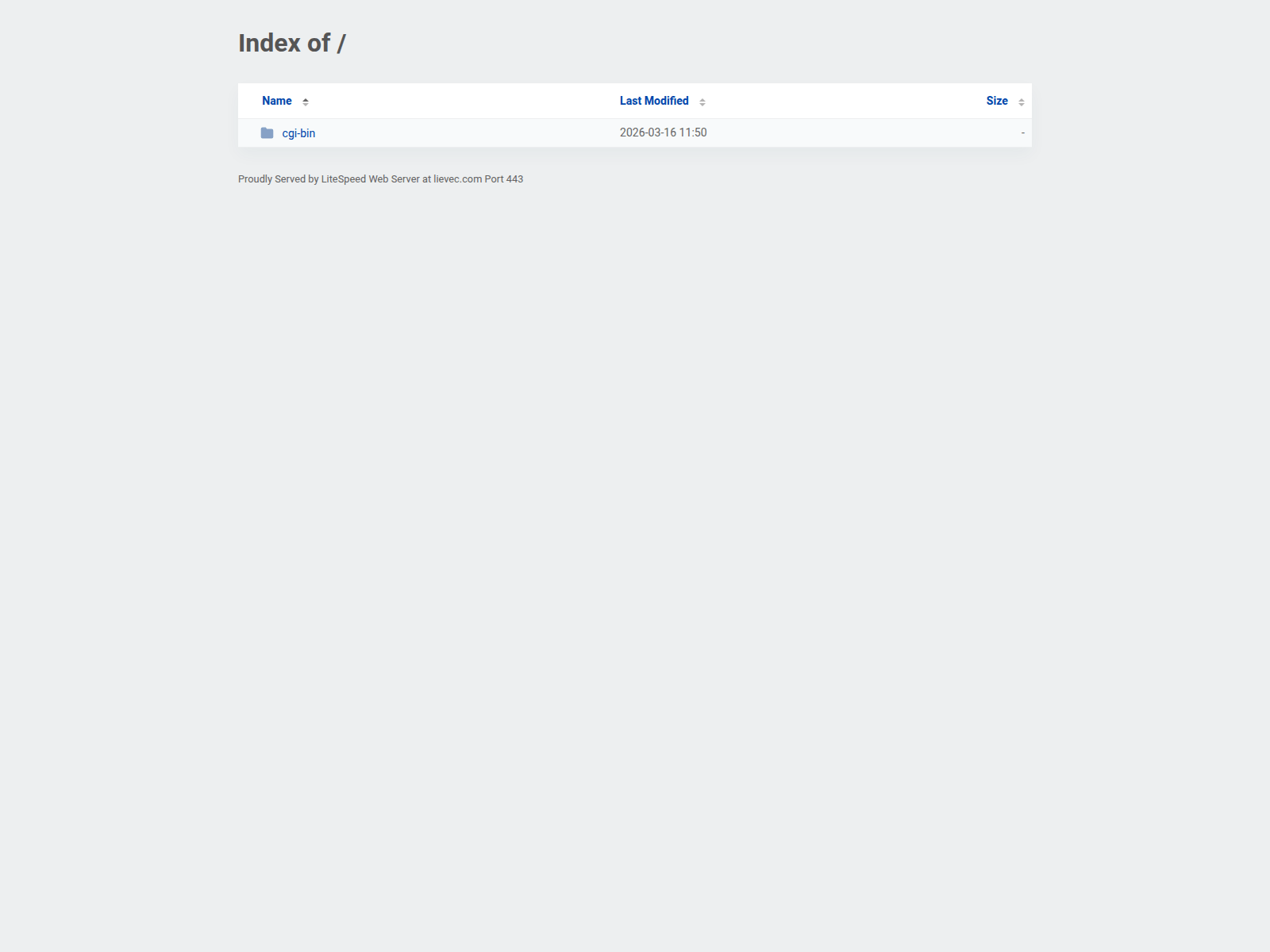
“Index of /”
威胁判定
高
66/100 证据评分
可用性
内容不可用
最新观察中的内容不可用
风险信号
病毒检测总数:3/94
存储的阻止列表匹配项:2
诈骗类型:Generic Phishing
证据摘要
HIGH
Analysis as of July 24, 2026 indicates that lievec.com is a newly registered domain (created March 16, 2026) that has been used for generic phishing. The site returned an HTTP response with the title “Index of /”, suggesting a directory listing rather than a branded landing page. The server presented a TLS certificate issued by Sectigo Limited, confirming that HTTPS was enabled. Network probes resolve the hostname to IP 69.57.162.186, which belongs to the Namecheap, Inc. AS22612 network located in the United States. The hosting environment advertises PHP and LiteSpeed, consistent with a typical web‑application stack used by phishing operators.
Registration details show the domain was purchased through NameSilo, LLC, and the authoritative nameservers are dns1.namecheaphosting.com and dns2.namecheaphosting.com. VirusTotal scans recorded three positive detections out of ninety‑four submitted security vendors, and the domain appears on three external blocklists. Independent anti‑phishing feeds, including PhishDestroy, MetaMask, and SEAL, have already flagged and blocked the domain. The current HTTP status is offline, indicating that the site has been taken down or is no longer serving content. Defenders should incorporate the observed indicators of compromise into their perimeter defenses.
Blocking the domain name lievec.com, its resolving IP address 69.57.162.186, and the associated name‑server entries will stop outbound connections to the known phishing infrastructure. Adding the domain to internal URL filtering and updating external threat‑intelligence feeds with the observed blocklist entries will reduce the risk of accidental exposure. Continuous monitoring of the registrar NameSilo and the hosting AS22612 network for new domains that resolve to the same IP range is recommended, as adversaries often reuse infrastructure.
已发送报告记录
已提交证据快照
- 已发送
- 台账记录
- 1
- 案件 ID
PD-20260316-52F326- 已捕获页面标题
- Index of /
- PDF 文件
- PDF 证据
完整证据文本
Policy Violations:
Acceptable Use Policy (AUP): The domain lievec.com is engaged in phishing activities, which are explicitly prohibited under your AUP. This constitutes a clear violation of the policy against deception and fraud.
Terms of Service (TOS): The ongoing use of lievec.com for illegal activities warrants immediate action as it violates your TOS, which reserves the right to suspend or terminate services for such violations.
Applicable Laws (US):
Computer Fraud and Abuse Act (18 U.S.C. § 1030): This federal law prohibits unauthorized access to computers and the fraudulent use of information obtained through such access, which applies to phishing schemes.
Wire Fraud (18 U.S.C. § 1343): The use of electronic communications to carry out fraudulent schemes, such as those perpetrated by lievec.com, is a violation of this statute.
CAN-SPAM Act (15 U.S.C. § 7701 et seq.): This law regulates commercial email and prohibits deceptive practices, including misleading headers and subject lines, which are often associated with phishing attempts.
Regulatory Note: Failure to take immediate action against lievec.com may expose your organization to legal liability and regulatory scrutiny. Compliance with your AUP and applicable laws is imperative to mitigate potential risks.
Acceptable Use Policy (AUP): The domain lievec.com is engaged in phishing activities, which are explicitly prohibited under your AUP. This constitutes a clear violation of the policy against deception and fraud.
Terms of Service (TOS): The ongoing use of lievec.com for illegal activities warrants immediate action as it violates your TOS, which reserves the right to suspend or terminate services for such violations.
Applicable Laws (US):
Computer Fraud and Abuse Act (18 U.S.C. § 1030): This federal law prohibits unauthorized access to computers and the fraudulent use of information obtained through such access, which applies to phishing schemes.
Wire Fraud (18 U.S.C. § 1343): The use of electronic communications to carry out fraudulent schemes, such as those perpetrated by lievec.com, is a violation of this statute.
CAN-SPAM Act (15 U.S.C. § 7701 et seq.): This law regulates commercial email and prohibits deceptive practices, including misleading headers and subject lines, which are often associated with phishing attempts.
Regulatory Note: Failure to take immediate action against lievec.com may expose your organization to legal liability and regulatory scrutiny. Compliance with your AUP and applicable laws is imperative to mitigate potential risks.
VirusTotal
3 det.
URLQuery
2 det.
TLS 证书
Sectigo Limited
年龄
5 mo
观测状态
内容不可用 502

DestroyList
已列入
Reports Sent
1
数据覆盖范围
VirusTotal
3 / 94
URLQuery
2 det.
PhishStats
checked — no match recorded
OTX
no community references
CF雷达
scan completed
URLScan capture
存储的报告
URLScan verdict
分析完成
DNS 阻断
14 已检查 — 未发现拦截
TLS
valid certificate, 198d
WHOIS
5 mo old
屏幕截图
3 captures · 3 sources
重定向链
未探查
网络安全情报 Registrar context
Registrar context
NameSilo
Stored registration data identifies NameSilo as the registrar. PhishDestroy maintains separate registrar investigations; that broader material is contextual and is not an independent detection for this domain.
威胁响应 Pipeline
发现
Checks
Reports
可用性
14/14
阻止列表覆盖
10 个来源 · 于 2026年8月10日 同步
已保存的截图
域名情报
域名
URLScan Verdict
分析完成
score 0 report ↗
服务器 / ASN
LiteSpeed · AS22612 NAMECHEAP-NET - Namecheap, Inc., US
IP 信誉
abuse score 0/100 0 reports checked 2026年7月14日
注册商
NameSilo
 (US)
PhishDestroy Investigation
(US)
PhishDestroy Investigation
(US)
PhishDestroy Investigation
IP 地址
69.57.162.186
注册信息创建 2026年3月16日 (146d)
HTTP 状态码502 Error
技术详情DNS、TLS 名称和时间戳
首次发现2026年3月16日
DOM Analysisanalyzed 2026年7月29日score 63/100
Submitted URLhttp://lievec.com/
域名服务器dns1.namecheaphosting.comdns2.namecheaphosting.com
ICANN OVERSIGHT
认证和 RAA 背景
认证和 RAA 背景
Registrar accreditation and DNS abuse obligations
For this gTLD, the registrar above operates under an ICANN accreditation agreement. The links below provide the official fee schedule and current DNS abuse compliance guidance.
Accreditation is a contract, not a safety certification.
RAA §3.18 establishes abuse-contact and handling requirements. This report can document stored outbound notices and later technical observations; it does not by itself establish receipt, investigation, remediation, or contractual non-compliance.
举报此域名
提交证据,帮助保护他人
VirusTotal 分析
网站性能分析
Google PageSpeed Insights — mobile performance audit of lievec.com · checked Mar 16, 2026
100
Good
Performance
FCP
0.75s
First Contentful Paint
LCP
0.75s
Largest Contentful Paint
CLS
0
Cumulative Layout Shift
TBT
0ms
Total Blocking Time
SI
2.51s
Speed Index
Powered by Google PageSpeed Insights · Mobile strategy · Scores: 90-100 Good 50-89 Needs Work 0-49 Poor
相关基础设施与报告
同一注册商: NameSilo 6
最近的威胁报告 6
最近添加了来自 PhishDestroy 数据库的报告。这些发现链接并不意味着共享基础设施或所有权。
您是否受到本网站的影响?
If credentials were compromised, report immediately. Do not engage with recovery scammers.
如果您输入了帐户凭据、个人或付款信息,或者从此域下载了文件,请立即采取措施。以下资源可帮助您报告事件并保护自己。


PhishDestroy listing review 不是执法报告
域名申诉
如果您拥有该域名并认为该列表不正确,请请求审核
警惕“数据恢复”诈骗! 犯罪分子可能会冒充调查员、律师或追债员再次联系受害者。 请勿支付预付费用或共享凭证。 了解有关康复欺诈的更多信息 →
检查任意域名
使用存储的阻止列表、WHOIS、DNS 和公共扫描证据进行威胁分析
立即扫描举报网络钓鱼
将可疑域名提交至我们的威胁数据库——保护社区
报告实时威胁动态
最近的网络钓鱼报告和观察到的可用性变化
监控