VirusTotal
12 / 89 engine detections
打开报告

“BOT ALPHA”
冒充 MetaMask: botalpha.exchange — 内容不可用. 证据摘要: VirusTotal 12/89 (alphaMountain.ai, BitDefender, CRDF, Forcepoint ThreatSeeker, Fortinet); URLQuery 1 alert…
为保留原始取证记录,下方的 PhishDestroy AI 详细分析仍使用英文。
12 / 89 engine detections
打开报告1 threat-system alert
打开报告49/100
15/100
打开报告DBL_SPAM
4 community references
打开报告provider verdict: clean
打开报告No threat flag
打开报告No malicious flag
打开报告Results reflect each source’s collection time. Zero detections do not guarantee safety. OTX references are community publications.
| Detection System | Indicator | Verdict | Alert |
|---|---|---|---|
| DNS4EU | botalpha.exchange |
malicious | Sinkholed |
PhishDestroy threat report
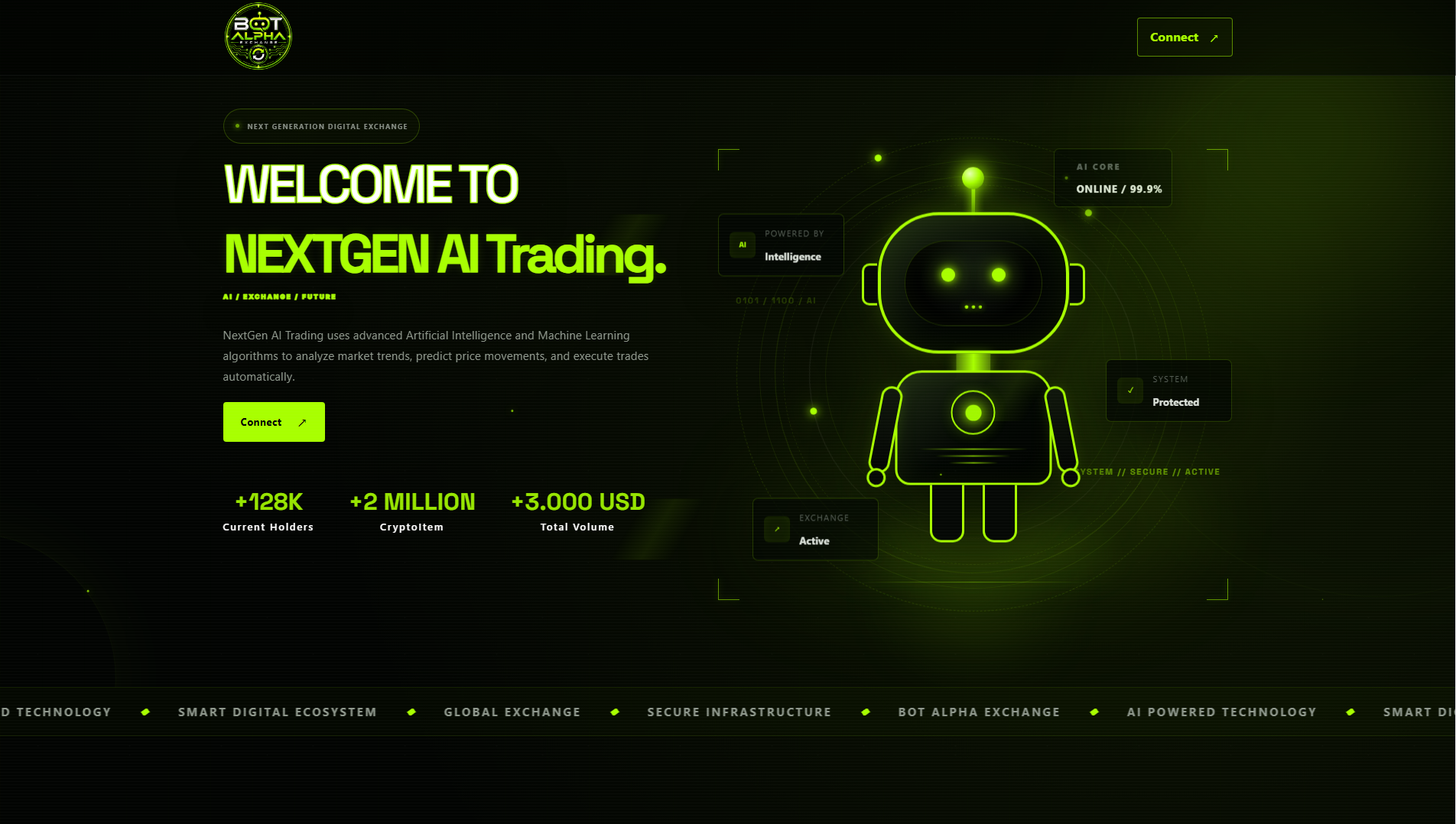
botalpha.exchange is an impersonation phishing site that presented itself as "BOT ALPHA" on an exchange-themed domain. It was aimed at crypto users drawn in by a trading-bot or exchange brand. PhishDestroy first flagged it on 2026-09-01. The site has been offline since 2026-09-29 and was still unreachable when last checked on 2026-10-19.
Impersonation pages like this borrow a recognisable name, here "BOT ALPHA", and pair it with a convincing domain so visitors believe they are on the genuine platform. The aim is to get victims to hand over something of value. That can be login details, a wallet connection, or deposits into what looks like a trading account but is controlled by the operators. Money or credentials given to such a page go straight to the scammers, and on-chain transfers cannot be reversed.
Twelve of 89 VirusTotal engines flagged the domain as of 2026-09-12. The vendors include Kaspersky, BitDefender, Fortinet, Forcepoint ThreatSeeker, G-Data, Gridinsoft, CRDF and alphaMountain.ai. Crypto-specific defences reached the same verdict: MetaMask's blocklist and SEAL both list it alongside PhishDestroy, so many wallet users would see a warning before interacting. Spamhaus carries it in its domain blocklist as spam. Four AlienVault OTX threat pulses reference it, which shows other researchers tracked it independently.
The domain was registered through NameCheap, Inc. on 2026-08-22, just ten days before PhishDestroy detected it. That short gap is typical of throwaway phishing domains set up for a single campaign. It was hosted on RouterHosting LLC in the United States and used a free Let's Encrypt certificate. The padlock in the browser therefore said nothing about the site's legitimacy. It stayed live for about four weeks after detection before going dark.
If you deposited funds on this site, assume they are gone. Ignore any later request for "fees" or "taxes" to unlock a withdrawal, since paying more never recovers the money. If you entered a password or seed phrase, change the password everywhere it was reused and turn on 2FA. If you shared a seed phrase, move your assets to a fresh wallet immediately. If you connected a wallet, review and revoke any token approvals you granted. Defenders should block the domain and IP 144.172.107.221, and watch for lookalike BOT ALPHA domains registered on other extensions.
Last checked
For this gTLD, the registrar above operates under an ICANN accreditation agreement. The links below provide the official fee schedule and current DNS abuse compliance guidance.
RAA §3.18 establishes abuse-contact and handling requirements. This report can document stored outbound notices and later technical observations; it does not by itself establish receipt, investigation, remediation, or contractual non-compliance.
ns2.botalpha.exchangeLocation describes the IP network.
893e6f5ea664f1848c7738e9615c0f0f3a1c36a19a387fa675b2811f3221ae34www.botalpha.exchangeSaved certificate metadata. Certificate dates without a timezone are shown as stored. Transport encryption does not establish that the site is trustworthy.
Hostnames retained in the domain record or Certificate Transparency cache. A hostname alone does not establish current availability or malicious activity.
www.botalpha.exchangeDomain recordThe original observation time is not recorded for these hostnames.
Google PageSpeed Insights — mobile performance audit of botalpha.exchange · checked Sep 1, 2026
An estimated time describes an observation window. It does not prove a registrar action or the exact moment a site became unavailable.
Compare what a browser and a crawler receive, and check for Keitaro traffic routing.
botalpha.exchange
Dated changes retained by the monitor and source collectors. Newest observations appear first; source states are not proof of a takedown.
可访问→不可用
0→3
可访问
No threat flag
View source12/89 engine detections
View source4 community references
View sourcePD-20260901-9267E6
botalpha.exchange
View sourcePage captured
View source已存储 79 个仿冒域名
每条路径都代表一个将域名与该主机关联的原因。实心节点表示已检测到VirusTotal,虚线节点表示已离线。完整列表如下。
Reports with the same collector label. A shared label does not establish impersonation or common ownership. View matching reports →
通过同一家注册商注册。一家注册商通常为数百万互不相关的客户提供服务,因此这仅表明数据归属同一群体,而非证明存在关联。
PD-20260901-9267E6 Recipient: abuse@namecheap.com Registrar: Namecheap Inc (United States) Policy Violations: Domain Registration Agreement prohibits hacking, misuse of domain to conduct attacks, scam and fraudulent activities; AUP allows immediate suspension Applicable Laws: CFAA 18 U.S.C. §1030, Wire Fraud 18 U.S.C. §1343, CAN-SPAM Act
如果您输入了帐户凭据、个人或付款信息,或者从此域下载了文件,请立即采取措施。以下资源可帮助您报告事件并保护自己。
选择您所在的国家/地区以获取 官方网络犯罪联系人 或 创建投诉草稿 →。
Template-based draft · optional AI wording assistance requires separate consent
Choose the steps that match what you shared. Keep a copy of this report alongside your own records.
Stop using the suspicious site. Open the real service through its official app or an address you already trust.
Keep original emails, receipts, messages and screenshots in a secure place. A factual timeline helps the receiving authority understand what happened. IC3 evidence guidance ↗
botalpha.exchange)即使你并不了解所有细节—— 不管怎样都要提交报告. 即使信息不完整,对调查仍有帮助。
A report is not a guarantee of recovery or investigation, but prompt, accurate transaction data can help authorities and service providers trace the incident.
Further guidance: NIST · phishing responseFBI IC3 · reports & evidenceFTC · recovery scams
This report combines saved page captures, registration and network records, scanner results and PhishDestroy reporting history. Each source keeps its own observation date. Open a source report to inspect the original result.
The AI-assisted analysis was written on . It describes the evidence available at that time; later source checks can change.
A capture documents what was shown. A scanner result records that provider’s assessment at the time of its check. Neither a valid certificate nor a zero-detection result is a guarantee of safety.