darkdotweb.com
  pulsenotch.com
Bảo mật miền và thông tin về mối đe dọa

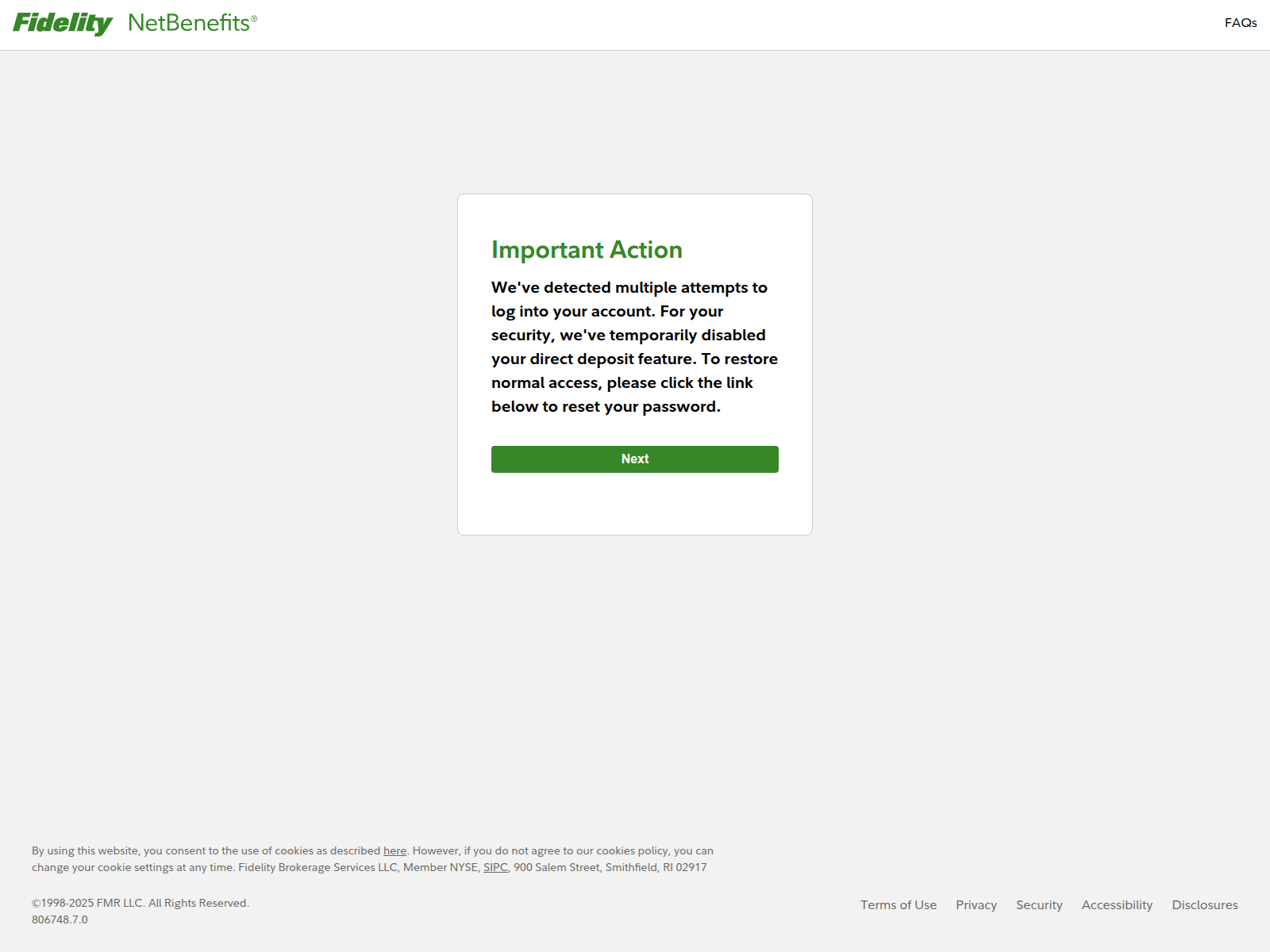
fidelityworkplacely[.]click
“Log In to Fidelity NetBenefits”
Phán quyết đe dọa
Quan trọng
95/100 điểm bằng chứng
sẵn có
Nội dung không có sẵn
Nội dung không có sẵn trong quan sát mới nhất
Tín hiệu rủi ro
Tổng số phát hiện Virus: 18/93
Mạo danh thương hiệu: Fidelity
Tóm tắt bằng chứng
QUAN TRỌNG
This domain, fidelityworkplacely.click, operates as a credential harvesting platform specifically designed to impersonate the legitimate Fidelity NetBenefits login portal. Analysis indicates the site presents a fraudulent interface to deceive users into submitting sensitive financial credentials, including usernames, passwords, and potentially multi-factor authentication codes. The threat actor’s objective appears to be unauthorized access to retirement accounts, employer-sponsored benefits portals, or other financial services managed through Fidelity’s infrastructure. The use of a login page title identical to the authentic Fidelity NetBenefits service increases the likelihood of successful deception, particularly among employees or plan participants expecting routine access to their accounts. Infrastructure analysis reveals multiple high-confidence indicators of malicious activity. The domain was registered on February 21, 2026, an anomalous future date suggesting potential registrar manipulation or domain generation algorithm abuse. It resolves to the IP address 43.162.124.172, hosted within autonomous system AS132203, a network segment previously associated with bulletproof hosting providers. Security vendors have flagged the domain in 18 out of 95 detection engines on VirusTotal, with additional listings on two independent security blocklists. The SSL certificate, identified as E8, lacks proper validation and does not correspond to Fidelity’s legitimate certificate authority chain, further confirming its fraudulent nature. Users who accessed fidelityworkplacely.click or entered credentials on the site should immediately initiate remediation protocols. Affected individuals must change passwords for all financial accounts, particularly those associated with Fidelity or employer benefits portals, using a secure, non-compromised device. Multi-factor authentication should be enabled or revalidated to prevent unauthorized access. Financial institutions and benefits administrators should be notified of potential exposure, and transaction histories should be reviewed for unauthorized activity. System-level scans for malware or keyloggers are recommended, as credential harvesting sites often deploy secondary payloads to maintain persistence. Organizations should also consider implementing domain monitoring to detect similar impersonation attempts targeting their user base.
VirusTotal
18 det.
OTX references
Chứng chỉ TLS
Hết hạn hoặc chưa được xác minh -164d
Tuổi
6 mo
Trạng thái ghi nhận
Nội dung không có sẵn HTTP 502

Danh sách hủy bỏ
Có trong danh sách
Data Coverage
VirusTotal
18 / 93
URLQuery
báo cáo được lưu trữ - bản án chi tiết đang chờ xử lý
PhishStats
checked — no match recorded
OTX
14 community references
CF Radar
no data
URLScan capture
báo cáo được lưu trữ
URLScan verdict
malicious
Chặn DNS
chưa được kiểm tra
TLS
Hết hạn hoặc chưa được xác minh
WHOIS
6 mo old
Ảnh chụp màn hình
2 captures · 2 sources
Chuỗi chuyển hướng
không được thăm dò
Pipeline ứng phó với các mối đe dọa
Khám phá
Checks
Reports
Khả dụng
12/13
Phạm vi danh sách chặn
10 nguồn ngoài được giám sát · ảnh chụp lưu ngày 11/08/2026
10 nguồn ngoài được giám sát Không trùng khớp
Bản chụp đã lưu
Thông tin về tên miền
Tên miền
URLScan Verdict
Độc hại
score 100 Phishing brand: Fidelity report ↗
Máy chủ / ASN
AS132203 TENCENT-NET-AP-CN Tencent Building, Kejizhongyi Avenue, CN
Uy tín IP
IP abuse confidence 0/100 1 report checked 15/06/2026
Địa chỉ IP
43.162.124.172

Vị trí Santa Clara, US
Santa Clara, USMạngAS132203 · Tencent Building, Kejizhongyi Avenue
Đăng kýĐược tạo 21/02/2026 (170d)
Trạng thái HTTP502 Error
Chi tiết kỹ thuậtDNS, tên TLS và mốc thời gian
Lần đầu tiên được phát hiện26/02/2026
DOM Analysisanalyzed 24/03/2026DOM analysis score 83/100
Quan sát TLScó hiệu lực từ 01/12/2025
Tình báo pháp chứng
Báo cáo tên miền này
Gửi bằng chứng và góp phần bảo vệ người khác
Phân tích của VirusTotal
18 / Nhà cung cấp bảo mật 93 đã gắn cờ miền này
View on VT
Last analyzed
ADMINUSLabs
Criminal IP
alphaMountain.ai
BitDefender
Certego
CRDF
CyRadar
Forcepoint ThreatSeeker
Fortinet
G-Data
Lionic
Phishing Database
PhishLabs
Seclookup
SOCRadar
Sophos
VIPRE
Webroot
Hạ tầng và báo cáo liên quan
Content matches 4
Shared IP 43.162.124.172 6
IP gốc này lưu trữ nhiều miền lừa đảo — cơ sở hạ tầng có thể được chia sẻ giữa các chiến dịch.
Fidelity impersonation 8
These domains also target Fidelity users. View all Fidelity threats →
Báo cáo mối đe dọa gần đây 4
Các báo cáo được thêm gần đây từ cơ sở dữ liệu PhishDestroy. Các liên kết khám phá này không ngụ ý cơ sở hạ tầng hoặc quyền sở hữu chung.
Bạn có bị ảnh hưởng bởi trang web này không?
If credentials were compromised, report immediately. Do not engage with recovery scammers.
Nếu bạn đã nhập thông tin xác thực tài khoản, thông tin cá nhân hoặc thông tin thanh toán hoặc đã tải xuống tệp từ miền này, hãy hành động ngay lập tức. Dưới đây là các nguồn lực giúp bạn báo cáo vụ việc và bảo vệ chính mình.


Action Fraud
Báo cáo gian lận và tội phạm mạng ở Anh, xứ Wales và Bắc Ireland
Contact centre0300 123 2040
PhishDestroy listing review Không phải là báo cáo thực thi pháp luật
Kháng cáo về tên miền
Yêu cầu xem xét lại nếu bạn sở hữu tên miền này và cho rằng danh sách này không chính xác
Hãy cảnh giác với những kẻ lừa đảo lợi dụng việc phục hồi dữ liệu! Tội phạm có thể liên hệ lại với nạn nhân trong khi giả làm điều tra viên, luật sư hoặc nhân viên phục hồi. Không trả phí trả trước hoặc chia sẻ thông tin đăng nhập. Tìm hiểu thêm về gian lận trong quá trình phục hồi →
Hãy báo cáo với chính quyền địa phương
Chọn quốc gia của bạn để nhận liên hệ tội phạm mạng chính thức hoặc soạn thảo đơn khiếu nại →.
Danh mục 97 quốc gia
Bản nháp có sự hỗ trợ của AI - chi tiết sự cố được nhà cung cấp AI xử lý
Hãy tự mình xem xét và gửi nó
Kiểm tra bất kỳ tên miền nào
Phân tích mối đe dọa bằng cách sử dụng danh sách chặn được lưu trữ, WHOIS, DNS và bằng chứng quét công khai
Quét ngayBáo cáo lừa đảo qua email
Hãy gửi các tên miền đáng ngờ đến cơ sở dữ liệu mối đe dọa của chúng tôi — để bảo vệ cộng đồng
Báo cáoDòng tin tức về các mối đe dọa thời gian thực
Các báo cáo lừa đảo gần đây và những thay đổi về tính khả dụng được quan sát thấy
Theo dõiLuôn cập nhật thông tin, luôn an toàn
Theo dõi các mối đe dọa đang diễn ra hoặc phản đối danh sách này nếu bạn cho rằng đây là kết quả báo động sai