www.stores-dofus.fr
  stresser.work
  quantumfxbrokers.com
Безпека домену та аналіз загроз

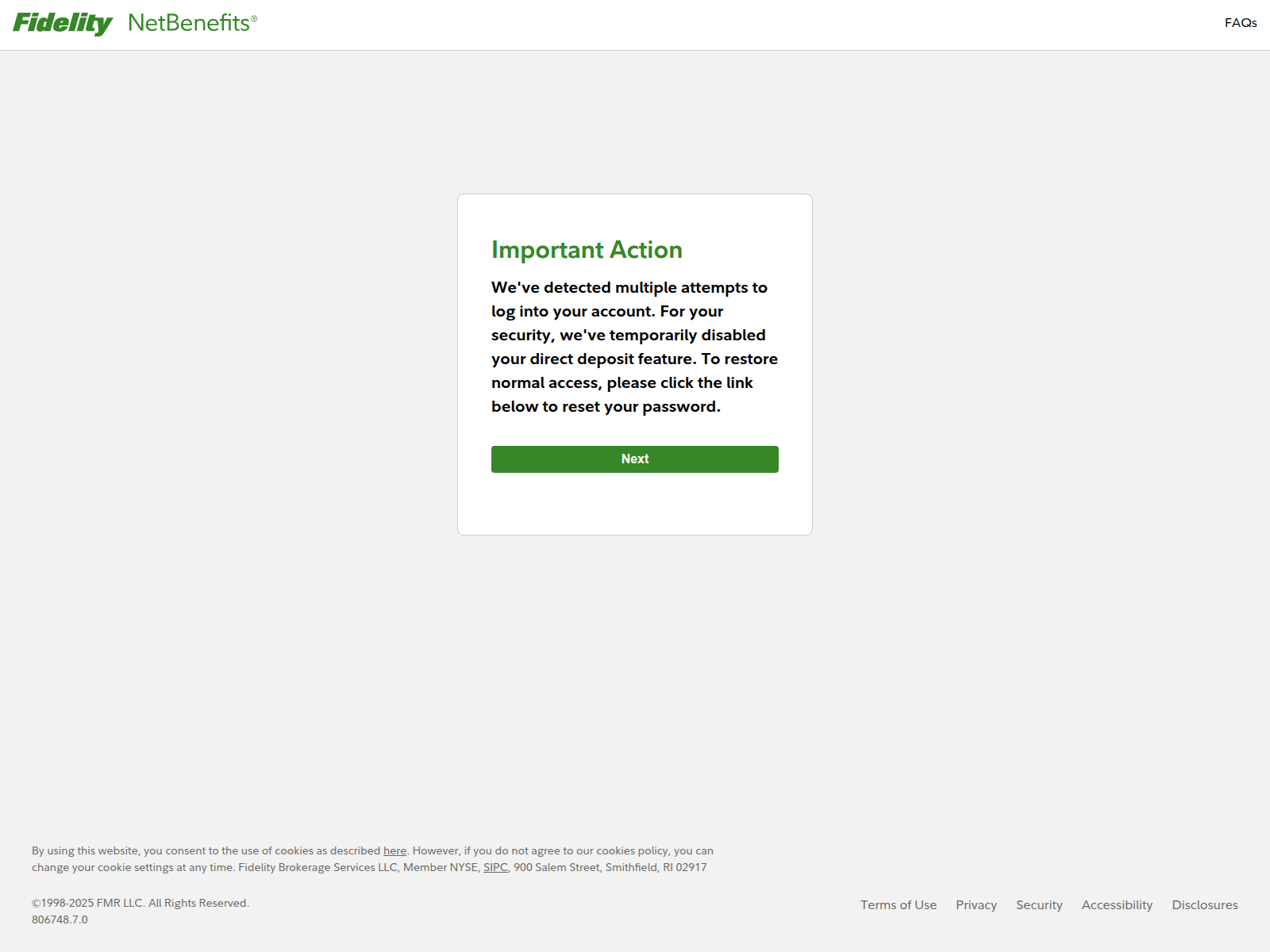
fidelityworkplacely[.]click
“Log In to Fidelity NetBenefits”
Загрозливий вердикт
Критичний
95/100 оцінка доказів
Доступність
Контент недоступний
Вміст був недоступний під час останнього спостереження
Сигнали ризику
Виявлення VirusTotal: 18/93
Уособлення бренду: Fidelity
Зведення доказів
КРИТИЧНИЙ
This domain, fidelityworkplacely.click, operates as a credential harvesting platform specifically designed to impersonate the legitimate Fidelity NetBenefits login portal. Analysis indicates the site presents a fraudulent interface to deceive users into submitting sensitive financial credentials, including usernames, passwords, and potentially multi-factor authentication codes. The threat actor’s objective appears to be unauthorized access to retirement accounts, employer-sponsored benefits portals, or other financial services managed through Fidelity’s infrastructure. The use of a login page title identical to the authentic Fidelity NetBenefits service increases the likelihood of successful deception, particularly among employees or plan participants expecting routine access to their accounts. Infrastructure analysis reveals multiple high-confidence indicators of malicious activity. The domain was registered on February 21, 2026, an anomalous future date suggesting potential registrar manipulation or domain generation algorithm abuse. It resolves to the IP address 43.162.124.172, hosted within autonomous system AS132203, a network segment previously associated with bulletproof hosting providers. Security vendors have flagged the domain in 18 out of 95 detection engines on VirusTotal, with additional listings on two independent security blocklists. The SSL certificate, identified as E8, lacks proper validation and does not correspond to Fidelity’s legitimate certificate authority chain, further confirming its fraudulent nature. Users who accessed fidelityworkplacely.click or entered credentials on the site should immediately initiate remediation protocols. Affected individuals must change passwords for all financial accounts, particularly those associated with Fidelity or employer benefits portals, using a secure, non-compromised device. Multi-factor authentication should be enabled or revalidated to prevent unauthorized access. Financial institutions and benefits administrators should be notified of potential exposure, and transaction histories should be reviewed for unauthorized activity. System-level scans for malware or keyloggers are recommended, as credential harvesting sites often deploy secondary payloads to maintain persistence. Organizations should also consider implementing domain monitoring to detect similar impersonation attempts targeting their user base.
VirusTotal
18 det.
OTX references
Сертифікат TLS
Прострочений або неперевірений -164d
Вік
6 mo
Зафіксований статус
Контент недоступний HTTP 502

DestroyList
У списку
Data Coverage
VirusTotal
18 / 93
URLQuery
звіт збережено — докладний вердикт очікує на розгляд
PhishStats
checked — no match recorded
OTX
14 community references
CF Radar
no data
URLScan capture
збережений звіт
URLScan verdict
malicious
Блокування DNS
не перевірено
TLS
Прострочений або неперевірений
WHOIS
6 mo old
Знімок екрана
2 captures · 2 sources
Ланцюжок перенаправлень
не досліджено
Процес реагування на загрози Pipeline
Відкриття
Checks
Reports
Доступність
12/13
Перевірка за блок-листами
10 зовнішніх джерел під наглядом · знімок від 11.08.2026
Збережений знімок
Аналітика доменів
Домен
URLScan Verdict
Шкідливий
score 100 Phishing brand: Fidelity report ↗
Сервер / ASN
AS132203 TENCENT-NET-AP-CN Tencent Building, Kejizhongyi Avenue, CN
Репутація IP
IP abuse confidence 0/100 1 report checked 15.06.2026
IP-адреса
43.162.124.172

Геолокація Santa Clara, US
Santa Clara, USМережаAS132203 · Tencent Building, Kejizhongyi Avenue
РеєстраціяСтворено 21.02.2026 (170d)
Статус HTTP502 Error
Технічні подробиціDNS, імена TLS і часові мітки
Вперше виявлено26.02.2026
DOM Analysisanalyzed 24.03.2026DOM analysis score 83/100
Спостереження TLSдіє з 01.12.2025
Криміналістичні дані
Поскаржитися на цей домен
Надішліть докази та допоможіть захистити інших
Аналіз VirusTotal
18 / 93 постачальників безпеки позначили цей домен
View on VT
Last analyzed
ADMINUSLabs
Criminal IP
alphaMountain.ai
BitDefender
Certego
CRDF
CyRadar
Forcepoint ThreatSeeker
Fortinet
G-Data
Lionic
Phishing Database
PhishLabs
Seclookup
SOCRadar
Sophos
VIPRE
Webroot
Пов’язана інфраструктура та звіти
Content matches 4
Shared IP 43.162.124.172 6
Ця вихідна IP-адреса містить кілька фішингових доменів — інфраструктура може бути спільною для кампаній.
Fidelity impersonation 8
These domains also target Fidelity users. View all Fidelity threats →
Останні повідомлення про загрози 4
Нещодавно додані звіти з бази даних PhishDestroy. Ці посилання для виявлення не передбачають спільної інфраструктури чи власності.
Чи вплинув на вас цей сайт?
If credentials were compromised, report immediately. Do not engage with recovery scammers.
Якщо ви ввели облікові дані облікового запису, особисту чи платіжну інформацію або завантажили файл із цього домену, негайно вживіть заходів. Нижче наведено ресурси, які допоможуть вам повідомити про інцидент і захистити себе.


«Action Fraud»
Повідомте про шахрайство та кіберзлочинність в Англії, Уельсі та Північній Ірландії
Contact centre0300 123 2040
PhishDestroy listing review Не звіт правоохоронних органів
Оскарження домену
Надішліть запит на перевірку, якщо ви володієте цим доменом і вважаєте, що інформація про нього неправильна
Остерігайтеся шахраїв, які обіцяють повернути втрачені кошти! Злочинці можуть знову зв’язатися з жертвами, видаючи себе за слідчих, адвокатів або агентів із відновлення. Не сплачуйте авансових зборів і не діліться обліковими даними. Дізнайтеся більше про шахрайство у сфері відшкодування збитків →
Зверніться до місцевих органів влади
Виберіть свою країну, щоб отримати офіційні контакти кіберзлочинців або створити проект скарги →.
Довідник 97 країн
Чернетка за допомогою штучного інтелекту — деталі інциденту обробляються постачальником штучного інтелекту
Перегляньте та подайте його самостійно
Перевірити будь-який домен
Аналіз загроз за допомогою збереженого списку блокувань, WHOIS, DNS і загальнодоступних доказів сканування
Сканувати заразПовідомити про фішинг
Додавайте підозрілі домени до нашої бази даних загроз — захищайте спільноту
ПовідомитиПотокова стрічка про загрози
Останні звіти про фішинг і помічені зміни доступності
ВідстежуватиБудьте в курсі подій, дбайте про свою безпеку
Слідкуйте за актуальними загрозами або оскаржте цей запис, якщо вважаєте, що це помилкова тривога