ChainPatrol
 Web-Check
  SOCRadar
  LeakIX
FBI IC3
Denuncie crimes possibilitados pela Internet nos Estados Unidos
Federal tips line1-800-CALL-FBI

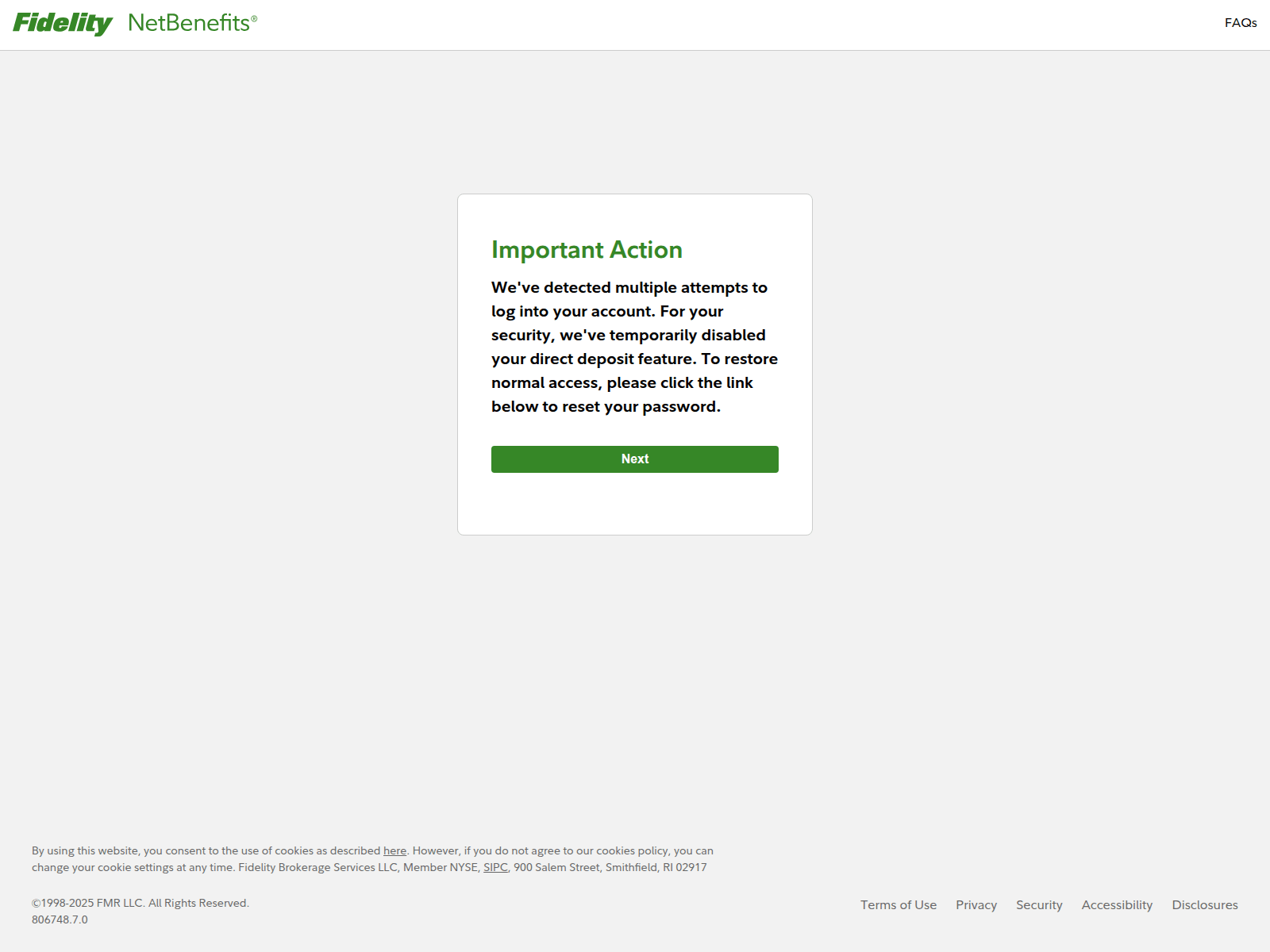
“Log In to Fidelity NetBenefits”
fidelityworkplacecv.cyou — Conteúdo indisponível. Representação da marca: Fidelity; Tipo de golpe: Banking Phishing. Resumo das evidências: VirusTotal 14/95 (ADMINUSLabs, alphaMountain.ai, BitDefender, CRDF, CyRadar); URLScan malicious verdict; PhishDestroy score 92/100. Registrador: Gname.
A análise detalhada do PhishDestroy AI permanece em inglês para preservar o registro forense original.
The domain fidelityworkplacecv.cyou is a generic phishing site designed to steal banking credentials. It does not impersonate a specific brand but uses the name 'Fidelity NetBenefits' in its page title to deceive victims into entering login details. As of the latest verification, fidelityworkplacecv.cyou has been taken offline, though it previously posed an elevated risk of financial fraud.
Technical analysis shows fidelityworkplacecv.cyou was flagged by 14 of 95 security vendors on VirusTotal, including ADMINUSLabs, alphaMountain.ai, and BitDefender. The domain was registered on November 28, 2025, through Gname.com Pte. Ltd. and resolved to the IP address 43.162.112.221, hosted on AS132203 in the US. It appeared on two security blocklists, PhishDestroy and PhishingDB, and was referenced in 13 AlienVault OTX threat intelligence pulses. The SSL certificate was issued by E8, and the observed page title was 'Log In to Fidelity NetBenefits'. Google Safe Browsing did not flag the domain, but Gridinsoft assigned it a trust score of 0/100.
Victims who entered credentials on fidelityworkplacecv.cyou should immediately change their banking passwords and enable two-factor authentication (2FA) on all financial accounts. Monitor accounts for unauthorized transactions and report any suspicious activity to the affected institution. To report the phishing domain, submit it to Google Safe Browsing, the Anti-Phishing Working Group (APWG), and local cybercrime authorities. If the site was accessed via a corporate network, notify the organization’s IT security team.

 (SG)
(SG)
 Santa Clara, US
The linked repository preserves daily zone observations across seven ShortDot-operated TLDs, including registration volume and abuse-related indicators. This registry context is supporting background and is not an independent detection for the domain in this report.
For this gTLD, the registrar above operates under an ICANN accreditation agreement. The links below provide the official fee schedule and current DNS abuse compliance guidance.
RAA §3.18 establishes abuse-contact and handling requirements. This report can document stored outbound notices and later technical observations; it does not by itself establish receipt, investigation, remediation, or contractual non-compliance.
Se você inseriu credenciais de conta, informações pessoais ou de pagamento, ou baixou um arquivo deste domínio, tome medidas imediatas. Abaixo estão os recursos para ajudá-lo a relatar o incidente e se proteger.


Selecione seu país para obter contactos oficiais do cibercrime ou crie um rascunho de reclamação →.
Este IP de origem hospeda vários domínios de phishing — a infraestrutura pode ser compartilhada entre campanhas.
These domains also target Fidelity users. View all Fidelity threats →
Relatórios adicionados recentemente do banco de dados PhishDestroy. Esses links de descoberta não implicam infraestrutura ou propriedade compartilhada.
Análise de ameaças usando lista de bloqueio armazenada, WHOIS, DNS e evidências de verificação pública
Digitalize agoraEnvie domínios suspeitos para nosso banco de dados de ameaças — proteja a comunidade
DenunciarRelatórios recentes de phishing e alterações de disponibilidade observadas
MonitorarMonitore ameaças em tempo real ou conteste esta listagem caso acredite que se trate de um falso positivo
 lisboa.asia