 ChainPatrol
 Web-Check
  SOCRadar
  LeakIX
FBI IC3
Denuncie crimes possibilitados pela Internet nos Estados Unidos
Federal tips line1-800-CALL-FBI

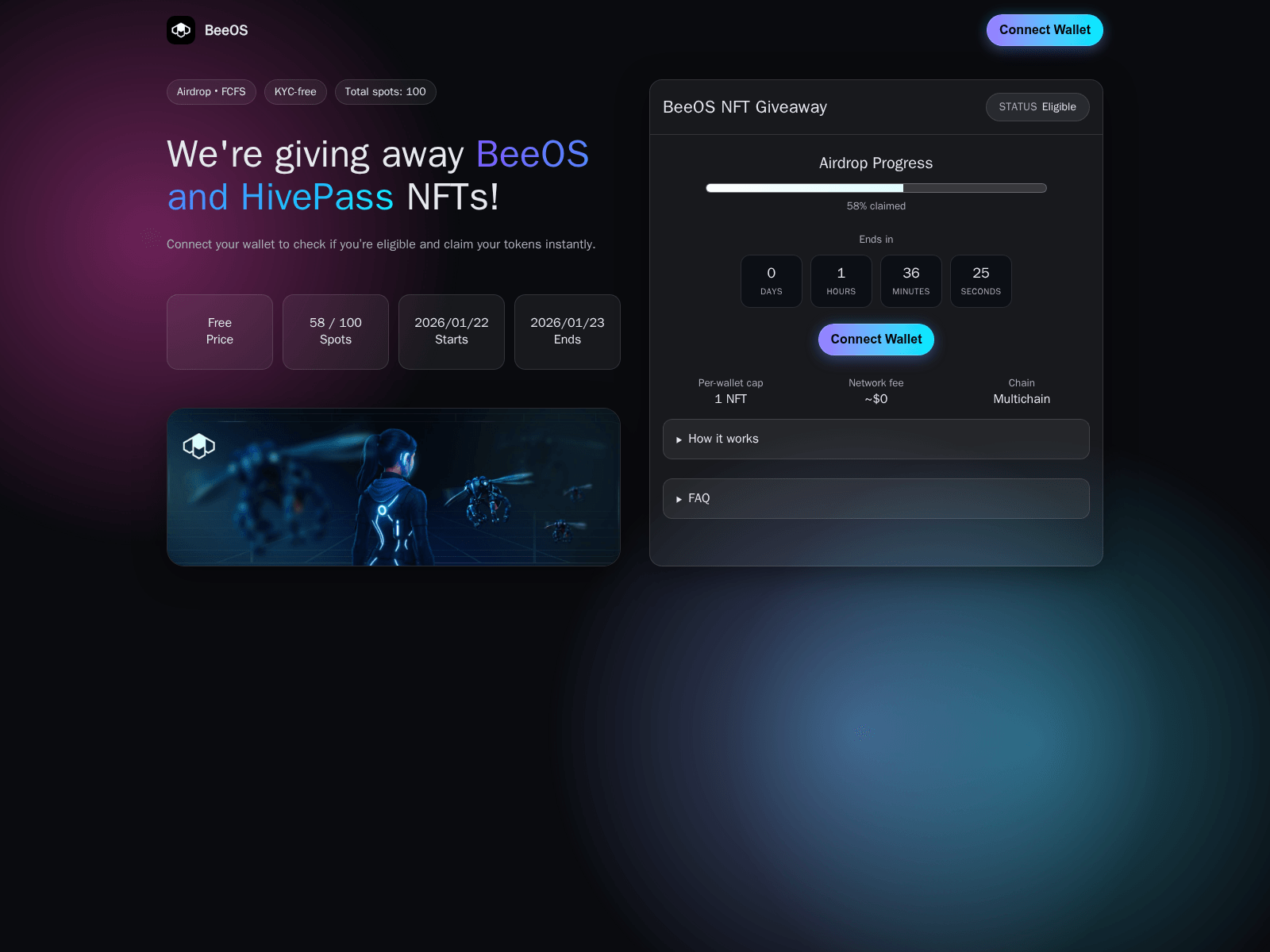
“BeeOS NFT Giveaway”
beeos2548.xyz — Não verificado. Tipo de golpe: Fake Airdrop. Resumo das evidências: VirusTotal 10/93 (Fortinet, Gridinsoft, Seclookup, SOCRadar); Spamhaus DBL_PHISH; 1 external blocklist match (ScamSniffer); PhishDestroy score 80/100. Registrador: NiceNIC.
A análise detalhada do PhishDestroy AI permanece em inglês para preservar o registro forense original.
Analysis of beeos2548.xyz indicates a newly registered site used for a fake NFT airdrop campaign. The domain was created on 21 February 2026 and is hosted on Cloudflare infrastructure (AS13335) with the IP address 188.114.97.3 located in the United States. DNS resolution uses Cloudflare’s authoritative nameservers frida.ns.cloudflare.com and maxim.ns.cloudflare.com. No TLS certificate is presented, leaving the HTTP service unencrypted. The page title returned from the live host was "BeeOS NFT Giveaway," matching the declared scam type of a fake airdrop. The registrar listed for the registration is NiceNIC International Group Co., Limited.
Reputation services have flagged the domain on two independent security blocklists and it is explicitly listed by PhishDestroy and ScamSniffer as a malicious resource. VirusTotal scans show that 10 of 93 security vendors returned a detection, reinforcing the malicious classification. The detections span a mix of URL‑filtering and malware‑analysis engines, indicating that the site was observed serving malicious redirects or credential‑harvesting forms. The Gridinsoft trust score is 0 out of 100, indicating a lack of confidence in the site’s legitimacy. The current operational status is offline, suggesting that the payload may have been taken down or is being rotated.
Given the combination of recent registration, Cloudflare hosting, absence of TLS, low trust score, and multiple vendor detections, security teams should treat beeos2548.xyz as a confirmed phishing/airdrop fraud host. Defensive actions include adding the domain and its resolving IP to blocklists, updating web‑proxy and DNS filtering policies, and monitoring for any resurrection of the domain or similar patterns. Both PhishDestroy and ScamSniffer have incorporated the domain into their real‑time phishing feeds.

 (RU)
PhishDestroy Investigation
(RU)
PhishDestroy Investigation
 San Francisco, US
For this gTLD, the registrar above operates under an ICANN accreditation agreement. The links below provide the official fee schedule and current DNS abuse compliance guidance.
RAA §3.18 establishes abuse-contact and handling requirements. This report can document stored outbound notices and later technical observations; it does not by itself establish receipt, investigation, remediation, or contractual non-compliance.
PD-20260122-7E25E6 Recipient: abuse@nicenic.net Se você inseriu credenciais de conta, informações pessoais ou de pagamento, ou baixou um arquivo deste domínio, tome medidas imediatas. Abaixo estão os recursos para ajudá-lo a relatar o incidente e se proteger.

Selecione seu país para obter contactos oficiais do cibercrime ou crie um rascunho de reclamação →.
Esses relatórios são resolvidos para o mesmo IP de borda compartilhado. Eles ajudam na descoberta de relatórios, mas não implicam propriedade comum ou um servidor de origem compartilhado.
Relatórios adicionados recentemente do banco de dados PhishDestroy. Esses links de descoberta não implicam infraestrutura ou propriedade compartilhada.
Análise de ameaças usando lista de bloqueio armazenada, WHOIS, DNS e evidências de verificação pública
Digitalize agoraEnvie domínios suspeitos para nosso banco de dados de ameaças — proteja a comunidade
DenunciarRelatórios recentes de phishing e alterações de disponibilidade observadas
MonitorarMonitore ameaças em tempo real ou conteste esta listagem caso acredite que se trate de um falso positivo
 multixchange.net