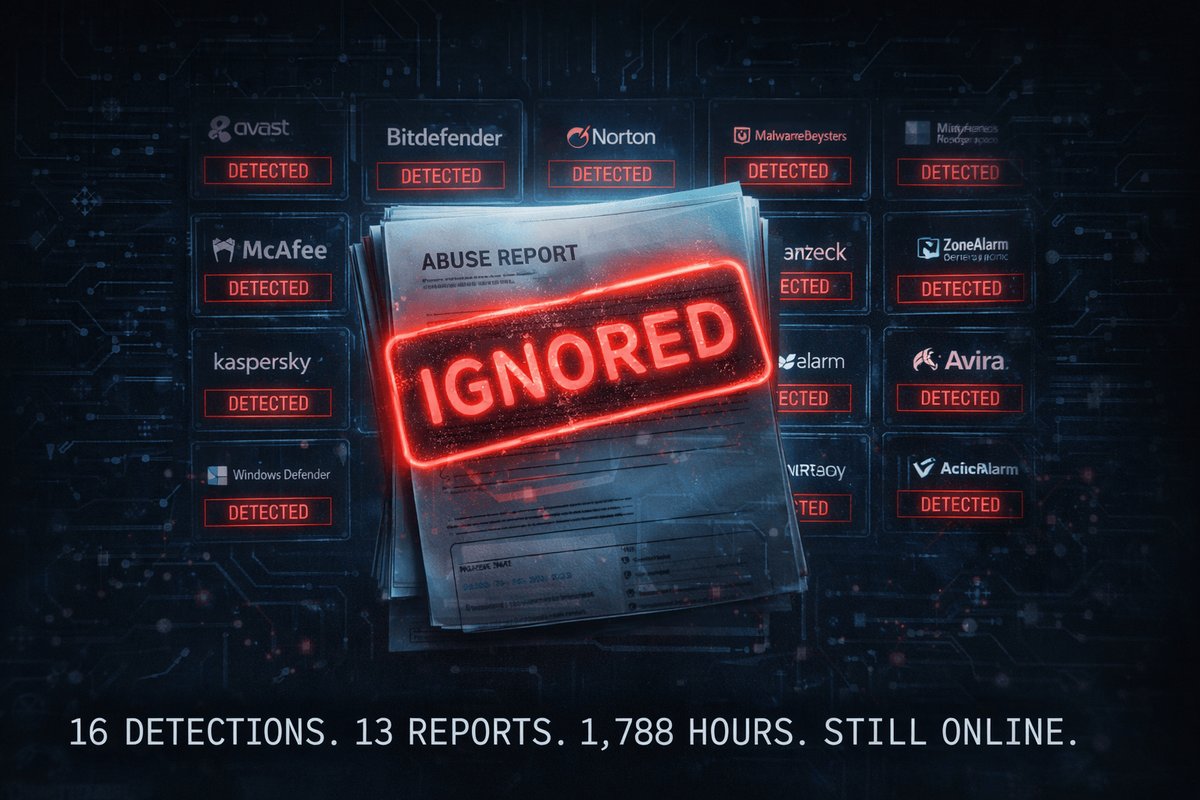
NameSilo Defended a $100M Crypto Drainer
— Then Had to Defend Itself
This investigation traces one strategy across two phases: first NameSilo defended its client xmrwallet; after the wallet closed, the same pressure protected NameSilo’s own reputation. We compare matching patterns in review management, SEO around negative queries, paid PR distribution, and later attacks on individual search links and archives.
This article is a preview. Full evidence, IPFS archives, and all source material at the link above.
The Background: What xmrwallet.com Actually Is
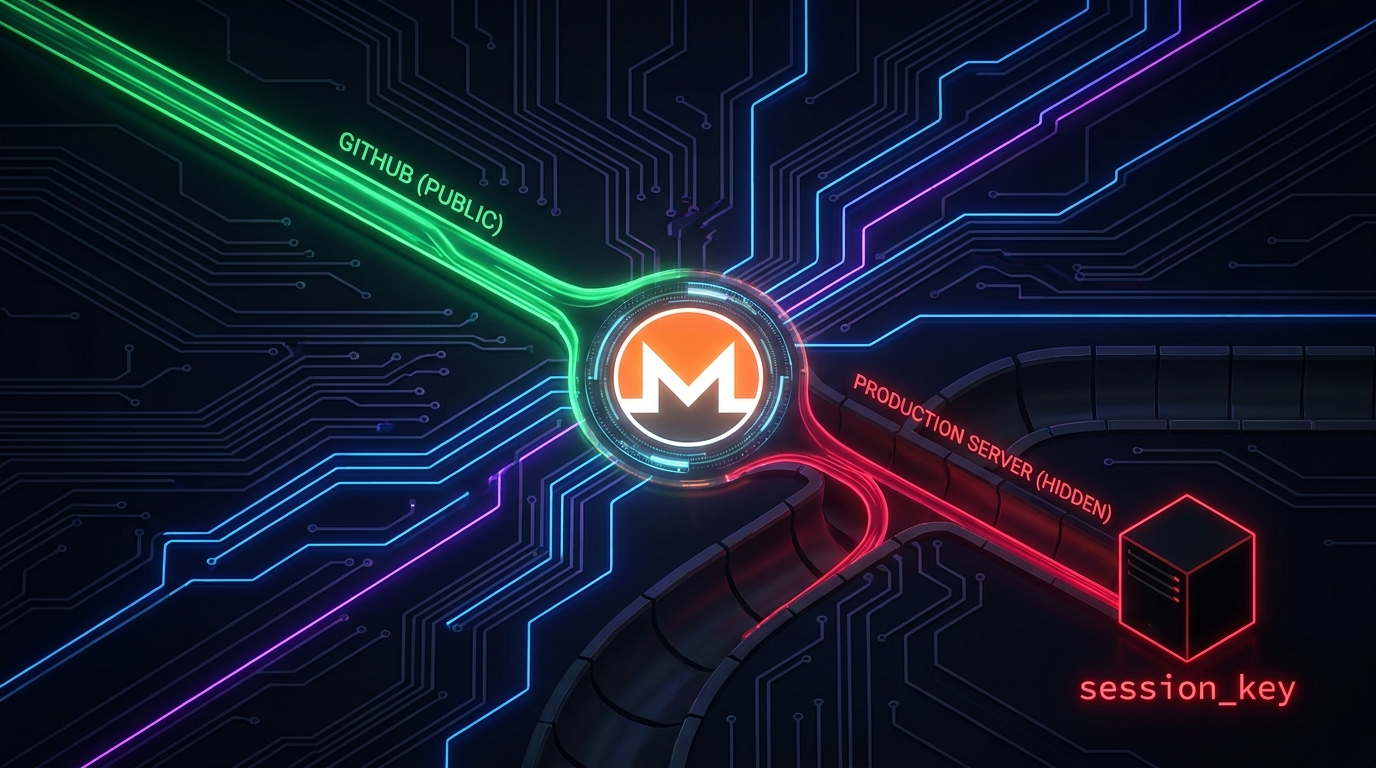
xmrwallet.com is not a phishing page. It is a fully functional Monero wallet with a server-side backdoor built in 2018 and running until May 2026 — nearly a decade. The GitHub repository is a public facade. The theft code exists only on the production server, never committed, never audited.
Every user interaction sends the private view key to the operator's servers via POST request, Base64-encoded in a variable called session_key — approximately 40 transmissions per session. The client-side transaction is explicitly discarded (raw_tx_and_hash.raw = 0); the server builds its own using the stolen keys.
The NewAlchemy audit earned 67 Reddit upvotes and was used as a trust signal for years. Its explicit scope: "client-side JavaScript only." Explicitly out of scope: "numerous PHP API endpoints." Those endpoints are the actual theft mechanism. The audit was structurally incapable of finding the backdoor.
The theft is selective by design. Small deposits are left untouched for years, building trust and legitimate reviews. Large amounts are stolen within minutes. One documented victim deposited 590 XMR — gone within 2 days. Conservative total across 15+ documented victims: 5,000–50,000+ XMR stolen ($1.5M–$15M+ at historical prices). 60% of victim posts mass-reported and deleted before evidence capture.

session_key to the operator on every session.We reconstructed the gtag-based key exfiltration in a sandboxed demo. Open DevTools → Network tab → interact with the wallet. Watch session_key POST requests fire in real time. This is what ran for 10 years. This is what the "security audit" never looked at. This is what NameSilo publicly defended.
The Sentence That Explained NameSilo

On February 16, 2026, the operator of xmrwallet.com emailed PhishDestroy demanding report removal. He signed as "Nathalie Roy" — GitHub account nathroy, ID 39167759. We replied with a full technical breakdown and a written warning: "What happens next depends entirely on how you choose to proceed."
The next day, he sent one sentence that told us everything about his relationship with NameSilo:
Three weeks before NameSilo called him the victim
Nobody running a decade-old drainer on $550/mo bulletproof Belize hosting, sitting behind Russian DDoS-Guard, calmly invites you to subpoena his registrar — unless he already knows the answer. Three other registrars (PDR, WebNic, NICENIC) suspended his domains within days of the same evidence. NameSilo wrote him a press release and offered to clean his record.
January 21, 2026 — xmrwallet paid PR Newswire to distribute a press release stating: "private keys never reach central servers." The session_key POST requests were firing on every user session to the production server throughout this period. PR Newswire is a paid distribution service — companies write and fund their own text, with no editorial review. Source: PR Newswire, Jan 21, 2026
NameSilo's Four Lies, On the Record
On March 13, 2026, NameSilo's official account posted under our investigation thread. 11,300 views before capture. Archived permanently at ghostarchive.org/archive/CXXZ0. Every sentence is refuted by primary sources:
-
1"Domain was compromised a few months ago (during which a copy of the webpage was replaced with a crypto-drainer)."SHA-256 hashes prove code was unchanged. The operator confirmed to us it was his own PHP backend, written in 2018. Nothing was injected. The "hack" story was invented after the fact.✗ FABRICATED
-
2"Prior to that, we had received no abuse reports related to this domain."PhishDestroy alone sent 20+ reports via NameSilo's portal (2023–2026), with delivery receipts. 100+ public complaints exist on BitcoinTalk and Reddit since 2018. Since this false claim, every report we file is published with timestamps before submission.✗ CONTRADICTED BY RECEIPTS
-
3"After an extensive review… not involving the registrant."The operator wrote to us February 17 defending his code as his own work — before NameSilo's tweet. He never claimed a hack. Their "extensive review" reached conclusions that contradict their own registrant's statements in writing.✗ SELF-CONTRADICTING
-
4"Working with the registrant to remove the website from VirusTotal reports."Not abuse handling — helping a confirmed scammer erase security warnings while the drainer was still live. PDR, WebNic, and NICENIC all suspended domains within days of the same evidence. NameSilo offered to scrub the record.✗ ACTIVE HARM TO VICTIMS
Who Is NameSilo: A CIS Outsourcing Operation With a US Mailing Address
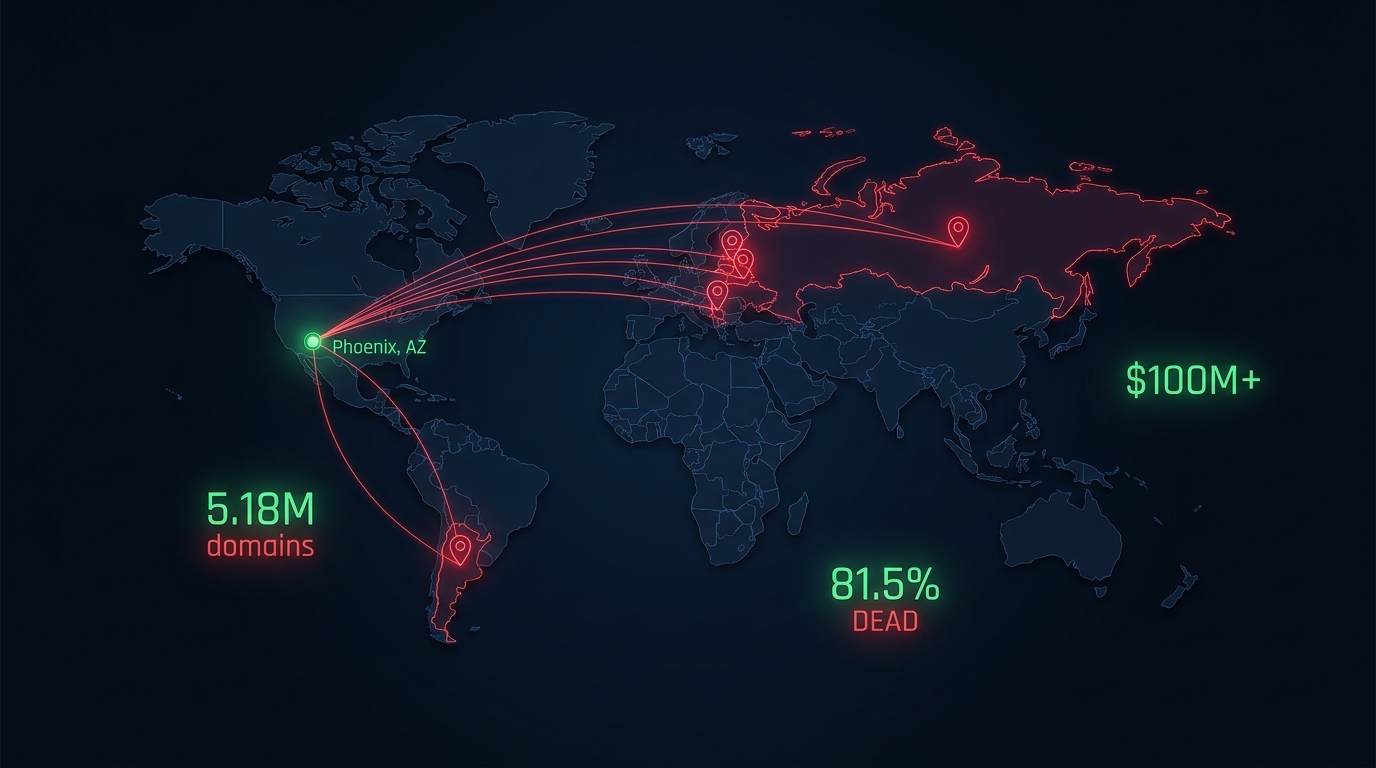
NameSilo LLC is registered in Phoenix, Arizona. Listed on the Canadian Securities Exchange as Brisio Innovations (CSE:BZI), reporting C$65.5M revenue in 2025. The actual engineering team is spread across Russia, Belarus, Ukraine, Serbia, Argentina, and Latvia. At least 13 Russian-speaking employees identified. The person with full DevOps infrastructure access spent a decade running IT for a Russian financial pyramid before joining NameSilo.
Aleksey Podashevskiy (Frontend) — Belarus, sanctioned jurisdiction, working for a US-registered ICANN-accredited registrar. 13+ Russian-speaking employees identified in total across Russia, Belarus, Serbia, Argentina, Latvia. Zero Western hosting in the xmrwallet infrastructure chain.
5.18M+ domains analyzed across NameSilo's full portfolio — every one cross-referenced against VirusTotal, URLhaus, PhishTank, abuse.ch, OpenPhish, and SURBL.
xmrwallet PHP backend reconstructed entirely from client-side behavioral traces — no server access, no source code, no cooperation. The theft mechanism was mapped from observable network patterns alone.
13 team members correlated across LinkedIn, GitHub, HeadHunter, Telegram, corporate registries, and court records across 6 countries. Trustpilot deletion patterns tracked over multiple months to identify systematic removal cadence. CSE:BZI quarterly filings cross-referenced against domain portfolio data to identify the revenue anomaly. 5.18M domains analyzed against 6 threat intel feeds. All raw data is public at gitlab.com/phishdestroy/namesilo-evidence. Filed with ICANN, EU law enforcement, and 3 national cybercrime units.
The Domain Anomaly: 32.2% Never Activated — A Statistical Smokescreen
We pulled and analyzed every domain in NameSilo's portfolio — all 5.18M of them. Each one was checked against VirusTotal, URLhaus, PhishTank, abuse.ch, OpenPhish, and SURBL. The raw data, methodology, and per-domain findings are public: gitlab.com/phishdestroy/namesilo-evidence. Result: 32.2% of domains have never been activated — vs 14.7–22.8% at comparable registrars. 10,000–17,000 bulk registrations in a single day (peak: 17,180 on 2025-07-19). $12M spent on never-activated domains; annual burn rate $3.2M/year on domains that serve no purpose. In 2024, when NameSilo partner ShortDot acquired new TLDs (.sbs, .cfd at ~$0.50 wholesale, sold at $14.95 retail = 22–31× markup), dead-domain registrations spiked 615% in a single year.
PrivacyGuardian hides the buyer identity on 3M+ domains (registered to pw-{hex}@privacyguardian.org). Bitcoin accepted. No KYC. Every phantom domain makes the abuse-to-total ratio look smaller.
"barely anything"
every 43rd site
1 phishing per 2.5 legit
NameSilo reports C$65.5M revenue (2025). P/E: 143.8× vs industry 21×. Revenue per real (live) domain: C$68 vs industry $10–15. 95 ICANN registrars sell .com cheaper. If bulk phantom domain registrations are washing proceeds — BTC-to-domain at 22–31× markup — they surface as "legitimate registrar revenue" in quarterly reports filed on the Canadian Securities Exchange. This pattern is documented and referred to law enforcement.
prnewswire.com — Reach Systems / NASA order, Jun 23, 2026
newswire.ca — SewerVUE acquisition, Sep 12, 2025
prnewswire.com — xmrwallet "private keys never reach servers," Jan 21, 2026
Two Names. One Brain. Can This Be a Coincidence?
While writing this investigation, we ran into an old friend. Judging by the number of articles it publishes about phishing, scams, blacklists and removing domains from them, NameSilo looks almost like our colleague. Put both operations side by side and the same brain appears three times: reviews, SEO and paid articles.
manufacture trust
bury the victim
email4pr relay
Both manipulate reviews: xmrwallet removes theft complaints and answers victims with the same synchronization excuse; NameSilo floods Trustpilot with scripted five-star praise for named support agents while negative reviews disappear.
Both run the same SEO defense: xmrwallet publishes “scam,” “security,” “recovery” and “sync” articles; NameSilo publishes “phishing,” “blacklist,” “delisting” and “abuse” articles. Both fill the exact searches created by the accusations against them with their own text.
Both use the same paid-article resource: PR Newswire distribution and the email4pr relay. NameSilo uses it for Canadian-market investor releases. xmrwallet used it to sell a false Tor and “keys never reach the server” story as corporate-looking news.
Two names. The same review manipulation. The same SEO. The same paid PR pipeline. One brain.
The Same Enterprise PR Pipeline
A “volunteer open-source wallet” publishing press releases on a platform built for publicly traded companies is not normal. It means access to a corporate PR account or the same PR agent. That is the pipeline xmrwallet chose — the same enterprise platform NameSilo Technologies uses for Canadian Securities Exchange announcements.
Apr 19, 2023 — “Upgrade Website to Support Charities”
Sep 26, 2023 — “Companies Embrace Cryptocurrency”
Contact: Nathalie Roy,
+1 300-227-473, 407923@email4pr.com.
May 1, 2026 — 2025 Year-End Results
Plus quarterly results, SewerVUE, CommerceHQ, Reach Systems and subsidiary-sale announcements.
For NameSilo, this distribution feeds the news stream around its Canadian-listed parent. For xmrwallet, it sold a false safety story.
The January 2026 release announced “full Tor integration” for an “open-source” project whose last real GitHub commit was November 6, 2018 — more than seven years earlier. No Tor code was ever committed. They paid to advertise a feature that did not exist in the public codebase while also claiming that private keys never reached a central server. The release used an invalid phone number and an enterprise PR relay address. This was not independent coverage. It was operator-written copy purchased for distribution.
Archived release and contact details · Public GitHub repository
Who do these platforms believe their audience is? Canadian investors encounter NameSilo’s paid corporate releases in a visual format associated with authoritative financial news. The same distribution environment then delivered xmrwallet’s false Tor and server-safety story to that affluent investor audience as another professional-looking announcement.
A paid distribution label does not end the responsibility question. Republishing unsupported claims from a registrar and then a direct scam associated with that registrar can expose the very audience that trusts financial-news infrastructure. The platform should examine the ordering account, billing relationship, agent, submission metadata and approval trail behind both sets of releases.
If the same person, account or PR agent ordered both xmrwallet and NameSilo distribution, the honest response is not silence. Preserve the records, disclose the relationship and report it to the relevant regulators and law-enforcement authorities. We are asking the platform to determine whether this was coincidence or one buyer using its authority twice.
PR Newswire is not journalism. The subject writes the text, pays for distribution, and the same text is republished as “news.” It then appears on finance portals and stock-news feeds as if somebody independently covered it. For NameSilo this is a key corporate channel for the Canadian exchange. For xmrwallet it was a paid falsehood dressed in the visual language of corporate disclosure.
Why Did Both of Them Keep Writing About the Exact Accusations?
We never understood why xmrwallet kept publishing articles about scams, phishing, wallet recovery, synchronization problems and hacks. We never understood why NameSilo kept rewriting the same material about phishing, abuse reports, blacklists, delisting and reputation recovery. ICANN does not require this. The answer is simpler: manipulation of search results.
13 archived examples — every supplied link
- 5 Security Tips for Crypto Users
- 5 Crypto Scams You Should Know About
- How to Restore in Monero GUI
- How to Restore Monero on CLI
- How to Restore Monero Using Keys — GUI
- Monero and Tornado Cash
- Security of Your XMR Wallet
- Social Media Scams to Avoid
- XMR Social Recovery
- Monero Security on Smartphones
- XMRWallet: Best for Beginners
- Guide to Monero Wallets
- Monero Survives XMR Wallet Hack
14 NameSilo examples — every supplied link
- How to Report a Website for Phishing or Copyright Infringement
- Can Someone Steal Your Domain Without Hacking You?
- Free WHOIS Privacy Risks in 2026
- WHOIS Privacy Protection in 2026
- Phishing by Proxy
- Blacklists, Reputation Scores and Recovery Paths
- How Attackers Pick Domain Names That Trick You
- Ghost Records as Security Backdoors
- WHOIS Fingerprint and Domain Metadata
- Domain Footprinting and Attack Surface
- The Disposable-Domain Economy
- “Unblockable” Domain Security
- AI-Generated Spam and Domain Abuse
- Identifying Scam Websites
The repetition is the point. Publish enough pages around phishing, scam, blacklist, recovery, security and delisting, and searches for the accusation return the subject’s own framing. xmrwallet used it against victim reports. NameSilo uses it around the registrar’s abuse reputation, while the real reviews describe rude support, unclear English and agents repeating scripts instead of answering direct questions.
One Logic. One Strategy. Two Phases.
This is the part the separate incidents hide. The client was already gone. What continued was NameSilo’s defense of NameSilo.
What the Short Version Left Out
PR Newswire charges approximately $195–249 per year for membership plus $805–3,000+ for each release. Free or far cheaper alternatives exist, including PRLog and EIN Presswire at roughly $149. Yet a volunteer wallet with zero disclosed donations chose the same enterprise distribution pipeline that NameSilo Technologies uses for Canadian Securities Exchange communications.
xmrwallet published three releases through this pipeline, including its January 21, 2026 Tor announcement. NameSilo published 12 releases: “Surpasses 6 Million Domains” on January 22, 2026—one day after xmrwallet, its 2025 year-end results on May 1, 2026, and ten more releases covering quarterly results, SewerVUE, CommerceHQ, Reach Systems and a subsidiary sale. SewerVUE is literally a sewer-pipe inspection company—that is why our “old friend cleaning sewer pipes” reference was not random.
+1 300-227-473. Area code 300 does not exist in the North American Numbering Plan. The email was 407923@email4pr.com, an enterprise PR relay rather than a normal volunteer-project address.The release promoted xmrwallet as providing “discreet financial tools for charitable organizations.” In our assessment, the charity language was reputation cover for a wallet we had already linked to theft.
For xmrwallet the same resource carried a false Tor and server-safety story. For NameSilo it is a central investor-relations pipeline.
The last public commit was November 6, 2018. The repository then remained frozen for more than five years, and no Tor implementation was ever committed. xmrwallet later deleted its source from GitHub. Our technical finding is that the public 2018 repository was an audit prop while production ran different, obfuscated server-side code capable of collecting wallet secrets. The project was paying approximately $550 per month for protected hosting behind Russian DDoS-Guard infrastructure while presenting itself as a donation-free volunteer project.
They paid enterprise-PR prices to advertise code that did not exist in the public repository and to repeat that keys never reached the server. That is not ordinary open-source communication. It is purchased reputation defense.
The Review Match Is Also Direct
The SEO articles and the support reviews solve the same reputation problem from two directions. NameSilo fills negative searches—phishing, abuse, blacklist, delisting, stolen domain—with its own explanations. At the same time, the review stream fills the support question with praise for “Leonid” and other named agents.
A real customer receives a rude, unclear or scripted answer, then sees page after page saying Leonid is brilliant and helpful. The intended effect is doubt: “If everybody praises this support, perhaps the problem is me.” The customer hesitates and decides not to publish the truthful negative review. If they publish it anyway, our observed pattern is that NameSilo challenges or reports it until it disappears. The positive reviews do not merely improve a score; they suppress the next negative review before it exists, while removals erase the ones that still get written.
That is the shared mechanism: capture the negative words in search, manufacture the positive answer in reviews, and remove the testimony that contradicts both.
Our 2023–2024 database contains tens of thousands of abuse reports associated with NameSilo that, in our assessment, were ignored or produced no effective action. In the drainer slice we were tracking at the time, effectively every operation was registering domains there. On that dataset, we considered NameSilo the worst-performing registrar. We will publish the complete registrar comparison separately.
Our opinion: the repeated phishing, blacklist, delisting and abuse articles were not written because ICANN required them. They were written to occupy the searches generated by NameSilo’s real abuse record.
The CIS Connection: Evidence, Opinion and an Important Caveat
We had already concluded that the xmrwallet operator was Russian; the hosting and infrastructure were only part of that conclusion. Separately, we identified more than ten Russian-speaking or CIS-linked NameSilo employees.
Mikhail Chudinov is particularly relevant because of his public LinkedIn profile and Russian-language Habr writing about decentralization and cryptocurrency. Our opinion after reading those texts is that his analysis treats decentralization, metaverses and NFTs as overlapping movements without adequately separating their technical and economic incentives, and shows a limited view of where cryptocurrency systems were heading.
Caveat: this may be a coincidence. Chudinov’s nationality, employment and public views do not by themselves prove that he, NameSilo or xmrwallet shared an operator. We are documenting the overlap, not presenting an employee’s origin or opinions as proof of operational control.
One Response Pattern: Legal Threats, Detectives and Suppression
From our first message, we warned both xmrwallet and NameSilo not to turn a technical report into a pressure campaign. Both responded with threats involving litigation and private investigators. The xmrwallet operator even suggested bringing the registrar into court. NameSilo later threatened legal action publicly after offering to remove VirusTotal detections for the same client.
Perhaps this approach worked for ten years. It does not make the underlying evidence disappear.
By 2018, from our perspective, NameSilo was already near the center of the cybercrime registrations we were tracking while ICANN’s response felt like a year-long absence. That is our characterization of prolonged enforcement failure—not a claim that ICANN literally closed for a year.
That absence of accountability creates a predictable incentive: a registrar can remove detections for a client, later tell ICANN that it cannot determine what phishing is and that abuse is outside its responsibility, and expect no immediate consequence. ICANN’s behavior allows this pattern to persist.
xmrwallet was already closed. The later Twitter lock, GDPR requests, DMCA notices, complaints against individual search results, phishing reports against our own site, Bing deindexation and attempted IPFS takedowns could no longer protect the wallet. They could protect only NameSilo’s reputation.
The requests did not target only our domain. They targeted individual links leading to our work. The public Lumen Database trail records part of this campaign; additional records are preserved in our Telegram archive.
We also believe that, with a larger media budget, the next predictable step would be purchased coverage portraying the researcher as a stalker or extortionist. That is a forecast based on the suppression pattern, not an event we claim has already occurred.
This was not one complaint against one page. The campaign targeted our domain and the individual search results linking to our work—one URL after another—using GDPR, DMCA, phishing reports and platform complaints. The objective was to make the investigation disappear from the search journey even when the underlying archive remained online.
The timing answers the motive question: xmrwallet was already closed. A closed wallet could no longer benefit from this attack. The remaining beneficiary was NameSilo, whose name, abuse history and defense of the wallet were attached to those results.
So who else in this story repeatedly manipulates discovery around exact names and exact negative queries—through first-party SEO pages, paid distribution and, in our assessment, Google Ads around specific terms? NameSilo. The same logic appears again: capture the name, replace the result, and suppress the link that cannot be rewritten.
Be careful when relying on this registrar. In our experience, NameSilo reacts very differently to independent criticism than it does to Leonid-centered praise or paid publications carrying company-supplied text. The domain it had defended was eventually moved to another registrar. Because xmrwallet was not a phishing landing page but a functioning wallet with a server-side theft mechanism, that transfer looks to us like containment of NameSilo’s exposure—not a phishing-domain remedy.
We stated the rule from the beginning: pressure against us produces a documented response through lawful channels. Every deindexing request, takedown attempt and threat becomes another exhibit. That is not retaliation outside the law; it is preservation, publication and formal reporting.
The Money Estimate: Clearly Separated From Established Findings
Our working hypothesis is that the operation stole at least $80 million. That figure is our estimate, not an established forensic total. The documented victim sample supports only a lower conservative range; the $80 million hypothesis extrapolates beyond the publicly documented cases.
A second, separate hypothesis is that a sharp activity peak, when compared with employee and infrastructure timelines, may reflect a period of large-scale Monero laundering. We have not established that conclusion.
We have likewise not established a direct Tornado Cash relationship or shared clients. The xmrwallet article about Tornado Cash, the timing and the surrounding activity make that a question we believe investigators should examine—not a fact we are asserting.
We invited anyone with direct knowledge to correct the amount from a burner address. We might then remove that estimate or reduce how strongly we pursue that specific line, but no anonymous message would erase the evidence or turn this investigation into a negotiation.
While they were rewriting the same SEO articles, buying corporate-looking announcements, manufacturing support praise and trying to erase our links, the operation they protected was closed. It was not closed by the victim they misled, a famous investigator or a commercial security company. We closed it—a noncommercial research project working for zero dollars.
The later suppression campaign makes the contrast worse. Corporate accounts, legal complaints, deindexing requests and takedown attempts were aimed at researchers with no paid media budget. They still could not remove the archives, reverse the evidence or reopen the wallet. Every attempt simply created another timestamp and another exhibit at no cost to us.
That is not operational strength. It is strategic incompetence. They had money, infrastructure and platform access. We had evidence, public archives and $0—and the scam is the thing that disappeared.
One logic, one strategy: manufacture reviews, occupy the accusation in search, purchase corporate-looking coverage, remove detections, move the defended domain, threaten the researchers and then suppress every path leading to their evidence. The client disappeared. The strategy continued because its second phase was the defense of NameSilo itself.
What Happened After We Published
By the time this pressure campaign began, xmrwallet was already closed. What followed could protect only NameSilo: every major surface where we had a presence was targeted. Each mechanism is logged, archived, and now part of ICANN complaint #1479.
Before the lock dropped, we published a tweet predicting NameSilo would use the scammer's suppression playbook and timestamped it in GhostArchive. They did exactly what we said, on schedule. The timestamped prediction — proving we anticipated the tactic before it was used — is included in the ICANN complaint against NameSilo (ICANN #1479).
Everything is on IPFS (phishdestroy.eth), Arweave, GhostArchive, and Wayback Machine. 61 SHA-256 verified screenshots. Zero successful legal challenges to any claim. Zero technical rebuttals from the operator or NameSilo. Zero factual responses — only legal threats, ad hominem, and deleted tweets. The full investigation with raw data, team dossier, laundering analysis, and victim resources is at phishdestroy.eth.limo — mirrored across IPFS, Arweave, GhostArchive, and Wayback Machine. No Gold Checkmark reaches any of them.
Escape Domain Network: Prepared Months Before Takedown
Starting February 4, 2026 — the same week the operator first contacted PhishDestroy — he began secretly registering escape domains across 4 different registrars, prepaid 5–10 years each. The infrastructure was designed to survive any single takedown. It didn't survive the investigation.
Initial technical breakdown with full evidence: gitlab.com/phishdestroy/DO-NOT-USE-xmrwallet-com
| Domain | Registrar | Prepaid | IP | Status |
|---|---|---|---|---|
| xmrwallet.cc | PublicDomainRegistry | 8 years | 185.129.100.248 | SUSPENDED |
| xmrwallet.biz | WebNic.cc | 5 years | 190.115.31.40 | SUSPENDED |
| xmrwallet.net | NICENIC International | 10 years | 190.115.31.40 ← | DNS DEAD |
| xmrwallet.me | Key-Systems GmbH | 10 years | 185.129.100.248 ← | ACTIVE — abuse reported |
IP clustering: 185.129.100.248 shared by .cc and .me — same host. 190.115.31.40 shared by .biz and .net — same host. Four registrars, two IP clusters. 33 years of prepaid registration. All registered in secret after first contact with investigators.
Bought Reputation: Wikipedia, Forbes, and 15+ Sponsored Articles
NameSilo's public reputation is manufactured. Wikipedia: paid/promotional flag. Forbes: "We earn a commission" affiliate disclosure. SmartCustomer: 1.8/5 — with zero negative results in Google.
NameSilo has a Wikipedia article — marked by editors as a paid/promotional article, not neutral editorial coverage. Edit history (archived): en.wikipedia.org/w/index.php?title=NameSilo&action=history
NameSilo appears on Forbes Advisor with an explicit affiliate disclosure: "Forbes Advisor adheres to strict editorial integrity standards... We earn a commission." Forbes Advisor earns money when users sign up through their links — creating direct financial incentive for positive coverage. Source: forbes.com/advisor/business/software/namesilo-review/
NameSilo holds a 1.8/5 rating on SmartCustomer — source: smartcustomer.com/reviews/namesilo.com. Despite dozens of negative reviews on record, a Google search returns zero negative coverage — active suppression using the same GDPR and DMCA tools applied against our investigation.
NameSilo Technologies Corp. (CSE:BZI / OTC: URLOF — publicly-traded parent of NameSilo LLC) uses PR Newswire for corporate announcements. PR Newswire is a paid distribution service: the company writes the text and pays for placement. Examples of paid NameSilo Technologies press releases:
- Acquisition of SewerVUE Technology Corp. — newswire.ca, Sep 12, 2025
- Subsidiary Reach Systems receives NASA order — prnewswire.com, Jun 23, 2026
The same mechanism: xmrwallet used PR Newswire on January 21, 2026 to publish its cover story ("private keys never reach central servers") while the backdoor ran. Paid distribution presenting operator-authored text as newsworthy content.
Three Positions. One Company. None of Them Survive Contact With Each Other.
NameSilo did not maintain a consistent story. They ran three mutually exclusive positions in sequence — confident expert, threatened victim, humble public servant — depending on how much legal exposure they were facing at each moment.
"Your claims are false, libelous and defamatory. NameSilo takes action and reviews all abuse reports submitted to us. If you have any such cases, please submit them to abuse@namesilo.com. Otherwise, please contact the website host or registrant directly. And halt your falsehoods towards us or we will be forced to undergo legal action."
If your abuse team had the competence to conduct an extensive in-depth review, determine the domain was hacked, identify the registrant as the victim, and begin helping him remove VirusTotal detections — then you are explicitly claiming to be more authoritative and more technically competent than every antivirus vendor that flagged this domain as malicious.
You cannot later claim that you simply process reports and lack the expertise to determine phishing. The ICANN complaint is not asking for competence you don't have. It is asking why you used the competence you demonstrably have — to help the scammer, not the victims.
Trustpilot: Bot Farms Competing With Bot Farms
One 5-star for NameSilo (Jan 2026): “Leonid was very helpful… 5 stars!” The other review: for Otrium — a company with reviews alleging fraud and stolen money. One bot account, two scam-adjacent businesses. Pattern: named support agents, praised response time, templated language. Real domain buyers review prices and panel UX. Bot reviews praise “Leonid.”
Data Analysis — 2,280 NameSilo vs 2,480 Namecheap Reviews
| Metric | NameSilo | Namecheap |
|---|---|---|
| 5-star reviews | 88.9% | 74.0% |
| 1-star reviews | 7.2% | 16.7% |
| Single-review accounts | 62.4% | 59.6% |
| No avatar (fresh accounts) | 67.3% | 51.5% |
| Reviews about support/service | 70.0% | 60.2% |
| Reviews about price/cost | 9.8% | 37.5% |
| Named agent “Leonid” | 5.7% | 0.0% |
| US geolocation | 35.1% | 26.5% |
Leonid appeared on April 13, 2025. Zero mentions before. Then 65 reviews in his first two months. May 2025: 106 reviews (5× normal), 95% five-star, zero one-star. Not one unhappy customer in 106 reviews for a registrar ranked #96 in .com pricing.
43% of Leonid reviews are under 80 characters. Four have the title just “Leonid”. Three more: “Leonid was very helpful.” Among reviewers: “Satoshi Nakamoto,” “Author,” “Виктор -”, “Anna Koroleva,” “Boris Martin,” “Andrei Dobrescu” mixed with “Brad,” “LaToya,” “Patty Johnson.” A name generator cycling through continents. The name Leonid is Russian.
Zero four-star. Zero three-star. Zero anything else. 91% single-review accounts. Over 7 years. China: 94% five-star, 80% single-review. Singapore: 95% five-star. Combined 168 reviews from Chinese-speaking markets — almost entirely fabricated.
Why China? NameSilo actively markets there: namesilo-china.com, bcbay.com/namesilo, paid Chinese blog posts, a Chinese Wikipedia article. When investigators ask “who buys 4.22 million dead domains?” — NameSilo points to China. The Trustpilot data shows they have been building this alibi since 2019, one fake review at a time.
Independent Claude API Forensic Analysis — Blind Test
2,480 NameSilo and 2,480 Namecheap Trustpilot reviews submitted to Claude API, anonymized as “Company A” (NameSilo) and “Company B” (Namecheap). The AI had no knowledge of which was which.
| Forensic Indicator | NameSilo (A) | Namecheap (B) |
|---|---|---|
| 5-star ratio | 89.1% | 74.0% |
| 1-star ratio | 7.1% | 16.7% |
| Disposable accounts giving 5 stars | 92% | ~65% |
| Reviews mentioning price | 11.2% | 39.2% |
| Named single agent in reviews | Leonid: 168 | none |
| 5-star vocabulary diversity (TTR) | 0.073 | ~0.15 |
| HK: 100% five-star | 57/57 | n/a |
| May–Jun 2025 spike (5× normal) | 215 reviews | none |
| AI manipulation verdict | 92% | 15% |
“Company A exhibits extensive, multi-dimensional evidence of systematic review manipulation through coordinated artificial generation. The probability of these patterns occurring organically approaches zero.”
Full analysis: phishdestroy.eth.limo/namesilo-trustpilot.html · Raw data: trustpilot-forensic-report-final.txt
What the Investigation Achieved
Following PhishDestroy's investigation and publication, xmrwallet.com ceased operations. The operator sent a farewell message — and notably, no longer signed it as "Nathalie Roy." The identity that had been the public face of xmrwallet for years was quietly dropped. No explanation given.
xmrwallet.com was eventually redirected to its GitHub repository — the same public facade that served as the "open-source" alibi for a decade. It took three attempts. The repository had been inactive for 5 years prior to the redirect: no commits, no updates, no maintenance — consistent with a project whose actual code lived exclusively on an unaudited production server and was never intended for public review.
xmrwallet.com transferred to Namecheap in May 2026, registered until 2036. NameSilo apparently considers this resolved. It is not.
You thought the experts who could outperform every antivirus vendor would stop when the domain moved? The investigation is on IPFS. It is on Arweave. It is in ICANN's formal complaint system. It is with EU law enforcement. It is with 3 national cybercrime units. The legal threat added one more timestamp to the file. The domain transfer added one more exhibit. Every action taken to suppress this investigation is itself documented evidence of the pattern we described.
You were not the smartest people in this situation. You just had more money for a while.
Related Investigations