VirusTotal
5 / 91 engine detections
レポートを開く

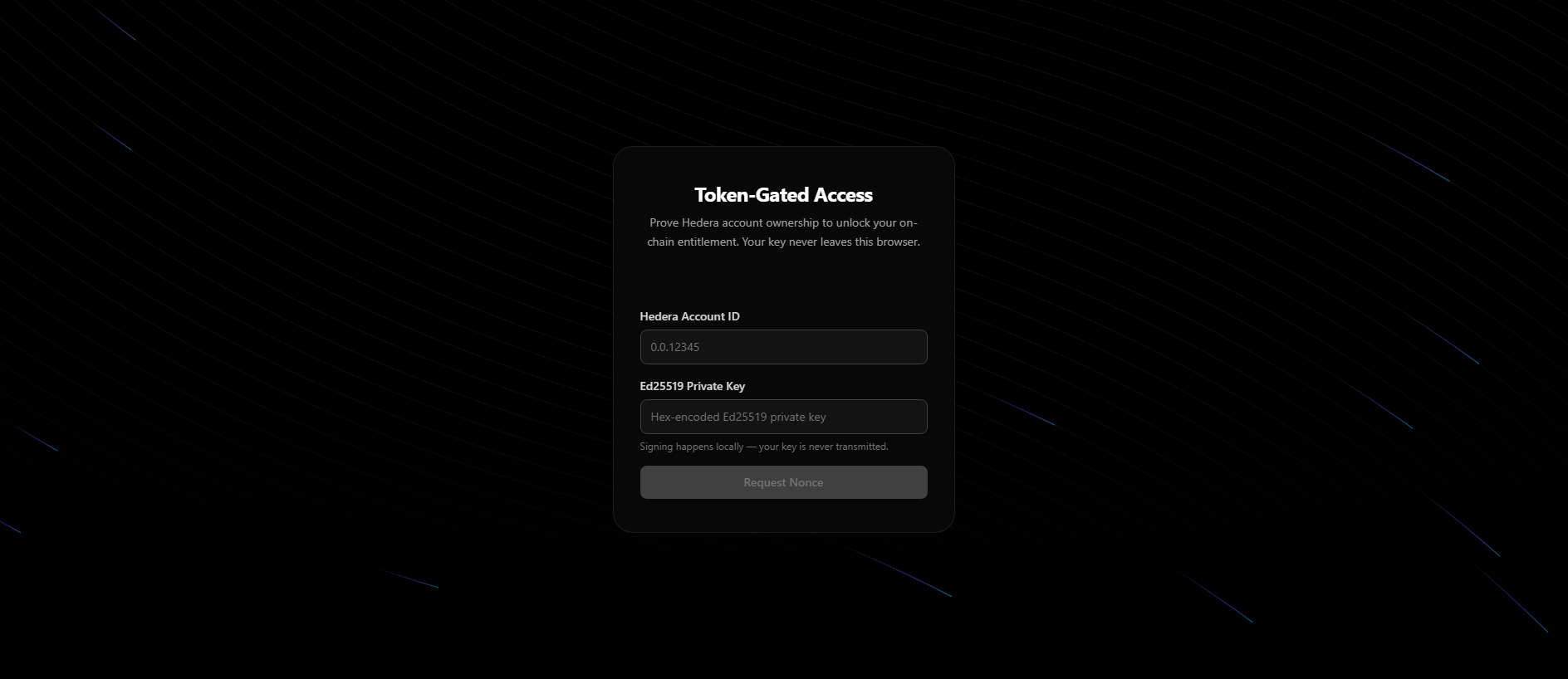
“Hedera Token-Gated Auth”
The sent-report ledger records the first outgoing report at .
The recorded recipient is abuse@ovh.ca.
The latest stored availability evidence still shows the domain reachable; 1 month has elapsed since the first outgoing report.
ICANN RAA §3.18 describes registrar abuse-contact and handling obligations. This section records outgoing timestamps, listed recipients, case identifiers, and later availability. It does not by itself prove receipt, acknowledgement, investigation, remediation, or contractual non-compliance.
シードフレーズ・フィッシング: hedera-demo.apps.arkivist.io — 最後に確認されたアクティブな状態 (HTTP 200). 証拠の概要: VirusTotal 5/91 (alphaMountain.ai, CRDF, Forcepoint ThreatSeeker…
元のフォレンジック記録を保持するため、下の PhishDestroy AI 詳細分析は英語のままです。
5 / 91 engine detections
レポートを開くchecked — no detections recorded
レポートを開くno community references
レポートを開くprovider verdict: clean
レポートを開くNo threat flag
レポートを開くNo malicious flag
レポートを開くResults reflect each source’s collection time. Zero detections do not guarantee safety. OTX references are community publications.
PhishDestroy threat report
This site impersonates Hedera, the distributed ledger network, under the guise of a token-gated authentication flow. It targets cryptocurrency holders who may believe they need to verify wallet ownership to access Hedera-related content or services. PhishDestroy first identified it on 2026-09-13, and as of the last check on 2026-10-18 the site remains fully live and serving malicious content.
The page, titled "Hedera Token-Gated Auth", presents itself as a legitimate authentication step, prompting users to prove wallet access. In practice, seed phrase theft pages ask victims to type their 12- or 24-word recovery phrase directly into a form, claiming it is needed to verify identity or unlock gated content. Any phrase entered is immediately harvested by the attacker, who can then import the victim's wallet on any device and drain every asset it holds — tokens, NFTs and any connected approvals — without further interaction from the victim.
Five of 91 engines on VirusTotal flagged this domain as malicious as of 2026-09-26; vendors include alphaMountain.ai, CRDF, Forcepoint ThreatSeeker, Gridinsoft and SOCRadar. Detection coverage is moderate rather than broad, so users should not interpret a low engine count as a sign of safety. The domain also appears on three independent blocklists: PhishDestroy, MetaMask and SEAL, confirming the classification across multiple threat-intelligence pipelines.
The domain was registered on 2026-04-06 through Name.com, Inc. and is hosted on an OVH SAS network node located in Canada. The site uses a Let's Encrypt TLS certificate issued under the YE1 authority, which provides encryption in transit but carries no implication of legitimacy or trustworthiness.
If you visited the site but entered nothing, no immediate action is required beyond avoiding it in future. If you typed your seed phrase into any field on this page, treat your wallet as fully compromised: move all assets to a new wallet generated on a clean device before the attacker acts, and do not reuse the exposed phrase under any circumstances. Security teams and platform operators should block the domain at the DNS and network layer and add it to internal threat feeds. Report it through your browser's phishing-report function to accelerate broader blocklist coverage.
Last checked
dayana.ns.cloudflare.comdrew.ns.cloudflare.comLocation describes the IP network.
d1b4cf7abe438a430a5eed63970027ebb4a085b2458b45ab054d4deba5821dcaSaved certificate metadata. Certificate dates without a timezone are shown as stored. Transport encryption does not establish that the site is trustworthy.
Google PageSpeed Insights — mobile performance audit of hedera-demo.apps.arkivist.io · checked Sep 13, 2026
An estimated time describes an observation window. It does not prove a registrar action or the exact moment a site became unavailable.
Compare what a browser and a crawler receive, and check for Keitaro traffic routing.
alive_content: raw=ok; http=200; via=http_proxy; server=Caddy
hedera-demo.apps.arkivist.io
Dated changes retained by the monitor and source collectors. Newest observations appear first; source states are not proof of a takedown.
不明→live_content
content_served
不明→live_content
content_served
不明→live_content
content_served
不明→live_content
content_served
不明→live_content
content_served
不明→live_content
content_served
不明→live_content
content_served
不明→live_content
content_served
不明→live_content
content_served
不明→live_content
content_served
不明→live_content
content_served
不明→live_content
content_served
不明→live_content
content_served
不明→live_content
content_served
不明→live_content
content_served
不明→live_content
content_served
4→5
3→4
2→3
到達可能
No threat flag
View source5/91 engine detections
View sourcePD-20260913-FB2677
Page captured
View sourcehedera-demo.apps.arkivist.io
View source各レーンは、ドメインがこのホストにリンクされている理由の1つを示しています。ノードのサイズは「VirusTotal」の検出件数を表しており、破線のノードはすでにオフラインになっています。完全なリストは以下の通りです。
このホストと同じファビコンのハッシュ、または同じページタイトルを持つもの。
同じレジストラを通じて登録されています。レジストラは、互いに関係のない何百万もの顧客に対応しているため、この事実は関連性を証明するものではなく、単に報告をまとめているに過ぎません。
PD-20260913-FB2677 Recipient: abuse@ovh.ca アカウント資格情報、個人情報、支払い情報を入力した場合、またはこのドメインからファイルをダウンロードした場合は、すぐに対処してください。インシデントを報告し、自分自身を守るのに役立つリソースを以下に示します。
サイバー犯罪の公式連絡先 または 苦情草稿を作成する → を取得するには、国を選択してください。
Template-based draft · optional AI wording assistance requires separate consent
Choose the steps that match what you shared. Keep a copy of this report alongside your own records.
Stop using the suspicious site. Open the real service through its official app or an address you already trust.
Keep original emails, receipts, messages and screenshots in a secure place. A factual timeline helps the receiving authority understand what happened. IC3 evidence guidance ↗
hedera-demo.apps.arkivist.io)たとえすべての詳細がわかっていなくても―― とにかく報告を提出する. 不完全な情報であっても、捜査には役立つ。
A report is not a guarantee of recovery or investigation, but prompt, accurate transaction data can help authorities and service providers trace the incident.
Further guidance: NIST · phishing responseFBI IC3 · reports & evidenceFTC · recovery scams
保存されたブロックリスト、WHOIS、DNS、および公開スキャン証拠を使用した脅威分析
今すぐスキャン不審なドメインを当社の脅威データベースに報告してください — コミュニティを守りましょう
レポート最近のフィッシングレポートと観察された可用性の変化
監視リアルタイムの脅威を監視するか、誤検知だと思われる場合はこのリストに異議を申し立ててください
This report combines saved page captures, registration and network records, scanner results and PhishDestroy reporting history. Each source keeps its own observation date. Open a source report to inspect the original result.
The AI-assisted analysis was written on . It describes the evidence available at that time; later source checks can change.
A capture documents what was shown. A scanner result records that provider’s assessment at the time of its check. Neither a valid certificate nor a zero-detection result is a guarantee of safety.