spidermonmonad.com
  m4fxmarkets.com
  customcommunityspace.com
  primestonepartnersag.com
  vurak-groups.com
  teslastocks.org
  restore-apyxfi.app
ABUSE NOTICE · 7D+ OPEN
Outgoing abuse reports are recorded; the latest stored availability evidence still shows the domain reachable.
Notification and current-status evidence
The sent-report ledger records the first outgoing report at . A report was sent to the recorded registrar; contact details remain in Domain Intelligence. The latest stored availability evidence still shows the domain reachable; 4 months has elapsed since the first outgoing report.
ICANN RAA §3.18 describes registrar abuse-contact and handling obligations. This section records outgoing timestamps and later availability. It does not by itself prove receipt, acknowledgement, investigation, remediation, or contractual non-compliance.
Elapsed since first report
4 months
Reports sent
1
Current status
HTTP 302 at latest stored check
Sicurezza del dominio e intelligence sulle minacce

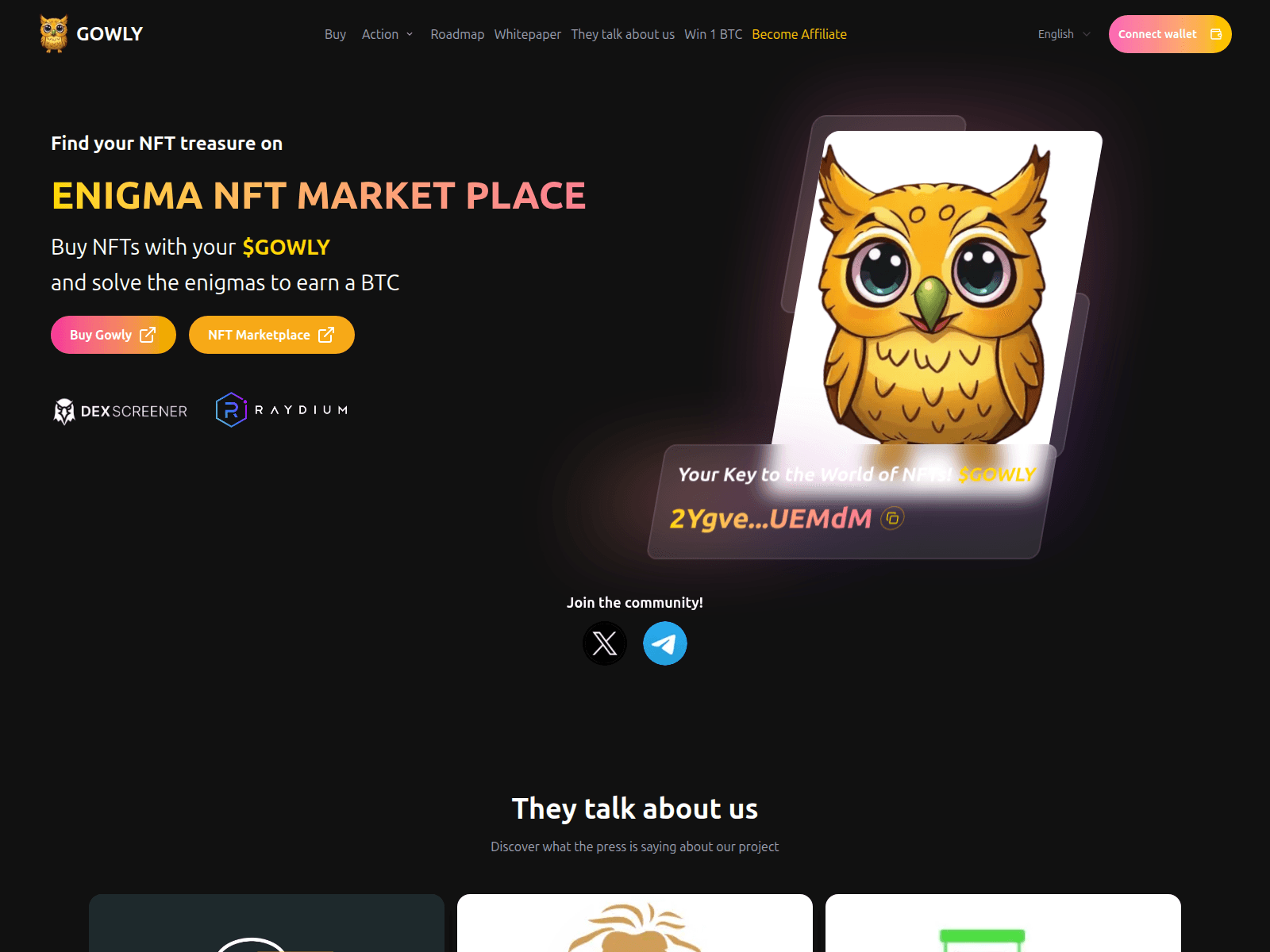
gowlysolcoin[.]com
“Gowly – The Next-Gen Web3 Utility Token | EnigmaSolCoin”
Verdetto di minaccia
Critico
Punteggio delle prove 71/100
Disponibilità
Ultimo attivo conosciuto
Ultima osservazione di raggiungibilità memorizzata
Segnali di rischio
Rilevamenti VirusTotal: 3/91
Tipo di truffa: Crypto Scam
Ultimo attivo conosciuto
Riepilogo delle prove
CRITICO
PhishDestroy identifies gowlysolcoin.com as a live Web3 utility-token phishing domain that purports to be the “Gowly” next-gen token under the EnigmaSolCoin brand. The site is currently flagged under the generic_phishing threat category while deeper analysis continues. Initial telemetry indicates the domain’s backend is designed to siphon private keys, seed phrases, or wallet credentials via fake token-swap or airdrop interfaces typical of Web3 drainer kits, though the specific drainer kit has not yet been fully extracted from the page payloads. This domain was flagged on seed fb8692 on February 8 2025. Technical indicators include a VirusTotal score of 1 out of 95 antivirus engines at the time of capture, a creation date of February 09 2025, registration through TUCOWS.COM, CO., an IP resolution to 103.169.142.0, and a Google Trust Services SSL certificate. As of the last update the domain remains unlisted on Google Safe Browsing lists and has not been added to any public threat-intelligence blocklists, indicating a very low retroactive detection footprint. The site is currently active and serving the phishing page with the title “Gowly – The Next-Gen Web3 Utility Token | EnigmaSolCoin.” Countermeasures remain underway, including takedown requests and network-level blocks; however, the domain continues to resolve and lure victims via social engineering on crypto forums and messaging channels. Remaining risk is assessed as high due to low retroactive detection, zero VirusTotal flags, and the absence of network-layer blocks. Users should immediately block the domain and IP, refrain from clicking any links or approving wallet transactions, and report encounters to their security teams or PhishDestroy for rapid ingestion into detection pipelines.
Istantanea delle prove inviate
- Inviato
- Voci del registro
- 1
- ID del caso
PD-20260331-D0B147- Titolo della pagina acquisita
- Gowly – The Next-Gen Web3 Utility Token | EnigmaSolCoin
- Artefatto PDF
- Prova in PDF
Testo completo delle prove
Policy Violations:
Illegal Activities: Active phishing operation targeting victims
Fraud & Deception: Impersonation of legitimate services
Identity Theft: Collection of credentials under false pretenses
Applicable Laws (CA):
Criminal Code Section 342.1
Criminal Code Section 380 - Fraud
PIPEDA
Canadian law prohibits computer fraud and unauthorized access.
Action Required: This evidence-backed report demonstrates clear violations requiring suspension per your policies. Continued hosting exposes your organization to regulatory scrutiny and potential legal liability.
Illegal Activities: Active phishing operation targeting victims
Fraud & Deception: Impersonation of legitimate services
Identity Theft: Collection of credentials under false pretenses
Applicable Laws (CA):
Criminal Code Section 342.1
Criminal Code Section 380 - Fraud
PIPEDA
Canadian law prohibits computer fraud and unauthorized access.
Action Required: This evidence-backed report demonstrates clear violations requiring suspension per your policies. Continued hosting exposes your organization to regulatory scrutiny and potential legal liability.
VirusTotal
3 det.
Certificato TLS
Google Trust Services
Età
1.5 yr
Stato osservato
Ultimo attivo conosciuto HTTP 302

Elenco da eliminare
Presente
Reports Sent
1
Data Coverage
VirusTotal
3 / 91
URLQuery
checked — no detections recorded
PhishStats
checked — no match recorded
OTX
no community references
CF Radar
scan completed
URLScan capture
rapporto memorizzato
URLScan verdict
Analisi completata
Blocchi DNS
11 verificato — nessun blocco
TLS
valid certificate, 88d
WHOIS
18 mo old
Screenshot
3 captures · 3 sources
Catena di reindirizzamenti
non sondato
Pipeline di risposta alle minacce
Scoperta
Checks
Reports
Disponibilità
11/12
Copertura delle blocklist
10 fonti esterne monitorate · snapshot del 10/08/2026
10 fonti esterne monitorate Nessuna corrispondenza
MetaMask
Nessuna corrispondenza
ScamSniffer
Nessuna corrispondenza
Polkadot
Nessuna corrispondenza
CryptoFirewall
Nessuna corrispondenza
OpenPhish
Nessuna corrispondenza
SEAL
Nessuna corrispondenza
Enkrypt
Nessuna corrispondenza
Phishunt
Nessuna corrispondenza
Codeesura
Nessuna corrispondenza
DiscordPhishing
Nessuna corrispondenza
Infrastruttura finanziaria
Indirizzi estratti dalla pagina di phishing.
Telegram
Acquisizione salvata
Analisi dei domini
Dominio
URLScan Verdict
Analisi completata
score 0 report ↗
Server / ASN
cloudflare · AS209242 Cloudflare London, LLC
IP Context
Cloudflare shared edge
origin IP hidden
La reputazione Edge-IP non è attribuita a questo dominio.
Registrar
TUCOWS.COM, CO
 (CA)
(CA)
(CA)
Indirizzo IP
103.169.142.0
CDN
Posizione Surry Hills, AU
Surry Hills, AUReteAS209242 · Canva
L'IP di origine è nascosto dietro un proxy CDN. I risultati dell'IP inverso per l'indirizzo edge contengono tenant non correlati; la ricerca dell'origine richiede DNS passivo o dati di trasparenza del certificato.
RegistrazioneCreato 09/02/2025
Stato HTTP302 Found (Temporary)
Dettagli tecniciDNS, nomi TLS e date
Rilevato per la prima volta31/03/2026
Submitted URLhttps://gowlysolcoin.com/
Nameserverns1.systemdns.comns2.systemdns.comns3.systemdns.com
Impronta TLS
Osservazione TLSvalido dal 30/03/2026analizzato il 22/04/2026
ICANN OVERSIGHT
Accreditamento e contesto RAA
Accreditamento e contesto RAA
Registrar accreditation and DNS abuse obligations
For this gTLD, the registrar above operates under an ICANN accreditation agreement. The links below provide the official fee schedule and current DNS abuse compliance guidance.
Accreditation is a contract, not a safety certification.
RAA §3.18 establishes abuse-contact and handling requirements. This report can document stored outbound notices and later technical observations; it does not by itself establish receipt, investigation, remediation, or contractual non-compliance.
L’accreditamento è un contratto, non un sigillo di sicurezza.
Verifica le tariffe ICANN
Leggi il RAA §3.18
PHISHDESTROY INVESTIGATIONICANN funding, contracts, and DNS abuse oversight
Segnala questo dominio
Invia le prove e contribuisci a proteggere gli altri
Analisi di VirusTotal
3 / I fornitori di sicurezza 91 hanno contrassegnato questo dominio
View on VT
Last analyzed First positive detection Previous stored snapshot: 0 detections
CRDF
Gridinsoft
SOCRadar
Analisi delle prestazioni del sito
Google PageSpeed Insights — mobile performance audit of gowlysolcoin.com · checked Mar 31, 2026
62
Needs Work
Performance
FCP
1.72s
First Contentful Paint
LCP
8.14s
Largest Contentful Paint
CLS
0
Cumulative Layout Shift
TBT
452ms
Total Blocking Time
SI
3.26s
Speed Index
Powered by Google PageSpeed Insights · Mobile strategy · Scores: 90-100 Good 50-89 Needs Work 0-49 Poor
Analisi della configurazione del sito
Stored observations are retained with their original collection time.
Sitemap
1 page · HTTP 200
Infrastruttura e rapporti correlati
Altri rapporti sul bordo Cloudflare condiviso 6
Questi report si risolvono nello stesso IP edge condiviso. Aiutano con l'individuazione dei report ma non implicano la proprietà comune o un server di origine condiviso.
Stesso registrar: TUCOWS.COM, CO 6
Rapporti recenti sulle minacce 6
Rapporti aggiunti di recente dal database PhishDestroy. Questi collegamenti di scoperta non implicano infrastrutture o proprietà condivise.
Questo sito ti ha influenzato in qualche modo?
If credentials were compromised, report immediately. Do not engage with recovery scammers.
Se hai interagito con questo dominio, hai inserito informazioni personali o hai collegato un portafoglio di criptovaluta, agisci immediatamente. Di seguito sono riportate le risorse per aiutarti a segnalare l'incidente e proteggerti.

Europol
Trova il canale di segnalazione ufficiale per il tuo paese dell'UE
National police directory
Action Fraud
Segnala frodi e crimini informatici in Inghilterra, Galles e Irlanda del Nord
Contact centre0300 123 2040
Chainabuse
Report a crypto wallet, transaction, or phishing URL
SEAL -ISAC
Security Alliance crypto threat intelligence
PhishDestroy listing review Non un rapporto delle forze dell'ordine
Ricorso in materia di domini
Richiedi una revisione se possiedi questo dominio e ritieni che l'elenco non sia corretto
Attenzione ai truffatori che promettono il recupero dei fondi! I criminali possono contattare nuovamente le vittime fingendo di essere investigatori, avvocati o agenti di recupero. Non pagare commissioni anticipate né condividere credenziali. Nessun servizio legittimo può garantire il recupero delle criptovalute rubate. Scopri di più sulle frodi relative ai sussidi di recupero →
Segnalalo alle autorità locali
Seleziona il tuo Paese per ottenere contatti ufficiali del crimine informatico o creare una bozza di reclamo →.
Elenco di 97 paesi
Bozza assistita dall'intelligenza artificiale: i dettagli dell'incidente vengono elaborati dal fornitore di intelligenza artificiale
Controllalo e invialo tu stesso
Verifica qualsiasi dominio
Analisi delle minacce utilizzando blocklist archiviate, WHOIS, DNS e prove di scansione pubblica
Scansiona oraSegnala un tentativo di phishing
Segnala i domini sospetti al nostro database delle minacce — proteggi la comunità
SegnalaFeed in tempo reale sulle minacce
Segnalazioni recenti di phishing e modifiche osservate della disponibilità
MonitoraRimani informato, rimani al sicuro
Controlla le minacce in tempo reale oppure contesta questa segnalazione se ritieni che si tratti di un falso positivo
Raccomandazioni e consigli per le vittime
Si stima che $51 billion sono confluiti in portafogli di criptovalute illegali nel 2024 (source). Se hai interagito con gowlysolcoin.com — agisci subito.
Cosa devo fare subito?
Urgente
- Revoca delle autorizzazioni dei token — use revoke.cash per revocare l'accesso concesso a smart contract dannosi
- Trasferire i fondi rimanenti a un portafoglio nuovo di zecca. Il portafoglio compromesso non è più sicuro
- Modifica tutte le password — e-mail, account Exchange, qualsiasi servizio che utilizzi la stessa password
- Abilita l'autenticazione a due fattori (2FA) utilizzando un'app di autenticazione (non via SMS). Disattiva il recupero tramite SMS
- Carte congelate se hai inserito i tuoi dati bancari sul sito di phishing
Quali informazioni devo raccogliere per la mia relazione?
Linee guida dell'FBI
Secondo il FBI, i dettagli più importanti sono i dati relativi alle transazioni:
- Indirizzi di criptovaluta — il portafoglio del truffatore (ad es.,
0x5856...35985) - Importo e tipo di criptovaluta — importo esatto (ad es., 1,02345 ETH, 0,5 BTC, 500 USDT)
- ID transazione (hash) — l'identificatore univoco della transazione sulla blockchain
- Date e orari esatti — di ogni transazione e del primo contatto con il truffatore
- Schermate — siti web truffaldini, messaggi in chat, e-mail, transazioni tramite portafoglio digitale, social media
- Tutti gli URL e i domini utilizzato dal truffatore (tra cui
gowlysolcoin.com) - Comunicazioni — e-mail, SMS, numeri di telefono, nomi utente utilizzati dal truffatore
Anche se non conosci tutti i dettagli — sporgere comunque denuncia. Anche le informazioni parziali sono comunque utili alle indagini.
A chi devo segnalare la truffa?
- FBI IC3 — Internet Crime Complaint Center (sistema di segnalazione federale degli Stati Uniti)
- Europol — Segnalazioni relative alla criminalità informatica in Europa (UE)
- Chainabuse — segnalare i portafogli sospetti di truffa su exchange e piattaforme
- Il tuo exchange di criptovalute — notify its fraud team immediately; it may be able to preserve records or restrict funds held on its platform
- Polizia locale — crea un documento ufficiale, anche se non è in grado di agire immediatamente
A report is not a guarantee of recovery or investigation, but prompt, accurate transaction data can help authorities and service providers trace the incident.
Come funzionano in genere le truffe nel mondo delle criptovalute?
- Siti web fasulli — cloni perfetti, al pixel, di siti legittimi con domini leggermente modificati
- Approvazioni dolose — I messaggi di “connect wallet” che consentono agli aggressori di spendere token senza limiti
- Macellazione dei suini — fiducia conquistata nel corso di settimane tramite Telegram/WhatsApp/app di incontri, per poi rubare i soldi
- Truffe legate al recupero dei fondi — fraudsters pose as recovery agents and demand upfront fees. Never share a seed phrase or pay before independently verifying the provider
- Pubblicità ingannevoli e airdrop — Annunci su Google e sui social media e offerte di “token gratuiti” che portano a app che prosciugano il portafoglio
- Truffe basate sull'intelligenza artificiale — i deepfake, il phishing automatizzato e i siti generati dall’intelligenza artificiale rendono più difficile individuare le frodi
Come posso proteggermi in futuro?
- Utilizza un portafoglio hardware (Ledger, Trezor). Non conservare mai grandi somme nei portafogli del browser
- Aggiungi i siti ufficiali ai preferiti — Non cliccare mai sui link contenuti nelle e-mail, nei messaggi diretti o negli annunci pubblicitari
- Leggi tutte le approvazioni — Verificare i permessi prima di firmare. Rifiutare le approvazioni illimitate
- Verifica i domini — controllare PhishDestroy prima di interagire. Verifica l'HTTPS, l'ortografia e l'età del dominio
- "Troppo bello per essere vero" = truffa — rendimenti garantiti, testimonial di personaggi famosi, scadenze urgenti