



 ChainPatrol
 Web-Check
  SOCRadar
  LeakIX
ABUSE NOTICE · 7D+ OPEN
Outgoing abuse reports are recorded; the latest stored availability evidence still shows the domain reachable.
Notification and current-status evidence
The sent-report ledger records the first outgoing report at .
The recorded recipient is abuse@myloc.de.
The latest stored availability evidence still shows the domain reachable; 4 months has elapsed since the first outgoing report.
ICANN RAA §3.18 describes registrar abuse-contact and handling obligations. This section records outgoing timestamps, listed recipients, case identifiers, and later availability. It does not by itself prove receipt, acknowledgement, investigation, remediation, or contractual non-compliance.
Elapsed since first report
4 months
Reports sent
1
Latest case ID
PD-20260323-131239
Current status
Observed active at latest stored check
Sécurité des domaines et renseignements sur les menaces

chatidzoommeeting[.]com
“Index of /”
Verdict de menace
Critique
95/100 score de preuve
Disponibilité
Non vérifié
L'accessibilité actuelle n'est pas vérifiée
Signaux de risque
Détections VirusTotal : 11/91
Correspondances de la liste de blocage stockée : 2
Usurpation de l'identité de la marque : Zoom
Résumé du rapport
chatidzoommeeting.com — Non vérifié. Usurpation de l'identité de la marque : Zoom; Type d'arnaque : Banking Phishing. Résumé des preuves: VirusTotal 11/91 (ADMINUSLabs, alphaMountain.ai, BitDefender, CRDF, CyRadar); URLQuery 2 det.; 2 external blocklist matches (MetaMask, SEAL); PhishDestroy score 95/100. Bureau d’enregistrement: NameSilo.
L’analyse détaillée de PhishDestroy AI reste en anglais afin de préserver le relevé forensique original.
Résumé des preuves
CRITIQUE
Analysis of chatidzoommeeting.com indicates a high-risk phishing domain targeting user credentials under the pretext of Zoom meetings. The domain was registered on March 21, 2026, through NameSilo, LLC, and currently resolves to IP 89.163.155.33 hosted in Germany by myLoc managed IT AG. Infrastructure reveals Nginx serving content over HTTP/3 with a Let's Encrypt SSL certificate (R12), while the HTTP response code 302 suggests an active redirect mechanism. The page title 'Index of /' typically exposes directory listings, which may indicate misconfigured or intentionally exposed server contents, though the exact phishing content remains unconfirmed. Security vendors have flagged this domain, with 11 of 91 engines on VirusTotal detecting malicious activity. The domain appears on three security blocklists and is actively blocked by PhishDestroy, MetaMask, and SEAL. Nameservers ns7.privatedns.vip and ns8.privatedns.vip are consistent with bulletproof hosting patterns observed in phishing campaigns. The scam type is classified as banking phishing, though no specific financial institution is named in available data. Defenders should treat this domain as active and malicious. Network-level blocking of 89.163.155.33 and the domain itself is recommended. Organizations using Zoom or similar collaboration platforms should alert users to avoid interacting with this domain, particularly if it appears in emails or messages. Further investigation into associated infrastructure may reveal additional related domains or campaigns.
VirusTotal
11 det.
URLQuery
2 det.
DNS Security
1/14
URLScan
Certificat TLS
Let's Encrypt 26d
Âge
5 mo
Statut observé
Non vérifié

DestroyList
Répertorié
Reports Sent
1
Couverture des données
VirusTotal
11 / 91
URLQuery
2 det.
PhishStats
checked — no match recorded
OTX
no community references
CF Radar
scan completed
URLScan capture
rapport stocké
URLScan verdict
Analyse terminée
Blocs DNS
1/14
TLS
valid certificate, 26d
WHOIS
5 mo old
Capture d'écran
3 captures · 3 sources
Chaîne de redirection
non sondé
Renseignements sur la sécurité réseau Registrar context
Registrar context
NameSilo
Stored registration data identifies NameSilo as the registrar. PhishDestroy maintains separate registrar investigations; that broader material is contextual and is not an independent detection for this domain.
DNS Provider Blocks
1 / 14
Processus de réponse aux menaces Pipeline
Découverte
Checks
Reports
Disponibilité
18/19
Statut de la liste de blocage publique
Capture enregistrée
Informations sur les domaines
Domaine
URLScan Verdict
Analyse terminée
score 0 report ↗
Serveur / ASN
nginx · AS24961 WIIT AG
Réputation de l’IP
abuse score 0/100 0 reports checked 13/08/2026
Bureau d’enregistrement
NameSilo
 (US)
PhishDestroy Investigation
(US)
PhishDestroy Investigation
(US)
PhishDestroy Investigation
EnregistrementCréé 21/03/2026 (145d)
Détails techniquesDNS, SAN SSL, horodatages
Première détection23/03/2026
IoC Extractionscanned 29/07/20260 wallet · 0 Telegram IoCs
Submitted URLhttp://chatidzoommeeting.com/
Serveurs de nomsns7.privatedns.vipns8.privatedns.vip
TLS Fingerprint
TLS Observationvalid from 23/04/2026scanned 09/07/2026
Case ID
ICANN OVERSIGHT
Contexte de l’accréditation et du RAA
Contexte de l’accréditation et du RAA
Registrar accreditation and DNS abuse obligations
For this gTLD, the registrar above operates under an ICANN accreditation agreement. The links below provide the official fee schedule and current DNS abuse compliance guidance.
Accreditation is a contract, not a safety certification.
RAA §3.18 establishes abuse-contact and handling requirements. This report can document stored outbound notices and later technical observations; it does not by itself establish receipt, investigation, remediation, or contractual non-compliance.
Une accréditation est un contrat, pas un label de sécurité.
Vérifier les frais de l’ICANN
Lire le RAA §3.18
PHISHDESTROY INVESTIGATIONICANN funding, contracts, and DNS abuse oversight
Technologies · 2 identified
N
Nginx
Web servers
Reverse proxies
High-performance HTTP server and reverse proxy, known for stability and low resource usage.
H
HTTP/3
Miscellaneous
Third major version of HTTP protocol, built on QUIC for faster, more reliable connections.
Detected via Cloudflare Radar · Wappalyzer engine
Signaler ce domaine
Envoyez des éléments de preuve et contribuez à protéger les autres
Analyse VirusTotal
11 / Les fournisseurs de sécurité 91 ont signalé ce domaine
View on VT
Last analyzed Previous stored snapshot: 11 detections
ADMINUSLabs
alphaMountain.ai
BitDefender
CRDF
CyRadar
Forcepoint ThreatSeeker
Fortinet
G-Data
Gridinsoft
Lionic
Sophos
Analyse des performances du site
Google PageSpeed Insights — mobile performance audit of chatidzoommeeting.com · checked Jun 26, 2026
99
Good
Performance
FCP
1.7s
First Contentful Paint
LCP
1.7s
Largest Contentful Paint
CLS
0.01
Cumulative Layout Shift
TBT
0ms
Total Blocking Time
SI
2.01s
Speed Index
Powered by Google PageSpeed Insights · Mobile strategy · Scores: 90-100 Good 50-89 Needs Work 0-49 Poor
Données factuelles et rapports externes
Analyse de sécurité
Submitted Evidence Snapshot
Sent: Ledger records: 1
Case ID:
PD-20260323-131239 Recipient: abuse@myloc.de Page title stored with report: Index of /
OSINT et renseignement
DNS et réseau
Référencement naturel et nom de domaine
Ce site vous a-t-il affecté ?
If credentials were compromised, report immediately. Do not engage with recovery scammers.
Si vous avez saisi des informations d'identification de compte, des informations personnelles ou de paiement, ou téléchargé un fichier à partir de ce domaine, agissez immédiatement. Vous trouverez ci-dessous des ressources pour vous aider à signaler l'incident et à vous protéger.


Action Fraud
Signaler la fraude et la cybercriminalité en Angleterre, au Pays de Galles et en Irlande du Nord
Contact centre0300 123 2040
PhishDestroy listing review Pas un rapport des forces de l'ordre
Recours en matière de nom de domaine
Demandez un examen si vous possédez ce domaine et pensez que la liste est incorrecte
Méfiez-vous des escrocs qui prétendent vous aider à récupérer vos biens ! Les criminels peuvent recontacter leurs victimes tout en se faisant passer pour des enquêteurs, des avocats ou des agents de recouvrement. Ne payez pas de frais initiaux et ne partagez pas vos informations d'identification. En savoir plus sur la fraude liée aux aides à la reprise →
Signalez-le à vos autorités locales
Sélectionnez votre pays pour obtenir contacts officiels en matière de cybercriminalité ou créer un projet de plainte →.
Annuaire de 97 pays
Brouillon assisté par l'IA : les détails de l'incident sont traités par le fournisseur d'IA
Examinez-le et soumettez-le vous-même
Infrastructure et rapports associés
Shared IP 89.163.155.33 6
Cette adresse IP d'origine héberge plusieurs domaines de phishing : l'infrastructure peut être partagée entre les campagnes.
Même bureau d’enregistrement: NameSilo 6
 phenometa.net
  pools-trade.com
  rainbet-splash.com
  ok83.cc
 Zoom impersonation 8
These domains also target Zoom users. View all Zoom threats →
Rapports récents sur les menaces 6
Rapports récemment ajoutés à partir de la base de données PhishDestroy. Ces liens de découverte n’impliquent pas d’infrastructure ou de propriété partagée.
 finance-frax.com
  tensor-trade.net
  carbon-defi.com
  fortnitex.sbs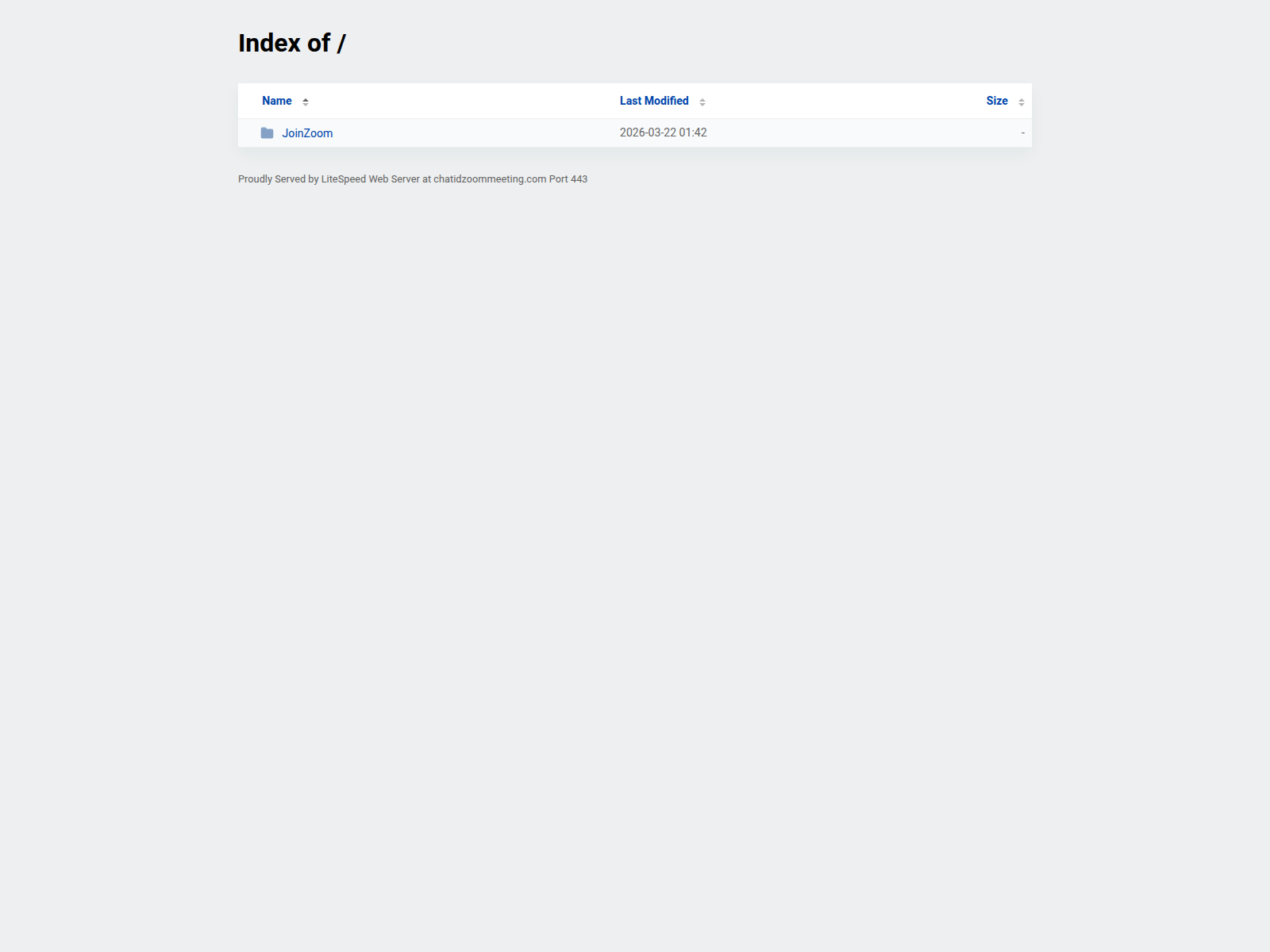
Vérifier n'importe quel domaine
Analyse des menaces à l'aide de listes de blocage stockées, de WHOIS, de DNS et de preuves d'analyse publique
Scanner maintenantSignaler une tentative d'hameçonnage
Signalez les domaines suspects à notre base de données des menaces — protégez la communauté
SignalerFlux d'alertes en temps réel
Rapports de phishing récents et changements de disponibilité observés
SurveillerRestez informés, restez en sécurité
Surveillez les menaces en temps réel ou signalez cette alerte si vous pensez qu'il s'agit d'un faux positif