darkmatter-darknetmarket.top
  fincryp.live
  gracedigitalplatform.com
  pulsenotch.com
  www.stores-dofus.fr
  stresser.work
  quantumfxbrokers.com
IC3 del FBI
Denunciar delitos cometidos a través de Internet en los Estados Unidos
Federal tips line1-800-CALL-FBI

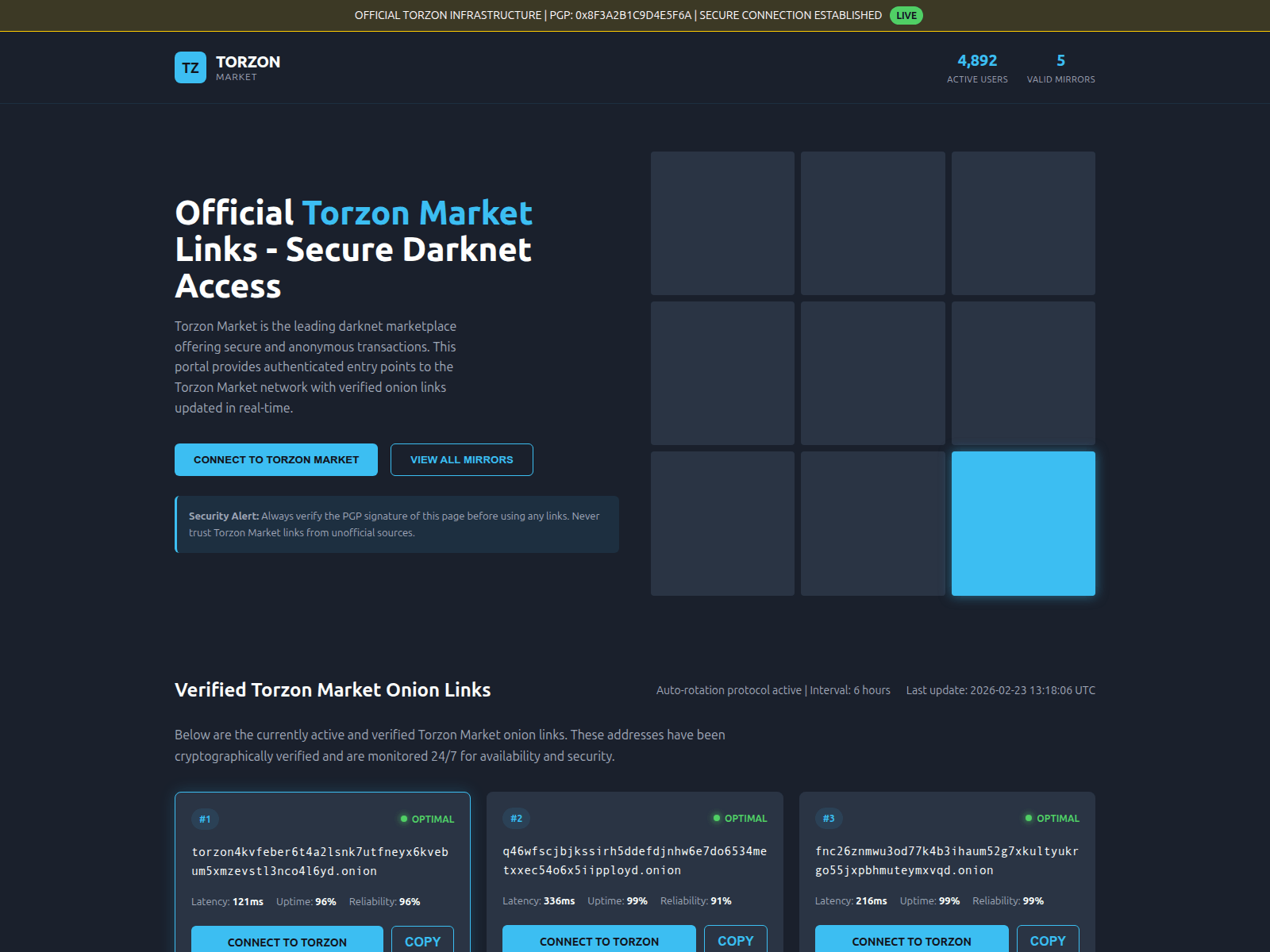
“Torzon Market Blog | Secure Onion Links 2026-02-23 13:20:31”
Analysis of torzon.blog shows a newly created domain (registered 23 Feb 2026) hosted on IP 45.147.197.100, which resolves to a server in the Netherlands under ASN 204601 (NovoServe B.V.). The domain was registered through NameSilo, LLC and uses four nameservers (ns1.zomro.net, ns2.zomro.ru, ns3.zomro.com, ns4.zomro.su). No SSL certificate is presented, indicating the site operated without HTTPS. The page title retrieved from the endpoint reads “Torzon Market Blog | Secure Onion Links 2026-02-23 13:20:31”, suggesting a focus on onion‑linked content but providing no further functional detail.
Threat intelligence classifies the site as a credential‑phishing operation; it has been blocked by PhishDestroy and currently appears on a single security blocklist. VirusTotal reports that the domain was scanned by 93 vendors, none of which flagged it at the time of scanning, though this absence of detections does not constitute a safety assurance. The domain’s status is listed as offline, and no live HTTP response or content snapshot is available for deeper inspection.
Uncertainty remains regarding the exact phishing payload, target audience, and whether the site ever served malicious login pages. Defenders should continue to monitor the IP address and associated ASN for any reactivation, add the domain to internal blocklists, and consider sinkholing the host if infrastructure reuse is observed. Users should be warned that any credential‑collection attempts originating from torzon.blog are untrusted, and organizations should enforce strict verification of login URLs to mitigate credential theft.
PD-20260223-A2C8FC
10 fuentes externas supervisadas · instantánea del 11/08/2026
Análisis de Cloudflare Radar almacenado · Abrir análisis
Accesible → Inaccesible
Análisis de Cloudflare Radar almacenado · Abrir análisis
 (US)
PhishDestroy Investigation
(US)
PhishDestroy Investigation

For this gTLD, the registrar above operates under an ICANN accreditation agreement. The links below provide the official fee schedule and current DNS abuse compliance guidance.
RAA §3.18 establishes abuse-contact and handling requirements. This report can document stored outbound notices and later technical observations; it does not by itself establish receipt, investigation, remediation, or contractual non-compliance.
Esta IP de origen aloja múltiples dominios de phishing; la infraestructura puede compartirse entre campañas.
These domains also target ["across"] users. View all ["across"] threats →
Informes agregados recientemente de la base de datos PhishDestroy. Estos enlaces de descubrimiento no implican infraestructura ni propiedad compartida.
Si ingresó credenciales de cuenta, información personal o de pago, o descargó un archivo de este dominio, tome medidas inmediatas. A continuación encontrará recursos que le ayudarán a informar el incidente y protegerse.


Seleccione su país para obtener contactos oficiales de cibercrimen o crear un borrador de queja →.
Análisis de amenazas utilizando listas de bloqueo almacenadas, WHOIS, DNS y evidencia de escaneo público
Escanear ahoraEnvía los dominios sospechosos a nuestra base de datos de amenazas: protege a la comunidad
DenunciarInformes de phishing recientes y cambios de disponibilidad observados
MonitorizarSupervisa las amenazas en tiempo real o impugna esta entrada si crees que se trata de un falso positivo.