firelight-ecosystems.xyz
  crystalaudit.xyz
  stresser.work
  corevision.com.tw
  seeker-mobile.net
  sol-online.wallet-secure.click
  app-meteora.org
  instagram-clone-dusky-tau.vercel.app
  roblox-robux10kadm1n.blogspot.com
  pt-rainbet.com
IC3 del FBI
Denunciar delitos cometidos a través de Internet en los Estados Unidos
Federal tips line1-800-CALL-FBI

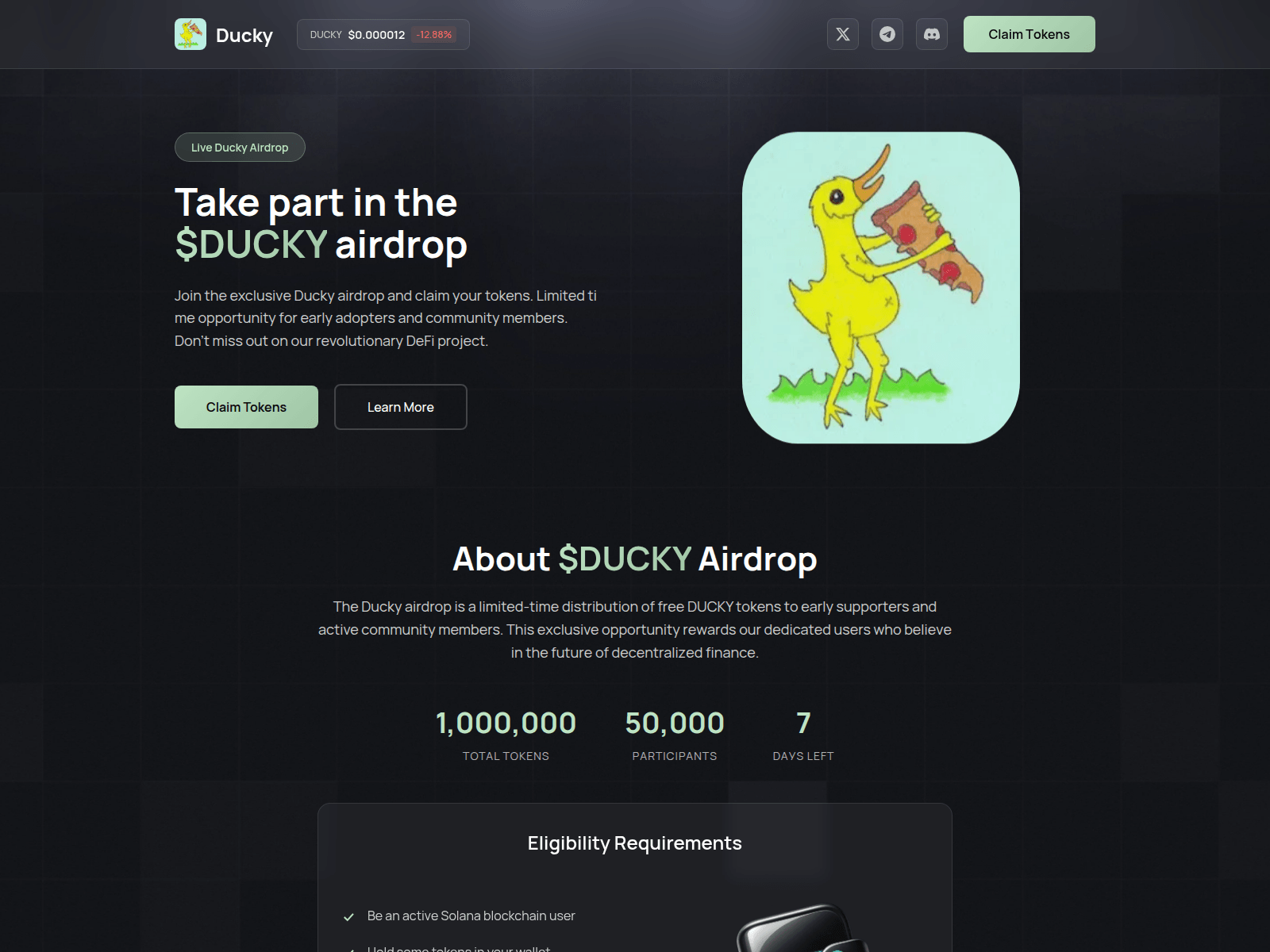
“Ducky | Airdrop”
register-ducky.fun is currently offline, but the historical record shows it was operated as a Solana‑targeted crypto drainer. The domain was created on 30 December 2025 and registered through PDR Ltd. d/b/a PublicDomainRegistry.com. DNS resolution points to the IP address 104.21.31.198, which is owned by ASN 13335 (Cloudflare, Inc.) and geolocated in the United States. Both angela.ns.cloudflare.com and gabe.ns.cloudflare.com serve as authoritative nameservers, confirming that the domain leveraged Cloudflare’s DNS and hosting platform. No TLS certificate was observed for the site, indicating that any web service was delivered over plain HTTP rather than HTTPS.
The only page title captured during its brief live period was “Ducky | Airdrop”, which aligns with the known Airdrop Scam phishing kit and the Solana Drainer malicious kit. The operation explicitly impersonated the Solana brand, as noted in the intelligence. VirusTotal scanned the domain and recorded 2 detections out of 93 scanning engines, and the domain is listed on two external blocklists—PhishDestroy and ScamSniffer—providing independent confirmation of its malicious nature. The limited detection count does not imply safety; rather, it reflects that only a minority of scanners flagged the activity, which is typical for fast‑changing scam infrastructure. No SSL/TLS, no visible certificate chain, and the lack of additional subdomains or backup CNAMEs leave the full breadth of the infrastructure uncertain.
Defenders should therefore block the IP address 104.21.31.198 at the network perimeter, monitor for any outbound connections to that address, and add the domain and its subdomains to URL‑filtering and email‑gateway deny lists. Because the site used a publicly known drainer kit, security controls that inspect for the exact page title string “Ducky | Airdrop” and the keyword “Airdrop” can help intercept similar future campaigns.
PD-20260107-3E8316
10 fuentes externas supervisadas · instantánea del 11/08/2026
Análisis de Cloudflare Radar almacenado · Abrir análisis
Direcciones extraídas de la página de phishing.
 (IN)
(IN)
 San Francisco, US
For this gTLD, the registrar above operates under an ICANN accreditation agreement. The links below provide the official fee schedule and current DNS abuse compliance guidance.
RAA §3.18 establishes abuse-contact and handling requirements. This report can document stored outbound notices and later technical observations; it does not by itself establish receipt, investigation, remediation, or contractual non-compliance.
These domains also target Solana users. View all Solana threats →
Part of the Estafa de airdrop phishing campaign. View all campaign domains →
Informes agregados recientemente de la base de datos PhishDestroy. Estos enlaces de descubrimiento no implican infraestructura ni propiedad compartida.
Si interactuó con este dominio, ingresó información personal o conectó una billetera de criptomonedas, tome medidas inmediatas. A continuación encontrará recursos que le ayudarán a informar el incidente y protegerse.


Seleccione su país para obtener contactos oficiales de cibercrimen o crear un borrador de queja →.
Análisis de amenazas utilizando listas de bloqueo almacenadas, WHOIS, DNS y evidencia de escaneo público
Escanear ahoraEnvía los dominios sospechosos a nuestra base de datos de amenazas: protege a la comunidad
DenunciarInformes de phishing recientes y cambios de disponibilidad observados
MonitorizarSupervisa las amenazas en tiempo real o impugna esta entrada si crees que se trata de un falso positivo.
Se calcula que $51 billion se destinaron a carteras de criptomonedas ilegales en 2024 (source). Si has interactuado con register-ducky.fun — Actúa ya.
Según el FBI, los datos más importantes son los de las transacciones:
0x5856...35985)register-ducky.fun)Aunque no tengas todos los detalles — presenta la denuncia de todos modos. Incluso la información parcial sigue siendo útil para las investigaciones.
A report is not a guarantee of recovery or investigation, but prompt, accurate transaction data can help authorities and service providers trace the incident.