Notification and current-status evidence
The sent-report ledger records the first outgoing report at . A report was sent to the recorded registrar; contact details remain in Domain Intelligence. The latest stored availability evidence still shows the domain reachable; 4 months has elapsed since the first outgoing report.
ICANN RAA §3.18 describes registrar abuse-contact and handling obligations. This section records outgoing timestamps and later availability. It does not by itself prove receipt, acknowledgement, investigation, remediation, or contractual non-compliance.
izom[.]net
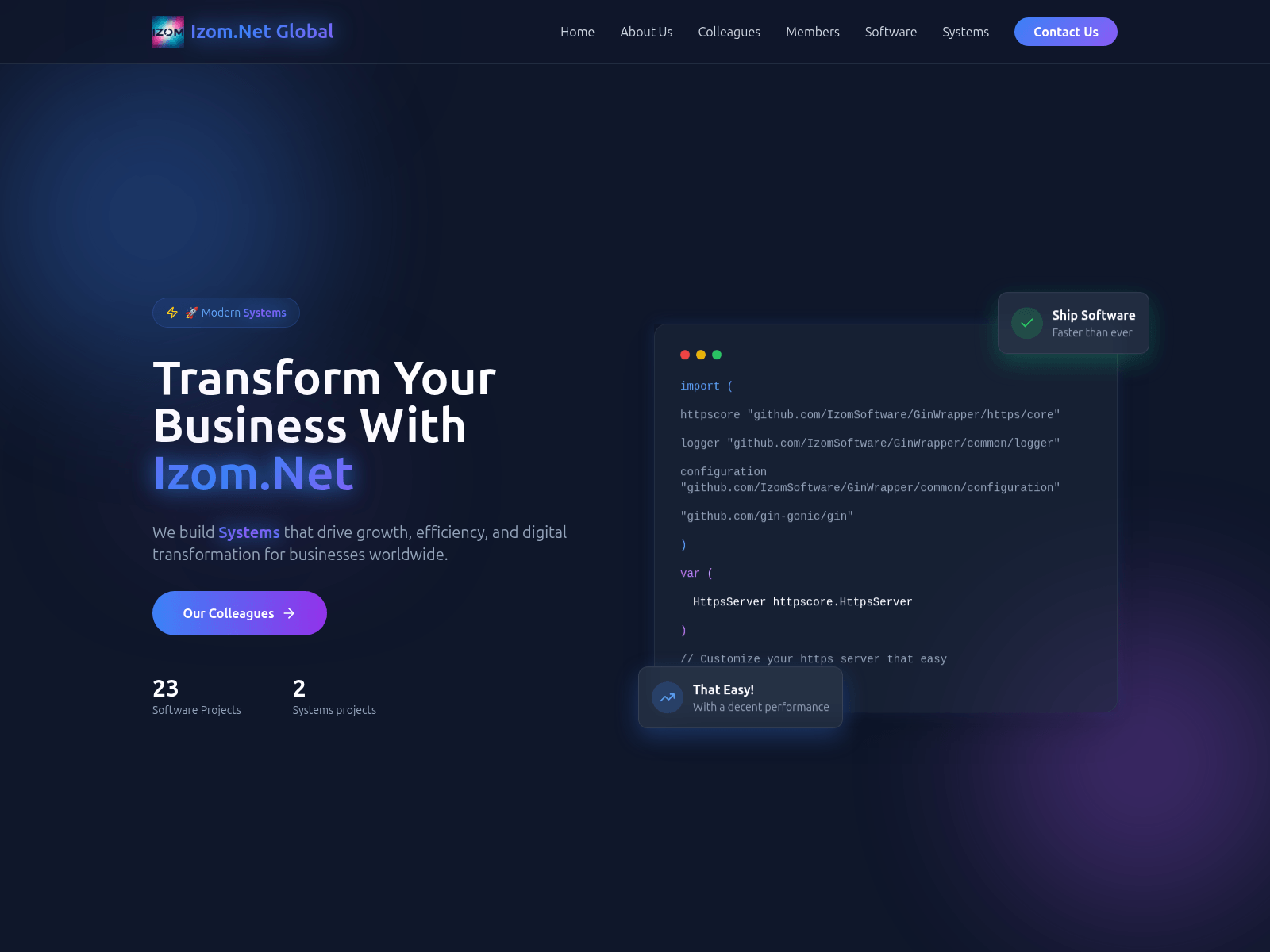
“Izom.Net Global”
This domain, izom.net, is flagged as a high-risk generic phishing threat as of July 12, 2026, and remains active. Intelligence from multiple sources supports this assessment. The domain was registered on February 5, 2026, through Ultahost, Inc., a relatively recent registration that aligns with patterns seen in phishing infrastructure. It resolves to IP address 207.180.234.23, which is associated with the hosting infrastructure. The page title observed is 'Izom.Net Global', and the site uses Tailwind CSS, Nginx, Unpkg, and HSTS technologies. An SSL certificate from ZeroSSL GmbH is in place, which is a common choice for phishing sites to appear legitimate. The Gridinsoft trust score is 0 out of 100, indicating a strong negative assessment. The domain appears on two security blocklists and is blocked by PhishDestroy and BLP-Malware. VirusTotal reporting shows 15 out of 95 security vendors flagging this domain as malicious, a significant number that confirms the threat. Additionally, AlienVault OTX lists the domain in 23 threat intelligence pulses, further corroborating its involvement in malicious campaigns. The exact nature of the phishing campaign is not fully detailed in the available intelligence, but the generic classification suggests it may target a broad range of credentials or sensitive information. Defenders should treat this domain as actively hostile. Immediate actions include blocking all traffic to izom.net at the network perimeter and email gateway. DNS filtering should be updated to prevent resolution. Any user who has interacted with this site should be investigated for credential compromise or malware infection. Monitoring for related domains or subdomains is advisable, as threat actors often rotate infrastructure. Continuous observation of the IP address 207.180.234.23 for new malicious domains is also recommended. The domain's creation date and current active status indicate an ongoing operation that requires prompt response.
Registro de reporte enviado
Instantánea de evidencia enviada
- Enviado
- Registros del libro
- 1
- ID del caso
PD-20260318-4CEDB4- Título de la página capturada
- Izom.Net Global
- Artefacto PDF
- Evidencia en PDF
Fundamento jurídico
Texto completo de la evidencia
Section 3.1 of AUP: The domain izom.net is engaged in phishing activities, attempting to deceive users into providing sensitive personal information, which is a clear violation of your Acceptable Use Policy prohibiting fraud and deception.
Section 5.2 of TOS: The continued operation of this domain constitutes a violation of your Terms of Service, which reserves the right to suspend or terminate services for any illegal activities, including those related to phishing.
Applicable Laws (MY):
Computer Crimes Act 1997 (Act 563): This law criminalizes unauthorized access and misuse of computer systems, including phishing schemes that compromise user data.
Malaysian Penal Code (Act 574), Section 420: This section addresses cheating and dishonestly inducing delivery of property, which encompasses phishing activities aimed at fraudulently obtaining personal information.
Regulatory Note: Failure to take immediate action against the domain izom.net may expose your organization to legal liability under Malaysian law, as well as potential regulatory scrutiny for non-compliance with your own policies.
Proceso de respuesta ante amenazas Pipeline
Cobertura de listas de bloqueo
10 fuentes · sincronizado el 10/08/2026
Cronología de detección
Observaciones almacenadas en orden cronológico.
-
VirusTotal
VirusTotal: 0 → 1
Infraestructura financiera
Direcciones extraídas de la página de phishing.
Telegram
Captura guardada
Inteligencia de dominios
Detalles técnicosDNS, nombres TLS y marcas de tiempo
ICANN OVERSIGHT
Acreditación y contexto RAA
Registrar accreditation and DNS abuse obligations
For this gTLD, the registrar above operates under an ICANN accreditation agreement. The links below provide the official fee schedule and current DNS abuse compliance guidance.
Accreditation is a contract, not a safety certification.
RAA §3.18 establishes abuse-contact and handling requirements. This report can document stored outbound notices and later technical observations; it does not by itself establish receipt, investigation, remediation, or contractual non-compliance.
Análisis de VirusTotal
Análisis del rendimiento del sitio
Google PageSpeed Insights — mobile performance audit of izom.net · checked Jul 12, 2026
¿Te ha afectado esta página web?
Si interactuó con este dominio, ingresó información personal o conectó una billetera de criptomonedas, tome medidas inmediatas. A continuación encontrará recursos que le ayudarán a informar el incidente y protegerse.
Informa a las autoridades locales
Seleccione su país para obtener contactos oficiales de cibercrimen o crear un borrador de queja →.
Comprobar cualquier dominio
Análisis de amenazas utilizando listas de bloqueo almacenadas, WHOIS, DNS y evidencia de escaneo público
Escanear ahoraDenunciar un intento de phishing
Envía los dominios sospechosos a nuestra base de datos de amenazas: protege a la comunidad
DenunciarFlujo de amenazas en tiempo real
Informes de phishing recientes y cambios de disponibilidad observados
MonitorizarMantente informado, mantente a salvo
Supervisa las amenazas en tiempo real o impugna esta entrada si crees que se trata de un falso positivo.
Recomendaciones y consejos para las víctimas
Se calcula que $51 billion se destinaron a carteras de criptomonedas ilegales en 2024 (source). Si has interactuado con izom.net — Actúa ya.
¿Qué debo hacer ahora mismo?
Urgente
- Revocar las autorizaciones de tokens — use revoke.cash para revocar el acceso concedido a contratos inteligentes maliciosos
- Transferir los fondos restantes a una cartera totalmente nueva. La cartera comprometida ya no es segura
- Cambiar todas las contraseñas — correo electrónico, cuentas de Exchange, cualquier cosa que utilice la misma contraseña
- Activar la autenticación de dos factores utilizando una aplicación de autenticación (no SMS). Desactivar la recuperación mediante SMS
- Tarjetas de congelación si has introducido tus datos bancarios en la página de phishing
¿Qué información debo recopilar para mi informe?
Directrices del FBI
Según el FBI, los datos más importantes son los de las transacciones:
- Direcciones de criptomonedas — la cartera del estafador (p. ej.,
0x5856...35985) - Importe y tipo de criptomoneda — importe exacto (p. ej., 1,02345 ETH, 0,5 BTC, 500 USDT)
- ID de la transacción (hash) — el identificador único de la transacción en la cadena de bloques
- Fechas y horas exactas — de cada transacción y del primer contacto con el estafador
- Capturas de pantalla — páginas web fraudulentas, mensajes de chat, correos electrónicos, transacciones con monederos electrónicos, redes sociales
- Todas las URL y dominios utilizados por el estafador (incluidos
izom.net) - Comunicaciones — correos electrónicos, mensajes de texto, números de teléfono y nombres de usuario que utilizó el estafador
Aunque no tengas todos los detalles — presenta la denuncia de todos modos. Incluso la información parcial sigue siendo útil para las investigaciones.
¿Dónde debo denunciar la estafa?
- IC3 del FBI — Centro de Denuncias de Delitos en Internet (sistema federal de denuncia de EE. UU.)
- Europol — Informes sobre la ciberdelincuencia en Europa (UE)
- Chainabuse — Detectar carteras fraudulentas en las distintas plataformas y mercados de intercambio
- Tu plataforma de intercambio de criptomonedas — notify its fraud team immediately; it may be able to preserve records or restrict funds held on its platform
- Policía local — deja constancia oficial, aunque no puedan actuar de inmediato
A report is not a guarantee of recovery or investigation, but prompt, accurate transaction data can help authorities and service providers trace the incident.

¿Cómo suelen funcionar las estafas relacionadas con las criptomonedas?
- Páginas web falsas — Clones idénticos al milímetro de sitios web legítimos, con dominios ligeramente modificados
- Aprobaciones malintencionadas — Las solicitudes de «conectar monedero» que permiten a los atacantes gastar tokens sin límite alguno
- Sacrificio de cerdos — Se ganaba la confianza de las víctimas a lo largo de varias semanas a través de Telegram, WhatsApp o aplicaciones de citas, y luego les robaban el dinero.
- Estafas relacionadas con la recuperación — fraudsters pose as recovery agents and demand upfront fees. Never share a seed phrase or pay before independently verifying the provider
- Anuncios falsos y airdrops — Anuncios de Google y redes sociales, así como ofertas de «fichas gratis», que acaban vaciando el monedero
- Estafas basadas en la inteligencia artificial — los «deepfakes», el phishing automatizado y los sitios web generados por IA, que hacen que el fraude sea más difícil de detectar
¿Cómo puedo protegerme en el futuro?
- Utiliza un monedero físico (Ledger, Trezor). Nunca guardes grandes cantidades en carteras de navegador.
- Añadir a favoritos las páginas web oficiales — Nunca hagas clic en enlaces de correos electrónicos, mensajes directos o anuncios
- Lee todas las autorizaciones — Comprueba los permisos antes de firmar. Rechaza las aprobaciones ilimitadas.
- Verificar dominios — comprobar si PhishDestroy antes de interactuar. Comprueba que sea HTTPS, la ortografía y la antigüedad del dominio
- «Demasiado bueno para ser verdad» = estafa — rendimientos garantizados, recomendaciones de famosos, plazos urgentes