VirusTotal
8 / 94
Denunciar


“Betmore: Most Popular Online Crypto Casino Based on Blockchain”
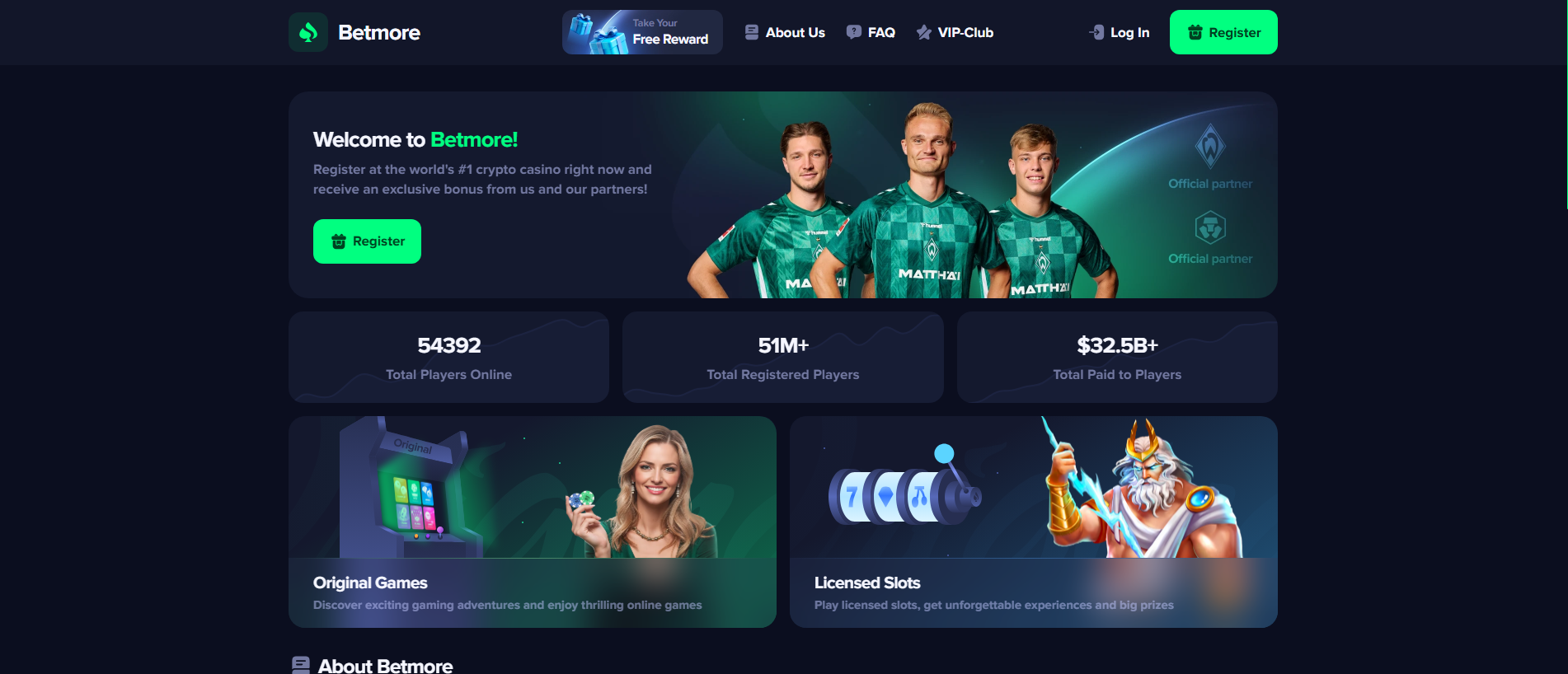
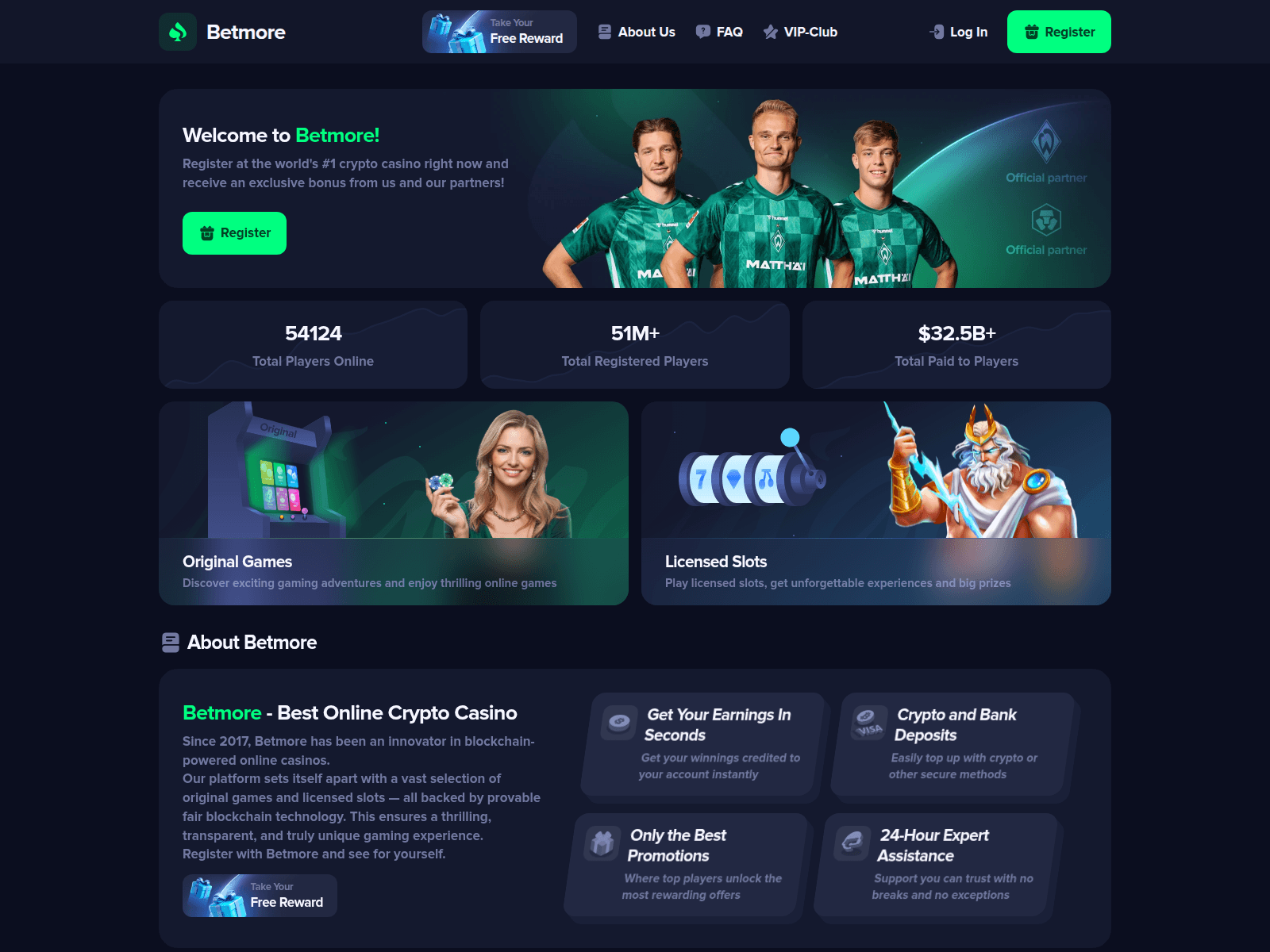
betmore.casino — Contenido no disponible. Suplantación de marca: Genericcrypto; Tipo de estafa: Crypto Gambling. Resumen de las pruebas: VirusTotal 8/94 (Bfore.Ai PreCrime); URLQuery 1 alert; URLScan malicious verdict; cloaking observed; PhishDestroy score 95/100. Registrador: NameSilo.
El análisis detallado de PhishDestroy AI se mantiene en inglés para conservar el registro forense original.

8 / 94
1 threat-system alert
Denunciarmalicious
Denunciarchecked — no match recorded
no community references
Denunciarinforme almacenado
 Denunciar
 12 comprobado — sin bloqueos
Report stored; verdict not recorded
DenunciarChecked; no threat flag recorded
Denunciar| Detection System | Indicator | Verdict | Alert |
|---|---|---|---|
| DNS4EU | betmore.casino |
malicious | Sinkholed |
PhishDestroy flags betmore.casino as an active crypto drainer phishing domain designed to trick cryptocurrency users into approving malicious token contracts that drain wallet balances. The domain mimics legitimate crypto-gambling brands to lure victims under the guise of exclusive betting bonuses or promotions. Attack infrastructure points to automated drainer scripts hosted behind a recently registered domain, consistent with fast-flux evasion tactics observed in Q1 2025 campaigns.
Technical indicators confirm elevated risk: the domain resolves to IP 104.21.22.96 and is served over a Let’s Encrypt-issued SSL certificate to lower victim suspicion. Registered on January 06, 2026 through NameSilo, LLC, the domain remains undetected by 95 VirusTotal engines (8/95), has not been marked by Google Safe Browsing, and sits outside all major public blocklists as of present scans. The creation date aligns with a spike in .casino TLD registrations exploited for phishing-as-a-service drainer kits.
Current status is ACTIVE with no takedown initiated; the domain continues to resolve and serve its payload. PhishDestroy recommends immediate network-level blocking of 104.21.22.96 and the domain itself across endpoints and DNS resolvers. Users are advised to revoke any token approvals made via this site and to monitor wallet activity for unauthorized transfers. Remaining risk is high due to zero detections and ongoing accessibility; proactive threat hunting is strongly encouraged.
La página mostraba una respuesta a un visitante que actuaba como un navegador y otra a un rastreador o un escáner de seguridad. El «cloaking» solo sirve para impedir que los revisores accedan a la página de destino real.
content_divergenceNota del escáner: unavailable: raw=connection_error; http=0; via=http_proxy; error=SOCKSHTTPConnectionPool(host='betmore.casino', port=80): Max retries exceeded with url: / (Caused by NewConnectionError(
For this gTLD, the registrar above operates under an ICANN accreditation agreement. The links below provide the official fee schedule and current DNS abuse compliance guidance.
RAA §3.18 establishes abuse-contact and handling requirements. This report can document stored outbound notices and later technical observations; it does not by itself establish receipt, investigation, remediation, or contractual non-compliance.
La reputación de Edge-IP no se atribuye a este dominio.
ben.ns.cloudflare.comdesiree.ns.cloudflare.comLocation describes the IP network.
81afb5c3f8a36709d1eb0b6964e3443176d306617ff8828692e69b6bc582b884Saved certificate metadata. Certificate dates without a timezone are shown as stored. Transport encryption does not establish that the site is trustworthy.
Google PageSpeed Insights — mobile performance audit of betmore.casino · checked Apr 5, 2026
14 recorded events. These records describe collected evidence, outgoing notifications and publication; they do not confirm a complete investigation or a takedown.
We scan suspicious URLs, inspect public results and send evidence through the appropriate abuse-reporting channels. The dated events above show what is recorded for this domain. The directory below explains the wider workflow.
Capture the rendered page, requests and visible infrastructure.
Compare the available engine results and retain the analysis timestamp.
Check whether Google currently lists the URL as unsafe.
Inspect a public scan and its recorded network and classification data.
Look for indicator references and related community intelligence.
Compare archived captures and preserve historical context.
Look for matching indicators and associated threat records.
Inspect certificate records and related hostnames.
Compare security resolver responses and record observed blocking.
Inspect the public DNS, TLS, HTTP and technology surface.
Security services used for scanning, reputation checks and reporting are listed below. A service being listed is not evidence that it received, accepted or acted on this particular domain. Recorded submissions appear in the notification history above.
Reportado por 1 miembro de la comunidad; visto por primera vez el 04/04/2026
PD-20260404-7609BD Recipient: abuse@namesilo.com Registrar: NameSilo LLC (United States) Policy Violations: Prohibits “domains and websites engaging in, promoting or facilitating phishing attacks”, spam and malware; abuse reports trigger investigation and suspension Applicable Laws: CFAA 18 U.S.C. §1030, Wire Fraud 18 U.S.C. §1343, CAN-SPAM Act 15 U.S.C. §7701–7713
Si ingresó credenciales de cuenta, información personal o de pago, o descargó un archivo de este dominio, tome medidas inmediatas. A continuación encontrará recursos que le ayudarán a informar el incidente y protegerse.


Seleccione su país para obtener contactos oficiales de cibercrimen o crear un borrador de queja →.
Template-based draft · optional AI wording assistance requires separate consent
Cada línea representa un motivo por el que un dominio está vinculado a este servidor. El tamaño de los nodos indica las detecciones de VirusTotal y los nodos con línea discontinua ya están fuera de línea. A continuación se incluyen las listas completas.
Forma parte de la campaña de phishing «Gambler Scam». Ver todos los dominios de la campaña →
Estos informes se resuelven en la misma IP perimetral compartida. Ayudan a descubrir informes, pero no implican una propiedad común ni un servidor de origen compartido.
Estos dominios también se dirigen a los usuarios de Genericcrypto. Ver todas las amenazas de «Genericcrypto» →
Registrados a través del mismo proveedor de registro. Un proveedor de registro presta servicio a millones de clientes que no tienen relación entre sí, por lo que este dato solo agrupa los registros, en lugar de demostrar que exista un vínculo.
Informes agregados recientemente de la base de datos PhishDestroy. Estos enlaces de descubrimiento no implican infraestructura ni propiedad compartida.
Análisis de amenazas utilizando listas de bloqueo almacenadas, WHOIS, DNS y evidencia de escaneo público
Escanear ahoraEnvía los dominios sospechosos a nuestra base de datos de amenazas: protege a la comunidad
DenunciarInformes de phishing recientes y cambios de disponibilidad observados
MonitorizarSupervisa las amenazas en tiempo real o impugna esta entrada si crees que se trata de un falso positivo.