VirusTotal
10 / 91
Report


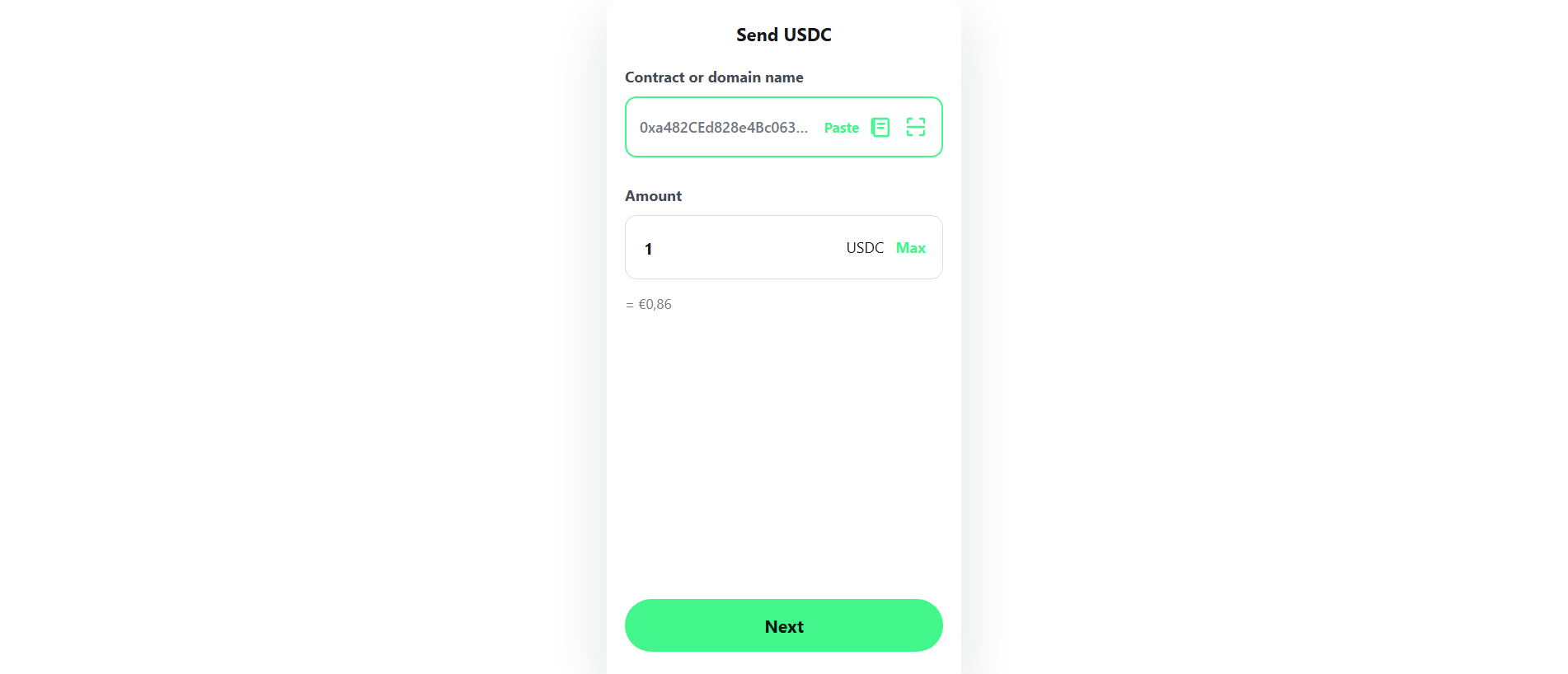
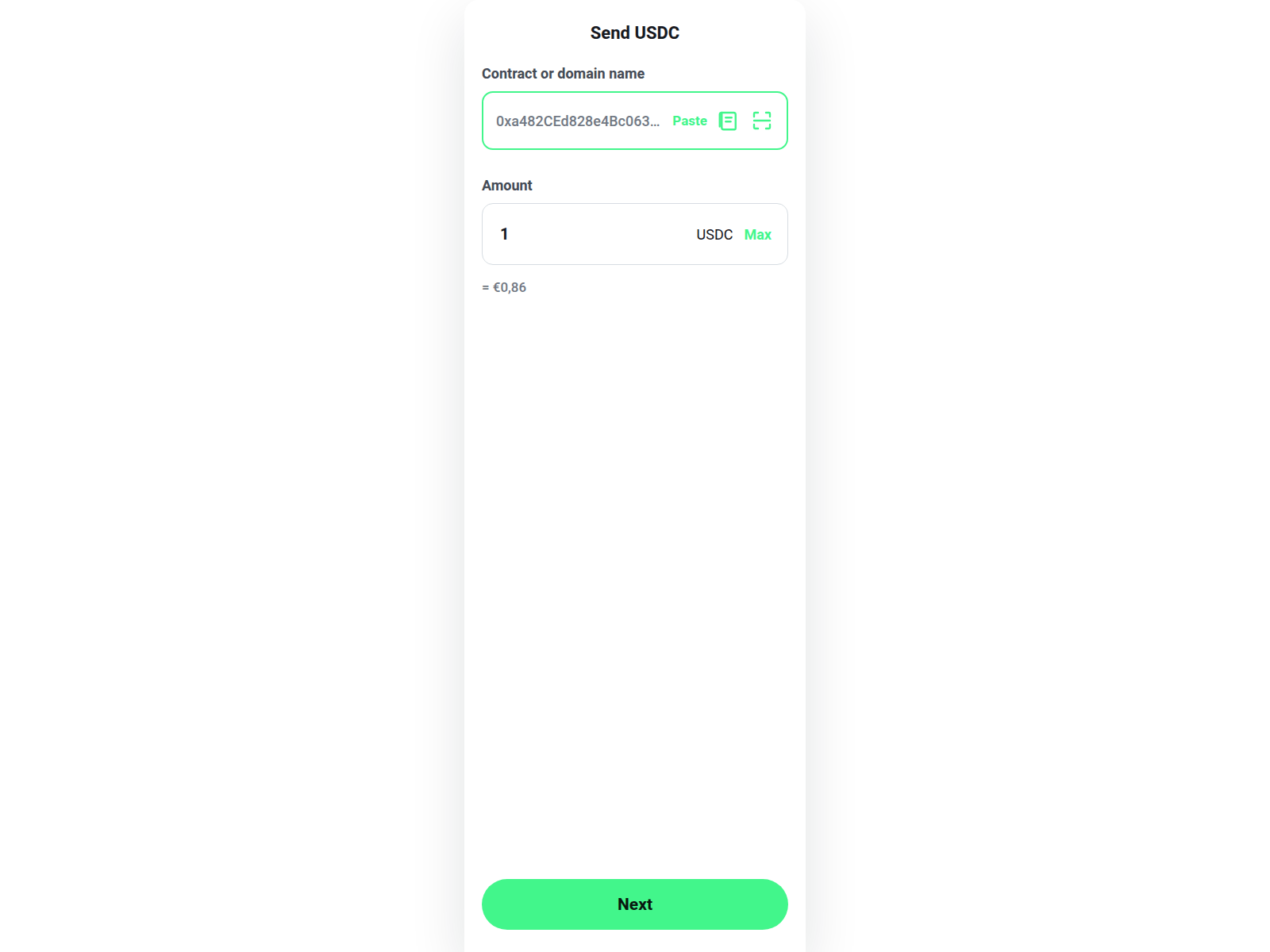
“Send USDC”
The sent-report ledger records the first outgoing report at .
The recorded recipient is abuse@namecheap.com.
The latest stored availability evidence still shows the domain reachable; 3 months has elapsed since the first outgoing report.
ICANN RAA §3.18 describes registrar abuse-contact and handling obligations. This section records outgoing timestamps, listed recipients, case identifiers, and later availability. It does not by itself prove receipt, acknowledgement, investigation, remediation, or contractual non-compliance.

10 / 91
DBL_PHISH
Report stored; detailed verdict not recorded
Report16 community references
Reportprovider verdict: clean
Reportstored report
 Report
 Analysis completed
Report14 checked — no blocks
Checked; no threat flag recorded
ReportThis domain is flagged as an active phishing site designed to intercept USDC cryptocurrency transactions. The page title, 'Send USDC,' suggests a fraudulent interface mimicking legitimate crypto transfer services, likely tricking users into sending funds to attacker-controlled wallets. The domain specifically targets individuals attempting to transfer USD Coin (USDC), a stablecoin, by presenting a deceptive transaction portal that harvests wallet credentials or misdirects payments. Analysis indicates the site may employ social engineering tactics, such as urgency or fake confirmations, to expedite unauthorized transfers before victims detect the fraud. Infrastructure analysis reveals the domain was registered on June 25, 2026, through NameCheap, Inc., and currently resolves to the IP address 162.0.217.211. Despite its recent creation, the domain has not been flagged by any of the 95 security vendors on VirusTotal (0/95 detections), indicating it may still be operating under the radar. The SSL certificate is issued by Sectigo Limited, which, while legitimate, does not guarantee the site's safety. No blocklist entries or prior reports were identified, suggesting this is a newly deployed threat vector with no prior exposure. Users who have interacted with send-usdc.network should immediately cease all activity and revoke any wallet permissions granted to the site. If funds were transferred, report the transaction to the relevant blockchain explorer and contact the wallet provider or exchange for potential recovery options. Monitor connected accounts for unauthorized activity, as phishing sites often deploy secondary payloads or credential harvesting. Security teams should add the domain and its resolving IP (162.0.217.211) to network blocklists and investigate logs for prior connections. Given the domain's recent registration and lack of detection, heightened vigilance is advised for similar USDC-themed phishing campaigns.
Full extracted values, their blockchain and collection source. An address found in page content does not establish who controls it.
0xa482CEd828e4Bc063cBFDD30460612403EF561ecFormat validated · Domain analysisIoC extraction recorded 2026-07-29 01:57:41 UTC
Stored crawler-versus-browser observations for this host, plus a live fingerprint check for Keitaro-style traffic distribution systems.
LiteSpeedScanner note: redirect: raw=redirect_302; http=302; via=https_proxy; location=login.php; server=LiteSpeed
For this gTLD, the registrar above operates under an ICANN accreditation agreement. The links below provide the official fee schedule and current DNS abuse compliance guidance.
RAA §3.18 establishes abuse-contact and handling requirements. This report can document stored outbound notices and later technical observations; it does not by itself establish receipt, investigation, remediation, or contractual non-compliance.
dns1.namecheaphosting.comdns2.namecheaphosting.comLocation describes the IP network.
97618d9f4a939d375f02b830a3ee9e4e927cf960940e1e87bb02cb6732efd8b6www.send-usdc.networkSaved certificate metadata. Certificate dates without a timezone are shown as stored. Transport encryption does not establish that the site is trustworthy.
Google PageSpeed Insights — mobile performance audit of send-usdc.network · checked Jun 28, 2026
11 recorded events. These records describe collected evidence, outgoing notifications and publication; they do not confirm a complete investigation or a takedown.
We scan suspicious URLs, inspect public results and send evidence through the appropriate abuse-reporting channels. The dated events above show what is recorded for this domain. The directory below explains the wider workflow.
Capture the rendered page, requests and visible infrastructure.
Compare the available engine results and retain the analysis timestamp.
Check whether Google currently lists the URL as unsafe.
Inspect a public scan and its recorded network and classification data.
Look for indicator references and related community intelligence.
Compare archived captures and preserve historical context.
Look for matching indicators and associated threat records.
Inspect certificate records and related hostnames.
Compare security resolver responses and record observed blocking.
Inspect the public DNS, TLS, HTTP and technology surface.
Security services used for scanning, reputation checks and reporting are listed below. A service being listed is not evidence that it received, accepted or acted on this particular domain. Recorded submissions appear in the notification history above.
PD-20260628-CE392C Recipient: abuse@namecheap.com Registrar: Namecheap Inc (United States) Policy Violations: Domain Registration Agreement prohibits hacking, misuse of domain to conduct attacks, scam and fraudulent activities; AUP allows immediate suspension Applicable Laws: CFAA 18 U.S.C. §1030, Wire Fraud 18 U.S.C. §1343, CAN-SPAM Act
If credentials, payment data, or files were exposed, report the incident immediately. Change affected passwords, revoke active sessions, and scan the device.


Select your country to get official cybercrime contacts, or create a complaint draft →.
Template-based draft · optional AI wording assistance requires separate consent
Each lane is one reason a domain is linked to this host. Node size marks VirusTotal detections and dashed nodes are already offline. The full lists follow below.
Same favicon hash or the same page title as this host.
Part of the Unknown phishing campaign. View all campaign domains →
Registered through the same registrar. A registrar serves millions of unrelated customers, so this groups reports rather than proving a link.
Recently added threat reports.
Threat analysis using stored blocklist, WHOIS, DNS, and public scan evidence
Scan NowSubmit suspicious domains to our threat database — protect the community
ReportRecent phishing reports and observed availability changes
MonitorMonitor live threats or contest this listing if you believe it's a false positive