VirusTotal
5 / 91
Report


“Security Verification”
The sent-report ledger records the first outgoing report at .
The recorded recipient is abuse@whiteprivacy.com.
The latest stored availability evidence still shows the domain reachable; 3 months has elapsed since the first outgoing report.
ICANN RAA §3.18 describes registrar abuse-contact and handling obligations. This section records outgoing timestamps, listed recipients, case identifiers, and later availability. It does not by itself prove receipt, acknowledgement, investigation, remediation, or contractual non-compliance.

5 / 91
Report stored; detailed verdict not recorded
Report16 community references
Reportprovider verdict: clean
Reportstored report
 Report
 Analysis completed
Report33/100
Checked; no threat flag recorded
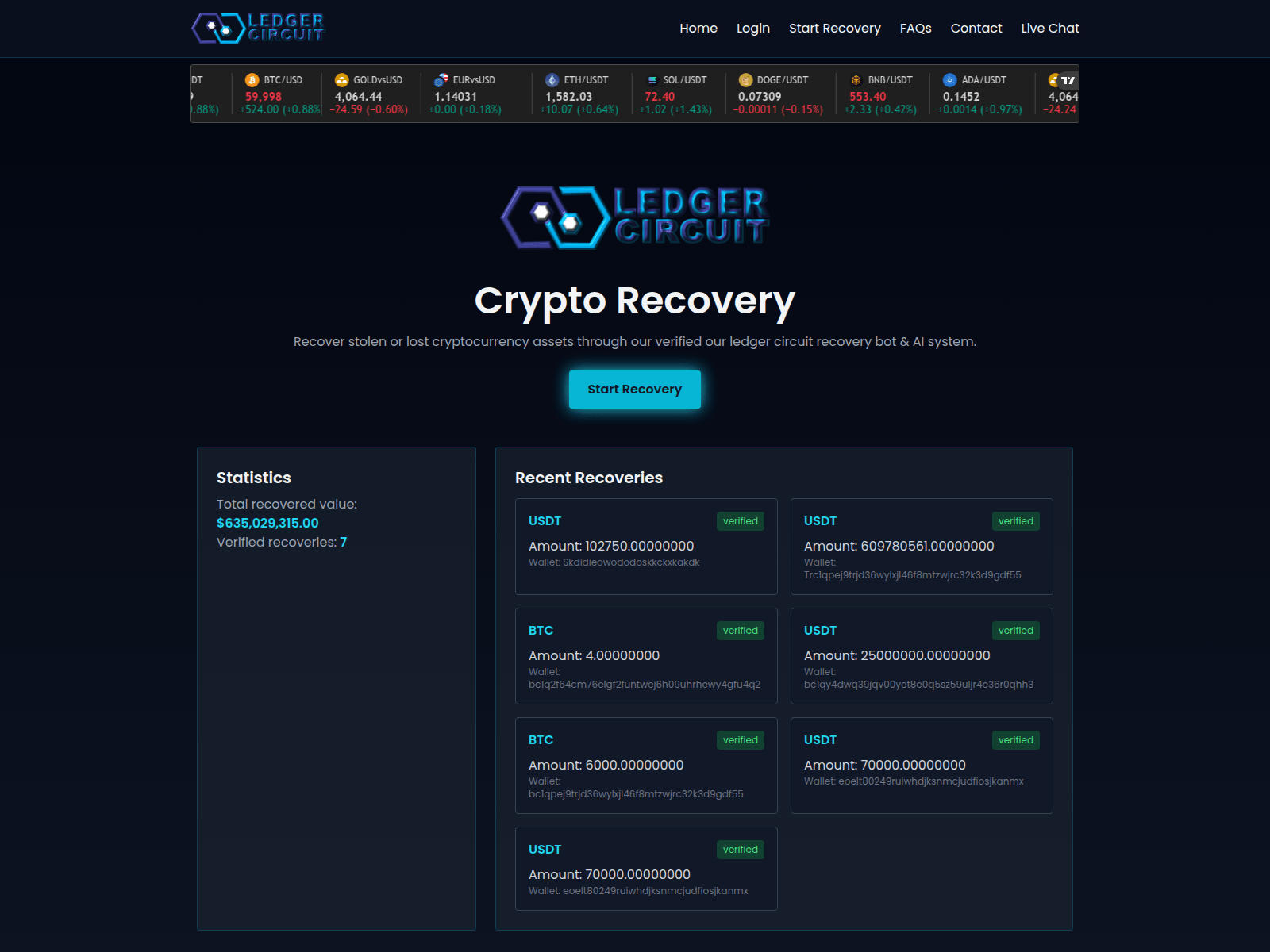
ReportAnalysis of ledgercircuit.online shows the site is actively serving content and returns HTTP 200 with the page title “Security Verification.” The front‑end stack consists of PHP, Tailwind CSS, Alpine.js, Unpkg and LiteSpeed, and traffic is delivered over HTTP/3. The domain resolves to 163.61.188.5, an IP located in the United States (MIT) and is covered by a Google Trust Services / WE1 SSL certificate. Registration was performed through Global Domain Group LLC and the authoritative nameservers are dns1.lytehosting.com, dns2.lytehosting.com, dns3.lytehosting.com and dns4.lytehosting.com. The site is listed on one security blocklist and appears in the PhishDestroy blocklist. VirusTotal reports five of ninety‑one scanners flagging the domain, and Gridinsoft assigns a trust score of 33 out of 100, indicating low confidence in legitimacy. The domain is classified as a brand‑impersonation targeting Ledger and the associated scam type is a crypto drainer. The risk level is high and the status remains active. Defenders should block network connections to 163.61.188.5, add ledgercircuit.online to URL filtering policies, and monitor for related credential‑harvesting activity. Because the page content beyond the title has not been publicly disclosed, further forensic capture of the site’s HTML and any form submissions is recommended to confirm the exact phishing workflow.
Full extracted values, their blockchain and collection source. An address found in page content does not establish who controls it.
bc1q2f64cm76elgf2funtwej6h09uhrhewy4gfu4q2Format validated · Domain analysisbc1qpej9trjd36wylxjl46f8mtzwjrc32k3d9gdf55Format validated · Domain analysisbc1qy4dwq39jqv00yet8e0q5sz59uljr4e36r0qhh3Format validated · Domain analysisIoC extraction recorded 2026-07-29 01:57:36 UTC
Stored crawler-versus-browser observations for this host, plus a live fingerprint check for Keitaro-style traffic distribution systems.
cloudflareScanner note: cloudflare_challenge: raw=cf_challenge; http=401; via=http_proxy; server=cloudflare
 (US)
(US)
For this gTLD, the registrar above operates under an ICANN accreditation agreement. The links below provide the official fee schedule and current DNS abuse compliance guidance.
RAA §3.18 establishes abuse-contact and handling requirements. This report can document stored outbound notices and later technical observations; it does not by itself establish receipt, investigation, remediation, or contractual non-compliance.
dns4.lytehosting.comLocation describes the IP network.
d2ee3d24c82d28ced9d4218c302b2b108db68eddf61895dc3e9d9cd6bdebac7aSaved certificate metadata. Certificate dates without a timezone are shown as stored. Transport encryption does not establish that the site is trustworthy.
Google PageSpeed Insights — mobile performance audit of ledgercircuit.online · checked Jun 29, 2026
10 recorded events. These records describe collected evidence, outgoing notifications and publication; they do not confirm a complete investigation or a takedown.
We scan suspicious URLs, inspect public results and send evidence through the appropriate abuse-reporting channels. The dated events above show what is recorded for this domain. The directory below explains the wider workflow.
Capture the rendered page, requests and visible infrastructure.
Compare the available engine results and retain the analysis timestamp.
Check whether Google currently lists the URL as unsafe.
Inspect a public scan and its recorded network and classification data.
Look for indicator references and related community intelligence.
Compare archived captures and preserve historical context.
Look for matching indicators and associated threat records.
Inspect certificate records and related hostnames.
Compare security resolver responses and record observed blocking.
Inspect the public DNS, TLS, HTTP and technology surface.
Security services used for scanning, reputation checks and reporting are listed below. A service being listed is not evidence that it received, accepted or acted on this particular domain. Recorded submissions appear in the notification history above.
151 stored lookalike domains
Showing 100 of 151
PD-20260629-D40BDA Recipient: abuse@whiteprivacy.com Policy Violations: Illegal Activities: Active phishing operation targeting victims Fraud & Deception: Impersonation of legitimate services Identity Theft: Collection of credentials under false pretenses Applicable Laws (Unknown): International Anti-Cybercrime Regulations Budapest Convention on Cybercrime Universal Fraud Prevention Laws Phishing activities violate international cybercrime conventions and Unknown's domestic fraud laws. Action Required: This evidence-backed report demonstrates clear violations requiring suspension per your policies. Continued hosting exposes your organization to regulatory scrutiny and potential legal liability.
If credentials, payment data, or files were exposed, report the incident immediately. Change affected passwords, revoke active sessions, and scan the device.


Select your country to get official cybercrime contacts, or create a complaint draft →.
Template-based draft · optional AI wording assistance requires separate consent
Each lane is one reason a domain is linked to this host. Node size marks VirusTotal detections and dashed nodes are already offline. The full lists follow below.
Same favicon hash or the same page title as this host.
Multiple reports share this IP.
These domains also target Ledger users. View all Ledger threats →
Registered through the same registrar. A registrar serves millions of unrelated customers, so this groups reports rather than proving a link.
Threat analysis using stored blocklist, WHOIS, DNS, and public scan evidence
Scan NowSubmit suspicious domains to our threat database — protect the community
ReportRecent phishing reports and observed availability changes
MonitorMonitor live threats or contest this listing if you believe it's a false positive