VirusTotal
7 / 91
Report


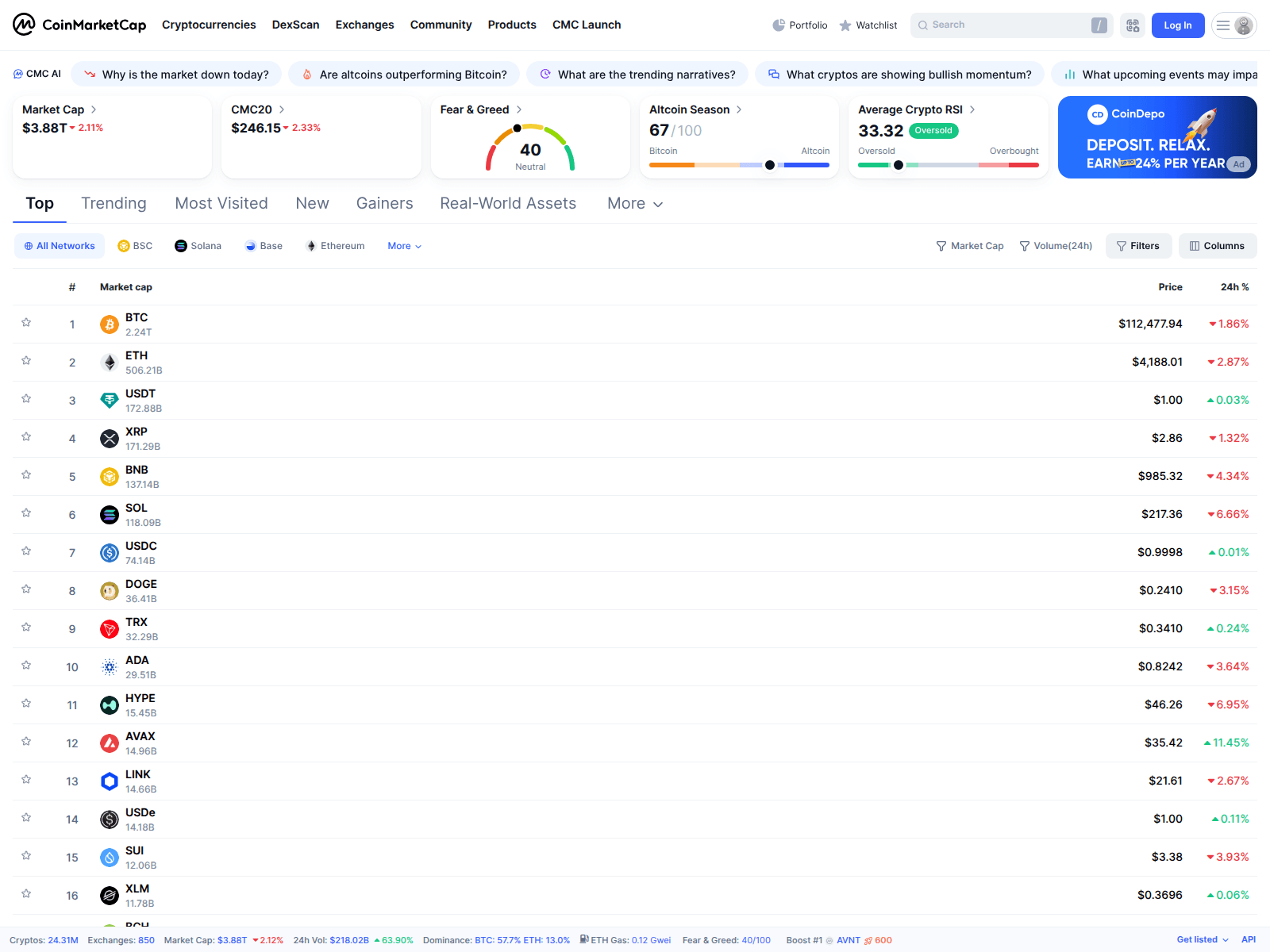
“Cryptocurrency Prices, Charts And Market Capitalizations | CoinMarketCap”

The domain hyperlendx.finance is a confirmed phishing site engaged in brand impersonation targeting users of the cryptocurrency platform Aave. It presents itself as a legitimate DeFi service but is designed to steal user credentials and funds through fraudulent login interfaces. As of the latest verification, hyperlendx.finance has been taken offline, though its prior activity classifies it as an elevated-risk scam.
Technical indicators confirm the malicious nature of hyperlendx.finance. The domain was registered on 2026-02-21 through Dynadot Inc and resolves to the IP address 3.174.46.87, hosted on Amazon.com, Inc. infrastructure in Germany. Security vendors on VirusTotal flagged it with 2 of 95 detections, including alerts from CRDF and Gridinsoft, which assigned a trust score of 0/100. The domain appears on one security blocklist, PhishDestroy, and uses an SSL certificate issued by WE1. The observed page title, 'Cryptocurrency Prices, Charts And Market Capitalizations | CoinMarketCap,' further suggests an attempt to mimic legitimate cryptocurrency platforms to deceive users.
Users who interacted with hyperlendx.finance should immediately change their Aave and other cryptocurrency platform passwords, enable two-factor authentication, and monitor accounts for unauthorized transactions. Since this is a credential-stealing phishing site, victims should also revoke any token approvals granted to unknown or suspicious contracts using tools like Etherscan or revoke.cash. Report the domain to relevant platforms, including Google Safe Browsing, the Anti-Phishing Working Group (APWG), and the impersonated brand, Aave, to assist in broader takedown efforts.
Full extracted values, their blockchain and collection source. An address found in page content does not establish who controls it.
0x02c6a2fa58cc01a18b8d9e00ea48d65e4df26c70Format validated · Domain analysis0x02dcdd04e3f455d838cd1249292c58f3b79e3c3cFormat validated · Domain analysis0x039e2fb66102314ce7b64ce5ce3e5183bc94ad38Format validated · Domain analysis0x0547010f8bdc8de796e2b80144f92d9815ef4444Format validated · Domain analysis0x0555e30da8f98308edb960aa94c0db47230d2b9cFormat validated · Domain analysis0x0d500b1d8e8ef31e21c99d1db9a6444d3adf1270Format validated · Domain analysis0x1831bb2723ced46e1b6c08d2f3ae50b2ab9427b9Format validated · Domain analysis0x1a1afc534bba548fb2248f324667f5ff3f66b741Format validated · Domain analysis0x20d6015660b3fe52e6690a889b5c51f69902ce0eFormat validated · Domain analysis0x2260fac5e5542a773aa44fbcfedf7c193bc2c599Format validated · Domain analysis0x2b41228b4fec7ab712a1a4172c4e6a546ba54444Format validated · Domain analysis0x2b591e99afe9f32eaa6214f7b7629768c40eeb39Format validated · Domain analysis0x2c45560bc707f7addb8df848a9ba6cd9f30faeecFormat validated · Domain analysis0x2f299be3b081e8cd47dc56c1932fcae7a91b5dcdFormat validated · Domain analysis0x2fa878ab3f87cc1c9737fc071108f904c0b0c95dFormat validated · Domain analysis0x3439153eb7af838ad19d56e1571fbd09333c2809Format validated · Domain analysis0x3639e6f4c224ebd1bf6373c3d97917d33e0492bbFormat validated · Domain analysis0x4200000000000000000000000000000000000006Format validated · Domain analysis0x42abdfdb63f3282033c766e72cc4810738571609Format validated · Domain analysis0x467364bd2a633208b4534f5b7ec11d24604546e4Format validated · Domain analysishttps://t.me/CoinMarketCapAnnouncementsStored page referencehttps://t.me/GigglefundBSCStored page referenceIoC extraction recorded 2026-07-29 02:31:49 UTC
Stored crawler-versus-browser observations for this host, plus a live fingerprint check for Keitaro-style traffic distribution systems.
ApacheScanner note: alive_content: raw=ok; http=200; via=https_proxy; server=Apache
 (US)
(US)
For this gTLD, the registrar above operates under an ICANN accreditation agreement. The links below provide the official fee schedule and current DNS abuse compliance guidance.
RAA §3.18 establishes abuse-contact and handling requirements. This report can document stored outbound notices and later technical observations; it does not by itself establish receipt, investigation, remediation, or contractual non-compliance.
Edge-IP reputation is not attributed to this domain.
ns2.dyna-ns.netLocation describes the IP network.
d7e77ecd865c04be76830e17c98fb0b02a6a693c5db588d777999d791ac5adcd11wbet.casino123onlinemovies.us14957.co2n08595.com333779.co35175.cc378259.my37885.my3t17270.com59518.co62wv.cc696602.mobi850857.com86sukien.site879562.my916884.mobi932137.com932225.com9vn789bet.comaaf6.ccarticles-famezones.comarticlesblogs-checks.combritainexport.combrowsekids.comc789a.comcccc360.xyzcomexdefinance.comcomputehydrogen.comdgvxb512.comdhawbzf1536.vipftvhq.sbsgeeao.appgodswire.orgjnk.biojyqpmu.comkrvra.winlazcoachboxing.comnad-ivtherapy-healthi-life.comonlinemeditations.comorder-08845.infopodken.cfdqoyqahtpflpowfr.sbsturbocloth.comvqcsl.linkSaved certificate metadata. Certificate dates without a timezone are shown as stored. Transport encryption does not establish that the site is trustworthy.
13 recorded events. These records describe collected evidence, outgoing notifications and publication; they do not confirm a complete investigation or a takedown.
We scan suspicious URLs, inspect public results and send evidence through the appropriate abuse-reporting channels. The dated events above show what is recorded for this domain. The directory below explains the wider workflow.
Capture the rendered page, requests and visible infrastructure.
Compare the available engine results and retain the analysis timestamp.
Check whether Google currently lists the URL as unsafe.
Inspect a public scan and its recorded network and classification data.
Look for indicator references and related community intelligence.
Compare archived captures and preserve historical context.
Look for matching indicators and associated threat records.
Inspect certificate records and related hostnames.
Compare security resolver responses and record observed blocking.
Inspect the public DNS, TLS, HTTP and technology surface.
Security services used for scanning, reputation checks and reporting are listed below. A service being listed is not evidence that it received, accepted or acted on this particular domain. Recorded submissions appear in the notification history above.
95 stored lookalike domains
Reported by 1 community member, first seen Sep 23, 2025
If credentials, payment data, or files were exposed, report the incident immediately. Change affected passwords, revoke active sessions, and scan the device.


Select your country to get official cybercrime contacts, or create a complaint draft →.
Template-based draft · optional AI wording assistance requires separate consent
Each lane is one reason a domain is linked to this host. Node size marks VirusTotal detections and dashed nodes are already offline. The full lists follow below.
Same favicon hash or the same page title as this host.
These domains also target Aave users. View all Aave threats →
Registered through the same registrar. A registrar serves millions of unrelated customers, so this groups reports rather than proving a link.
Threat analysis using stored blocklist, WHOIS, DNS, and public scan evidence
Scan NowSubmit suspicious domains to our threat database — protect the community
ReportRecent phishing reports and observed availability changes
MonitorMonitor live threats or contest this listing if you believe it's a false positive