VirusTotal
17 / 91
Report


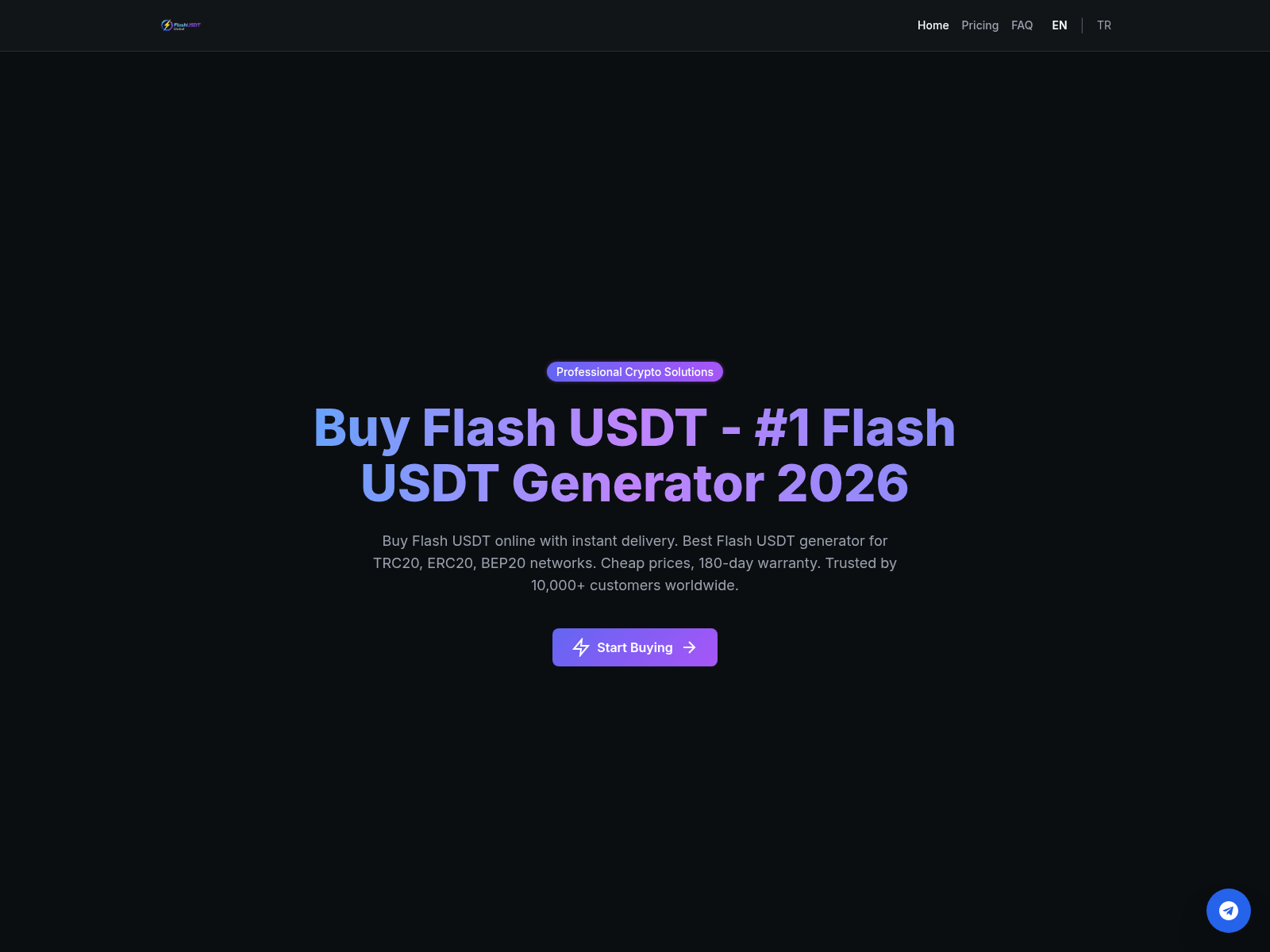
“Buy Flash USDT - #1 Flash USDT Generator 2026”

17 / 91
malicious
ReportDBL_PHISH
Report stored; detailed verdict not recorded
Report1 community reference
Reportprovider verdict: clean
Reportstored report
 Report
 14 checked — no blocks
Checked; no threat flag recorded
ReportThis domain, globalflashusdt.online, is flagged as a phishing site specializing in cryptocurrency fraud, specifically targeting users with a fake USDT (Tether) generator. The page title, 'Buy Flash USDT - #1 Flash USDT Generator 2026,' explicitly promotes a non-existent service designed to deceive victims into transferring cryptocurrency under false pretenses. No legitimate financial or blockchain service operates such generators, and the domain exhibits classic indicators of a crypto drainer scheme, where funds are siphoned from victims' wallets upon interaction. The absence of any recognizable brand impersonation suggests this is a standalone fraud operation rather than a spoof of an established entity.
Infrastructure analysis reveals the following technical indicators: the domain was registered on April 19, 2026, through Dynadot Inc, a registrar frequently utilized by threat actors due to its accessibility and privacy features. It resolves to the IP address 66.45.244.235, which has not been widely flagged in public threat intelligence feeds as of this assessment. The domain currently holds a VirusTotal detection score of 0/95, indicating no antivirus engines have flagged it at the time of analysis. The SSL certificate is issued by Let's Encrypt, a common choice for both legitimate and malicious sites due to its free and automated issuance process. Google Safe Browsing (GSB) status is not explicitly provided, but the lack of blocklist inclusions across major threat feeds suggests the domain is either newly operational or evading detection through obfuscation techniques.
As of the latest verification, globalflashusdt.online remains active and continues to host the fraudulent USDT generator page. No takedown actions or sinkholing efforts have been observed, and the domain's infrastructure remains intact. Users are strongly advised to avoid interacting with the site, as any engagement—particularly wallet connections or cryptocurrency transfers—poses a high risk of financial loss. Organizations should consider preemptive blocking of the domain and its resolving IP at the network level. Given the domain's recent registration and lack of prior detections, continuous monitoring is recommended to track potential shifts in hosting or additional malicious activity linked to this infrastructure.
Full extracted values, their blockchain and collection source. An address found in page content does not establish who controls it.
0x55d398326f99059ff775485246999027b3197955Format validated · Domain analysis0xdac17f958d2ee523a2206206994597c13d831ec7Format validated · Domain analysisTR7NHqjeKQxGTCi8q8ZY4pL8otSzgjLj6tFormat validated · Domain analysishttps://t.me/alexflashteamStored page referenceIoC extraction recorded 2026-07-29 02:49:41 UTC
Stored crawler-versus-browser observations for this host, plus a live fingerprint check for Keitaro-style traffic distribution systems.
Scanner note: unavailable: raw=connection_error; http=0; via=http_proxy; error=SOCKSHTTPConnectionPool(host='globalflashusdt.online', port=80): Max retries exceeded with url: / (Caused by NewConnecti
For this gTLD, the registrar above operates under an ICANN accreditation agreement. The links below provide the official fee schedule and current DNS abuse compliance guidance.
RAA §3.18 establishes abuse-contact and handling requirements. This report can document stored outbound notices and later technical observations; it does not by itself establish receipt, investigation, remediation, or contractual non-compliance.
dns1400a.trouble-free.netdns1400b.trouble-free.netLocation describes the IP network.
738c07052a8043edec95411c2b20620bc4930cfaca06ee9569d53dadecc2f252autoconfig.globalflashusdt.onlineautodiscover.globalflashusdt.onlinecpanel.globalflashusdt.onlinecpcalendars.globalflashusdt.onlinecpcontacts.globalflashusdt.onlinemail.globalflashusdt.onlinewebdisk.globalflashusdt.onlinewebmail.globalflashusdt.onlinewww.globalflashusdt.onlineSaved certificate metadata. Certificate dates without a timezone are shown as stored. Transport encryption does not establish that the site is trustworthy.
15 recorded events. These records describe collected evidence, outgoing notifications and publication; they do not confirm a complete investigation or a takedown.
We scan suspicious URLs, inspect public results and send evidence through the appropriate abuse-reporting channels. The dated events above show what is recorded for this domain. The directory below explains the wider workflow.
Capture the rendered page, requests and visible infrastructure.
Compare the available engine results and retain the analysis timestamp.
Check whether Google currently lists the URL as unsafe.
Inspect a public scan and its recorded network and classification data.
Look for indicator references and related community intelligence.
Compare archived captures and preserve historical context.
Look for matching indicators and associated threat records.
Inspect certificate records and related hostnames.
Compare security resolver responses and record observed blocking.
Inspect the public DNS, TLS, HTTP and technology surface.
Security services used for scanning, reputation checks and reporting are listed below. A service being listed is not evidence that it received, accepted or acted on this particular domain. Recorded submissions appear in the notification history above.
PD-20260702-EA2D9C Recipient: abusencc@interserver.net Registrar: Dynadot LLC / Dynadot Inc (United States) Policy Violations: Acceptable Use forbids illegal content; Spam & Abuse Policy prohibits phishing, fraud, malware; Dynadot may disable DNS and suspend domains Applicable Laws: CFAA 18 U.S.C. §1030, Wire Fraud 18 U.S.C. §1343, CAN-SPAM Act
If credentials, payment data, or files were exposed, report the incident immediately. Change affected passwords, revoke active sessions, and scan the device.


Select your country to get official cybercrime contacts, or create a complaint draft →.
Template-based draft · optional AI wording assistance requires separate consent
Each lane is one reason a domain is linked to this host. Node size marks VirusTotal detections and dashed nodes are already offline. The full lists follow below.
Multiple reports share this IP.
These domains also target Genericcrypto users. View all Genericcrypto threats →
Registered through the same registrar. A registrar serves millions of unrelated customers, so this groups reports rather than proving a link.
Recently added threat reports.
Threat analysis using stored blocklist, WHOIS, DNS, and public scan evidence
Scan NowSubmit suspicious domains to our threat database — protect the community
ReportRecent phishing reports and observed availability changes
MonitorMonitor live threats or contest this listing if you believe it's a false positive