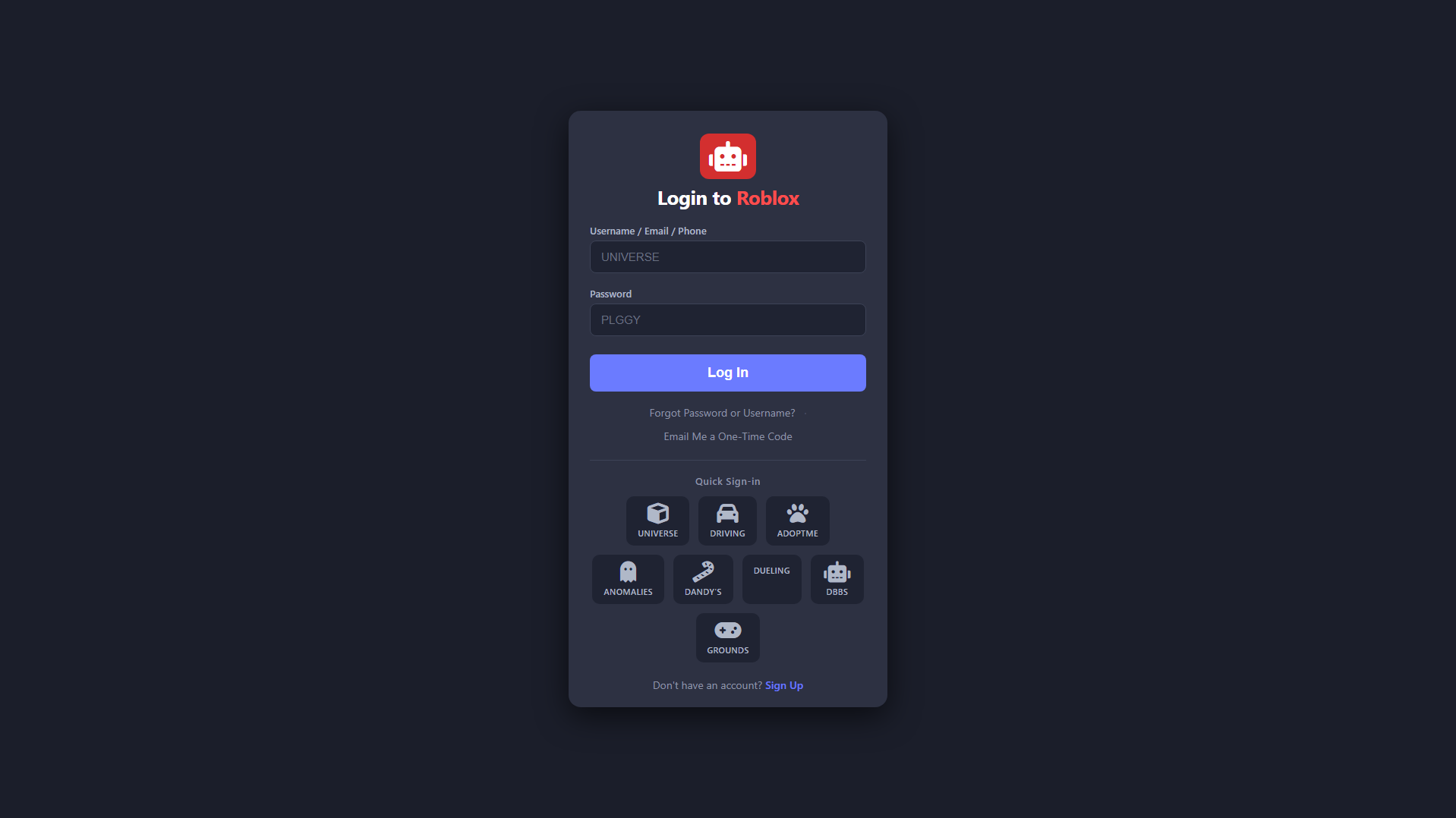
cerulean-cobbler-2999e3.netlify.app is a Roblox impersonation page detected by PhishDestroy on 2026-10-22. Risk: critical (100/100). Registrar: Netlify. Status: Last known active. Hosting: Amazon.com, Inc. VirusTotal: 21/92 engines flag it. Google Safe Browsing flags it. Do not enter credentials or connect a wallet.
Results reflect each source’s collection time. Zero detections do not guarantee safety. OTX references are community publications.
Questions about cerulean-cobbler-2999e3.netlify.app
Is cerulean-cobbler-2999e3.netlify.app legit?
No. PhishDestroy classifies cerulean-cobbler-2999e3.netlify.app as a Roblox impersonation page (risk: critical, 100/100); it was first detected on 2026-10-22. VirusTotal: 21/92 engines flag it. Google Safe Browsing flags it. Treat the site as unsafe.
Is cerulean-cobbler-2999e3.netlify.app safe to connect a wallet?
No. Do not connect a wallet, sign messages or approve tokens on cerulean-cobbler-2999e3.netlify.app. Phishing sites ask for approvals (approve, setApprovalForAll, Permit2) that let the operator move your assets, and a confirmed transaction cannot be reversed.
What should I do if I used cerulean-cobbler-2999e3.netlify.app?
Change every password you entered there and turn on two-factor authentication. If you connected a wallet or signed something, revoke the approvals and move the remaining funds to a new wallet; never share your seed phrase. Step-by-step help: emergency guide.
Certificate fingerprintbc3a8134c21a842e64ea34d488826dd2ba50f59a3bcbaed1e6b71a4242de1478Certificate names · 2 SANs
*.netlify.app
netlify.app
Saved certificate metadata. Certificate dates without a timezone are shown as stored. Transport encryption does not establish that the site is trustworthy.
Evidence layersAvailability: Content servingContent: Content served at rootDNS: StaleRegistration: Unknown
Latest HTTP observationLive contentOrdinary HTTP content served90%2026-10-24 10:00:38 UTC
RDAP registrationUnknown
Observed timelinelast reachable: 2026-10-24 10:00:38 UTClast content: 2026-10-24 10:00:38 UTC
Availability, content, DNS and registration are independent evidence layers. NXDOMAIN, an unreachable origin or missing content alone does not prove registrar action. A registrar or provider is credited only when a direct technical marker identifies that actor. Report causality is shown separately.
Direct link — Same registrable domain, favicon file or phishing kit.
Supporting signal — Shares infrastructure or a target brand; not proof of one operator.
Discovery only — Same registrar or CDN edge: listed for navigation, not evidence of a link.
Each lane is one reason a domain is linked to this host. Node size marks VirusTotal detections and dashed nodes are already offline. The full lists follow below. Full list of related reports
If credentials were compromised, report immediately. Do not engage with recovery scammers.
If credentials, payment data, or files were exposed, report the incident immediately. Change affected passwords, revoke active sessions, and scan the device.
Beware of recovery scammers! Recovery scammers may pose as investigators, lawyers, or tracing services. Do not pay upfront fees or disclose credentials.Learn more about recovery fraud →
Template-based draft · optional AI wording assistance requires separate consent
Template-based draft • optional AI wording assistance requires separate consent · Review and submit it yourself
After a phishing incident
Recommendations & Advice for Victims
Choose the steps that match what you shared. Keep a copy of this report alongside your own records.
What should I do immediately?
Urgent
Stop using the suspicious site. Open the real service through its official app or an address you already trust.
Change all passwords — email, exchange accounts, anything that shares the same password
Enable 2FA using an authenticator app (not SMS). Disable SMS-based recovery
Freeze cards if you entered banking details on the phishing site
What information should I collect for my report?
FBI guidelines
Keep original emails, receipts, messages and screenshots in a secure place. A factual timeline helps the receiving authority understand what happened. IC3 evidence guidance ↗
Payment records — if you paid, save the receipt, amount, date, payment provider and recipient details.
Exact dates & times — of each transaction and first contact with scammer
Screenshots — scam website, chat messages, emails, wallet transactions, social media
All URLs & domains used by the scammer (including cerulean-cobbler-2999e3.netlify.app)
Communications — emails, texts, phone numbers, usernames the scammer used
Even if you don't have all details — file a report anyway. Partial information still helps investigations.
Where should I report the scam?
FBI IC3 — Internet Crime Complaint Center (US federal reporting)
Your bank or payment provider — contact its fraud team promptly through official contact details if money or card information was exposed.
Local police — creates an official record, even if they can't act immediately
A report is not a guarantee of recovery or investigation, but prompt, accurate transaction data can help authorities and service providers trace the incident.
How do phishing scams typically work?
Fake websites — pixel-perfect clones of legitimate sites with slightly altered domains
Pig butchering — trust built over weeks via Telegram/WhatsApp/dating apps, then money stolen
Recovery scams — fraudsters pose as recovery agents and demand upfront fees. Never share a seed phrase or pay before independently verifying the provider
AI-powered scams — deepfakes, automated phishing, and AI-generated sites making fraud harder to detect
How can I protect myself in the future?
Bookmark official sites — never click links from emails, DMs, or ads
Verify domains — check on PhishDestroy before interacting. Check HTTPS, spelling, domain age
"Too good to be true" = scam — guaranteed returns, celebrity endorsements, urgent deadlines
About this reportSources, observation dates and corrections
This report combines saved page captures, registration and network records, scanner results and PhishDestroy reporting history. Each source keeps its own observation date. Open a source report to inspect the original result.
A capture documents what was shown. A scanner result records that provider’s assessment at the time of its check. Neither a valid certificate nor a zero-detection result is a guarantee of safety.