shopeeinc1111.blogspot.com
ABUSE NOTICE · 7D+ OPEN
Outgoing abuse reports are recorded; the latest stored availability evidence still shows the domain reachable.
Notification and current-status evidence
The sent-report ledger records the first outgoing report at . It contains 2 outgoing records; the latest is dated . A report was sent to the recorded registrar; contact details remain in Domain Intelligence. The latest stored availability evidence still shows the domain reachable; 4 months has elapsed since the first outgoing report.
ICANN RAA §3.18 describes registrar abuse-contact and handling obligations. This section records outgoing timestamps and later availability. It does not by itself prove receipt, acknowledgement, investigation, remediation, or contractual non-compliance.
Elapsed since first report
4 months
Reports sent
2
Current status
HTTP 308 at latest stored check
Domain security and threat intelligence

bayar[.]gg
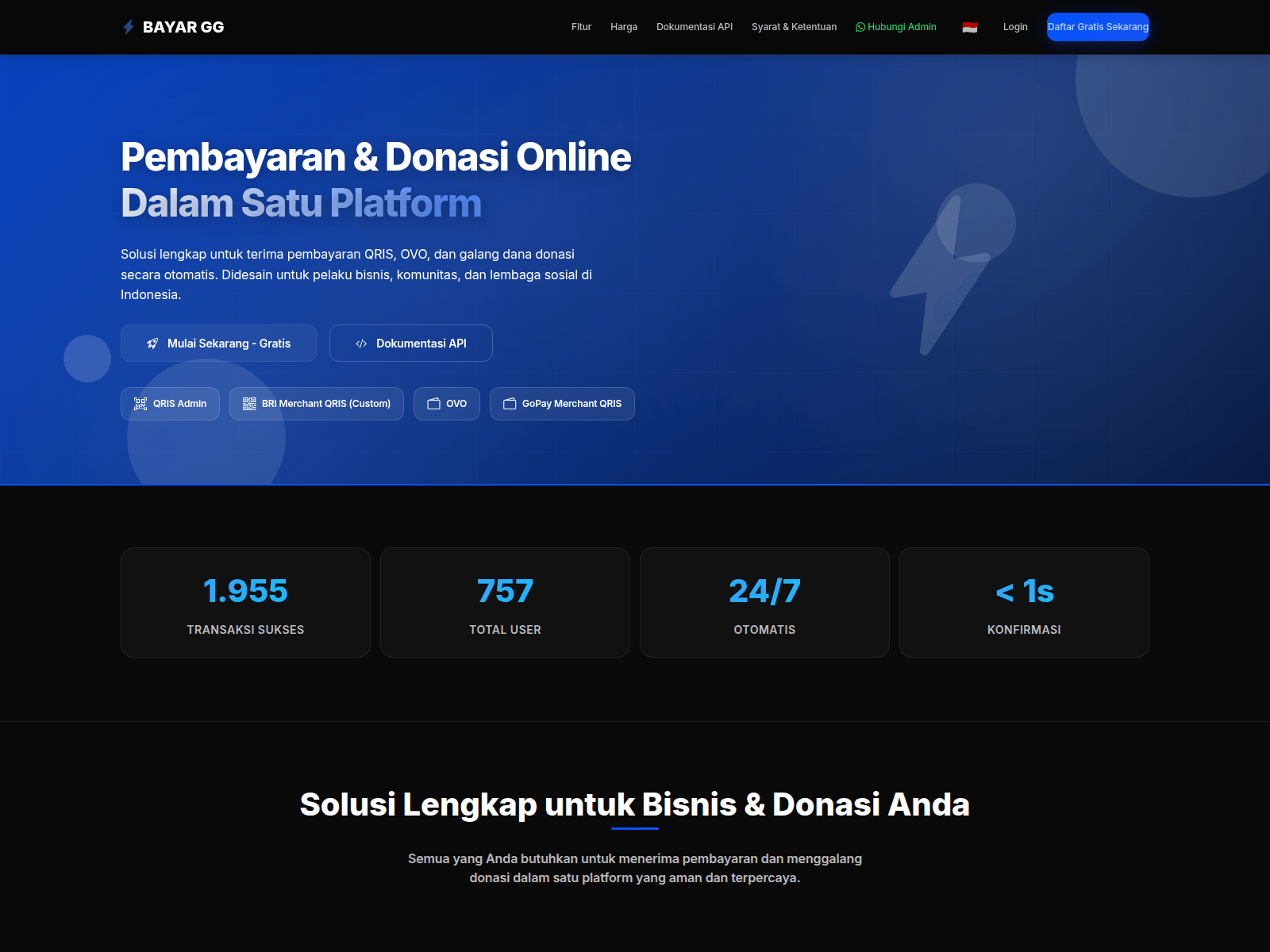
“Payment Gateway Indonesia Terbaik - QRIS, GoPay Merchant, OVO, BRI Merchant, WhatsApp Store | Terim…”
Threat verdict
Critical
88/100 evidence score
Availability
Last known active
Latest stored reachability observation
Risk signals
VirusTotal detections: 6/91
Spamhaus DBL: DBL_SPAM
Last known active
Stored observation
Observed title contrast
Scanner-facing title308 Permanent Redirect
Visitor-facing titlePayment Gateway Indonesia Terbaik - QRIS, GoPay Merchant, OVO, BRI Merchant, WhatsApp Store | Terima Pembayaran & Donasi Online - BAYAR GG
Evidence Summary
CRITICAL
The domain bayar.gg has been assessed as an elevated risk generic phishing threat. This site impersonates a legitimate payment gateway provider for Indonesia, aiming to deceive users into entering sensitive financial information. The phishing campaign specifically targets popular local payment methods such as QRIS, GoPay, OVO, and BRI Merchant, as well as WhatsApp Store integration. The domain was taken offline after detection, but similar threats may reappear under different names.
Technical analysis reveals several red flags. The domain was created on March 24, 2026, through TLD Registry (.gg), and resolves to IP address 95.169.180.225. VirusTotal data shows that 1 out of 95 security vendors flagged this domain as malicious, while AlienVault OTX recorded it in 8 threat intelligence pulses. Additionally, it appears on one security blocklist. The SSL certificate was issued by Let's Encrypt (R13), which is commonly abused by phishing sites due to its free and automated issuance. The page title claimed to be a top Indonesian payment gateway, but the discrepancy between the legitimate service and the actual domain should raise suspicion.
To stay safe from such payment gateway phishing attacks, users should always verify the URL before entering any credentials or payment details. Legitimate payment gateways use their official domain names and secure connections. Never click on links from unsolicited emails or messages claiming to be from payment providers. Enable two-factor authentication on all financial accounts and use anti-phishing browser extensions. If you suspect you have interacted with a phishing site, immediately change your passwords, contact your bank, and monitor your accounts for unauthorized transactions.
Submitted Evidence Snapshot
- Sent
- Ledger records
- 1
- Case ID
PD-1774620886-bayar.gg- PDF artifact
- PDF evidence
Report history 2
- Report 1 Phishing Abuse Report: bayar[.]gg
- Report 2 ⚠️ ESCALATION #2 (48h active): Phishing - bayar[.]gg
VirusTotal
6 det.
OTX references
TLS Certificate
Expired or unverified -42d
Age
5 mo
Observed status
Last known active HTTP 308

DestroyList
Listed
Reports Sent
2
Data Coverage
VirusTotal
6 / 91
URLQuery
not checked
PhishStats
not checked
OTX
8 community references
CF Radar
no data
URLScan capture
stored report
URLScan verdict
verdict unavailable
DNS blocks
not checked
TLS
Expired or unverified
WHOIS
5 mo old
Screenshot
2 captures · 2 sources
Redirect chain
not probed
Threat Response Pipeline
Discovery
Checks
Reports
Availability
11/12
Blocklist coverage
10 monitored external feeds · stored snapshot Aug 11, 2026
10 monitored external feeds No match
Financial Infrastructure
Addresses extracted from the phishing page.
Telegram
Stored Capture
Domain Intelligence
Domain
Server / ASN
nginx · AS262287 Latitude.sh LTDA
IP Reputation
IP abuse confidence 0/100 0 reports checked Jul 14, 2026
Registrar
TLD Registry (.gg)
IP Address
95.169.180.225

RegistrationCreated Mar 24, 2026 (140d)
HTTP Status308 Permanent Redirect
Technical detailsDNS, TLS names and timestamps
First DetectedMar 27, 2026
TLS fingerprint
TLS observationvalid from Apr 2, 2026scanned May 5, 2026
Favicon Hash
Report This Domain
Submit evidence & help protect others
VirusTotal Analysis
6 / 91 security vendors flagged this domain
View on VT
Last analyzed First positive detection Previous stored snapshot: 0 detections
alphaMountain.ai
Chong Lua Dao
CRDF
Fortinet
Gridinsoft
SOCRadar
Related Infrastructure & Reports
Recent threat reports 6
Recently added threat reports.
Were You Affected by This Site?
If credentials were compromised, report immediately. Do not engage with recovery scammers.
If a wallet, seed phrase, or account was exposed, report the incident immediately. Revoke approvals and move remaining assets to a new wallet created on a trusted device.


Action Fraud
Report fraud and cybercrime in England, Wales and Northern Ireland
Contact centre0300 123 2040
Chainabuse
Report a crypto wallet, transaction, or phishing URL
SEAL-ISAC
Security Alliance crypto threat intelligence
PhishDestroy listing review Not a law-enforcement report
Domain Appeal
Request a review if you own this domain and believe the listing is incorrect
Beware of recovery scammers! Recovery scammers may pose as investigators, lawyers, or tracing services. Do not pay upfront fees or disclose credentials. Guaranteed crypto recovery is a fraud indicator. Learn more about recovery fraud →
Report to Your Local Authorities
Select your country to get official cybercrime contacts, or create a complaint draft →.
97-country directory
Template-based draft • optional AI wording assistance requires separate consent
Review and submit it yourself
Check Any Domain
Threat analysis using stored blocklist, WHOIS, DNS, and public scan evidence
Scan NowReport Phishing
Submit suspicious domains to our threat database — protect the community
ReportLive Threat Feed
Recent phishing reports and observed availability changes
MonitorStay Informed, Stay Safe
Monitor live threats or contest this listing if you believe it's a false positive
Recommendations & Advice for Victims
An estimated $51 billion flowed to illicit crypto wallets in 2024 (source). If you interacted with bayar.gg — act now.
What should I do immediately?
Urgent
- Revoke token approvals — use revoke.cash to remove access granted to malicious smart contracts
- Move remaining funds to a brand-new wallet. The compromised wallet is no longer safe
- Change all passwords — email, exchange accounts, anything that shares the same password
- Enable 2FA using an authenticator app (not SMS). Disable SMS-based recovery
- Freeze cards if you entered banking details on the phishing site
What information should I collect for my report?
FBI guidelines
According to the FBI, the most important details are transaction data:
- Cryptocurrency addresses — scammer's wallet (e.g.,
0x5856...35985) - Amount & crypto type — exact amount (e.g., 1.02345 ETH, 0.5 BTC, 500 USDT)
- Transaction ID (hash) — the unique blockchain transaction identifier
- Exact dates & times — of each transaction and first contact with scammer
- Screenshots — scam website, chat messages, emails, wallet transactions, social media
- All URLs & domains used by the scammer (including
bayar.gg) - Communications — emails, texts, phone numbers, usernames the scammer used
Even if you don't have all details — file a report anyway. Partial information still helps investigations.
Where should I report the scam?
- FBI IC3 — Internet Crime Complaint Center (US federal reporting)
- Europol — European cybercrime reporting (EU)
- Chainabuse — flag scam wallets across exchanges & platforms
- Your crypto exchange — notify its fraud team immediately; it may be able to preserve records or restrict funds held on its platform
- Local police — creates an official record, even if they can't act immediately
A report is not a guarantee of recovery or investigation, but prompt, accurate transaction data can help authorities and service providers trace the incident.
How do crypto scams typically work?
- Fake websites — pixel-perfect clones of legitimate sites with slightly altered domains
- Malicious approvals — "connect wallet" prompts that grant unlimited token spending to attackers
- Pig butchering — trust built over weeks via Telegram/WhatsApp/dating apps, then money stolen
- Recovery scams — fraudsters pose as recovery agents and demand upfront fees. Never share a seed phrase or pay before independently verifying the provider
- Fake ads & airdrops — Google/social media ads and "free token" offers leading to wallet drainers
- AI-powered scams — deepfakes, automated phishing, and AI-generated sites making fraud harder to detect
How can I protect myself in the future?
- Use a hardware wallet (Ledger, Trezor). Never store large amounts in browser wallets
- Bookmark official sites — never click links from emails, DMs, or ads
- Read every approval — verify permissions before signing. Reject unlimited approvals
- Verify domains — check on PhishDestroy before interacting. Check HTTPS, spelling, domain age
- "Too good to be true" = scam — guaranteed returns, celebrity endorsements, urgent deadlines