Spamhaus DBL
DBL_PHISH
Interpretation & limits
A result applies to the recorded source and observation time. Absence of a flag is not proof of safety.


“ARC Forge”
Assessment based on the stored source evidence below. Review sources →

These are dated observations, not a live safety check. No flag, a stored capture, or a completed analysis does not establish that a site is safe.
DBL_PHISH
A result applies to the recorded source and observation time. Absence of a flag is not proof of safety.
checked — no detections recorded
ReportEngine detections from this stored analysis. Vendors and collection times may differ from other sources.
checked — no detections recorded
ReportAlerts refer to the preserved scan. They do not describe the current state of the site.
checked — no match recorded
A result applies to the recorded source and observation time. Absence of a flag is not proof of safety.
no community references
ReportCommunity publication references, not a vendor verdict or evidence of a common operator.
provider verdict: clean
A result applies to the recorded source and observation time. Absence of a flag is not proof of safety.
stored report
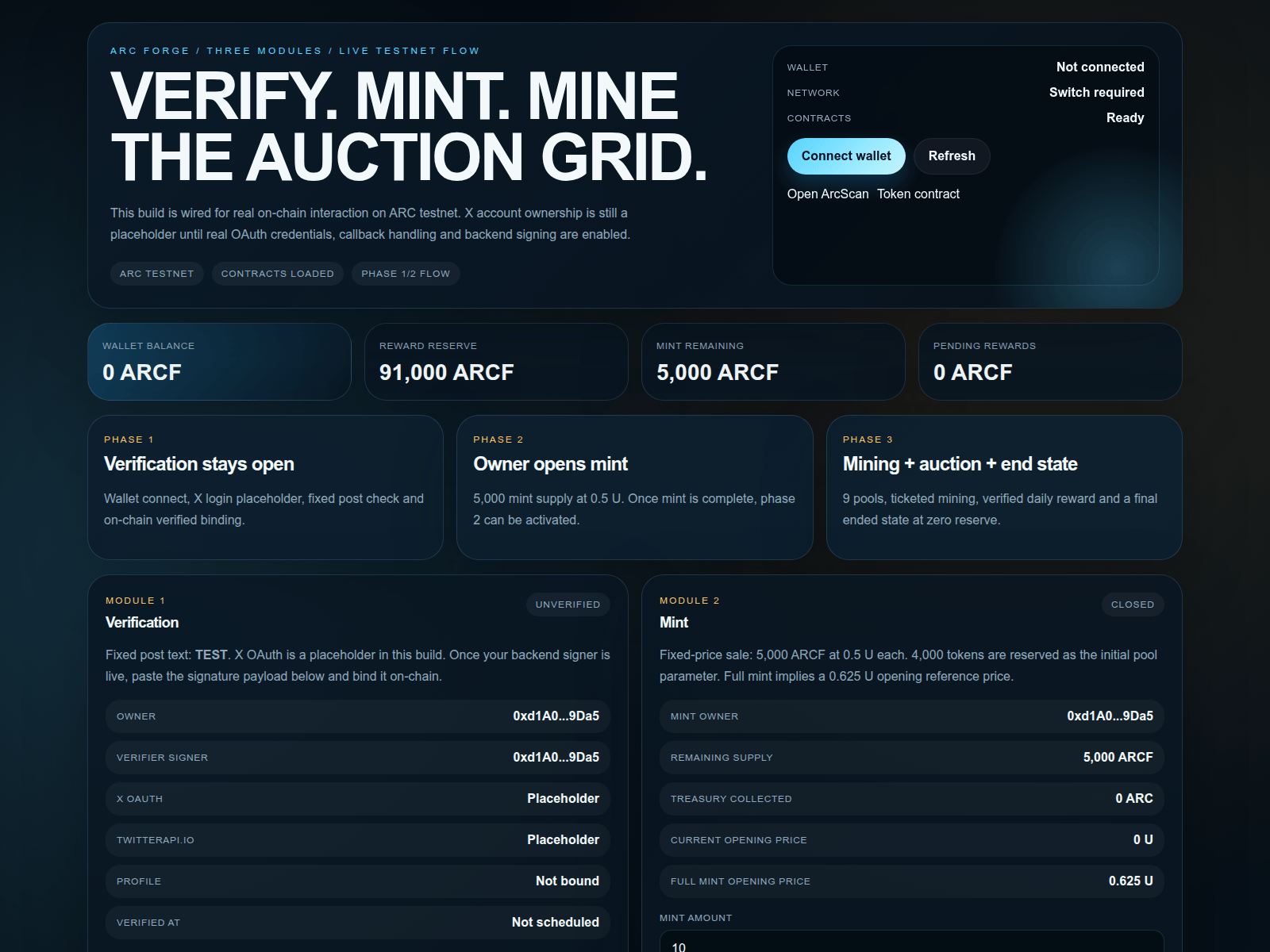
A preserved page image documents what the collector received; a capture is not a safety verdict.
Analysis completed
ReportThis is the recorded automated analysis. Completion alone is not a safety verdict.
12 checked — no blocks
A result applies to the recorded source and observation time. Absence of a flag is not proof of safety.
Checked; no threat flag recorded
ReportA result applies to the recorded source and observation time. Absence of a flag is not proof of safety.
Stored narrative · generated . Provider checks below retain their own observation dates.
arcforge.network has been identified as a fake software activation portal actively distributing credential-stealing malware. This domain mimics legitimate software registration pages to trick users into entering their login credentials under the guise of ‘software validation’ or ‘license activation.’ Visitors are redirected from spoofed emails or malvertising campaigns to a convincing replica of a well-known developer’s portal, where any entered credentials are immediately exfiltrated to attacker-controlled servers. Once obtained, these credentials are used for account takeover, access to cloud services, or sold on dark web markets. The threat actor exploits urgency and familiarity to bypass user skepticism, making this a high-risk vector for enterprise and personal account compromise. According to PhishDestroy’s investigation under seed b2ff06, this domain is currently active and poses an immediate risk to uninformed users.
This domain resolves to the IP address 8.221.137.222 and is registered through Dynadot Inc. Notably, the domain was created on April 13, 2026—an unusually recent registration—suggesting it was deployed specifically for a current phishing campaign. Despite zero detections on VirusTotal (0/95), this domain has not yet been flagged by major blocklists, indicating it remains under the radar of automated defense systems. The presence of a valid Let’s Encrypt SSL certificate further enhances its deceptive credibility, increasing the likelihood of successful user deception. The combination of a fresh domain, low detection rate, and realistic portal mimicry creates a potent phishing threat that bypasses traditional email and web filters.
If you have visited arcforge.network, immediately change any passwords or credentials entered on the site. Scan your system with updated antivirus software to detect potential malware installations. Report the domain to your security team or via PhishDestroy’s portal to aid in ongoing threat intelligence. Avoid clicking links from unsolicited emails or ads promoting software updates or registrations. Enable multi-factor authentication on all critical accounts to mitigate the risk of credential theft. Stay vigilant—verify any software-related websites directly through official, bookmarked links. The threat remains active and under investigation under seed b2ff06.
Full extracted values, their blockchain and collection source. An address found in page content does not establish who controls it.
0x1826AB69F9Bf6d1CC3D10B78d46492BAc5F8E0B3Format validated · Domain analysisIoC extraction recorded 2026-08-01 04:16:34 UTC
Stored crawler-versus-browser observations for this host, plus a live fingerprint check for Keitaro-style traffic distribution systems.
Scanner note: unavailable: raw=connection_error; http=0; via=http_proxy; error=SOCKSHTTPConnectionPool(host='arcforge.network', port=80): Max retries exceeded with url: / (Caused by NewConnectionErro
For this gTLD, the registrar above operates under an ICANN accreditation agreement. The links below provide the official fee schedule and current DNS abuse compliance guidance.
RAA §3.18 establishes abuse-contact and handling requirements. This report can document stored outbound notices and later technical observations; it does not by itself establish receipt, investigation, remediation, or contractual non-compliance.
ns2.dyna-ns.netLocation describes the IP network.
6e43e216d4a5416c68b2ce31057428fd64daec62c7be54d18619c5c1c91262f9www.arcforge.networkSaved certificate metadata. Certificate dates without a timezone are shown as stored. Transport encryption does not establish that the site is trustworthy.
Google PageSpeed Insights — mobile performance audit of arcforge.network · checked Apr 13, 2026
13 recorded events. These records describe collected evidence, outgoing notifications and publication; they do not confirm a complete investigation or a takedown.
We scan suspicious URLs, inspect public results and send evidence through the appropriate abuse-reporting channels. The dated events above show what is recorded for this domain. The directory below explains the wider workflow.
Capture the rendered page, requests and visible infrastructure.
Compare the available engine results and retain the analysis timestamp.
Check whether Google currently lists the URL as unsafe.
Inspect a public scan and its recorded network and classification data.
Look for indicator references and related community intelligence.
Compare archived captures and preserve historical context.
Look for matching indicators and associated threat records.
Inspect certificate records and related hostnames.
Compare security resolver responses and record observed blocking.
Inspect the public DNS, TLS, HTTP and technology surface.
Security services used for scanning, reputation checks and reporting are listed below. A service being listed is not evidence that it received, accepted or acted on this particular domain. Recorded submissions appear in the notification history above.
Reported by 1 community member, first seen Apr 13, 2026
PD-20260413-0385C7 Recipient: abuse@dynadot.com Registrar: Dynadot LLC / Dynadot Inc (United States) Policy Violations: Acceptable Use forbids illegal content; Spam & Abuse Policy prohibits phishing, fraud, malware; Dynadot may disable DNS and suspend domains Applicable Laws: CFAA 18 U.S.C. §1030, Wire Fraud 18 U.S.C. §1343, CAN-SPAM Act
If credentials, payment data, or files were exposed, report the incident immediately. Change affected passwords, revoke active sessions, and scan the device.


Select your country to get official cybercrime contacts, or create a complaint draft →.
Template-based draft · optional AI wording assistance requires separate consent
Each lane is one reason a domain is linked to this host. Node size marks VirusTotal detections and dashed nodes are already offline. The full lists follow below.
These domains also target Base users. View all Base threats →
Registered through the same registrar. A registrar serves millions of unrelated customers, so this groups reports rather than proving a link.
Recently added threat reports.
Threat analysis using stored blocklist, WHOIS, DNS, and public scan evidence
Scan NowSubmit suspicious domains to our threat database — protect the community
ReportRecent phishing reports and observed availability changes
MonitorMonitor live threats or contest this listing if you believe it's a false positive