ChainPatrol
 Web-Check
  SOCRadar
  LeakIX
FBI IC3
Melden Sie internetbasierte Kriminalität in den Vereinigten Staaten
Federal tips line1-800-CALL-FBI

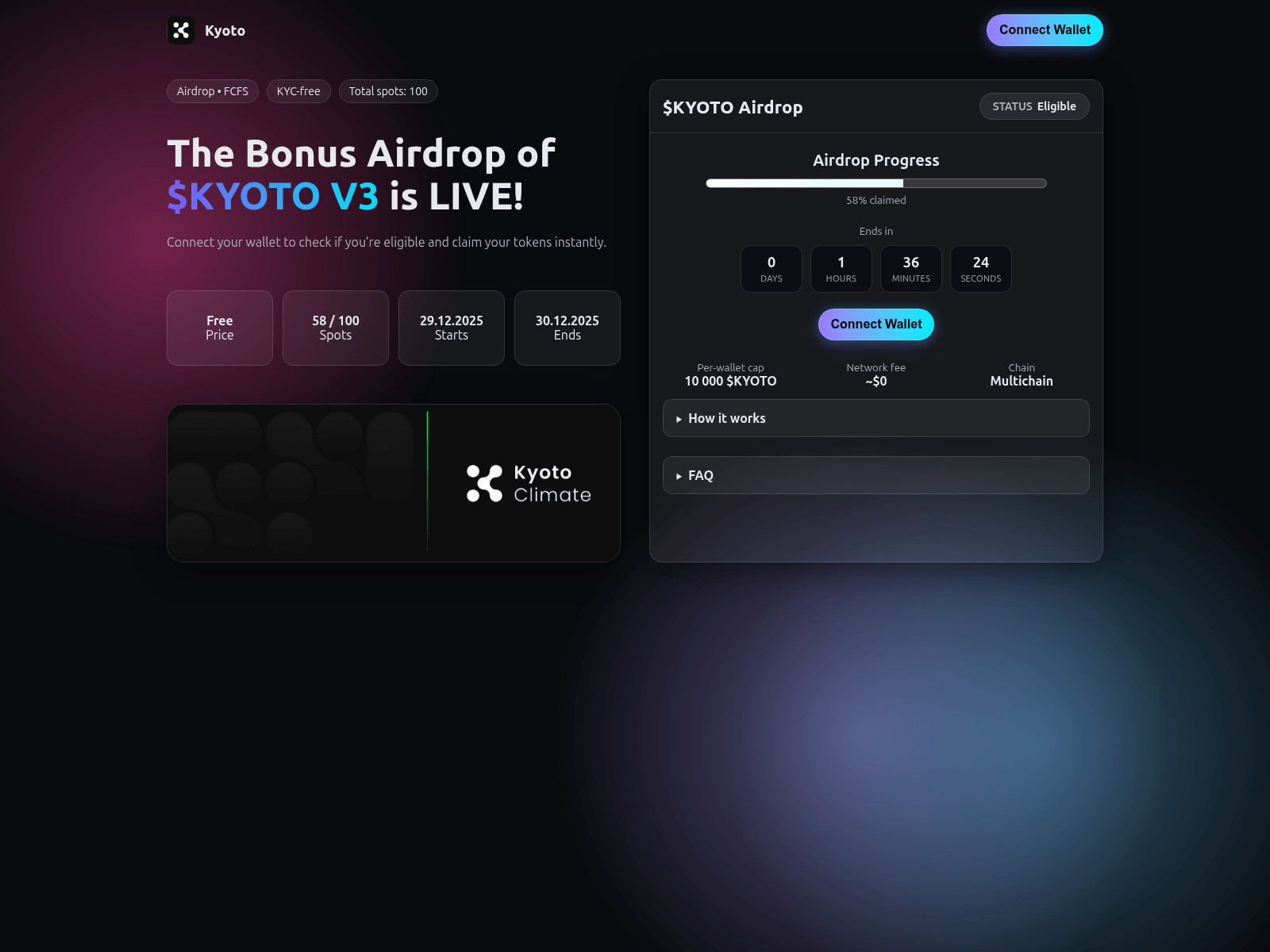
“Kyoto V3 Airdrop”
kyotoclimate.xyz — Serverfehler (HTTP 502). Betrugstyp: Crypto Scam. Zusammenfassung der Beweislage: VirusTotal 7/93 (alphaMountain.ai, CyRadar, Fortinet, Gridinsoft, Seclookup); Spamhaus DBL_PHISH; PhishDestroy score 71/100. Registrar: NiceNIC.
Die ausführliche Analyse von PhishDestroy AI bleibt auf Englisch, damit der ursprüngliche forensische Bericht unverändert bleibt.
Analysis of kyotoclimate.xyz shows a domain that was created on 28 December 2025 through NiceNIC International Group Co., Limited. The authoritative nameservers camilo.ns.cloudflare.com and serena.ns.cloudflare.com resolve the domain to the Cloudflare edge address 188.114.96.3, which belongs to AS13335 Cloudflare, Inc. and is geolocated to the United States. No TLS certificate was observed, indicating the site was served over plain HTTP at the time of capture. The page title returned by the server is “Kyoto V3 Airdrop”, aligning with the intelligence‑provided classification of a crypto‑focused airdrop scam.
VirusTotal recorded seven detections out of ninety‑three scanned scanners, and the domain is listed on a single security blocklist. PhishDestroy has also taken the domain offline and marked it as blocked. The campaign is identified as employing an “Airdrop Scam” phishing kit, consistent with the reported scam type of a crypto scam. The available evidence confirms that the domain was used to lure victims with promises of a cryptocurrency airdrop, likely to harvest credentials or private keys.
Because the site is currently offline, active payloads cannot be inspected, and the exact content of the page remains unverified beyond the title. Defenders should continue to block the domain at network perimeters, update URL filtering lists with the observed IP address and nameserver information, and monitor for any re‑registration attempts or similar domains using the same registrar or Cloudflare infrastructure. Ongoing telemetry from threat‑intel feeds should be correlated with the seven VirusTotal detections to assess whether additional malicious payloads are associated with this infrastructure.
 (RU)
PhishDestroy Investigation
(RU)
PhishDestroy Investigation
 San Francisco, US
For this gTLD, the registrar above operates under an ICANN accreditation agreement. The links below provide the official fee schedule and current DNS abuse compliance guidance.
RAA §3.18 establishes abuse-contact and handling requirements. This report can document stored outbound notices and later technical observations; it does not by itself establish receipt, investigation, remediation, or contractual non-compliance.
Wenn Sie Kontoanmeldeinformationen, persönliche oder Zahlungsinformationen eingegeben oder eine Datei von dieser Domain heruntergeladen haben, ergreifen Sie sofort Maßnahmen. Nachfolgend finden Sie Ressourcen, die Ihnen helfen, den Vorfall zu melden und sich zu schützen.


Wählen Sie Ihr Land aus, um Offizielle Kontakte im Bereich Cyberkriminalität oder einen Beschwerdeentwurf erstellen → zu erhalten.
Diese Berichte werden auf dieselbe gemeinsame Edge-IP aufgelöst. Sie helfen bei der Berichtserkennung, bedeuten jedoch keinen gemeinsamen Besitz oder einen gemeinsamen Ursprungsserver.
Part of the Airdrop-Betrug phishing campaign. View all campaign domains →
Kürzlich hinzugefügte Berichte aus der PhishDestroy-Datenbank. Diese Discovery-Links implizieren keine gemeinsame Nutzung der Infrastruktur oder des Eigentums.
Bedrohungsanalyse anhand gespeicherter Blocklisten, WHOIS, DNS und öffentlicher Scan-Beweise
Jetzt scannenMelden Sie verdächtige Domains an unsere Bedrohungsdatenbank – schützen Sie die Community
MeldenAktuelle Phishing-Meldungen und beobachtete Verfügbarkeitsänderungen
ÜberwachenBeobachten Sie aktuelle Bedrohungen oder legen Sie Widerspruch gegen diesen Eintrag ein, wenn Sie der Meinung sind, dass es sich um einen Fehlalarm handelt
 payme-paypal.com
  bullshit-proposal.xyz
  instagram-clone-dusky-tau.vercel.app
  finglobalheritage.online
  metamask-k.blogspot.com.ng