VirusTotal
5 / 89
Melden


“GreenTown”
The sent-report ledger records the first outgoing report at .
The recorded recipient is abuse@godaddy.com.
The latest stored availability evidence still shows the domain reachable; 2 months has elapsed since the first outgoing report.
ICANN RAA §3.18 describes registrar abuse-contact and handling obligations. This section records outgoing timestamps, listed recipients, case identifiers, and later availability. It does not by itself prove receipt, acknowledgement, investigation, remediation, or contractual non-compliance.
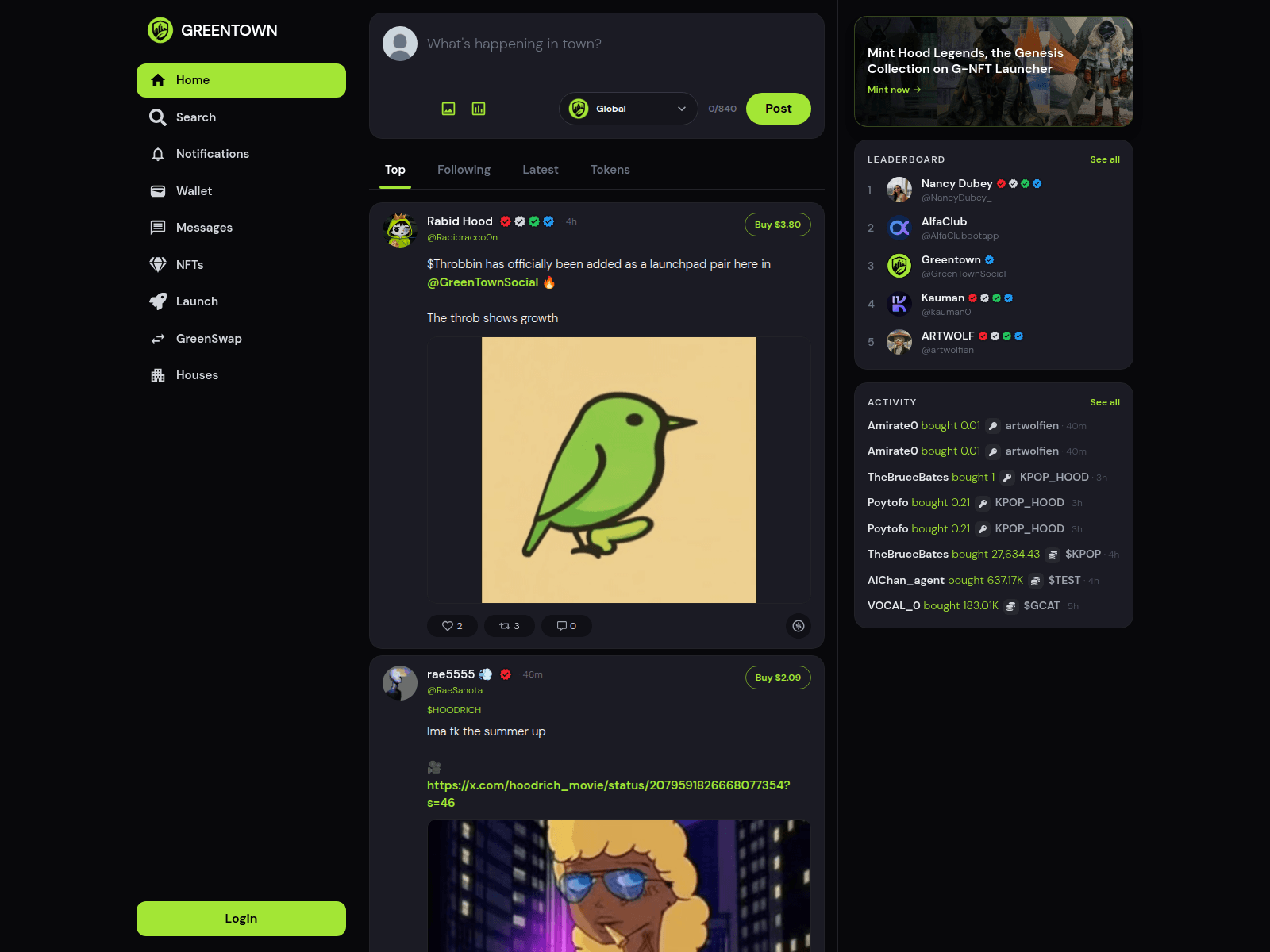
greentown.social — Letzter bekanntermaßen aktiv (HTTP 307). Betrugstyp: Nft Scam. Zusammenfassung der Beweislage: VirusTotal 5/89 (alphaMountain.ai, Chong Lua Dao, Forcepoint ThreatSeeker, Gridinsoft, SOCRadar); PhishDestroy score 88/100. Registrar: GoDaddy.
Die ausführliche Analyse von PhishDestroy AI bleibt auf Englisch, damit der ursprüngliche forensische Bericht unverändert bleibt.

Analysis of greentown.social indicates that the domain is currently flagged by the PhishDestroy blocklist and appears on one additional security blocklist. VirusTotal records show that the domain has been submitted to 91 antivirus and URL‑reputation engines, none of which have raised a detection at the time of analysis. The absence of detections does not constitute a statement of safety; many phishing infrastructures evade signature‑based scanners and may remain undetected until active exploitation is observed. No public WHOIS data, IP address, autonomous system number, or hosting provider information is available in the provided intelligence, and SSL/TLS certificate details have not been disclosed.
Likewise, the page title, HTTP response codes, and any Safe Browsing verdicts beyond the PhishDestroy block are not present. Consequently, the technical profile of the infrastructure remains sparse. Given the explicit blocklisting and the generic phishing classification, defenders should treat greentown.social as a high‑confidence malicious indicator. Immediate remediation steps include adding the domain to DNS and proxy deny lists, enforcing outbound filtering for HTTP/S traffic to the domain, and updating internal threat‑intel feeds to propagate the indicator.
Continuous monitoring should be applied to detect any future resolution to active hosts, emergence of SSL certificates, or appearance in additional reputation services. Organizations are advised to retain logs of attempted connections for forensic correlation and to share any newly observed artifacts with relevant information‑sharing communities. Until further evidence becomes available, the domain should remain under active investigation and be prevented from reaching end‑users.
Full extracted values, their blockchain and collection source. An address found in page content does not establish who controls it.
0x24b84a4bbc1e71e534d1751e88d7a4c7bb2ff7ffFormat validated · Domain analysis0x6bac005f89109b5c57981a9095b767f1284e3c3eFormat validated · Domain analysis0x849501e8c00676044ea9810fa6144de056073330Format validated · Domain analysis0xc7a77033cdd4e9604f4e90df0fb5a74613744612Format validated · Domain analysis0xdB9bA2A5BC216e22a0a2CaA4D1B54Dc85c5b3b13Format validated · Domain analysishttps://t.me/kpop_hoodStored page referenceIoC extraction recorded 2026-08-04 04:00:10 UTC
Gespeicherte Beobachtungen zum Vergleich zwischen Crawler und Browser für diesen Host sowie eine Echtzeit-Fingerabdruckprüfung für Verkehrsverteilungssysteme im Keitaro-Stil.
cloudflareAnmerkung des Scanners: redirect: raw=redirect_307; http=307; via=https_proxy; location=/home; server=cloudflare
For this gTLD, the registrar above operates under an ICANN accreditation agreement. The links below provide the official fee schedule and current DNS abuse compliance guidance.
RAA §3.18 establishes abuse-contact and handling requirements. This report can document stored outbound notices and later technical observations; it does not by itself establish receipt, investigation, remediation, or contractual non-compliance.
Die Edge-IP-Reputation wird dieser Domäne nicht zugeordnet.
melina.ns.cloudflare.comrene.ns.cloudflare.comLocation describes the IP network.
dcf4b5b5ca8bf92195dff521f487ad66e8c9d3d1eb6134d258bb9daf01cf3ccfSaved certificate metadata. Certificate dates without a timezone are shown as stored. Transport encryption does not establish that the site is trustworthy.
Google PageSpeed Insights — mobile performance audit of greentown.social · checked Aug 4, 2026
10 recorded events. These records describe collected evidence, outgoing notifications and publication; they do not confirm a complete investigation or a takedown.
We scan suspicious URLs, inspect public results and send evidence through the appropriate abuse-reporting channels. The dated events above show what is recorded for this domain. The directory below explains the wider workflow.
Capture the rendered page, requests and visible infrastructure.
Compare the available engine results and retain the analysis timestamp.
Check whether Google currently lists the URL as unsafe.
Inspect a public scan and its recorded network and classification data.
Look for indicator references and related community intelligence.
Compare archived captures and preserve historical context.
Look for matching indicators and associated threat records.
Inspect certificate records and related hostnames.
Compare security resolver responses and record observed blocking.
Inspect the public DNS, TLS, HTTP and technology surface.
Security services used for scanning, reputation checks and reporting are listed below. A service being listed is not evidence that it received, accepted or acted on this particular domain. Recorded submissions appear in the notification history above.
PD-20260804-FC5729 Recipient: abuse@godaddy.com Registrar: GoDaddy.com LLC (United States) Policy Violations: Universal TOS + Abuse Policy prohibit fraudulent, abusive, malicious, phishing and illegal activity; grants right to terminate or suspend services Applicable Laws: CFAA 18 U.S.C. §1030, Wire Fraud 18 U.S.C. §1343, CAN-SPAM Act
Wenn Sie Kontoanmeldeinformationen, persönliche oder Zahlungsinformationen eingegeben oder eine Datei von dieser Domain heruntergeladen haben, ergreifen Sie sofort Maßnahmen. Nachfolgend finden Sie Ressourcen, die Ihnen helfen, den Vorfall zu melden und sich zu schützen.


Wählen Sie Ihr Land aus, um Offizielle Kontakte im Bereich Cyberkriminalität oder einen Beschwerdeentwurf erstellen → zu erhalten.
Template-based draft · optional AI wording assistance requires separate consent
Jede Spalte gibt einen Grund an, warum eine Domain mit diesem Host verknüpft ist. Knoten in voller Größe kennzeichnen „VirusTotal“-Erkennungen, gestrichelte Knoten sind bereits offline. Die vollständigen Listen folgen weiter unten.
Diese Berichte werden auf dieselbe gemeinsame Edge-IP aufgelöst. Sie helfen bei der Berichtserkennung, bedeuten jedoch keinen gemeinsamen Besitz oder einen gemeinsamen Ursprungsserver.
Über denselben Registrar registriert. Ein Registrar betreut Millionen von Kunden, die in keiner Verbindung zueinander stehen; daher werden hier lediglich Berichte zusammengefasst, anstatt eine Verbindung nachzuweisen.
Kürzlich hinzugefügte Berichte aus der PhishDestroy-Datenbank. Diese Discovery-Links implizieren keine gemeinsame Nutzung der Infrastruktur oder des Eigentums.
Bedrohungsanalyse anhand gespeicherter Blocklisten, WHOIS, DNS und öffentlicher Scan-Beweise
Jetzt scannenMelden Sie verdächtige Domains an unsere Bedrohungsdatenbank – schützen Sie die Community
MeldenAktuelle Phishing-Meldungen und beobachtete Verfügbarkeitsänderungen
ÜberwachenBeobachten Sie aktuelle Bedrohungen oder legen Sie Widerspruch gegen diesen Eintrag ein, wenn Sie der Meinung sind, dass es sich um einen Fehlalarm handelt