ackisaffiliate.com
  ciphersagecun.com
  thesmartcapcoinltd.com
  taprify.icu
  zenithchaintrades.com
  ontimexpressdelivery.com
  gtbuk.com
  vurak-groups.com
  teslastocks.org
FBI IC3
Melden Sie internetbasierte Kriminalität in den Vereinigten Staaten
Federal tips line1-800-CALL-FBI

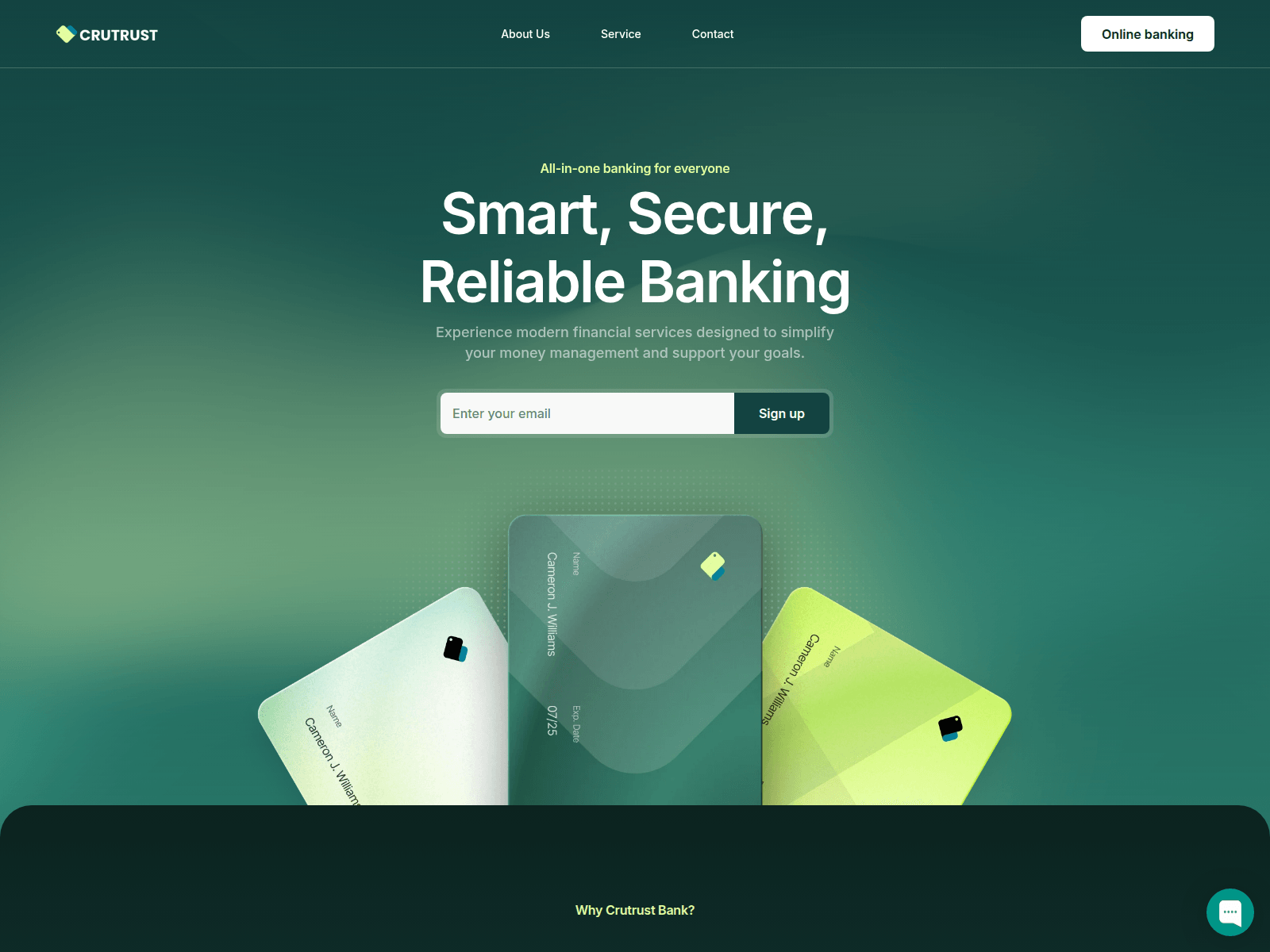
“Online Banking – Crutrust Bank”
Gespeicherte Erkennung
content_divergenceAnalysis of crutrustbank.com indicates an active high‑risk brand‑impersonation campaign targeting Apple users. The domain was registered on October 03, 2025 by Cosmotown, Inc., and resolves to the IPv4 address 198.23.193.170, which is hosted in the United States under ASN 36352 (HostPapa). The authoritative nameservers listed are dns1.geebytesdns.com, dns2.geebytesdns.com, ns1.geebytescloud.com, and ns2.geebytesclou, confirming the use of the geebytes DNS infrastructure. An SSL certificate issued by Let’s Encrypt with the E7 identifier is active, providing encrypted transport but offering no indication of legitimacy.
The HTTP response returns status code 200, and the page title observed is "Online Banking – Crutrust Bank," consistent with the declared scam type of banking phishing. Gridinsoft assigns a trust score of 0 out of 100, and the domain appears on a single security blocklist. PhishDestroy has already blocked the site, and VirusTotal reports that 3 of 95 scanning engines flag the domain as malicious, reinforcing the suspicion of malicious intent. The threat actor explicitly impersonates Apple, leveraging the brand to lure victims into credential harvesting.
While the exact content of the site has not been examined, the combination of a recent registration, low trust score, active SSL, and multiple detection signals suggests the infrastructure is deliberately deployed for phishing. Defenders should immediately add crutrustbank.com to deny lists across firewall, DNS filtering, and email security gateways. Continuous monitoring of the associated IP range (198.23.193.0/24) and the geebytes nameserver set is advised, as the operators may replicate the pattern for additional malicious domains. Organizations with Apple accounts should reinforce user education on verifying legitimate Apple communications and consider deploying multi‑factor authentication to mitigate credential compromise risks.

10 überwachte externe Feeds · gespeicherter Stand 10.08.2026
Erreichbar → Nicht erreichbar
Cloudflare-Radar-Scan gespeichert · Scan öffnen
 (US)
(US)
For this gTLD, the registrar above operates under an ICANN accreditation agreement. The links below provide the official fee schedule and current DNS abuse compliance guidance.
RAA §3.18 establishes abuse-contact and handling requirements. This report can document stored outbound notices and later technical observations; it does not by itself establish receipt, investigation, remediation, or contractual non-compliance.
Diese Ursprungs-IP hostet mehrere Phishing-Domänen – die Infrastruktur kann kampagnenübergreifend gemeinsam genutzt werden.
These domains also target Apple users. View all Apple threats →
Kürzlich hinzugefügte Berichte aus der PhishDestroy-Datenbank. Diese Discovery-Links implizieren keine gemeinsame Nutzung der Infrastruktur oder des Eigentums.
Wenn Sie Kontoanmeldeinformationen, persönliche oder Zahlungsinformationen eingegeben oder eine Datei von dieser Domain heruntergeladen haben, ergreifen Sie sofort Maßnahmen. Nachfolgend finden Sie Ressourcen, die Ihnen helfen, den Vorfall zu melden und sich zu schützen.


Wählen Sie Ihr Land aus, um Offizielle Kontakte im Bereich Cyberkriminalität oder einen Beschwerdeentwurf erstellen → zu erhalten.
Bedrohungsanalyse anhand gespeicherter Blocklisten, WHOIS, DNS und öffentlicher Scan-Beweise
Jetzt scannenMelden Sie verdächtige Domains an unsere Bedrohungsdatenbank – schützen Sie die Community
MeldenAktuelle Phishing-Meldungen und beobachtete Verfügbarkeitsänderungen
ÜberwachenBeobachten Sie aktuelle Bedrohungen oder legen Sie Widerspruch gegen diesen Eintrag ein, wenn Sie der Meinung sind, dass es sich um einen Fehlalarm handelt