



 ChainPatrol
 Web-Check
  SOCRadar
  LeakIX
FBI IC3
Melden Sie internetbasierte Kriminalität in den Vereinigten Staaten
Federal tips line1-800-CALL-FBI

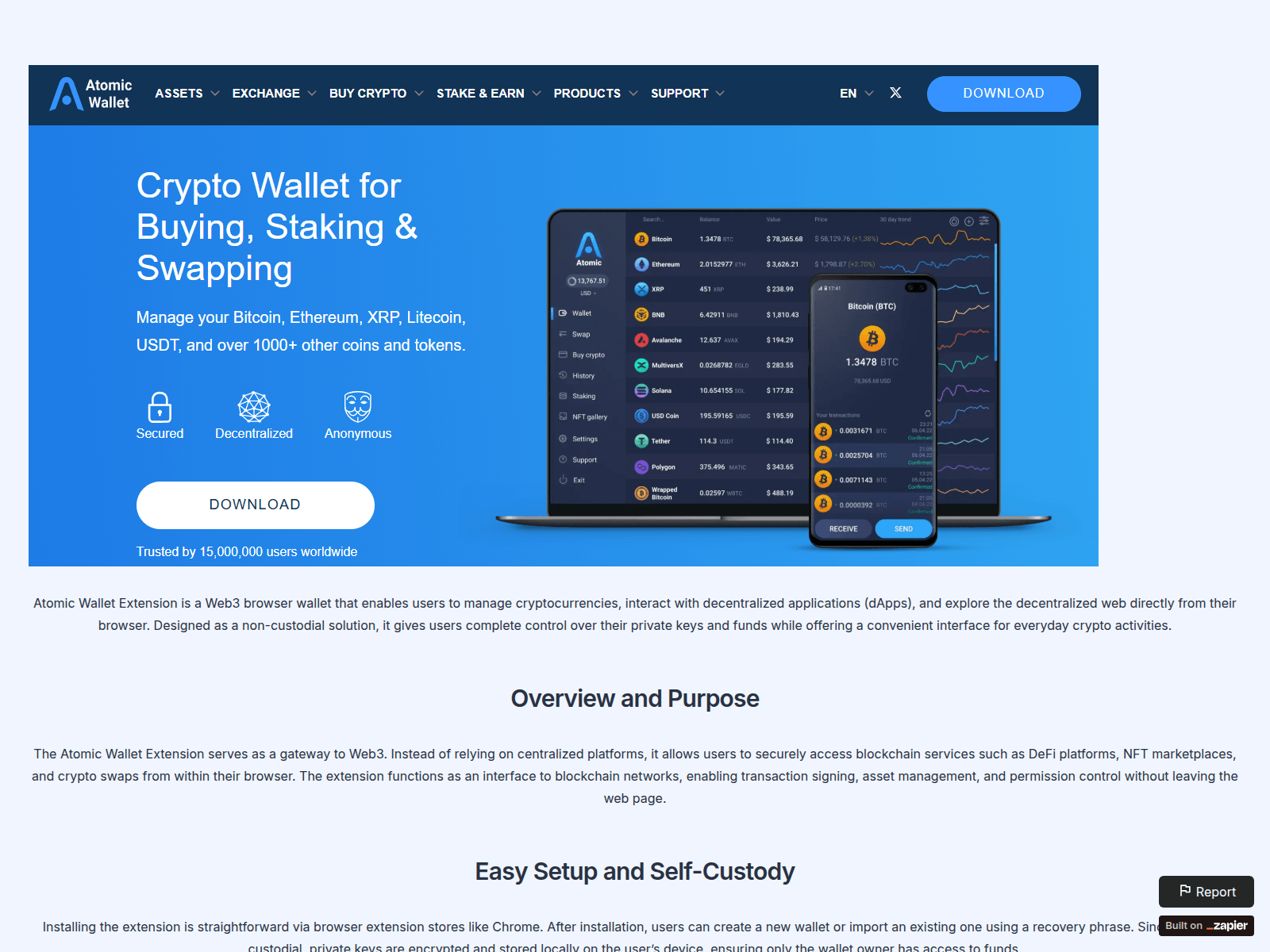
“Atomic Wallet Extension”
atiomic-ex.zapier.app — Getarnt · erreichbar. Betrugstyp: Crypto Drainer. Zusammenfassung der Beweislage: VirusTotal 12/94 (ADMINUSLabs, Cluster25, CRDF, CyRadar, Fortinet); cloaking observed; PhishDestroy score 86/100. Registrar: Name.com.
Die ausführliche Analyse von PhishDestroy AI bleibt auf Englisch, damit der ursprüngliche forensische Bericht unverändert bleibt.
atiomic-ex.zapier.app has been identified as an active credential harvesting phishing domain with an elevated risk level. Security researchers classify the specific threat as generic_phishing, indicating the site is engineered to trick users into surrendering sensitive login credentials under false pretenses. The domain leverages deceptive branding or service impersonation, a common tactic in phishing campaigns, to increase the likelihood of user engagement and data compromise. PhishDestroy’s analysis confirms the site remains operational and poses an immediate threat to unsuspecting visitors.
This domain was flagged by multiple authoritative sources, including four out of ninety-five VirusTotal security vendors, and is blocked by OpenPhish and PhishingArmy. The infrastructure behind atiomic-ex.zapier.app resolves to IP address 64.239.123.193, which hosts a Let’s Encrypt SSL certificate to enhance perceived legitimacy. The domain appears on two recognized security blocklists, further validating its malicious nature. While the exact creation date is not provided, these combined indicators reflect a well-coordinated phishing operation designed to evade detection through trusted services like Zapier’s app hosting platform and legitimate certificate authorities.
To mitigate exposure to this credential harvesting threat, users should avoid interacting with atiomic-ex.zapier.app entirely. Organizations are urged to block both the domain and its resolved IP (64.239.123.193) at the network perimeter. Security teams should update firewall rules, SIEM signatures, and proxy blocklists using the unique seed 4ba61c for cross-referencing. Employees must be reminded not to input credentials into third-party web forms, especially those received via unsolicited messages or embedded in unfamiliar subdomains. In cases of potential compromise, immediate password rotation and multi-factor authentication enablement are essential to limit account takeover risk.

 (SE)
(SE)
 Walnut, US
For the registrable domain zapier.app behind this subdomain, the registrar above operates under an ICANN accreditation agreement. The links below provide the official fee schedule and current DNS abuse compliance guidance.
RAA §3.18 establishes abuse-contact and handling requirements. This report can document stored outbound notices and later technical observations; it does not by itself establish receipt, investigation, remediation, or contractual non-compliance.
Cloud computing platform offering compute, storage, and networking services.
Cloud platform for frontend deployment, optimized for Next.js.
Payment processor — credit card and alt-payment acceptance.
stripe.comGoogle's bot-challenge service. On phishing sites, used to appear legitimate and filter out automated scanners.
HTTP Strict Transport Security — forces browsers to use HTTPS connections only.
Google PageSpeed Insights — mobile performance audit of atiomic-ex.zapier.app · checked Apr 12, 2026
Wenn Sie Kontoanmeldeinformationen, persönliche oder Zahlungsinformationen eingegeben oder eine Datei von dieser Domain heruntergeladen haben, ergreifen Sie sofort Maßnahmen. Nachfolgend finden Sie Ressourcen, die Ihnen helfen, den Vorfall zu melden und sich zu schützen.


Wählen Sie Ihr Land aus, um Offizielle Kontakte im Bereich Cyberkriminalität oder einen Beschwerdeentwurf erstellen → zu erhalten.
Diese Berichte werden auf dieselbe gemeinsame Edge-IP aufgelöst. Sie helfen bei der Berichtserkennung, bedeuten jedoch keinen gemeinsamen Besitz oder einen gemeinsamen Ursprungsserver.
Bedrohungsanalyse anhand gespeicherter Blocklisten, WHOIS, DNS und öffentlicher Scan-Beweise
Jetzt scannenMelden Sie verdächtige Domains an unsere Bedrohungsdatenbank – schützen Sie die Community
MeldenAktuelle Phishing-Meldungen und beobachtete Verfügbarkeitsänderungen
ÜberwachenBeobachten Sie aktuelle Bedrohungen oder legen Sie Widerspruch gegen diesen Eintrag ein, wenn Sie der Meinung sind, dass es sich um einen Fehlalarm handelt


 started-appen.zapier.app
  equityautomatedbot.com
  notexists7654321d6bfe926-ebd7-4808-9c1b-c266ebad8230.acquency.com