ripple-swap.com
  cricfy.cricket
  nuopux.com
  dfximpact.live
  ethguanfangweiyilianjie.com
  trust-aml.org
مركز IC3 التابع لمكتب التحقيقات الفيدرالي (FBI)
الإبلاغ عن الجرائم المتصلة بالإنترنت في الولايات المتحدة
Federal tips line1-800-CALL-FBI
The sent-report ledger records the first outgoing report at . A report was sent to the recorded registrar; contact details remain in Domain Intelligence. The latest stored availability evidence still shows the domain reachable; 10 days has elapsed since the first outgoing report.
ICANN RAA §3.18 describes registrar abuse-contact and handling obligations. This section records outgoing timestamps and later availability. It does not by itself prove receipt, acknowledgement, investigation, remediation, or contractual non-compliance.
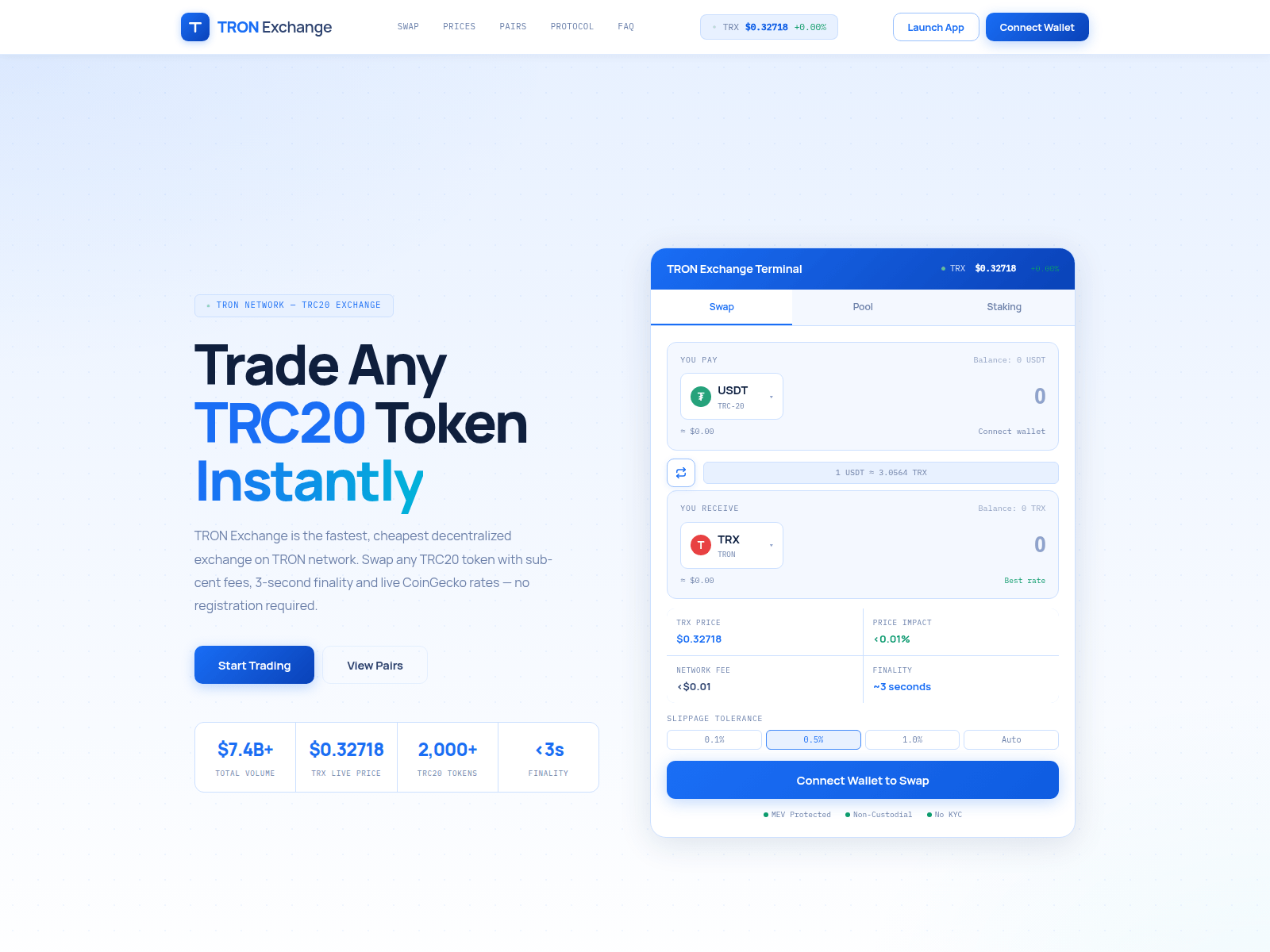
“TRON Exchange â Swap TRC20 Tokens | Fast & Secure”
Analysis of the domain tron-exchange.net as of August 02, 2026 indicates that it is actively being used in a generic phishing campaign. DNS resolution points to the IPv4 address 186.2.175.35, which is the sole host observed for this indicator. The domain was submitted to VirusTotal and examined by 91 antivirus and URL‑reputation engines; none of the engines raised a detection at the time of analysis. While the lack of detections does not constitute a safety guarantee, it shows that the payload or landing page has not yet been fingerprinted by public scanners.
Independent threat‑intelligence feeds have flagged the domain; it is listed on a single security blocklist and is actively blocked by the PhishDestroy filtering service. No additional public reputation scores, SSL certificate details, HTTP status codes, or Safe Browsing entries are currently available for this host. Consequently, the confidence in the phishing classification rests primarily on the observed DNS mapping, the blocklist inclusion, and the PhishDestroy block.
Defenders should add the IP address 186.2.175.35 to outbound and inbound deny lists where appropriate, enforce domain‑level blocking for tron‑exchange.net across email gateways, web proxies, and endpoint URL filters, and monitor DNS logs for any future resolution attempts. Continuous re‑scanning of the domain on multi‑engine services is advised, as the threat actor may later introduce malicious payloads that trigger detections. Organizations that have observed credential‑theft attempts or credential‑reuse incidents related to the “tron‑exchange” naming pattern should treat this indicator as a high‑priority alert and investigate related authentication logs for possible compromise.
PD-20260802-53B978
١٠ مصادر خارجية مراقبة · لقطة محفوظة 12/08/2026
أول قيمة محفوظة: يمكن الوصول إليه
 (BY)
PhishDestroy Investigation
(BY)
PhishDestroy Investigation

For this gTLD, the registrar above operates under an ICANN accreditation agreement. The links below provide the official fee schedule and current DNS abuse compliance guidance.
RAA §3.18 establishes abuse-contact and handling requirements. This report can document stored outbound notices and later technical observations; it does not by itself establish receipt, investigation, remediation, or contractual non-compliance.
حُدّدَت تقنيتان عاليتا الثقة
يستضيف عنوان IP الأصلي هذا العديد من مجالات التصيد الاحتيالي — وقد تتم مشاركة البنية التحتية عبر الحملات.
التقارير المضافة مؤخرًا من قاعدة بيانات PhishDestroy. لا تتضمن روابط الاكتشاف هذه بنية تحتية أو ملكية مشتركة.
إذا أدخلت بيانات اعتماد الحساب أو المعلومات الشخصية أو معلومات الدفع أو قمت بتنزيل ملف من هذا النطاق، فاتخذ إجراءً فوريًا. فيما يلي موارد لمساعدتك في الإبلاغ عن الحادث وحماية نفسك.


حدد بلدك للحصول على الاتصالات الرسمية المتعلقة بالجرائم الإلكترونية أو إنشاء مسودة شكوى →.
تحليل التهديدات باستخدام قائمة الحظر المخزنة، وWHOIS، وDNS، وأدلة الفحص العامة
امسح الآنأرسل النطاقات المشبوهة إلى قاعدة بيانات التهديدات الخاصة بنا — ساهم في حماية المجتمع
إبلاغتقارير التصيد الاحتيالي الأخيرة وتغييرات التوفر الملحوظة
مراقبةراقب التهديدات في الوقت الفعلي أو اعترض على هذا الإدراج إذا كنت تعتقد أنه إنذار كاذب