VirusTotal
11 / 91 engine detections
打开报告

“CoinP”
The sent-report ledger records the first outgoing report at .
The recorded recipient is abuse@godaddy.com.
The latest stored availability evidence still shows the domain reachable; 27 days has elapsed since the first outgoing report.
ICANN RAA §3.18 describes registrar abuse-contact and handling obligations. This section records outgoing timestamps, listed recipients, case identifiers, and later availability. It does not by itself prove receipt, acknowledgement, investigation, remediation, or contractual non-compliance.
钓鱼: coinpsse.com — 最后已知的活跃状态 (HTTP 200). 证据摘要: VirusTotal 11/91 (alphaMountain.ai, BitDefender, CRDF, ESET, Forcepoint ThreatSeeker); URLScan malicious…
为保留原始取证记录,下方的 PhishDestroy AI 详细分析仍使用英文。
11 / 91 engine detections
打开报告Suspicious
打开报告恶意
打开报告Scan report
打开报告1 community reference
打开报告No threat flag
打开报告Results reflect each source’s collection time. Zero detections do not guarantee safety. OTX references are community publications.
PhishDestroy threat report
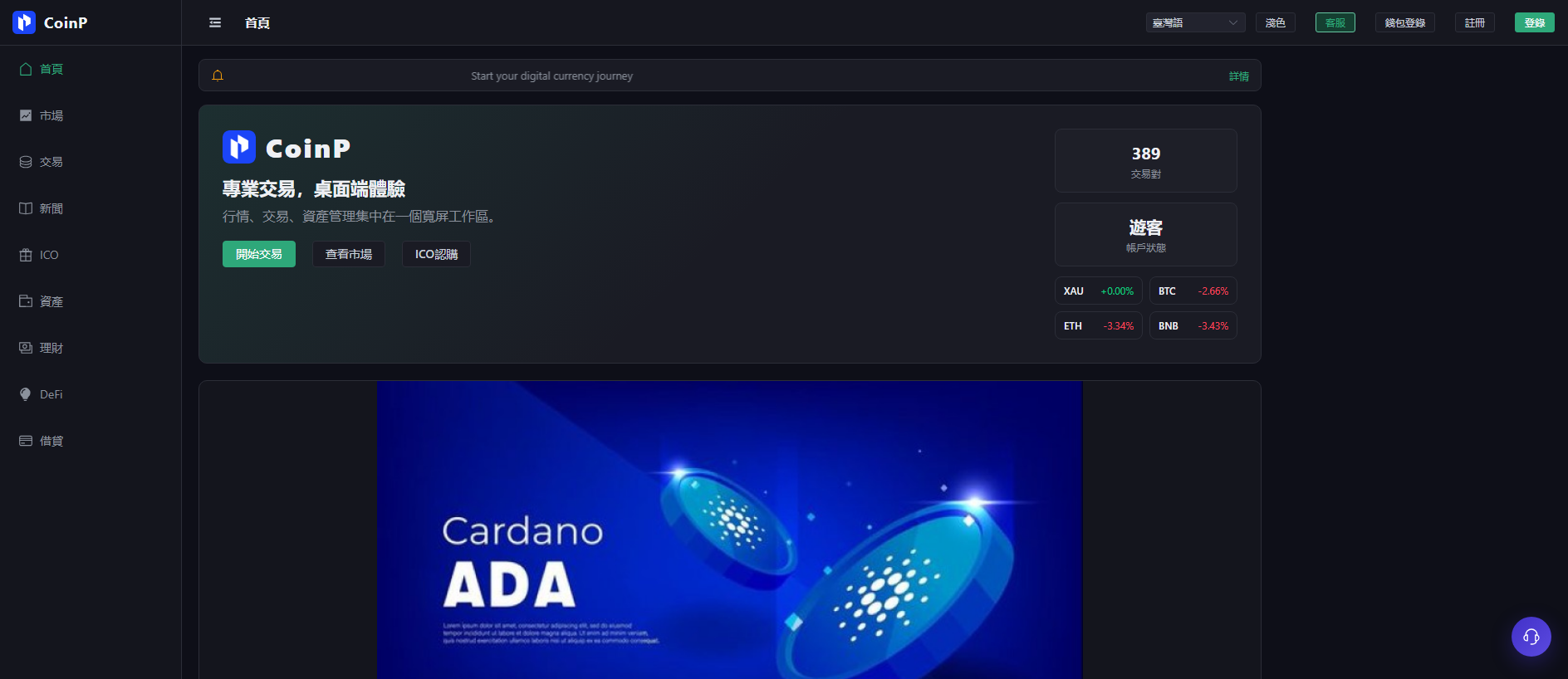
coinpsse.com is an impersonation phishing page whose browser title reads simply "CoinP". It presents itself as a crypto platform and targets people who believe they are using a legitimate trading or wallet service. PhishDestroy first flagged it on 2026-09-23. As of 2026-10-19 the site was still online and serving its content, so it remains a live risk.
Impersonation sites like this copy the name and look of a crypto service so visitors trust it with whatever it asks for. Depending on the page flow, that can be a login and 2FA code, a deposit to a platform "wallet" that never pays out, or a wallet connection followed by a signature request. urlscan.io tagged the page as a crypto scam, which matches this pattern. Money or tokens sent through a page like this go straight to the operators and are rarely recoverable.
Several independent sources back the classification. VirusTotal shows 11 of 91 engines flagging the domain as of 2026-10-03, including BitDefender, ESET, Fortinet, Forcepoint ThreatSeeker, G-Data, Gridinsoft, alphaMountain.ai and CRDF. The count is modest, but the vendors are mainstream, and urlscan.io returned a malicious verdict. The domain also appears on the MetaMask and SEAL blocklists alongside PhishDestroy, and one AlienVault OTX pulse references it. MetaMask users should therefore see a warning before the page loads.
The domain was registered through GoDaddy on 2026-09-08 and flagged 15 days later. That is a typical gap for a throwaway scam domain set up for a short campaign. The site sits behind Cloudflare, with the address geolocated to Canada, which hides the real origin server. Its certificate from Google Trust Services shows only that the padlock is valid. It says nothing about whether the site is trustworthy.
Do not log in, deposit or connect a wallet on coinpsse.com. If you entered a password or 2FA code there, change the password on the genuine service right away, reset 2FA and end any active sessions. If you connected a wallet or signed anything, revoke token approvals with a trusted approval checker and move remaining funds to a fresh wallet. Do not pay any "fee" the site asks for to release a balance, because that is part of the same theft. Defenders should block the domain at DNS and proxy level, add it to mail and web filters, and report it to the registrar and Cloudflare.
Last checked
Edge-IP 声誉不属于此域。
kai.ns.cloudflare.comzainab.ns.cloudflare.comLocation describes the IP network.
4dc0af9ffe57cd5d6c81c7bd5924af684ee87b9ead4ee3aac87512c04ef3d7d6Saved certificate metadata. Certificate dates without a timezone are shown as stored. Transport encryption does not establish that the site is trustworthy.
Google PageSpeed Insights — mobile performance audit of coinpsse.com · checked Sep 23, 2026
An estimated time describes an observation window. It does not prove a registrar action or the exact moment a site became unavailable.
Dated changes retained by the monitor and source collectors. Newest observations appear first; source states are not proof of a takedown.
未知→live_content
content_served
未知→live_content
content_served
未知→live_content
content_served
未知→live_content
content_served
未知→live_content
content_served
未知→live_content
content_served
未知→live_content
content_served
未知→live_content
content_served
未知→live_content
content_served
未知→live_content
content_served
未知→live_content
content_served
未知→live_content
content_served
未知→live_content
content_served
未知→live_content
content_served
未知→live_content
content_served
未知→live_content
content_served
未知→live_content
content_served
可访问
No threat flag
View source11/91 engine detections
View sourcePD-20260923-3D8C16
1 community references
View sourcePage captured
View sourcecoinpsse.com
View source每条路径都代表一个将域名与该主机关联的原因。实心节点表示已检测到VirusTotal,虚线节点表示已离线。完整列表如下。
与该主机的网站图标哈希值相同,或页面标题相同。
这些报告解析为相同的共享边缘 IP。它们有助于报告发现,但并不意味着共同所有权或共享源服务器。
通过同一家注册商注册。一家注册商通常为数百万互不相关的客户提供服务,因此这仅表明数据归属同一群体,而非证明存在关联。
Compare what a browser and a crawler receive, and check for Keitaro traffic routing.
coinpsse.com
PD-20260923-3D8C16 Recipient: abuse@godaddy.com 如果您输入了帐户凭据、个人或付款信息,或者从此域下载了文件,请立即采取措施。以下资源可帮助您报告事件并保护自己。
选择您所在的国家/地区以获取 官方网络犯罪联系人 或 创建投诉草稿 →。
Template-based draft · optional AI wording assistance requires separate consent
Choose the steps that match what you shared. Keep a copy of this report alongside your own records.
Stop using the suspicious site. Open the real service through its official app or an address you already trust.
Keep original emails, receipts, messages and screenshots in a secure place. A factual timeline helps the receiving authority understand what happened. IC3 evidence guidance ↗
coinpsse.com)即使你并不了解所有细节—— 不管怎样都要提交报告. 即使信息不完整,对调查仍有帮助。
A report is not a guarantee of recovery or investigation, but prompt, accurate transaction data can help authorities and service providers trace the incident.
Further guidance: NIST · phishing responseFBI IC3 · reports & evidenceFTC · recovery scams
This report combines saved page captures, registration and network records, scanner results and PhishDestroy reporting history. Each source keeps its own observation date. Open a source report to inspect the original result.
The AI-assisted analysis was written on . It describes the evidence available at that time; later source checks can change.
A capture documents what was shown. A scanner result records that provider’s assessment at the time of its check. Neither a valid certificate nor a zero-detection result is a guarantee of safety.