The Anatomy of a Takedown: How PhishDestroy Disrupts Cybercrime
From a fledgling initiative in 2019 to a powerhouse disrupting over 500,000 malicious domains, PhishDestroy's journey reveals the power of community, technology, and a hard-earned reputation.
In the relentless battle against online fraud, PhishDestroy has emerged as a critical force, evolving from a dedicated initiative in 2019 into a highly effective operation. Our mission is clear: to dismantle phishing and scam infrastructure, protecting users worldwide. This isn't just about blocking malicious links; it's about understanding the anatomy of a cyberattack and disrupting it at its core.
Our Evolution: From Weeks to Minutes
When PhishDestroy began, taking down a malicious domain could take weeks. Over the years, we have grown, forged strong alliances, and earned the trust of key players in the cybersecurity landscape. Our focus has always been laser-sharp on phishing, allowing us to develop specialized expertise and maintain a minimal false positive rate.
Today, what once took weeks can now be reduced to mere minutes. This acceleration is a testament to our continuous innovation and the robust reputation we've built.
The Takedown Process
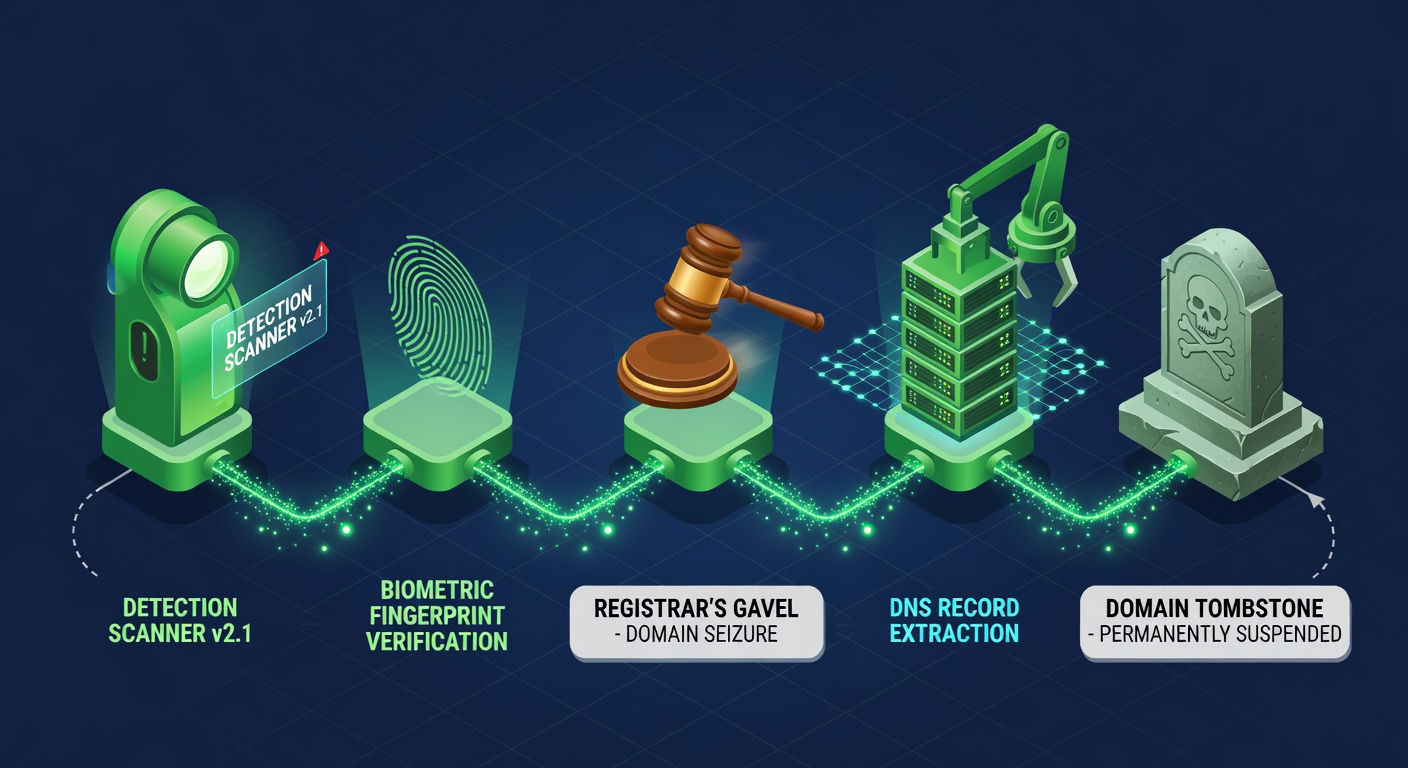
1. Rapid Detection & Verification
Detection occurs through community reports via our Telegram Bot, automated monitoring, and threat intelligence feeds. Our teams swiftly verify threats to ensure a minimal false positive rate.
2. In-depth Analysis & Evidence Collection
Our analysts delve deep into the threat, identifying its characteristics, targets, and methods. This involves payload analysis, infrastructure mapping, and assessing victim impact. Every piece of evidence is meticulously documented.
3. Strategic Coordination & Action
This is where our reputation comes into play. We have built strong relationships with hundreds of hosting providers, domain registrars, and law enforcement agencies. When PhishDestroy submits a report, more than 50 systems instantly recognize our request. If a reported site is indeed phishing, it can be shut down within minutes.
4. Liquidation and Monitoring
The ultimate goal is complete removal. Once a takedown is initiated, we monitor the status to ensure the site is offline and remains so. Our efforts have resulted in the successful disruption of over 500,000 malicious domains since 2019, with continuous post-removal verification to catch resurfacing infrastructure within hours.
Operational Methodology: Automation, Accuracy, Scale
Our model combines community reporting with automated detection systems and precision analytics. The pipeline is designed to scale from a single report to thousands of takedowns per day without sacrificing quality.
- Custom-built parsers continuously scan SEO search results, sponsored ad placements, and Google Ads for phishing indicators — capturing threats at the moment of first paid placement.
- Identified threats are automatically submitted to 50+ antivirus vendors and threat-intelligence feeds, maximizing global block coverage in the first minutes after detection.
- We maintain a false-positive rate below 0.5%, with over 100,000 validated reports — proving our systems are not just fast, but highly accurate.
- Verified contributors who submit 100+ accurate reports are granted "trusted" status, enabling direct submissions without moderation and dramatically reducing time-to-takedown for known reporters.
- A live damage counter estimates the financial loss inflicted on scammers — based on average domain value and promo costs (~$15/domain for typical crypto-scam setups).
Detection Sources — Where Threats Surface
Phishing infrastructure rarely hides — it advertises. We harvest leads from:
- Telegram Bot reports from our community via @PhishDestroy_bot — primary public intake.
- SEO & paid-ad parsers — Google Ads, Bing, Yandex; sponsored crypto-wallet, exchange, and bridge keywords are continuously monitored.
- Threat-intelligence feeds shared with us by partners and researchers.
- Honeypot networks and seed-phrase canary tokens that ping us when scammers try to use stolen data.
- WHOIS & certificate transparency monitoring for newly-registered look-alike domains targeting protected brands.
Evidence Preservation — Permanent Digital Record
Takedowns are only the first step. Preserving evidence is our core priority — because a deleted domain is useless to investigators if no record remains.
- Every detected domain is archived via public scanners (urlscan.io, Wayback Machine, our own snapshot pipelines) to capture full site fingerprints — HTML, screenshots, network calls, JavaScript payloads.
- Each operation leaves a digital record that is immune to deletion by attackers — published openly on GitHub destroylist and the ScamIntelLogs archive.
- Archives include scammer admin panels, Telegram chat exports, payment flows, victim records, and IOCs — supporting attribution and prosecution long after takedown.
- While scammers wipe traces, we make them permanent.
Allies and Adversaries Among Registrars
Speed-of-takedown depends entirely on registrar and host responsiveness. Our partner data shows a stark divide:
- Responsive partners:Namecheap's 24/7 abuse team alone has helped eliminate 30,000+ malicious domains. GoDaddy, Hostinger, Squarespace, and IONOS consistently act within hours of a verified report.
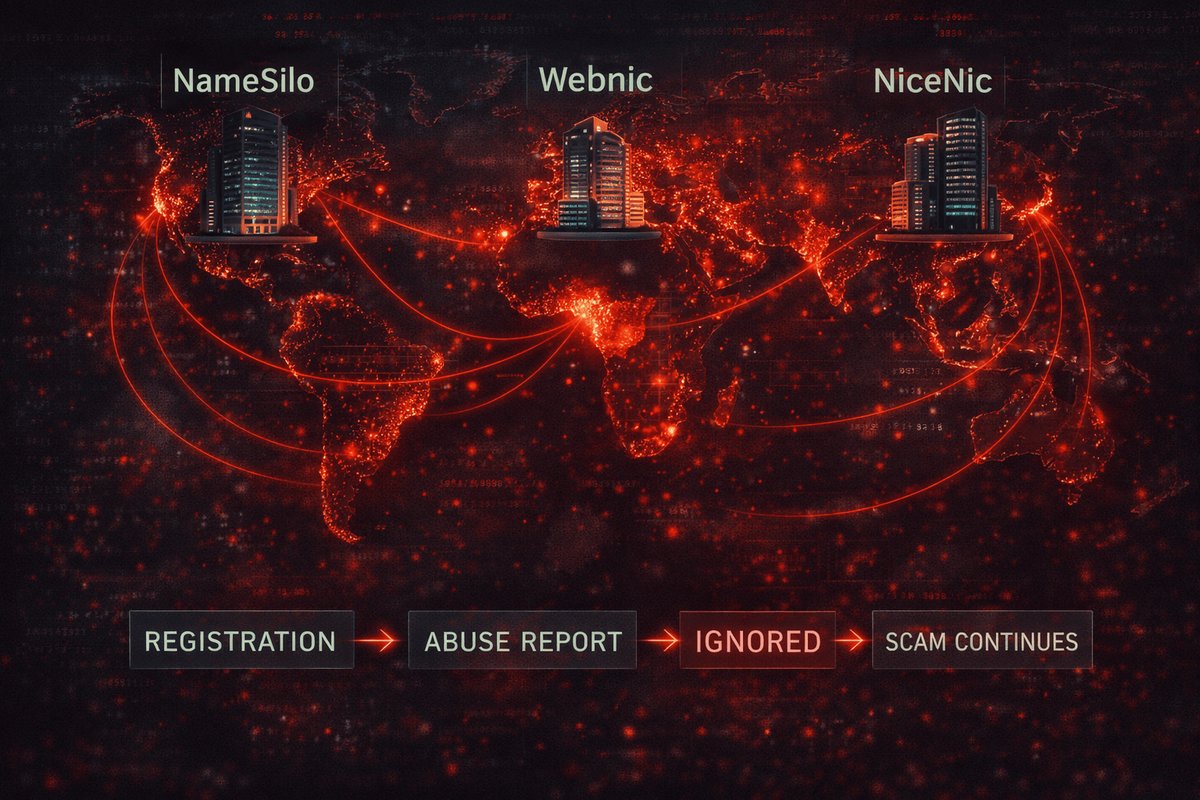
- Persistent enablers:NiceNic, Cosmotown, NameSilo, and Webnic repeatedly ignore abuse reports — effectively acting as safe havens for cybercriminal operations. See our investigation: How NameSilo, Webnic, and NiceNic Enable Global Scams.
Criminal Retaliation — Confirmation of Impact
Our effectiveness has triggered organized backlash, which we treat as proof of impact rather than disruption:
- DDoS attacks against our infrastructure (mitigated by Cloudflare).
- Coordinated smear and takedown campaigns via paid PR placements (see how paid media distorts cybersecurity).
- Mass-reporting of our social media accounts to silence reporting.
- Our X (Twitter) account with 140,000+ documented phishing reports was permanently suspended after registrar pressure — see NameSilo Killed Our Twitter. The archive remains public: GitHub archive.
Criminals try to erase their tracks; we ensure their traces stay permanent.
Legal Status & Coordination
We are a non-profit, operator collective — not a company, not a legal entity, not affiliated with any government. Everything we do is in the open:
- All reports and evidence are published openly on GitHub, Telegram, and Mastodon — nothing is hidden or stored privately.
- In major investigations involving actor attribution, financial tracing, or infrastructure mapping, we formally transfer full evidence packages to law enforcement or CERT teams.
- All such transfers are made in full legal compliance and only when actionable intelligence is verified.
- We do not store any personal data of contributors — protecting whistleblowers from retaliation and eliminating data-breach risk.
Our role is to document and destroy malicious operations, then support those with legal authority to act on the evidence.
By the Numbers
- 500,000+ phishing & scam domains disrupted since 2019.
- 130,000+ active threats curated in destroylist.
- 50+ antivirus vendors and threat-intel platforms receive our feeds.
- 30,000+ domains removed via Namecheap partnership alone.
- <0.5% false-positive rate across 100,000+ validated reports.
- 140,000+ reports archived after our X account suspension.
- 888K+ community subscribers across feeds.
How You Can Help
- Report a domain:@PhishDestroy_bot on Telegram.
- Subscribe to alerts:@PhishDestroyAlerts.
- Use our blocklist in your firewall, DNS, or security stack: github.com/phishdestroy/destroylist.
- Read our investigations:Registrars enabling scams, $100K returned, 150+ fake Mozilla extensions.
"Collective action is the strongest defense. Our journey highlights what can be achieved when technology, expertise, and community unite against cybercrime."