metaamaskkloggin.wordpress.com
  metamasklogimn.wordpress.com
  metmaklogin.wordpress.com
  urlwatch.com
  contact-metamask-support.blogspot.com.co
  voadafone.new.hr-rewards.com
Безопасность домена и анализ угроз

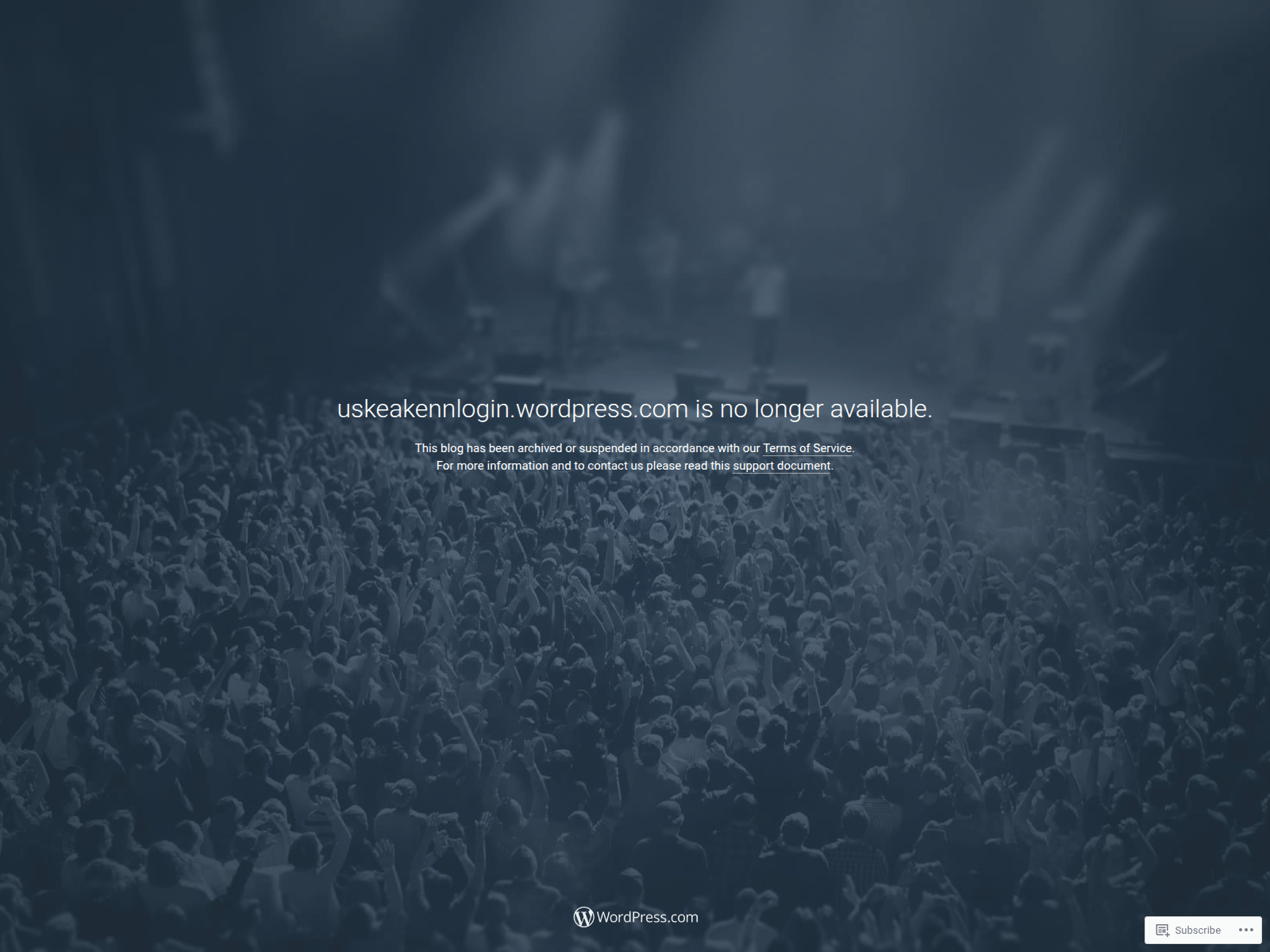
uskeakennlogin[.]wordpress[.]com
“WordPress.com — Get a Free Blog Here”
Вердикт по угрозе
Критический
71/100 оценка доказательств
Доступность
Контент недоступен
Контент был недоступен в последнем наблюдении.
Сигналы риска
Всего обнаружений вирусов: 7/95
Олицетворение бренда: Facebook
Сводка доказательств
КРИТИЧЕСКИЙ
The domain uskeakennlogin.wordpress.com was identified as a credential phishing site and is currently offline, returning HTTP status 410. Technical fingerprinting shows the host resolves to IP 192.0.78.12, an address owned by Automattic, Inc. (AS2635) in the United States. The domain is served through the standard WordPress.com name server set (ns1‑ns4.wordpress.com) and presents a valid Let's Encrypt certificate (E8) that supports HSTS and HTTP/3. Underlying technologies detected include WordPress, MySQL, PHP, and Nginx, confirming the site operated on a typical WordPress stack. The page title retrieved from the site was "WordPress.com — Get a Free Blog Here," which does not directly reveal malicious intent but aligns with the observed credential phishing classification.
Registrar information indicates the domain was registered via MarkMonitor, Inc. on March 03, 2000, a date that predates the observed malicious activity and suggests the domain may have been repurposed. VirusTotal scans flagged the domain by seven of ninety‑five security vendors, reinforcing the suspicion of malicious use. The domain is listed on one external blocklist and was previously blocked by the PhishDestroy service, providing additional corroboration of its threat status.
Given the elevated risk rating, defenders should ensure that any outbound connections to 192.0.78.12 are denied at the network perimeter, and DNS filtering should continue to block uskeakennlogin.wordpress.com. Continuous monitoring of the domain’s registration and DNS records is advised in case the site is re‑activated. Organizations should also educate users about unexpected login prompts that reference WordPress services, as the page title suggests a generic blog offering that could be leveraged to lure credentials. The combination of vendor detections, blocklist presence, and the credential phishing label indicates that the domain should be treated as malicious until proven otherwise.
VirusTotal
7 det.
Сертификат TLS
Просрочен или не проверен -67d
Возраст
26.5 yr
Зафиксированный статус
Контент недоступен HTTP 410

DestroyList
В списке
Data Coverage
VirusTotal
7 / 95
URLQuery
отчет сохранен — ожидается подробный вердикт
PhishStats
не проверено
OTX
no community references
CF Radar
scan completed
URLScan capture
сохраненный отчет
URLScan verdict
Анализ завершён
DNS-блокировки
не проверено
TLS
Просрочен или не проверен
WHOIS
322 mo old
Снимок экрана
2 captures · 2 sources
Цепочка перенаправлений
не исследовано
Процесс реагирования на угрозы
Открытие
Checks
Reports
Доступность
12/13
Проверка по блок-листам
10 внешних источников под наблюдением · снимок от 11.08.2026
10 внешних источников под наблюдением Совпадений нет
Хронология обнаружения
-
Статус домена
Доступен → Недоступен
-
Cloudflare Radar
Сканирование Cloudflare Radar сохранено · Открыть сканирование
Сохранённый снимок
Аналитика доменов
Домен
URLScan Verdict
Анализ завершён
score 0 report ↗
Сервер / ASN
nginx · AS2635 AUTOMATTIC, US
Репутация IP
IP abuse confidence 26/100 10 reports checked 17.06.2026
Registrar (base domain)
MarkMonitor
 (US)
(US)
(US)
Registration (base domain)wordpress.com · Создано 03.03.2000
Статус HTTP410 Gone
Технические деталиDNS, имена TLS и временные метки
Впервые обнаружено16.12.2025
DOM Analysisanalyzed 29.07.2026DOM analysis score 0/1005 brand signals
Submitted URLhttp://uskeakennlogin.wordpress.com/
Серверы имёнns1.wordpress.comns2.wordpress.comns3.wordpress.comns4.wordpress.com
Отпечаток TLS
Наблюдение TLSдействует с 08.03.2026проверено 12.03.2026
Альтернативные имена субъекта TLSwordpress.com
Favicon Hash
ICANN OVERSIGHT
Registration: wordpress.com
Аккредитация и контекст RAA
Аккредитация и контекст RAA
Registrar accreditation and DNS abuse obligations
For the registrable domain wordpress.com behind this subdomain, the registrar above operates under an ICANN accreditation agreement. The links below provide the official fee schedule and current DNS abuse compliance guidance.
Accreditation is a contract, not a safety certification.
RAA §3.18 establishes abuse-contact and handling requirements. This report can document stored outbound notices and later technical observations; it does not by itself establish receipt, investigation, remediation, or contractual non-compliance.
Аккредитация — это договор, а не знак безопасности.
Проверить сборы ICANN
Прочитать RAA §3.18
PHISHDESTROY INVESTIGATIONICANN funding, contracts, and DNS abuse oversight
Технологии
Выявлено 6 технологий с высокой уверенностью
WordPress
MySQL
PHP
Nginx
HSTS
HTTP/3
Cloudflare Radar
Пожаловаться на этот домен
Предоставьте доказательства и помогите защитить других
Анализ VirusTotal
7 / Поставщики средств безопасности 95 отметили этот домен
View on VT
Last analyzed
ChainPatrol
alphaMountain.ai
BitDefender
G-Data
Google Safebrowsing
Lionic
Sophos
Связанная инфраструктура и отчёты
Content matches 8
Shared IP 192.0.78.12 6
На этом исходном IP-адресе размещено несколько фишинговых доменов — инфраструктура может использоваться в разных кампаниях.
Тот же регистратор: MarkMonitor 6
Facebook impersonation 8
These domains also target Facebook users. View all Facebook threats →
Повлиял ли на вас этот сайт?
If credentials were compromised, report immediately. Do not engage with recovery scammers.
Если вы ввели учетные данные, личную или платежную информацию или загрузили файл с этого домена, примите немедленные меры. Ниже приведены ресурсы, которые помогут вам сообщить об инциденте и защитить себя.

«Action Fraud»
Сообщайте о мошенничестве и киберпреступлениях в Англии, Уэльсе и Северной Ирландии
Contact centre0300 123 2040
PhishDestroy listing review Не отчет правоохранительных органов
Обжалование решения по домену
Запросите проверку, если вы являетесь владельцем этого домена и считаете, что его данные неверны.
Остерегайтесь мошенников, предлагающих услуги по восстановлению данных! Преступники могут снова связаться с жертвами, притворяясь следователями, адвокатами или агентами по восстановлению. Не платите авансовые платежи и не делитесь учетными данными. Узнайте больше о мошенничестве при получении компенсаций →
Сообщите об этом в местные органы власти
Выберите свою страну, чтобы получить официальные контакты по киберпреступности или создать проект жалобы →.
Каталог 97 стран
Черновик по шаблону • помощь AI с формулировками включается только с отдельного согласия.
Просмотрите и отправьте его самостоятельно
Проверить любой домен
Анализ угроз с использованием сохраненного черного списка, WHOIS, DNS и общедоступных доказательств сканирования.
Сканировать сейчасСообщить о фишинге
Добавляйте подозрительные домены в нашу базу данных угроз — защищайте сообщество
СообщитьПоток оперативных данных об угрозах
Недавние сообщения о фишинге и наблюдаемые изменения доступности
ОтслеживатьБудьте в курсе событий, берегите себя
Отслеживайте актуальные угрозы или оспорьте эту запись, если считаете, что это ложное срабатывание