wtnforum.net
  onion.live
  darkdotweb.com
Безопасность домена и анализ угроз

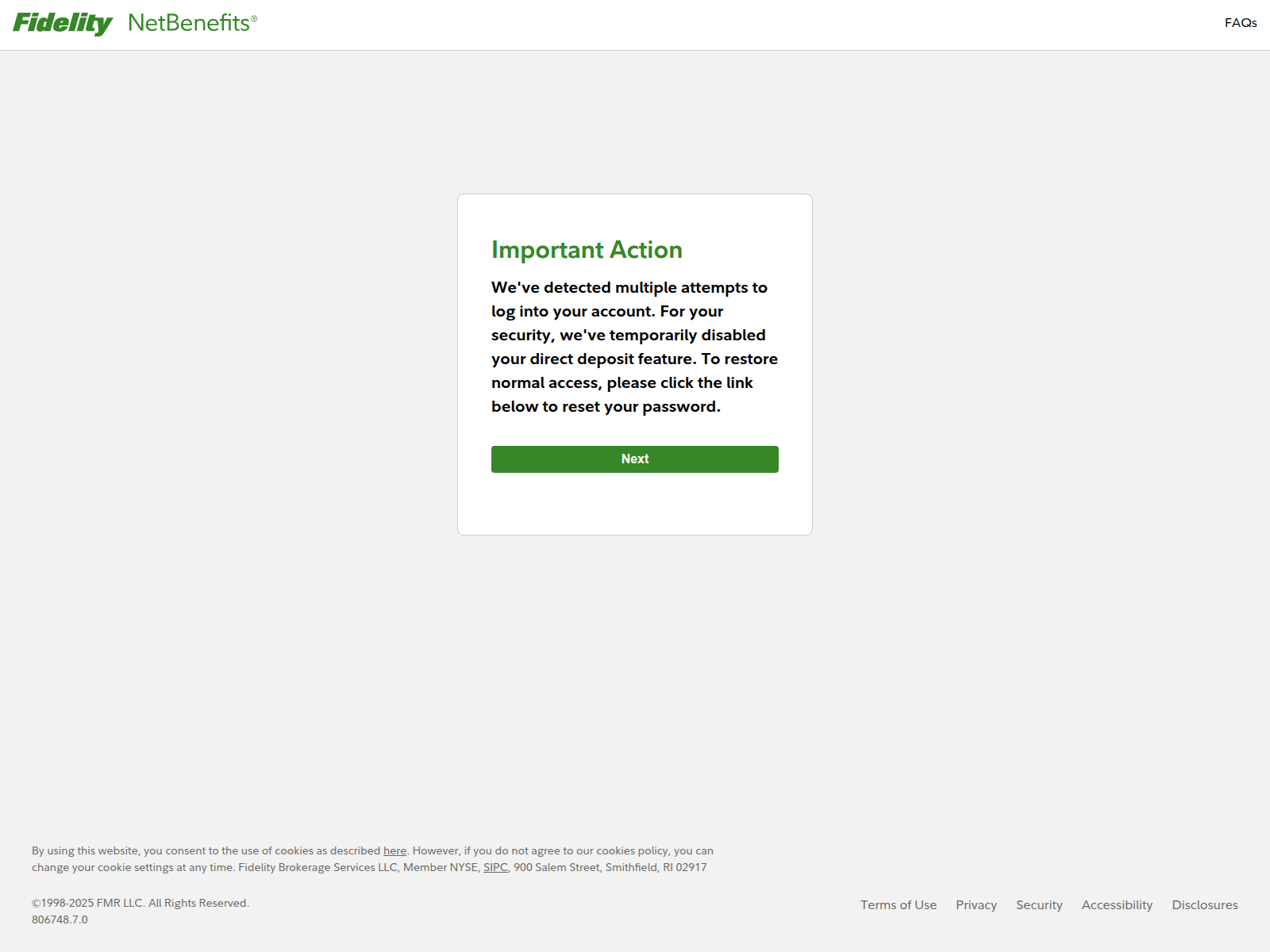
fidelityworkplacely[.]click
“Log In to Fidelity NetBenefits”
Вердикт по угрозе
Критический
95/100 оценка доказательств
Доступность
Контент недоступен
Контент был недоступен в последнем наблюдении.
Сигналы риска
Всего обнаружений вирусов: 18/93
Олицетворение бренда: Fidelity
Сводка доказательств
КРИТИЧЕСКИЙ
This domain, fidelityworkplacely.click, operates as a credential harvesting platform specifically designed to impersonate the legitimate Fidelity NetBenefits login portal. Analysis indicates the site presents a fraudulent interface to deceive users into submitting sensitive financial credentials, including usernames, passwords, and potentially multi-factor authentication codes. The threat actor’s objective appears to be unauthorized access to retirement accounts, employer-sponsored benefits portals, or other financial services managed through Fidelity’s infrastructure. The use of a login page title identical to the authentic Fidelity NetBenefits service increases the likelihood of successful deception, particularly among employees or plan participants expecting routine access to their accounts. Infrastructure analysis reveals multiple high-confidence indicators of malicious activity. The domain was registered on February 21, 2026, an anomalous future date suggesting potential registrar manipulation or domain generation algorithm abuse. It resolves to the IP address 43.162.124.172, hosted within autonomous system AS132203, a network segment previously associated with bulletproof hosting providers. Security vendors have flagged the domain in 18 out of 95 detection engines on VirusTotal, with additional listings on two independent security blocklists. The SSL certificate, identified as E8, lacks proper validation and does not correspond to Fidelity’s legitimate certificate authority chain, further confirming its fraudulent nature. Users who accessed fidelityworkplacely.click or entered credentials on the site should immediately initiate remediation protocols. Affected individuals must change passwords for all financial accounts, particularly those associated with Fidelity or employer benefits portals, using a secure, non-compromised device. Multi-factor authentication should be enabled or revalidated to prevent unauthorized access. Financial institutions and benefits administrators should be notified of potential exposure, and transaction histories should be reviewed for unauthorized activity. System-level scans for malware or keyloggers are recommended, as credential harvesting sites often deploy secondary payloads to maintain persistence. Organizations should also consider implementing domain monitoring to detect similar impersonation attempts targeting their user base.
VirusTotal
18 det.
OTX references
Сертификат TLS
Просрочен или не проверен -164d
Возраст
6 mo
Зафиксированный статус
Контент недоступен HTTP 502

DestroyList
В списке
Data Coverage
VirusTotal
18 / 93
URLQuery
отчет сохранен — ожидается подробный вердикт
PhishStats
checked — no match recorded
OTX
14 community references
CF Radar
no data
URLScan capture
сохраненный отчет
URLScan verdict
malicious
DNS-блокировки
не проверено
TLS
Просрочен или не проверен
WHOIS
6 mo old
Снимок экрана
2 captures · 2 sources
Цепочка перенаправлений
не исследовано
Процесс реагирования на угрозы
Открытие
Checks
Reports
Доступность
12/13
Проверка по блок-листам
10 внешних источников под наблюдением · снимок от 11.08.2026
10 внешних источников под наблюдением Совпадений нет
Сохранённый снимок
Аналитика доменов
Домен
URLScan Verdict
Вредоносный
score 100 Phishing brand: Fidelity report ↗
Сервер / ASN
AS132203 TENCENT-NET-AP-CN Tencent Building, Kejizhongyi Avenue, CN
Репутация IP
IP abuse confidence 0/100 1 report checked 15.06.2026
IP-адрес
43.162.124.172

Геолокация Santa Clara, US
Santa Clara, USСетьAS132203 · Tencent Building, Kejizhongyi Avenue
РегистрацияСоздано 21.02.2026 (171d)
Статус HTTP502 Error
Технические деталиDNS, имена TLS и временные метки
Впервые обнаружено26.02.2026
DOM Analysisanalyzed 24.03.2026DOM analysis score 83/100
Наблюдение TLSдействует с 01.12.2025
Криминалистическая аналитика
Пожаловаться на этот домен
Предоставьте доказательства и помогите защитить других
Анализ VirusTotal
18 / Поставщики средств безопасности 93 отметили этот домен
View on VT
Last analyzed
ADMINUSLabs
Criminal IP
alphaMountain.ai
BitDefender
Certego
CRDF
CyRadar
Forcepoint ThreatSeeker
Fortinet
G-Data
Lionic
Phishing Database
PhishLabs
Seclookup
SOCRadar
Sophos
VIPRE
Webroot
Связанная инфраструктура и отчёты
Content matches 4
Shared IP 43.162.124.172 6
На этом исходном IP-адресе размещено несколько фишинговых доменов — инфраструктура может использоваться в разных кампаниях.
Fidelity impersonation 8
These domains also target Fidelity users. View all Fidelity threats →
Недавние сообщения об угрозах 4
Недавно добавленные отчёты об угрозах. Эти ссылки не означают общую инфраструктуру или одного владельца.
Повлиял ли на вас этот сайт?
If credentials were compromised, report immediately. Do not engage with recovery scammers.
Если вы ввели учетные данные, личную или платежную информацию или загрузили файл с этого домена, примите немедленные меры. Ниже приведены ресурсы, которые помогут вам сообщить об инциденте и защитить себя.


«Action Fraud»
Сообщайте о мошенничестве и киберпреступлениях в Англии, Уэльсе и Северной Ирландии
Contact centre0300 123 2040
PhishDestroy listing review Не отчет правоохранительных органов
Обжалование решения по домену
Запросите проверку, если вы являетесь владельцем этого домена и считаете, что его данные неверны.
Остерегайтесь мошенников, предлагающих услуги по восстановлению данных! Преступники могут снова связаться с жертвами, притворяясь следователями, адвокатами или агентами по восстановлению. Не платите авансовые платежи и не делитесь учетными данными. Узнайте больше о мошенничестве при получении компенсаций →
Сообщите об этом в местные органы власти
Выберите свою страну, чтобы получить официальные контакты по киберпреступности или создать проект жалобы →.
Каталог 97 стран
Черновик по шаблону • помощь AI с формулировками включается только с отдельного согласия.
Просмотрите и отправьте его самостоятельно
Проверить любой домен
Анализ угроз с использованием сохраненного черного списка, WHOIS, DNS и общедоступных доказательств сканирования.
Сканировать сейчасСообщить о фишинге
Добавляйте подозрительные домены в нашу базу данных угроз — защищайте сообщество
СообщитьПоток оперативных данных об угрозах
Недавние сообщения о фишинге и наблюдаемые изменения доступности
ОтслеживатьБудьте в курсе событий, берегите себя
Отслеживайте актуальные угрозы или оспорьте эту запись, если считаете, что это ложное срабатывание