
 ChainPatrol
 Web-Check
  SOCRadar
  LeakIX
FBI IC3
Denuncie crimes possibilitados pela Internet nos Estados Unidos
Federal tips line1-800-CALL-FBI

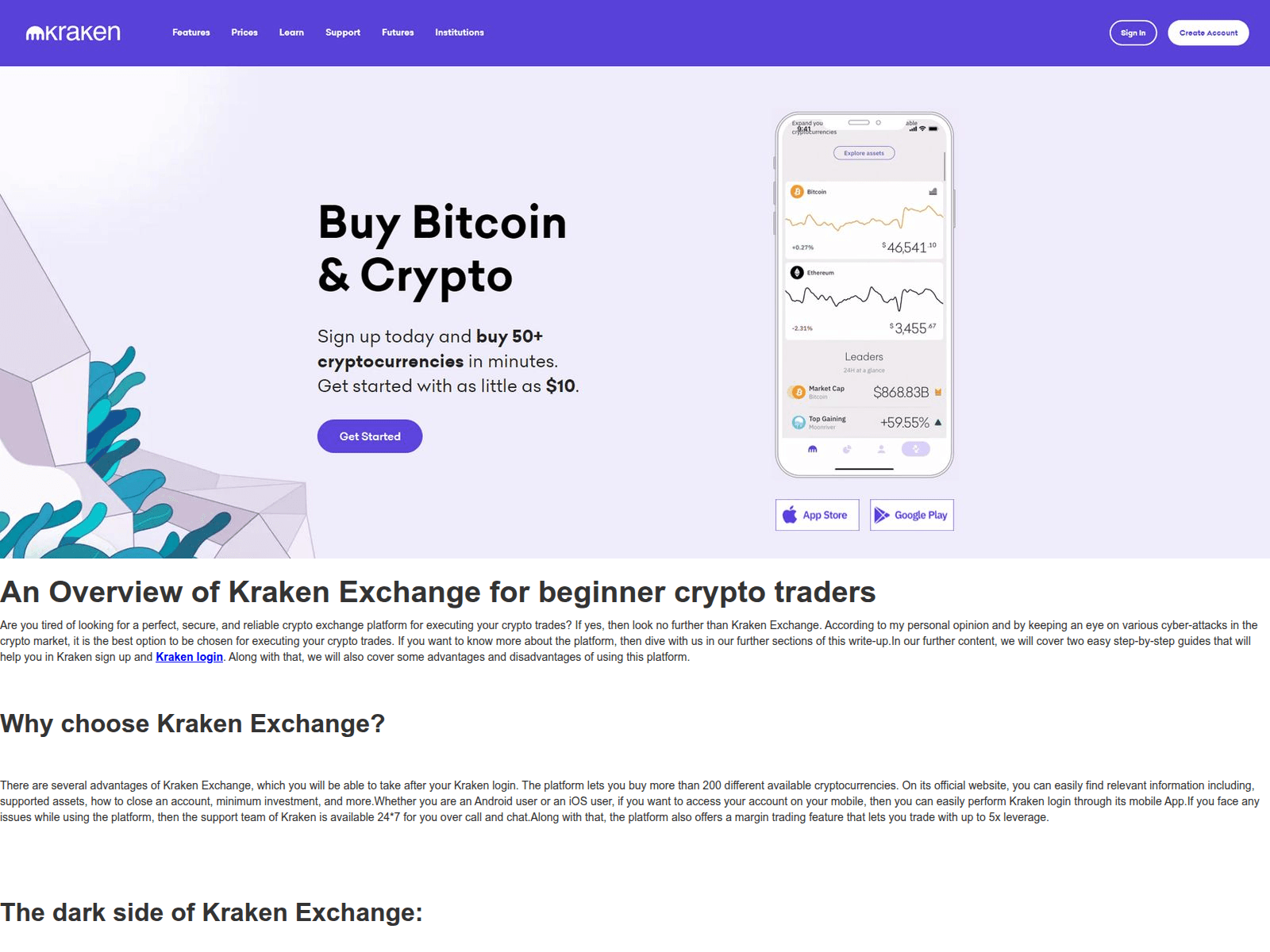
“Kraken® Login - Log In to My - Account (official Website)”
krakinuuloggen.webflow.io — Conteúdo indisponível. Representação da marca: Kraken; Tipo de golpe: Crypto Scam. Resumo das evidências: VirusTotal 18/95 (ADMINUSLabs, ChainPatrol, alphaMountain.ai, BitDefender, CyRadar); URLScan malicious verdict; 2 external blocklist matches (MetaMask, SEAL); CF Radar malicious; PhishDestroy score 95/100. Registrador: NameCheap.
A análise detalhada do PhishDestroy AI permanece em inglês para preservar o registro forense original.
This domain is flagged as a high-risk brand impersonation threat targeting Kraken, a cryptocurrency exchange platform. Analysis indicates the site operates as a fake login portal, designed to harvest user credentials and facilitate unauthorized account access. The threat type aligns with credential theft tactics commonly employed in cryptocurrency-related phishing campaigns, where attackers exploit brand trust to deceive victims. Infrastructure analysis reveals the domain krakinuuloggen.webflow.io was registered through NameCheap, Inc. on February 21, 2026, and resolves to the IP address 172.64.151.8, associated with Cloudflare, Inc. (AS13335) in the United States. The SSL certificate is issued by Google Trust Services (WE1), a legitimate provider often leveraged to lend false credibility. Detection metrics show 18 out of 95 security vendors on VirusTotal flag the domain as malicious. The domain appears on three security blocklists, including PhishDestroy, MetaMask, and SEAL, further corroborating its malicious classification. The page title, 'Kraken® Login - Log In to My - Account (official Website),' employs branding elements to mimic authenticity, a hallmark of brand impersonation schemes. Mitigation measures for this threat type include immediate domain blocking at the network level, particularly for endpoints resolving to 172.64.151.8. Organizations should update security policies to flag domains registered through NameCheap with creation dates matching the campaign timeline (February 2026) and exhibiting similar SSL certificate patterns. End-users are advised to verify domain authenticity by cross-referencing official communication channels and avoiding interaction with unsolicited login portals. Multi-factor authentication (MFA) should be enforced for all cryptocurrency exchange accounts to mitigate credential theft risks, even if credentials are compromised. Security teams are encouraged to monitor for additional domains leveraging the same registrar, IP range, or SSL certificate authority to preemptively disrupt related campaigns.

 (US)
San Francisco, US
(US)
San Francisco, USCloudflare is a web-infrastructure and website-security company, providing content-delivery-network services, DDoS mitigation, Internet security, and distributed domain-name-server services.
www.cloudflare.com 100% de confiançaHTTP/3 is the third major version of the Hypertext Transfer Protocol used to exchange information on the World Wide Web.
httpwg.org 100% de confiançaSe você inseriu credenciais de conta, informações pessoais ou de pagamento, ou baixou um arquivo deste domínio, tome medidas imediatas. Abaixo estão os recursos para ajudá-lo a relatar o incidente e se proteger.


Selecione seu país para obter contactos oficiais do cibercrime ou crie um rascunho de reclamação →.
Esses relatórios são resolvidos para o mesmo IP de borda compartilhado. Eles ajudam na descoberta de relatórios, mas não implicam propriedade comum ou um servidor de origem compartilhado.
These domains also target Kraken users. View all Kraken threats →
Relatórios adicionados recentemente do banco de dados PhishDestroy. Esses links de descoberta não implicam infraestrutura ou propriedade compartilhada.
Análise de ameaças usando lista de bloqueio armazenada, WHOIS, DNS e evidências de verificação pública
Digitalize agoraEnvie domínios suspeitos para nosso banco de dados de ameaças — proteja a comunidade
DenunciarRelatórios recentes de phishing e alterações de disponibilidade observadas
MonitorarMonitore ameaças em tempo real ou conteste esta listagem caso acredite que se trate de um falso positivo
 hamnsahsmanhsmansahmnsahmasnham46.space
  stockoptionexchange.live
  ever-green.capital
  global-trading-ai.com
  hii-alight.com