

 ChainPatrol
 Web-Check
  SOCRadar
  LeakIX
FBI IC3
Denuncie crimes possibilitados pela Internet nos Estados Unidos
Federal tips line1-800-CALL-FBI

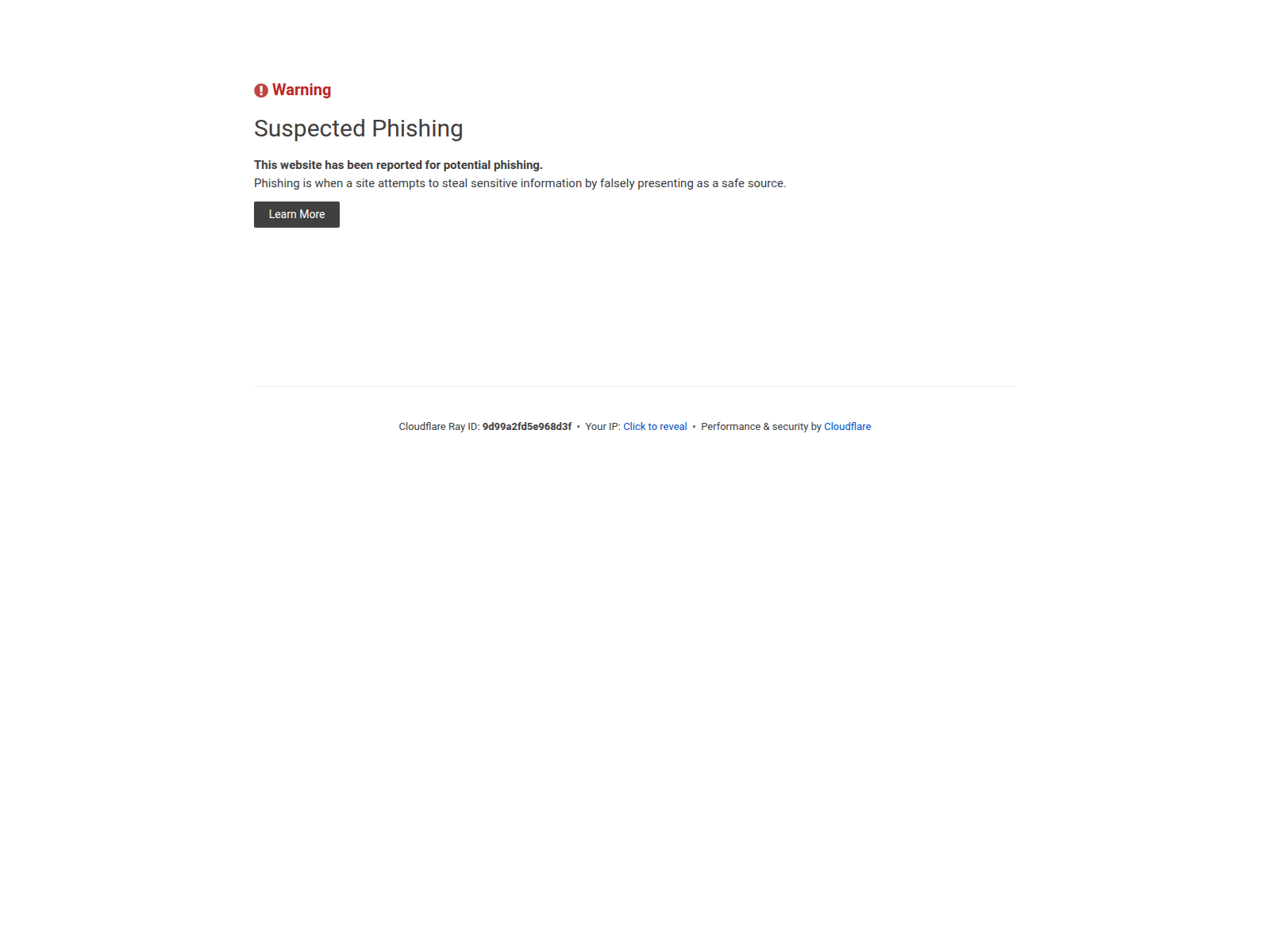
“Suspected phishing site | Cloudflare”
en-us-radium.pages.dev — Conteúdo indisponível. Representação da marca: Genericcloudflare; Tipo de golpe: Credential Phishing. Resumo das evidências: VirusTotal 10/93 (ADMINUSLabs, ChainPatrol, alphaMountain.ai, CyRadar, Fortinet); URLScan malicious verdict; PhishDestroy score 80/100. Registrador: Cloudflare.
A análise detalhada do PhishDestroy AI permanece em inglês para preservar o registro forense original.
Analysis of the domain en-us-radium.pages.dev indicates a credential phishing campaign hosted on Cloudflare Pages infrastructure. The domain was registered on February 21, 2026, through Cloudflare, Inc., and resolves to the IP address 172.66.44.204, associated with AS13335 (Cloudflare, Inc.) in the United States. At the time of assessment, the domain returned an HTTP 403 status, with the page title explicitly labeled 'Suspected phishing site | Cloudflare,' suggesting internal or automated detection by the hosting provider. The domain is served via Cloudflare nameservers (vivienne.ns.cloudflare.com and noah.ns.cloudflare.com) and employs technologies including HSTS, HTTP/3, and a Google Trust Services SSL certificate (WE1). Detection data reveals moderate but consistent flagging by security vendors.
Ten of 93 engines on VirusTotal classified the domain as malicious, while it appears on three distinct security blocklists. The domain has been blocked by PhishDestroy, MetaMask, and SEAL, indicating recognition across both general phishing and cryptocurrency-specific threat intelligence feeds. Gridinsoft assigned a trust score of 0/100, further corroborating its classification as high-risk. No specific brand impersonation or phishing kit details are present in available metadata; the scam type is categorized generically as credential phishing based on existing intelligence. Defenders should treat this domain as confirmed malicious infrastructure.
The use of Cloudflare Pages and Cloudflare-managed DNS may complicate takedown efforts, though the domain is currently offline. Organizations are advised to block the domain and its resolving IP (172.66.44.204) at the network level, update endpoint protection rules, and monitor for related subdomains or newly registered lookalike domains under the pages.dev namespace. Given the domain's prior activity and detection history, it may reappear under altered subdomains or similar hosting arrangements.

 (US)
San Francisco, US
(US)
San Francisco, USHTTP Strict Transport Security (HSTS) informs browsers that the site should only be accessed using HTTPS.
www.rfc-editor.org 100% de confiançaCloudflare is a web-infrastructure and website-security company, providing content-delivery-network services, DDoS mitigation, Internet security, and distributed domain-name-server services.
www.cloudflare.com 100% de confiançaHTTP/3 is the third major version of the Hypertext Transfer Protocol used to exchange information on the World Wide Web.
httpwg.org 100% de confiançaGoogle PageSpeed Insights — mobile performance audit of en-us-radium.pages.dev · checked Apr 13, 2026
Se você inseriu credenciais de conta, informações pessoais ou de pagamento, ou baixou um arquivo deste domínio, tome medidas imediatas. Abaixo estão os recursos para ajudá-lo a relatar o incidente e se proteger.


Selecione seu país para obter contactos oficiais do cibercrime ou crie um rascunho de reclamação →.
Esses relatórios são resolvidos para o mesmo IP de borda compartilhado. Eles ajudam na descoberta de relatórios, mas não implicam propriedade comum ou um servidor de origem compartilhado.
These domains also target Genericcloudflare users. View all Genericcloudflare threats →
Relatórios adicionados recentemente do banco de dados PhishDestroy. Esses links de descoberta não implicam infraestrutura ou propriedade compartilhada.
Análise de ameaças usando lista de bloqueio armazenada, WHOIS, DNS e evidências de verificação pública
Digitalize agoraEnvie domínios suspeitos para nosso banco de dados de ameaças — proteja a comunidade
DenunciarRelatórios recentes de phishing e alterações de disponibilidade observadas
MonitorarMonitore ameaças em tempo real ou conteste esta listagem caso acredite que se trate de um falso positivo
 firstamericancd.lovable.app
  spinforgechain.com
  trezor.gitbook.io