

 ChainPatrol
 Web-Check
  SOCRadar
  LeakIX
FBI IC3
Denuncie crimes possibilitados pela Internet nos Estados Unidos
Federal tips line1-800-CALL-FBI

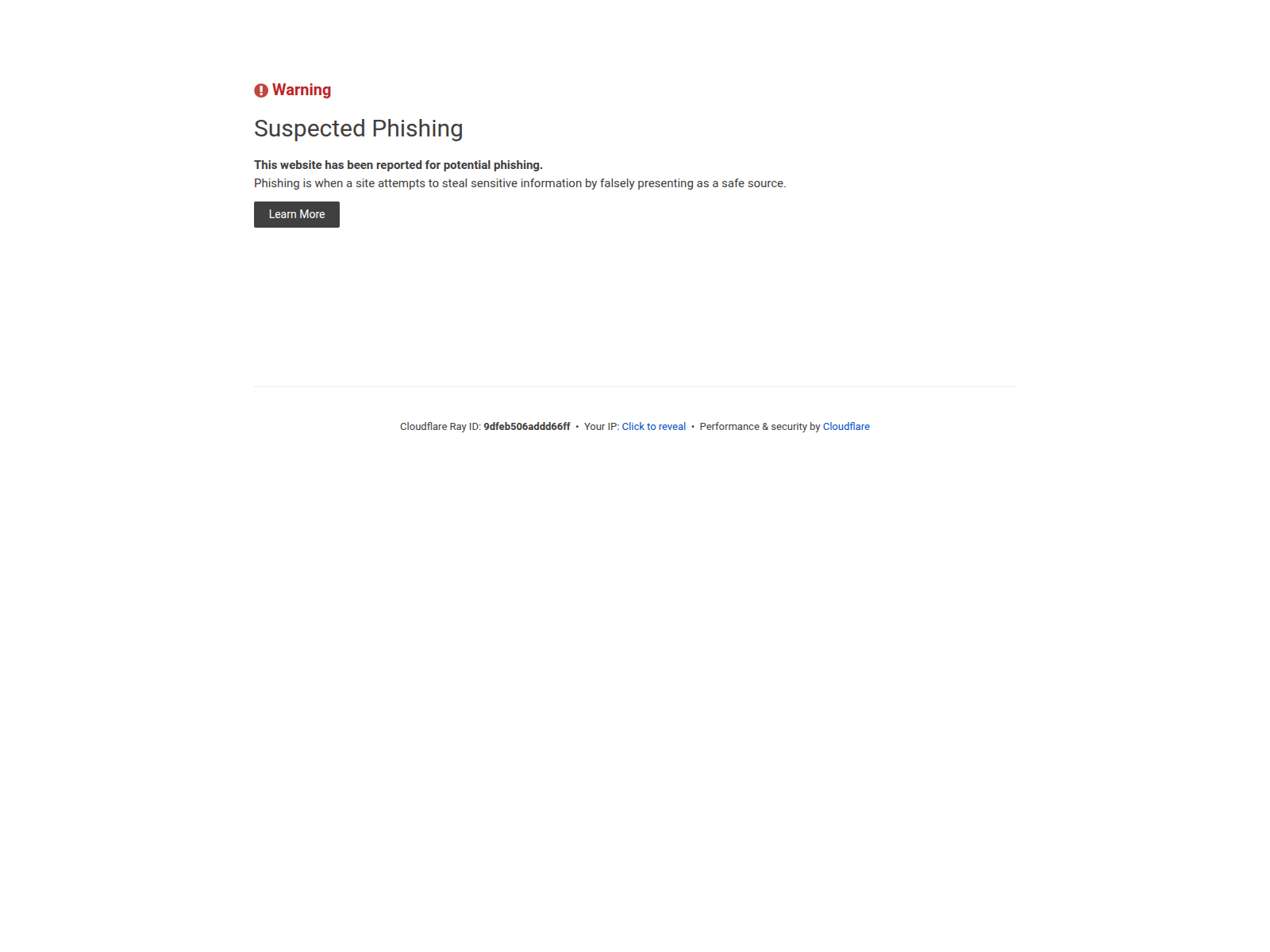
“Suspected phishing site | Cloudflare”
doc-exdus-web3-1ge.pages.dev — Conteúdo indisponível. Representação da marca: Genericcloudflare; Tipo de golpe: Investment Scam. Resumo das evidências: VirusTotal 9/94 (ADMINUSLabs, ChainPatrol, alphaMountain.ai, CyRadar, ESET); URLQuery 1 alert; URLScan malicious verdict; 2 external blocklist matches (MetaMask, SEAL); PhishDestroy score 82/100. Registrador: Cloudflare.
A análise detalhada do PhishDestroy AI permanece em inglês para preservar o registro forense original.
Analysis of the domain doc-exdus-web3-1ge.pages.dev shows a recent infrastructure that aligns with an investment‑type phishing campaign. The domain was created on March 22, 2026 and is registered through Cloudflare, Inc., using the Cloudflare nameservers bradley.ns.cloudflare.com and celine.ns.cloudflare.com. DNS resolution points to the Cloudflare edge address 172.66.44.93, which is located in Canada and belongs to the Cloudflare network. HTTPS is enforced via HSTS and the site serves a Google Trust Services / WE1 certificate, confirming that TLS termination occurs at Cloudflare. The server responds with HTTP status code 403, and the only visible page title is "Suspected phishing site | Cloudflare," indicating that the site has been taken down or is presenting a generic block page.
Reputation signals are strongly negative. The domain appears on three public security blocklists and has been explicitly blocked by PhishDestroy, MetaMask, and SEAL. VirusTotal scans record nine detections out of ninety‑four security vendors, reinforcing the malicious classification. Gridinsoft assigns a trust score of 0 out of 100, the lowest possible rating. Detected technologies include Cloudflare’s edge services and HTTP/3 support, which are commonly leveraged by threat actors to obscure source locations.
Uncertainties remain about the exact content that was hosted before the domain was taken offline, including any branding or credential‑harvesting forms. No specific victim‑target brand is disclosed in the available metadata, and no malicious payload or exploit kit has been identified. Consequently, analysts cannot confirm the precise lures used beyond the generic investment‑scam narrative.
Defenders should continue to block the domain at DNS and network layers, incorporate the associated IP address into threat‑intel feeds, and monitor for any re‑registration or related subdomains that may be activated by the same threat actor.

| Detection System | Indicator | Verdict | Alert |
|---|---|---|---|
| Quad9 DNS | doc-exdus-web3-1ge.pages.dev |
malicious | Sinkholed |
 (US)
(US)
 Toronto, CA
HTTP Strict Transport Security — forces browsers to use HTTPS connections only.
Web infrastructure and security company providing CDN, DDoS mitigation, and DNS services.
www.cloudflare.comThird major version of HTTP protocol, built on QUIC for faster, more reliable connections.
Google PageSpeed Insights — mobile performance audit of doc-exdus-web3-1ge.pages.dev · checked Mar 21, 2026
Se você inseriu credenciais de conta, informações pessoais ou de pagamento, ou baixou um arquivo deste domínio, tome medidas imediatas. Abaixo estão os recursos para ajudá-lo a relatar o incidente e se proteger.


Selecione seu país para obter contactos oficiais do cibercrime ou crie um rascunho de reclamação →.
Esses relatórios são resolvidos para o mesmo IP de borda compartilhado. Eles ajudam na descoberta de relatórios, mas não implicam propriedade comum ou um servidor de origem compartilhado.
These domains also target Genericcloudflare users. View all Genericcloudflare threats →
Relatórios adicionados recentemente do banco de dados PhishDestroy. Esses links de descoberta não implicam infraestrutura ou propriedade compartilhada.
Análise de ameaças usando lista de bloqueio armazenada, WHOIS, DNS e evidências de verificação pública
Digitalize agoraEnvie domínios suspeitos para nosso banco de dados de ameaças — proteja a comunidade
DenunciarRelatórios recentes de phishing e alterações de disponibilidade observadas
MonitorarMonitore ameaças em tempo real ou conteste esta listagem caso acredite que se trate de um falso positivo
 claim-trumpcoin-airdrop-crypto.pages.dev
  tk.ercajchain.com
  gtlk.link
  pub-0f360892ee1545f6960ccb1afa74f2b6.r2.dev
  flamefortune.cc