ChainPatrol
 Web-Check
  SOCRadar
  LeakIX
FBI IC3
Denuncie crimes possibilitados pela Internet nos Estados Unidos
Federal tips line1-800-CALL-FBI
The sent-report ledger records the first outgoing report at .
The recorded recipient is abuse@iqweb.io.
The latest stored availability evidence still shows the domain reachable; 5 months has elapsed since the first outgoing report.
ICANN RAA §3.18 describes registrar abuse-contact and handling obligations. This section records outgoing timestamps, listed recipients, case identifiers, and later availability. It does not by itself prove receipt, acknowledgement, investigation, remediation, or contractual non-compliance.

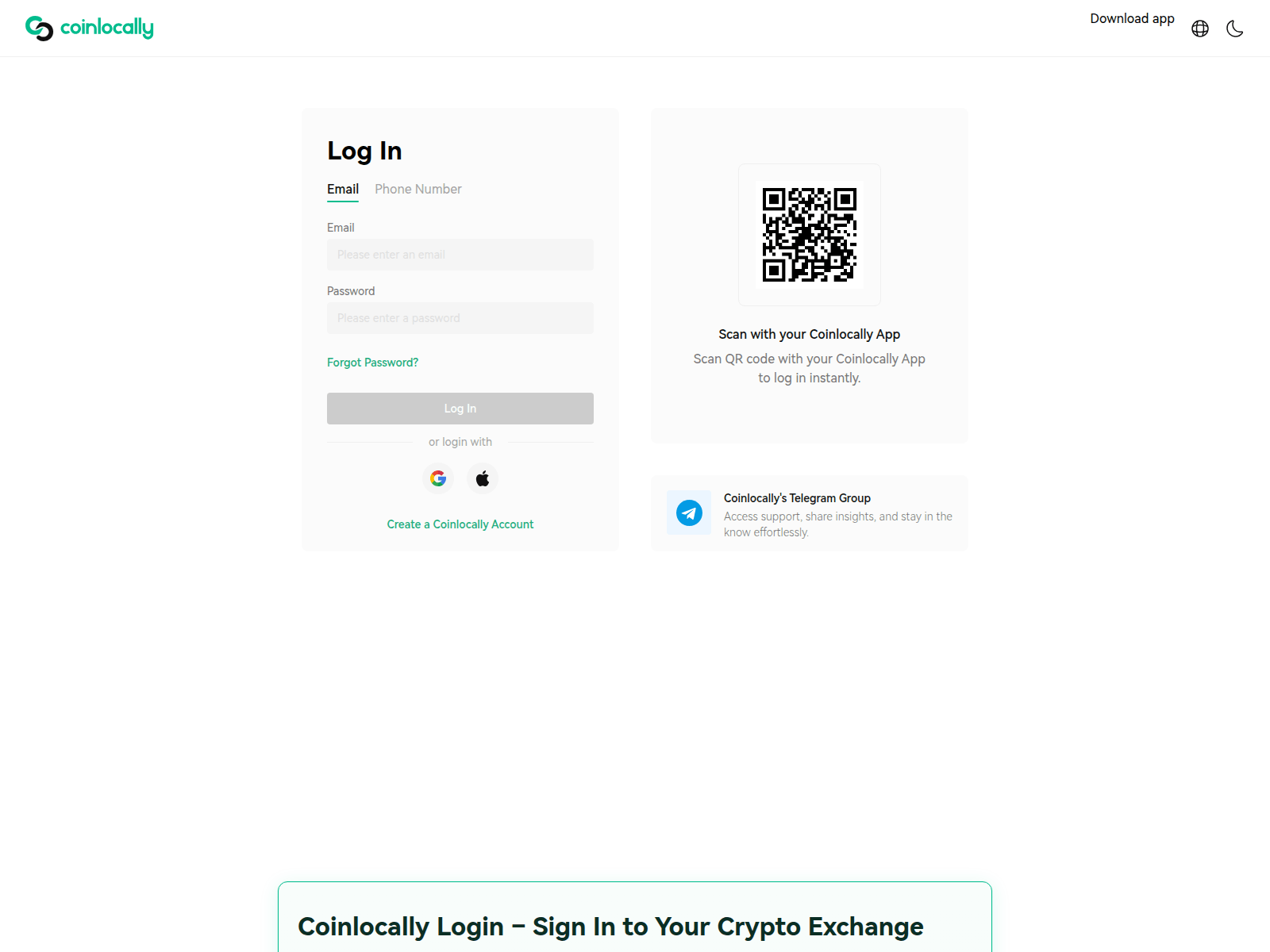
“Coinlocally Sign In Portal — Login Exchange Access”
coinlocally-login.at — Não verificado. Tipo de golpe: Fake Exchange. Resumo das evidências: VirusTotal 6/91 (alphaMountain.ai, CRDF, Fortinet, Gridinsoft, SOCRadar); Spamhaus DBL_PHISH; PhishDestroy score 68/100. Registrador: Iqweb.
A análise detalhada do PhishDestroy AI permanece em inglês para preservar o registro forense original.
coinlocally-login.at was registered on February 27, 2026 and resolves to the IPv4 address 186.2.175.29. The address is assigned to AS59692, operated by IQWeb FZ-LLC and geolocated to Belize. Infrastructure analysis shows a Gridinsoft trust score of 0 out of 100, indicating a highly suspicious host. The domain is served through four CloudNS nameservers (pns71.cloudns.net, pns72.cloudns.com, pns73.cloudns.net, pns74.cloudns.uk). The site presents a login interface titled “Coinlocally Sign In Portal — Login Exchange Access”, directly mimicking the legitimate Coinlocally exchange login page. The page loads over HTTPS with a Let’s Encrypt R13 certificate, and returns HTTP 200. Front‑end libraries detected include jQuery and Hammer.js, and traffic is routed behind a DDoS‑Guard protection layer, a pattern frequently observed in credential‑phishing deployments. VirusTotal analysis reports that 4 of 95 security vendors have flagged the domain, and the domain appears on one public blocklist. PhishDestroy has already added the domain to its takedown list, confirming active malicious use. The observed characteristics—fresh domain age, low trust score, use of a reputable SSL provider to gain user confidence, and replication of a known exchange login—align with a high‑risk credential‑phishing campaign targeting cryptocurrency traders. Open questions remain regarding the ultimate command‑and‑control infrastructure and whether the IP address is shared with other malicious actors, as no additional intelligence on related domains or hosting patterns has been disclosed. Nonetheless, the current evidence is sufficient to classify the domain as a high‑confidence phishing vector. Defenders should block the domain and its resolving IP at network perimeter, monitor for similar login‑page clones, and enforce multi‑factor authentication for any Coinlocally accounts to mitigate credential compromise.

 (MY)
(MY)

Fast, small JavaScript library simplifying HTML manipulation, event handling, and Ajax.
Google PageSpeed Insights — mobile performance audit of coinlocally-login.at · checked Mar 6, 2026
PD-20260227-93F22C Recipient: abuse@iqweb.io Se você inseriu credenciais de conta, informações pessoais ou de pagamento, ou baixou um arquivo deste domínio, tome medidas imediatas. Abaixo estão os recursos para ajudá-lo a relatar o incidente e se proteger.


Selecione seu país para obter contactos oficiais do cibercrime ou crie um rascunho de reclamação →.
Este IP de origem hospeda vários domínios de phishing — a infraestrutura pode ser compartilhada entre campanhas.
Relatórios adicionados recentemente do banco de dados PhishDestroy. Esses links de descoberta não implicam infraestrutura ou propriedade compartilhada.
Análise de ameaças usando lista de bloqueio armazenada, WHOIS, DNS e evidências de verificação pública
Digitalize agoraEnvie domínios suspeitos para nosso banco de dados de ameaças — proteja a comunidade
DenunciarRelatórios recentes de phishing e alterações de disponibilidade observadas
MonitorarMonitore ameaças em tempo real ou conteste esta listagem caso acredite que se trate de um falso positivo
 coinchief-login.com
  www.yubit-login.at
  digitaldropshipaja.com