wtnforum.net
  onion.live
  darkdotweb.com
ドメインのセキュリティと脅威インテリジェンス

fidelityworkplacely[.]click
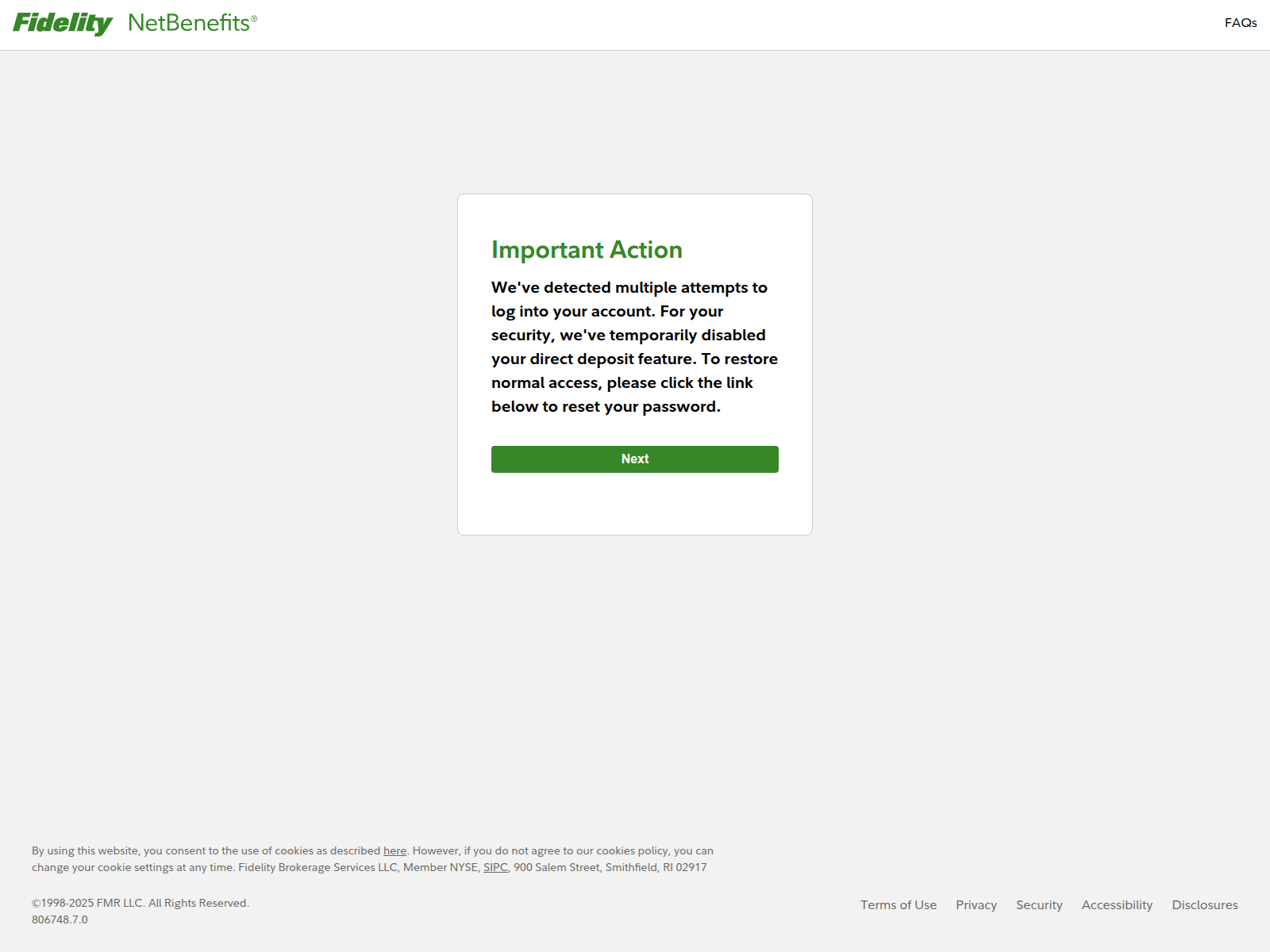
“Log In to Fidelity NetBenefits”
脅威の評決
クリティカル
95/100 証拠スコア
可用性
コンテンツが利用できません
最新の観測ではコンテンツが利用できませんでした
リスクシグナル
VirusTotal 検出数: 18/93
ブランドの偽装: Fidelity
証拠の概要
重要
This domain, fidelityworkplacely.click, operates as a credential harvesting platform specifically designed to impersonate the legitimate Fidelity NetBenefits login portal. Analysis indicates the site presents a fraudulent interface to deceive users into submitting sensitive financial credentials, including usernames, passwords, and potentially multi-factor authentication codes. The threat actor’s objective appears to be unauthorized access to retirement accounts, employer-sponsored benefits portals, or other financial services managed through Fidelity’s infrastructure. The use of a login page title identical to the authentic Fidelity NetBenefits service increases the likelihood of successful deception, particularly among employees or plan participants expecting routine access to their accounts. Infrastructure analysis reveals multiple high-confidence indicators of malicious activity. The domain was registered on February 21, 2026, an anomalous future date suggesting potential registrar manipulation or domain generation algorithm abuse. It resolves to the IP address 43.162.124.172, hosted within autonomous system AS132203, a network segment previously associated with bulletproof hosting providers. Security vendors have flagged the domain in 18 out of 95 detection engines on VirusTotal, with additional listings on two independent security blocklists. The SSL certificate, identified as E8, lacks proper validation and does not correspond to Fidelity’s legitimate certificate authority chain, further confirming its fraudulent nature. Users who accessed fidelityworkplacely.click or entered credentials on the site should immediately initiate remediation protocols. Affected individuals must change passwords for all financial accounts, particularly those associated with Fidelity or employer benefits portals, using a secure, non-compromised device. Multi-factor authentication should be enabled or revalidated to prevent unauthorized access. Financial institutions and benefits administrators should be notified of potential exposure, and transaction histories should be reviewed for unauthorized activity. System-level scans for malware or keyloggers are recommended, as credential harvesting sites often deploy secondary payloads to maintain persistence. Organizations should also consider implementing domain monitoring to detect similar impersonation attempts targeting their user base.
VirusTotal
18 det.
OTX references
TLS証明書
期限切れまたは未検証 -164d
年齢
6 mo
観測ステータス
コンテンツが利用できません HTTP 502

DestroyList
掲載あり
Data Coverage
VirusTotal
18 / 93
URLQuery
レポートは保存されています - 詳細な判定は保留中です
PhishStats
checked — no match recorded
OTX
14 community references
CFレーダー
no data
URLScan capture
保存されたレポート
URLScan verdict
malicious
DNSブロック
チェックされていない
TLS
期限切れまたは未検証
WHOIS
6 mo old
スクリーンショット
2 captures · 2 sources
リダイレクトチェーン
調査されていない
脅威対応 Pipeline
ディスカバリー
Checks
Reports
可用性
12/13
ブロックリストの確認範囲
監視対象の外部情報源 10 件 · 保存スナップショット 2026年8月11日
保存済みキャプチャ
ドメイン・インテリジェンス
ドメイン
URLScan Verdict
悪意あり
score 100 Phishing brand: Fidelity report ↗
サーバー / ASN
AS132203 TENCENT-NET-AP-CN Tencent Building, Kejizhongyi Avenue, CN
IPレピュテーション
IP abuse confidence 0/100 1 report checked 2026年6月15日
登録情報作成日 2026年2月21日 (171d)
HTTPステータス502 Error
技術詳細DNS、TLS 名、タイムスタンプ
初確認2026年2月26日
DOM Analysisanalyzed 2026年3月24日DOM analysis score 83/100
TLS 観測2025年12月1日 から有効
フォレンジックインテリジェンス
このドメインを報告する
証拠を提出し、他の人を守る手助けをしましょう
VirusTotalによる分析
18 / 93 セキュリティ ベンダーがこのドメインにフラグを立てました
View on VT
Last analyzed
ADMINUSLabs
Criminal IP
alphaMountain.ai
BitDefender
Certego
CRDF
CyRadar
Forcepoint ThreatSeeker
Fortinet
G-Data
Lionic
Phishing Database
PhishLabs
Seclookup
SOCRadar
ソフォス
VIPRE
Webroot
関連インフラとレポート
Content matches 4
Shared IP 43.162.124.172 6
この発信元 IP は複数のフィッシング ドメインをホストします。インフラストラクチャはキャンペーン全体で共有される可能性があります。
Fidelity impersonation 8
These domains also target Fidelity users. View all Fidelity threats →
最近の脅威レポート 4
PhishDestroy データベースから最近追加されたレポート。これらの検出リンクは、共有インフラストラクチャや所有権を意味するものではありません。
このサイトによって何か影響を受けましたか?
If credentials were compromised, report immediately. Do not engage with recovery scammers.
アカウント資格情報、個人情報、支払い情報を入力した場合、またはこのドメインからファイルをダウンロードした場合は、すぐに対処してください。インシデントを報告し、自分自身を守るのに役立つリソースを以下に示します。


PhishDestroy listing review 法執行機関の報告書ではありません
ドメイン異議申立て
このドメインを所有していて、リストが間違っていると思われる場合は、審査をリクエストしてください
復旧を装った詐欺に注意! 犯罪者は、捜査員、弁護士、または回収業者を装い、被害者に再び連絡を取る可能性があります。 前払い料金を支払ったり、資格情報を共有したりしないでください。 回復詐欺について詳しくはこちら →
お住まいの地域の当局へ報告してください
サイバー犯罪の公式連絡先 または 苦情草稿を作成する → を取得するには、国を選択してください。
97か国のディレクトリ
AI 支援ドラフト — インシデントの詳細は AI プロバイダーによって処理されます
自分で確認して送信する
任意のドメインを確認する
保存されたブロックリスト、WHOIS、DNS、および公開スキャン証拠を使用した脅威分析
今すぐスキャンフィッシングを報告する
不審なドメインを当社の脅威データベースに報告してください — コミュニティを守りましょう
レポートリアルタイム脅威情報フィード
最近のフィッシングレポートと観察された可用性の変化
監視最新情報を入手し、安全を確保しましょう
リアルタイムの脅威を監視するか、誤検知だと思われる場合はこのリストに異議を申し立ててください