VirusTotal
15 / 92 engine detections
Apri il rapporto
tivorfin.de: Imitazione di Zelle, rilevato da PhishDestroy il 2026-10-09. Rischio: critico (100/100). Stato: Ultimo attivo conosciuto. Hosting: OMEGATECH-AS Omegatech LTD, SC. PhishDestroy ha inviato 1 segnalazione di abuso. VirusTotal: 15/92 motori lo segnalano. Presente nella lista Spamhaus DBL. Non inserire credenziali e non collegare un wallet.
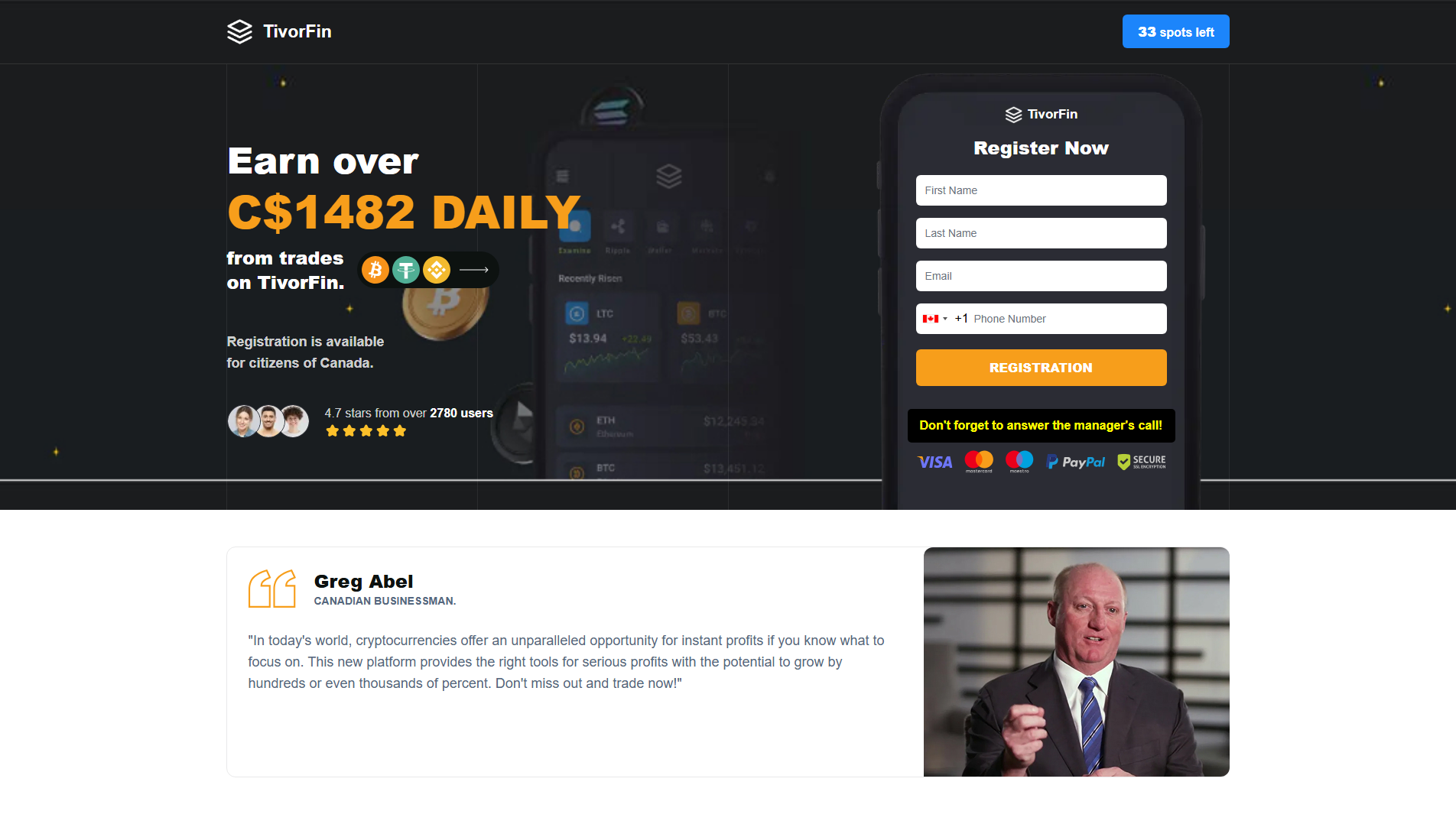
“180+ Globale Märkte, grenzenloser Erfolg — TivorFin”
The sent-report ledger records the first outgoing report at .
The recorded recipient is abuse@omegatech.sc.
The latest stored availability evidence still shows the domain reachable; 13 days has elapsed since the first outgoing report.
ICANN RAA §3.18 describes registrar abuse-contact and handling obligations. This section records outgoing timestamps, listed recipients, case identifiers, and later availability. It does not by itself prove receipt, acknowledgement, investigation, remediation, or contractual non-compliance.
Imitazione di Zelle: tivorfin.de — Ultimo attivo conosciuto (HTTP 200). Riepilogo delle prove: VirusTotal 15/92 (alphaMountain.ai, BitDefender, CRDF, DNS8…
L’analisi dettagliata di PhishDestroy AI resta in inglese per preservare il rapporto forense originale.
15 / 92 engine detections
Apri il rapporto2 det.
Apri il rapportoMalevolo
Apri il rapportoDBL_SPAM
5 community references
Apri il rapportoNessun flag di minaccia
Apri il rapportoNessun flag malevolo
Apri il rapportoI risultati riflettono il momento di raccolta di ciascuna fonte. Zero rilevamenti non garantiscono la sicurezza. I riferimenti OTX sono pubblicazioni della community.
PhishDestroy threat report
tivorfin.de is an impersonation phishing page that presents itself as TivorFin, a German-language trading brand. Its headline, "180+ Globale Märkte, grenzenloser Erfolg" (180+ global markets, boundless success), is aimed at German-speaking retail investors looking for broad market access. PhishDestroy first flagged the domain on 2026-10-09, and the site was still online and serving its content when last checked on 2026-10-19.
Sites like this borrow the look and promises of an investment platform to win trust, then ask visitors to register, hand over personal and identity details, and fund an account. The pitch of 180+ markets and unlimited success is meant to make large returns sound routine. In this type of scheme, the account dashboard is usually fake. Deposits go straight to the operators, and withdrawal requests are met with new "fees" or "taxes" until the victim stops paying. Victims can lose their deposited funds along with the personal data they submitted at sign-up.
On 2026-10-09, 15 of 92 VirusTotal engines flagged the domain. Among them were BitDefender, ESET, Fortinet, G-Data, Forcepoint ThreatSeeker, alphaMountain.ai, CRDF and DNS8, a mix of established antivirus vendors and threat-intel feeds that independently reached the same conclusion. Spamhaus lists the domain in its DBL as spam, and it appears in five AlienVault OTX threat pulses. That makes it a known indicator shared among researchers. It is also on the PhishDestroy blocklist.
The site is hosted in the Netherlands on the network of Omegatech LTD. It uses a free Let's Encrypt certificate, so the browser padlock only means the connection is encrypted and says nothing about whether the operator is legitimate. The .de domain and German-language copy point to an operation built specifically for the German-speaking market.
If you registered on tivorfin.de, do not send any further money, especially payments described as withdrawal, unlocking or tax fees. These fees are part of the scam and will not release your funds. Contact your bank or payment provider right away to dispute transfers, and report the case to the police with your payment records and any messages from the operators. If you uploaded ID documents, expect follow-up phishing and "fund recovery" offers, which are scams too. Change any password you reused on the site. Security teams should block the domain and its hosting address and add it to mail and web filters.
Osservazioni archiviate di pagina, rete e scanner, raggruppate per fonte e momento dell’osservazione.
Osservato: · Retrieved:
| Uuid | 01a11ec3-bcc1-74fa-b81d-f0ad73128cb3 |
|---|---|
| Final url | https://tivorfin.de/ |
| Stato | 200 |
| Reindirizzato | https-only |
| Redirects | [
{
"to": "https://tivorfin.de/",
"from": "http://tivorfin.de/",
"status": 307
}
] |
| Ip | 158.94.210.119 |
| Contacted IP addresses | [
"158.94.210.119"
] |
| Asns | [
"202412"
] |
| Countries | [
"NL"
] |
| Document hash | 820e6ec9de237af4826c323fdfee7373fcf8bb71563ef4d44f63e686f768ba55 |
| Script hashes | [
"8aa5f8f647356dcd4fc5dbbe0efd5bc0e8da74026bc61e24636e2e1f5749b0ce"
] |
| Globals | [
"__dclq",
"__dclOrig",
"__dclFlush",
"__smsCheckBeforeSubmit",
"__isSmsEnabled",
"__isSmsVerified",
"intlTelInput"
] |
| Tls | {
"san": [
"tivorfin.de"
],
"cipher": "AES_128_GCM",
"issuer": "YE2",
"subject": "tivorfin.de",
"protocol": "TLS 1.3",
"valid_to": "2026-11-30T09:18:00Z",
"valid_from": "2026-09-01T09:18:01Z"
} |
| Età del dominio (giorni) | 105 |
| Apex age days | 105 |
| Tls age days | 37 |
| Giorni di validità TLS | 89 |
| Requests | 7 |
| Provider verdicts | {
"engines": {
"tags": [
"urlscan-ml",
"urlscan-ml-60c5e22"
],
"score": 94,
"malicious": true
},
"overall": {
"score": 0,
"malicious": false
}
} |
| HTTP headers | {
"content-type": "text/html; charset=utf-8",
"x-content-type-options": "nosniff"
} |
Osservato: · Retrieved:
| Uuid | 7d4fe8bd-70cd-469e-b272-f8ae9eee9fe4 |
|---|---|
| Final url | https://tivorfin.de/ |
| Stato | 200 |
| History | [
{
"url": "https://tivorfin.de/",
"status": 200
}
] |
| DOM structure hash | eceb164ad49a9201d2bac6e76ae403f0bd493dd8aef2c98d65ca566fe91ef3ed |
| Document hash | b08063f1f0c1e74bffee5d49998e63ad934d2159be4445a691f4597ac20d7a12 |
| Rischi del dominio | [
"Malware",
"Security threats",
"CIPA Filter",
"CIPA"
] |
| Radar rank | {
"bucket": ">200000"
} |
| Record DNS | [
{
"name": "tivorfin.de",
"type": "A",
"value": "158.94.210.119"
}
] |
| DNSSEC valido | false |
| Ip | 158.94.210.119 |
| Verdict | {
"tags": [
"malware"
],
"malicious": true,
"categories": [
"malware"
]
} |
| Record di registrazione | {
"updated": "2026-09-01T05:46:43Z",
"nameservers": [
"ns1.dyna-ns.net",
"ns2.dyna-ns.net"
]
} |
Osservato: · Retrieved:
| Vendor result counts | {
"timeout": 0,
"harmless": 44,
"malicious": 12,
"suspicious": 4,
"undetected": 32
} |
|---|---|
| Vendor labels | {
"CRDF": "malicious",
"DNS8": "suspicious",
"ESET": "suspicious",
"VIPRE": "phishing",
"G-Data": "phishing",
"Lionic": "phishing",
"Sophos": "phishing",
"Fortinet": "spam",
"SOCRadar": "phishing",
"URLQuery": "malicious",
"Kaspersky": "phishing",
"Seclookup": "malicious",
"Gridinsoft": "suspicious",
"BitDefender": "phishing",
"alphaMountain.ai": "phishing",
"Forcepoint ThreatSeeker": "phishing"
} |
| Reputation | 0 |
| Prima rilevazione | 2026-06-25T17:45:01Z |
| Record DNS | [
{
"ttl": 300,
"type": "NS",
"value": "ns2.dyna-ns.net"
},
{
"ttl": 300,
"type": "NS",
"value": "ns1.dyna-ns.net"
},
{
"ttl": 300,
"type": "A",
"value": "158.94.210.119"
},
{
"ttl": 300,
"type": "SOA",
"rname": "hostmaster.tivorfin.de",
"value": "ns1.dyna-ns.net"
}
] |
| Dns at | 2026-10-18T17:53:01Z |
| Jarm | 40d40d40d00000000043d43d00043d6aff5ab0f4fc31897186312c9e639319 |
| Certificate | {
"san": [
"tivorfin.de"
],
"issuer": "Let's Encrypt / YE2",
"serial": "51ec7df37fe4c2090eb5acb354373befbc9",
"sha256": "f89ed1e96c2bee365b3c929d0473b86e40c86df992328bb6eb9810aadae26574",
"subject": "tivorfin.de",
"valid_to": "2026-11-30T09:18:00Z",
"valid_from": "2026-09-01T09:18:01Z"
} |
| Registry data | {
"status": [
"active"
],
"events": {
"last changed": "2026-09-01T05:46:43Z"
}
} |
No. PhishDestroy classifica tivorfin.de come Imitazione di Zelle (rischio: critico, 100/100); è stato rilevato per la prima volta il 2026-10-09. VirusTotal: 15/92 motori lo segnalano. Presente nella lista Spamhaus DBL. Considera il sito non sicuro.
No. Non collegare un wallet, non firmare messaggi e non approvare token su tivorfin.de. I siti di phishing chiedono autorizzazioni (approve, setApprovalForAll, Permit2) che permettono all’operatore di spostare i tuoi fondi, e una transazione confermata non si può annullare.
Cambia tutte le password inserite su quel sito e attiva l’autenticazione a due fattori. Se hai collegato un wallet o firmato qualcosa, revoca le autorizzazioni e sposta i fondi rimasti su un nuovo wallet; non condividere mai la seed phrase. Guida passo passo: guida di emergenza.
ns1.dyna-ns.netns2.dyna-ns.netLa posizione si riferisce alla rete IP.
f89ed1e96c2bee365b3c929d0473b86e40c86df992328bb6eb9810aadae26574tivorfin.deMetadati del certificato salvati. Le date del certificato prive di fuso orario sono mostrate così come archiviate. La cifratura del trasporto non dimostra che il sito sia affidabile.
Google PageSpeed Insights — audit delle prestazioni su dispositivi mobili di tivorfin.de · checked Oct 9, 2026
Un orario stimato descrive una finestra di osservazione. Non dimostra un’azione del registrar né il momento esatto in cui un sito è diventato irraggiungibile.
Modifiche datate conservate dal monitoraggio e dai sistemi di raccolta delle fonti. Le osservazioni più recenti compaiono per prime; gli stati delle fonti non costituiscono prova di un takedown.
Sconosciuto→live_content
content_served
Sconosciuto→live_content
content_served
Sconosciuto→live_content
content_served
Sconosciuto→live_content
content_served
Sconosciuto→live_content
content_served
Sconosciuto→live_content
content_served
Sconosciuto→live_content
content_served
Sconosciuto→live_content
content_served
Sconosciuto→live_content
content_served
Sconosciuto→live_content
content_served
Sconosciuto→live_content
content_served
Sconosciuto→live_content
content_served
Raggiungibile
Nessun flag di minaccia
Visualizza fonte5 community references
Visualizza fonte15/92 engine detections
Visualizza fontePD-20261009-BB353D
tivorfin.de
Visualizza fontePage captured
Visualizza fonteOgni riga rappresenta un motivo per cui un dominio è collegato a questo host. I nodi a dimensione intera indicano rilevamenti di VirusTotal, mentre quelli tratteggiati sono già offline. Di seguito è riportato l'elenco completo.
Questo IP di origine ospita più domini di phishing: l'infrastruttura può essere condivisa tra campagne.
Report con la stessa etichetta del sistema di raccolta. Un’etichetta condivisa non dimostra un’impersonificazione né una proprietà comune. Visualizza i report corrispondenti →
Confronta ciò che ricevono un browser e un crawler e verifica l’eventuale instradamento del traffico tramite Keitaro.
tivorfin.de
PD-20261009-BB353D Recipient: abuse@omegatech.sc Se hai inserito credenziali dell'account, informazioni personali o di pagamento oppure hai scaricato un file da questo dominio, agisci immediatamente. Di seguito sono riportate le risorse per aiutarti a segnalare l'incidente e proteggerti.


Seleziona il tuo Paese per ottenere contatti ufficiali del crimine informatico o creare una bozza di reclamo →.
Template-based draft · optional AI wording assistance requires separate consent
Scegli i passaggi pertinenti a ciò che hai condiviso. Conserva una copia di questo report insieme alla tua documentazione.
Smetti di usare il sito sospetto. Accedi al servizio autentico tramite la sua app ufficiale o un indirizzo di cui ti fidi già.
Conserva in un luogo sicuro email, ricevute, messaggi e screenshot originali. Una cronologia dei fatti aiuta l’autorità competente a capire cosa è successo. IC3 evidence guidance ↗
tivorfin.de)Anche se non conosci tutti i dettagli — sporgere comunque denuncia. Anche le informazioni parziali sono comunque utili alle indagini.
Una segnalazione non garantisce il recupero dei fondi né l’avvio di un’indagine, ma dati sulle transazioni tempestivi e accurati possono aiutare le autorità e i fornitori di servizi a tracciare l’incidente.
Further guidance: NIST · phishing responseFBI IC3 · reports & evidenceFTC · recovery scams
Analisi delle minacce utilizzando blocklist archiviate, WHOIS, DNS e prove di scansione pubblica
Scansiona oraSegnala i domini sospetti al nostro database delle minacce — proteggi la comunità
SegnalaSegnalazioni recenti di phishing e modifiche osservate della disponibilità
MonitoraControlla le minacce in tempo reale oppure contesta questa segnalazione se ritieni che si tratti di un falso positivo
Questo report combina acquisizioni di pagina salvate, record di registrazione e di rete, risultati degli scanner e lo storico delle segnalazioni di PhishDestroy. Ogni fonte mantiene la propria data di osservazione. Apri il report di una fonte per esaminare il risultato originale.
L’analisi assistita da AI è stata redatta il . Descrive le evidenze disponibili in quel momento; le verifiche successive delle fonti possono modificare il quadro.
Un’acquisizione documenta ciò che veniva mostrato. Il risultato di uno scanner registra la valutazione di quel provider al momento del controllo. Né un certificato valido né un risultato con zero rilevamenti garantiscono la sicurezza.