VirusTotal
3 / 91
Segnala


“FYsolar shares and market place | Home”
Security analysis of www.shopfysolar.online covers observed phishing indicators, infrastructure evidence, current status, and defensive guidance.
L’analisi dettagliata di PhishDestroy AI resta in inglese per preservare il rapporto forense originale.

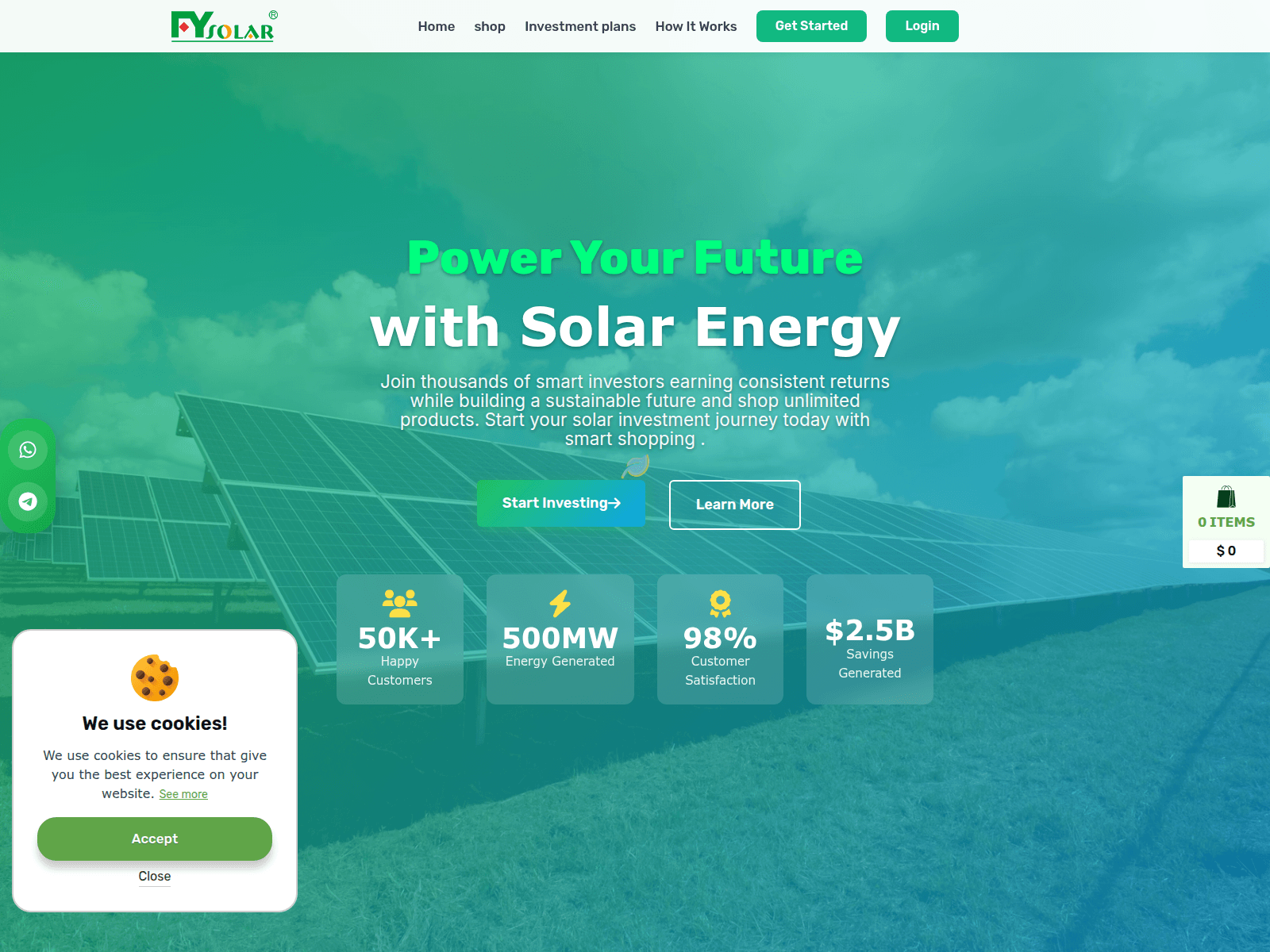
Analysis of www.shopfysolar.online indicates that the domain was registered through NameCheap, Inc. on October 29, 2025 and currently resolves to IP 172.67.196.222, which belongs to Cloudflare (AS13335) located in the United States. The site hosted on Cloudflare uses the nameservers harley.ns.cloudflare.com and kristina.ns.cloudflare.com, but no TLS certificate was observed, leaving the HTTP connection unencrypted. The page title retrieved during the brief crawl reads “FYsolar shares and market place | Home”, which does not reference the impersonated brand. However, the domain is classified as a brand‑impersonation campaign targeting DHL and is further labeled as a crypto scam.
Detection services have flagged the domain: four of ninety‑five VirusTotal scanners reported malicious activity, and Gridinsoft assigned a trust score of zero out of one hundred. The domain appears on a single external blocklist and has been actively blocked by PhishDestroy. AlienVault OTX lists the domain in one threat‑intel pulse. No additional intelligence such as malware payloads, phishing landing‑page screenshots, or command‑and‑control infrastructure has been released, leaving the exact attack vector and victim interaction unknown.
Defenders should update DNS and web‑filtering policies to block resolution of 172.67.196.222 and any URL containing shopfysolar.online, monitor outbound traffic for attempted connections to the same Cloudflare IP range, and consider adding the domain to internal blocklists. Because the site is presently offline, continuous re‑evaluation is advised in case the operator re‑hosts the content on a different IP or modifies the TLS configuration. Organizations that rely on DHL communications should educate users about the mismatch between legitimate DHL branding and the unrelated FYsolar page title, and enforce verification of TLS certificates for any credential‑submission portals.
Full extracted values, their blockchain and collection source. An address found in page content does not establish who controls it.
https://t.me/Fysolarvestcom_AdmindeskStored page referenceIoC extraction recorded 2026-08-01 04:04:18 UTC
Osservazioni archiviate relative al confronto tra crawler e browser per questo host, oltre a una verifica in tempo reale delle impronte digitali per i sistemi di distribuzione del traffico in stile Keitaro.
Nota dello scanner: unavailable: raw=connection_error; http=0; via=http_proxy; error=SOCKSHTTPConnectionPool(host='shopfysolar.online', port=80): Max retries exceeded with url: / (Caused by NewConnectionEr
 (US)
(US)
For this gTLD, the registrar above operates under an ICANN accreditation agreement. The links below provide the official fee schedule and current DNS abuse compliance guidance.
RAA §3.18 establishes abuse-contact and handling requirements. This report can document stored outbound notices and later technical observations; it does not by itself establish receipt, investigation, remediation, or contractual non-compliance.
La reputazione Edge-IP non è attribuita a questo dominio.
harley.ns.cloudflare.comkristina.ns.cloudflare.comLocation describes the IP network.
12 recorded events. These records describe collected evidence, outgoing notifications and publication; they do not confirm a complete investigation or a takedown.
We scan suspicious URLs, inspect public results and send evidence through the appropriate abuse-reporting channels. The dated events above show what is recorded for this domain. The directory below explains the wider workflow.
Capture the rendered page, requests and visible infrastructure.
Compare the available engine results and retain the analysis timestamp.
Check whether Google currently lists the URL as unsafe.
Inspect a public scan and its recorded network and classification data.
Look for indicator references and related community intelligence.
Compare archived captures and preserve historical context.
Look for matching indicators and associated threat records.
Inspect certificate records and related hostnames.
Compare security resolver responses and record observed blocking.
Inspect the public DNS, TLS, HTTP and technology surface.
Security services used for scanning, reputation checks and reporting are listed below. A service being listed is not evidence that it received, accepted or acted on this particular domain. Recorded submissions appear in the notification history above.
Segnalato da 1 membro della comunità; prima osservazione il 11/12/2025
Se hai inserito credenziali dell'account, informazioni personali o di pagamento oppure hai scaricato un file da questo dominio, agisci immediatamente. Di seguito sono riportate le risorse per aiutarti a segnalare l'incidente e proteggerti.


Seleziona il tuo Paese per ottenere contatti ufficiali del crimine informatico o creare una bozza di reclamo →.
Template-based draft · optional AI wording assistance requires separate consent
Ogni riga rappresenta un motivo per cui un dominio è collegato a questo host. I nodi a dimensione intera indicano rilevamenti di VirusTotal, mentre quelli tratteggiati sono già offline. Di seguito è riportato l'elenco completo.
Questi report si risolvono nello stesso IP edge condiviso. Aiutano con l'individuazione dei report ma non implicano la proprietà comune o un server di origine condiviso.
Questi domini prendono di mira anche gli utenti di Dhl. Visualizza tutte le minacce relative a "Dhl" →
Registrati tramite lo stesso registrar. Un registrar serve milioni di clienti non collegati tra loro, quindi questo dato indica semplicemente un raggruppamento piuttosto che dimostrare un nesso.
Rapporti aggiunti di recente dal database PhishDestroy. Questi collegamenti di scoperta non implicano infrastrutture o proprietà condivise.
Analisi delle minacce utilizzando blocklist archiviate, WHOIS, DNS e prove di scansione pubblica
Scansiona oraSegnala i domini sospetti al nostro database delle minacce — proteggi la comunità
SegnalaSegnalazioni recenti di phishing e modifiche osservate della disponibilità
MonitoraControlla le minacce in tempo reale oppure contesta questa segnalazione se ritieni che si tratti di un falso positivo